Listen to this Post
Introduction:
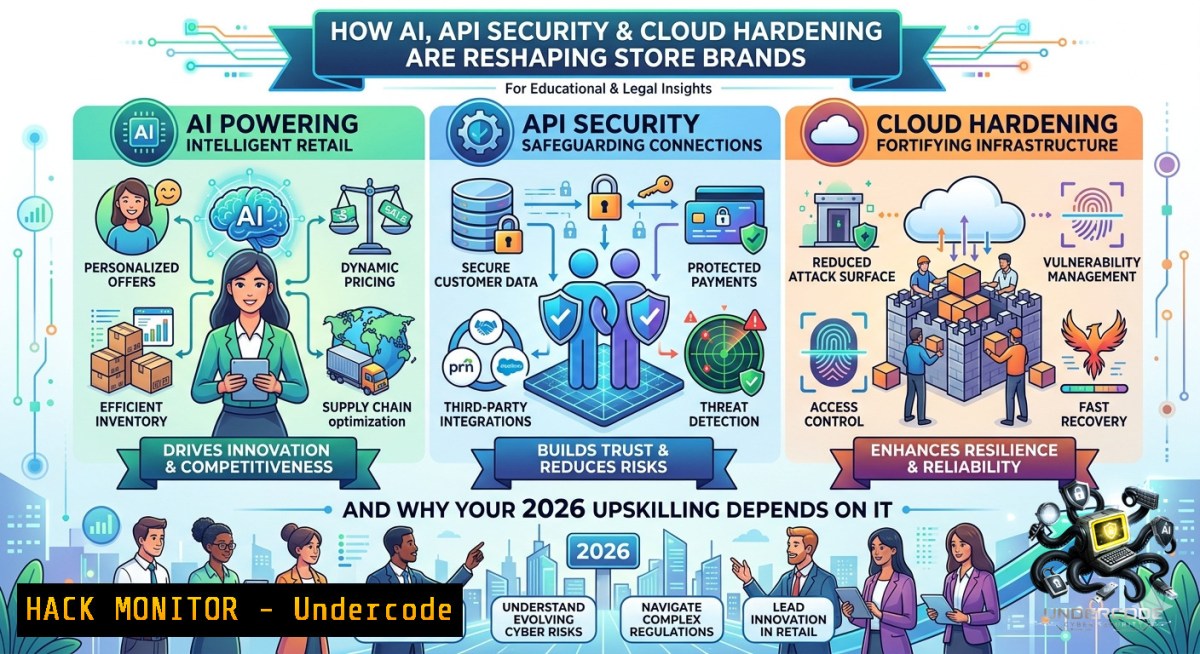
The recent induction of Natalie Tabisz into the 2026 Private Label Hall of Fame underscores a seismic shift in the retail industry: the transition from gut-feel merchandising to a data-driven, “brand-first” philosophy. In 2026, the ability to launch over 200 SKUs generating $30 million in revenue is no longer just a business achievement; it is a technical one, heavily reliant on AI analytics, cloud infrastructure, and robust cybersecurity frameworks. For professionals in IT, cybersecurity, and cloud engineering, the modern store brand represents a complex attack surface where supply chain data, AI models, and API-driven POS integrations converge, demanding a new level of technical proficiency to protect and scale.
Learning Objectives:
- Objective 1: Analyze the cybersecurity risks inherent in AI-driven retail analytics and private label data ecosystems.
- Objective 2: Apply Linux and Windows hardening commands to secure cloud infrastructures supporting retail operations.
- Objective 3: Implement API security and incident response protocols based on 2026 industry standards for POS and payment integrations.
- Securing the Data Supply Chain: From Dairy SKUs to Double-Digit Growth
Natalie Tabisz’s success in managing complex dairy portfolios and generating $30M in revenue is a testament to the power of data-driven merchandising. However, this wealth of data—from supplier trade spend details to partner-specific strategies—is a prime target for cyber adversaries. In 2026, the retail sector faces AI-1owered attacks, software supply chain vulnerabilities, and synthetic identity fraud, threatening the very trust that enables collaborative growth.
Step‑by‑step guide to secure your retail data supply chain:
- Map the Data Flow: Identify all points where private label data (e.g., pricing, inventory, supplier contracts) is ingested, processed, and stored.
- Conduct a Supply Chain Risk Assessment: Use the NIST Cyber Supply Chain Risk Management (C-SCRM) framework to evaluate third-1arty vendors.
- Implement Data Loss Prevention (DLP): Deploy DLP policies to monitor and protect sensitive data moving across the network. On Windows, use PowerShell to audit file access:
Get-SmbOpenFile | Export-Csv -Path "C:\security\open_smb_files.csv"
On Linux, audit file integrity with AIDE (Advanced Intrusion Detection Environment):
sudo aide --init
sudo mv /var/lib/aide/aide.db.new.gz /var/lib/aide/aide.db.gz
sudo aide --check
- Encrypt Data at Rest and in Transit: Enforce TLS 1.3 for all API communications and use AES-256 for database encryption.
- Establish a Vendor Risk Management Program: Require all retail partners (including Topco members) to complete a security questionnaire aligned with ISO 27001 or SOC 2.
-
AI Governance: Operationalizing Security for Retail’s “Brand-First” Future
With AI now influencing demand forecasting, fraud detection, and even supplier negotiations, cybersecurity controls must evolve. Traditional defenses are inadequate for AI-driven systems. The “brand-first” philosophy, as championed by leaders like Tabisz, must now include an “AI governance-first” mindset to prevent manipulated models, data poisoning, and biased outcomes that could derail a private label’s market share.
Step‑by‑step guide to operationalize AI security management in retail:
- Inventory AI Assets: Create a register of all AI models used in merchandising, inventory management, and customer analytics.
- Perform AI Risk Assessments: Simulate adversarial attacks on your models using tools like Adversarial Robustness Toolbox (ART).
- Implement AI Security Monitoring: Use a SIEM (e.g., Wazuh) to log and monitor API calls to AI endpoints.
- Establish a Model Validation Pipeline: Before deployment, test models for bias and security vulnerabilities. Use Python for validation:
Simple AI model validation check for model drift
import pickle
import numpy as np</li>
</ol>

with open('retail_model.pkl', 'rb') as f:
model = pickle.load(f)

Check for data drift in input features
expected_mean = [100, 50]  Example mean values
input_data = np.array([[110, 55]])
if np.abs(input_data - expected_mean).max() > 20:
print("⚠️ Potential data drift detected — security alert triggered.")
5. Train Staff on AI Security: Ensure teams handling AI models undergo training on adversarial machine learning and secure AI deployment (e.g., LinkedIn Learning’s AI Governance course).
- Cloud Hardening for Retail Scale: Linux & Windows Commands That Work
The launch of over 200 new SKUs and the management of member-specific brands require a scalable and resilient cloud infrastructure. In 2026, multi-cloud environments (AWS, Azure) are standard, but misconfigurations are the leading cause of breaches. Hardening cloud estates against AI-1owered attackers demands OS-level commands that enforce compliance with benchmarks like CIS.
Step‑by‑step guide for cloud hardening (Linux & Windows):
Linux (Ubuntu 24.04) Hardening:
- Harden SSH: Disable root login and password authentication. Edit
/etc/ssh/sshd_config:sudo sed -i 's/PermitRootLogin prohibit-1assword/PermitRootLogin no/' /etc/ssh/sshd_config sudo sed -i 's/PasswordAuthentication yes/PasswordAuthentication no/' /etc/ssh/sshd_config sudo systemctl restart sshd
- Configure a Firewall: Use `iptables` to allow only necessary ports (e.g., 80, 443, 22 from trusted IPs).
sudo iptables -A INPUT -1 tcp --dport 22 -s 192.168.1.0/24 -j ACCEPT
sudo iptables -A INPUT -1 tcp --dport 80 -j ACCEPT
sudo iptables -A INPUT -1 tcp --dport 443 -j ACCEPT
sudo iptables -A INPUT -j DROP
- Apply CIS Benchmarks: Use a script like `harden_ubuntu_2404.sh` to automate compliance.
Windows Server 2022 Hardening:
1. Harden Windows Defender Firewall:
New-NetFirewallRule -DisplayName "Block SMB from Public" -Direction Inbound -Protocol TCP -LocalPort 445 -Action Block -Profile Public
2. Enable PowerShell Logging:
Set-ItemProperty -Path "HKLM:\SOFTWARE\Policies\Microsoft\Windows\PowerShell\ScriptBlockLogging" -Name "EnableScriptBlockLogging" -Value 1
3. Disable SMBv1: (Legacy protocol, high risk)
Disable-WindowsOptionalFeature -Online -FeatureName SMB1Protocol
- API Security Checklist for POS & Payment Integrations (2026)
The off-shelf merchandising initiatives that delivered double-digit growth rely on seamless API integrations between retail partners, POS systems, and inventory management platforms. These APIs are a critical vulnerability, susceptible to man-in-the-middle attacks, credential stuffing, and insecure direct object references (IDOR).
Step‑by‑step checklist to secure retail APIs:
- Implement Strong Authentication: Use OAuth 2.0 with Proof Key for Code Exchange (PKCE) and rotate API keys every 90 days.
- Apply Rate Limiting and Throttling: Protect against DDoS and brute-force attacks.
- Validate Input & Output: Use strict schema validation to prevent SQLi and XSS.
- Encrypt Payloads: Use TLS 1.3 and consider payload encryption for sensitive data (e.g., PII, payment info).
- Log All API Activity: Monitor for anomalies in API call volumes.
- Test for Vulnerabilities: Use tools like OWASP ZAP to test for the OWASP API Security Top 10.
- Example (Python) of a secure API call with retry logic and token refresh:
import requests from requests.adapters import HTTPAdapter from urllib3.util.retry import Retry</li> </ol> session = requests.Session() retries = Retry(total=3, backoff_factor=1, status_forcelist=[500, 502, 503, 504]) session.mount('https://', HTTPAdapter(max_retries=retries)) headers = {'Authorization': 'Bearer {token}', 'Content-Type': 'application/json'} try: response = session.get('https://api.retailpartner.com/v1/inventory', headers=headers, timeout=5) response.raise_for_status() print("API call successful.") except requests.exceptions.RequestException as e: print(f"API security error: {e}")- Breach Response Plan for Modern Retailers (2026 Edition)
A 7-Eleven data breach exposing 185,000 individuals serves as a stark reminder that retail is a high-value target. A well-rehearsed, step-by-step incident response plan is not an option; it is a regulatory and business imperative, especially for managing trade spend data and member-specific brand strategies.
Step‑by‑step data breach response plan (first 60 minutes):
- Activate the Incident Response Team (IRT): Notify stakeholders (Legal, IT, PR, Compliance).
- Contain the Breach: Isolate affected systems from the network.
– Linux: `sudo ifconfig eth0 down`
– Windows: `Get-NetAdapter | Where-Object {$_.Status -eq ‘Up’} | Disable-NetAdapter`
3. Disable Compromised Accounts: Revoke access tokens and force password resets for all affected user accounts.
4. Preserve Evidence: Capture memory and disk images for forensic analysis.
– Linux: `sudo dd if=/dev/sda of=/evidence/image.dd`
5. Eradicate the Threat: Apply patches and remove malware using EDR tools.
6. Recover Services: Restore from clean backups and verify data integrity.
7. Communicate: Notify affected customers and regulators as required by law (e.g., GDPR, CCPA).What Undercode Say:
- Key Takeaway 1: The 2026 Private Label Hall of Fame recognition of data-driven leaders like Natalie Tabisz is a clear signal that cybersecurity and IT infrastructure are now foundational to retail success. The ability to generate $30M in revenue from 200 new SKUs is underpinned by a resilient and secure data ecosystem that cannot be ignored.
- Key Takeaway 2: The convergence of AI, cloud, and API technologies in retail demands a new breed of technical professional. Skills in AI governance, cloud hardening (across Linux/Windows), and API security are not just “nice-to-haves”—they are critical for protecting the brand equity and supply chain integrity that private label growth depends on.
Analysis: The retail industry’s future hinges on trust—trust in the quality of private label products and the security of the systems that deliver them. As AI automates pricing and inventory, malicious actors will target the very models that drive growth. The 2026 cybersecurity landscape for store brands is therefore a battle for data integrity. Organizations that fail to integrate robust security controls (e.g., CIS benchmarks, OWASP API standards, and formal incident response plans) into their merchandising strategies will find their double-digit growth undermined by crippling breaches. Conversely, those that treat cybersecurity as a strategic enabler, not a barrier, will unlock sustained market expansion and customer loyalty.
Prediction:
- +P The adoption of AI-driven loss prevention and inventory intelligence will reduce retail shrinkage by up to 20% by 2028, creating a new market for AI security auditing services.
- -N AI-1owered supply chain attacks targeting private label manufacturers are expected to increase by 50% in 2026-2027, exploiting weak API security in supplier integrations.
- -N Retailers failing to implement a documented, NIST-aligned incident response plan by Q3 2026 will face increased regulatory fines and a 40% higher likelihood of customer churn following a breach.
- +P The demand for professionals with certifications in AI security (e.g., ISACA AAISM) and cloud hardening (e.g., CIS benchmarks) will surge by 65% as retail boards prioritize cyber resilience.
▶️ Related Video (70% Match):
🎯Let’s Practice For Free:
IT/Security Reporter URL:
Reported By: Retailnews Privatelabel – Hackers Feeds
Extra Hub: Undercode MoN
Basic Verification: Pass ✅🎓 Live Courses & Certifications:
Join Undercode Academy for Verified Certifications
🚀 Request a Custom Project:
Secure, high-velocity infrastructure and disruptive technological engineering. Contact our engineering team for high-tier development and proprietary systems:
[email protected]
💎 Smart Architecture | 🛡️ Secure by Design | ⭐ Trusted by Thousands🔐JOIN OUR CYBER WORLD [ CVE News • HackMonitor • UndercodeNews ]
📢 Follow UndercodeTesting & Stay Tuned:


