Listen to this Post
Introduction:
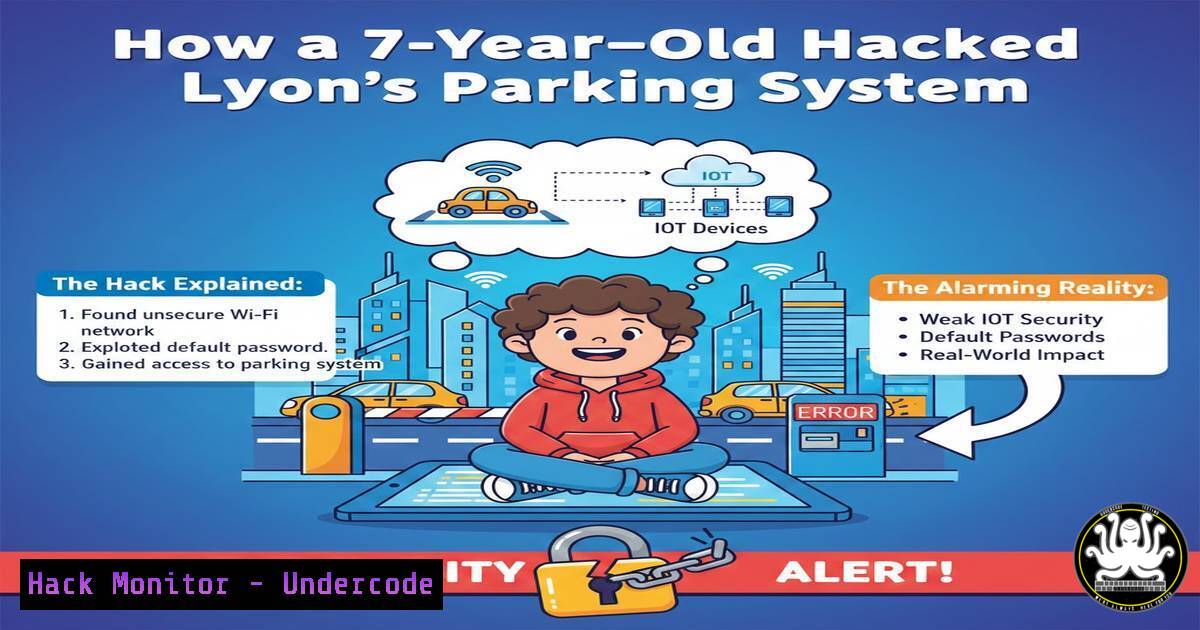
A recent social media post revealing a 7-year-old’s successful hack of Lyon’s parking systems exposes critical vulnerabilities in our increasingly connected infrastructure. This incident demonstrates that cybersecurity threats aren’t limited to sophisticated attackers but can be exploited through simple oversights in system design and implementation. The accessibility of these vulnerabilities underscores the urgent need for robust security measures in public-facing IoT devices.
Learning Objectives:
- Understand common IoT security vulnerabilities in public infrastructure
- Learn practical techniques for testing and securing connected systems
- Implement proper security controls for parking and similar public IoT systems
You Should Know:
1. RFID/NFC Vulnerability Exploitation
The Lyon parking system hack likely involved manipulating RFID or NFC communication between parking sensors, payment terminals, or access gates. These wireless technologies often contain critical security flaws including weak encryption, replay attacks, and protocol manipulation.
Step-by-step guide explaining what this does and how to use it:
- Identify Target System: Use an NFC/RFID reader application on a smartphone or dedicated hardware like Proxmark3 to detect active signals around parking meters or gates.
 Install NFC tools on Linux
sudo apt-get install libnfc-dev libnfc-bin
nfc-list

Using Proxmark3 commands
pm3
hf search
- Capture Communication: Monitor the communication between legitimate devices and the system using specialized tools.
 Set up RFID monitoring
hcxdumptool -i wlan0 -o capture.pcapng
- Analyze Protocol: Use Wireshark with RFID plugins to analyze captured traffic patterns and identify authentication mechanisms.
-
Replay Attack: Capture valid authentication signals and replay them to bypass security controls.
 Python example for RFID replay (educational purposes)
import serial
import time

def replay_rfid_signal(port, signal_data):
ser = serial.Serial(port, 9600)
ser.write(signal_data)
response = ser.read()
return response
2. Default Credential Exploitation
Many IoT parking systems ship with default credentials that are never changed during deployment, providing easy access to administrative functions.
Step-by-step guide explaining what this does and how to use it:
- Research Manufacturer Defaults: Identify the parking system manufacturer and search for default credentials in documentation or online databases.
-
Network Scanning: Use tools like Nmap to identify connected devices and open ports.
nmap -sS -sV -O 192.168.1.0/24
nmap --script http-enum,http-headers target_ip
- Brute Force Testing: Systematically test common default credentials using automated tools.
hydra -L users.txt -P passwords.txt ssh://target_ip
medusa -h target_ip -u admin -P wordlist.txt -M http
- Access Control Bypass: Once credentials are obtained, access the administrative interface to modify system behavior.
3. API Endpoint Manipulation
Modern parking systems often communicate with central servers via API endpoints that may lack proper authentication or input validation.
Step-by-step guide explaining what this does and how to use it:
- Endpoint Discovery: Use directory brute-forcing tools to find hidden API endpoints.
gobuster dir -u https://parking-system.com/api/ -w common-api-endpoints.txt
ffuf -w api_wordlist.txt -u https://target/FUZZ
- Parameter Testing: Identify and manipulate API parameters to bypass payment or access controls.
 Testing for IDOR vulnerabilities
curl -X GET "https://api.parkingsystem.com/v1/user/12345/payment" \
-H "Authorization: Bearer token"
- Input Validation Bypass: Test for SQL injection, command injection, and buffer overflow vulnerabilities in API inputs.
-- SQL Injection test
SELECT  FROM payments WHERE user_id = '1' OR '1'='1';
4. Physical Security Bypass
Parking systems often have physical access points that can be manipulated through hardware interfaces or maintenance ports.
Step-by-step guide explaining what this does and how to use it:
- Physical Inspection: Identify maintenance ports, debug interfaces, or exposed wiring on parking terminals or gate controllers.
-
UART/Serial Access: Connect to exposed serial ports using USB-to-TTL adapters to access system consoles.
screen /dev/ttyUSB0 115200
minicom -D /dev/ttyUSB0 -b 115200
- JTAG Debugging: Use JTAG interface to extract firmware or modify system behavior.
openocd -f interface.cfg -f target.cfg
- Hardware Modification: Identify and manipulate sensor inputs or actuator outputs to bypass security mechanisms.
5. Wireless Communication Interception
Many smart parking systems use wireless communication between sensors, payment terminals, and control systems that can be intercepted or manipulated.
Step-by-step guide explaining what this does and how to use it:
- Wireless Reconnaissance: Use software-defined radio (SDR) or Wi-Fi scanning tools to identify communication channels.
airodump-ng wlan0mon
kismet
- Signal Analysis: Capture and analyze wireless traffic to understand communication protocols.
wireshark &
tshark -i wlan0 -w parking_capture.pcap
- Protocol Reverse Engineering: Use tools like GNU Radio or Universal Radio Hacker to analyze custom RF protocols.
-
Signal Jamming or Spoofing: Create fake signals to manipulate system behavior or deny service.
6. Firmware Analysis and Modification
Extracting and analyzing device firmware can reveal backdoors, hardcoded credentials, and security vulnerabilities.
Step-by-step guide explaining what this does and how to use it:
- Firmware Extraction: Obtain firmware through official channels, debugging interfaces, or physical memory dumping.
binwalk -e firmware.bin
strings firmware.bin | grep -i "password|admin|key"
- Reverse Engineering: Use disassemblers and decompilers to analyze firmware security.
ghidra
radare2
- Vulnerability Identification: Search for known vulnerabilities, buffer overflows, or insecure function calls.
-
Patch Creation: Modify firmware to address security issues or enhance functionality.
7. Mitigation and Security Hardening
Implement comprehensive security measures to protect parking and similar IoT systems from exploitation.
Step-by-step guide explaining what this does and how to use it:
- Network Segmentation: Isolate parking systems from critical network infrastructure.
 iptables rules for network segmentation
iptables -A FORWARD -i eth1 -o eth0 -j DROP
iptables -A FORWARD -i eth0 -o eth1 -m state --state ESTABLISHED,RELATED -j ACCEPT
- Access Control Implementation: Enforce strong authentication and authorization mechanisms.
 PAM configuration for strong authentication
auth required pam_unix.so sha512 shadow nullok
auth required pam_tally2.so deny=5 unlock_time=900
- Encryption Enforcement: Implement end-to-end encryption for all communications.
 OpenSSL configuration for strong encryption
openssl req -new -newkey rsa:4096 -days 365 -nodes -x509 -keyout server.key -out server.crt
- Regular Security Audits: Conduct periodic vulnerability assessments and penetration tests.
 Automated security scanning
nessus
openvas
What Undercode Say:
- The accessibility of these exploits to non-technical individuals demonstrates fundamental design flaws in critical infrastructure security
- Public IoT systems require security-by-design principles rather than bolt-on protections
- Regular third-party security assessments are essential for identifying and mitigating vulnerabilities before exploitation
This incident reveals that many public infrastructure systems prioritize convenience over security, creating widespread vulnerabilities. The fact that a child could compromise these systems indicates inadequate security testing and oversight. As cities become smarter and more connected, the potential impact of such vulnerabilities grows exponentially, potentially affecting transportation, utilities, and public safety systems. Organizations must implement security-first design principles, conduct regular penetration testing, and establish robust incident response plans to protect critical infrastructure from increasingly sophisticated attacks.
Prediction:
The Lyon parking hack represents just the beginning of widespread public infrastructure targeting. As IoT devices proliferate in smart cities, we’ll see increasingly sophisticated attacks targeting transportation systems, utility grids, and public services. Within two years, we predict major metropolitan areas will experience coordinated attacks manipulating multiple connected systems simultaneously, potentially causing transportation gridlock, utility disruptions, and public safety incidents. The security community must develop standardized IoT security frameworks while manufacturers prioritize security over rapid deployment to prevent catastrophic infrastructure failures.
🎯Let’s Practice For Free:
IT/Security Reporter URL:
Reported By: Fredericcordel Ma – Hackers Feeds
Extra Hub: Undercode MoN
Basic Verification: Pass ✅


