Listen to this Post
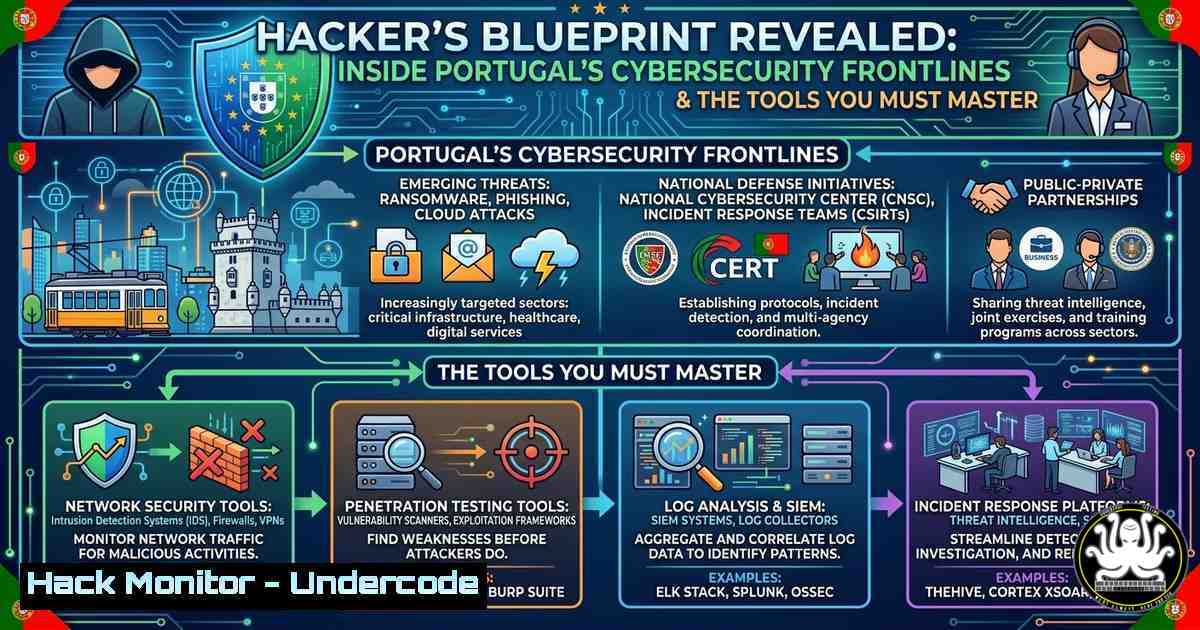
Introduction:
The recent RTP documentary “Linha da Frente” offers a rare glimpse into Portugal’s rapidly evolving cybersecurity landscape, featuring key players like Ethiack and the National Cybersecurity Centre. This exposure highlights a global truth: the frontlines of digital defense are no longer hidden in dark rooms but are becoming a critical national priority, driven by continuous security testing and talent development. For IT professionals, this signals a shift toward proactive, hacker-led security postures that demand a new set of technical skills.
Learning Objectives:
- Understand the core components of a modern national cybersecurity strategy, including bug bounty platforms and national challenge programs.
- Acquire practical command-line techniques for reconnaissance, vulnerability assessment, and system hardening across Linux and Windows environments.
- Learn how to simulate adversarial tactics using open-source tools to better defend enterprise assets.
You Should Know:
- Reconnaissance and Asset Discovery: The Hacker’s First Step
The episode’s focus on platforms like Ethiack underscores the importance of continuous asset discovery and external attack surface management. Before any exploitation, a hacker (ethical or otherwise) must map the target. This process, often called recon, is the foundation of effective security testing.
Start by using `nmap` for network discovery. A simple yet powerful scan to identify live hosts and open ports on a target network is:
nmap -sn 192.168.1.0/24
To perform a more aggressive service version scan, use:
nmap -sV -sC -p- target.com
On Windows, the equivalent for basic network reconnaissance can be done with Test-NetConnection:
Test-NetConnection -ComputerName target.com -Port 80
Test-NetConnection -ComputerName target.com -InformationLevel Detailed
These commands establish the initial footprint, identifying potential entry points just as the ethical hackers featured in the documentary would.
2. Web Vulnerability Exploitation with Automated Scanners
The documentary highlights the role of platforms like Ethiack, which automate the process of finding vulnerabilities. Understanding how these tools work is crucial. While enterprise solutions exist, open-source tools like Nikto and SQLmap provide insight into the mechanics.
To run a basic web server scan with Nikto, which checks for outdated server versions and dangerous files:
nikto -h https://example.com
For SQL injection testing, `sqlmap` automates detection and exploitation. A standard command to test a URL parameter is:
sqlmap -u "https://example.com/page.php?id=1" --batch --dbs
This command attempts to identify the database management system and extract a list of databases without user interaction. Understanding how to interpret the output—identifying injection points and database schemas—is key to mitigating these risks.
3. Windows Hardening: Defending Against Post-Exploitation
Once a vulnerability is exploited, a common goal is privilege escalation or persistence. The Portuguese National Cybersecurity Centre emphasizes defense, making system hardening a priority. On Windows, tools like `PowerShell` are essential for both attack and defense.
To list all local users and administrators, an attacker might use:
Get-LocalUser
Get-LocalGroupMember -Group "Administrators"
A defender can use the same commands to audit accounts. For hardening, disable unused services using sc.exe:
sc config "ServiceName" start= disabled
Or use PowerShell to stop a suspicious service:
Stop-Service -Name "ServiceName" -Force
Set-Service -Name "ServiceName" -StartupType Disabled
Implementing strict AppLocker or Windows Defender Application Control (WDAC) policies is a more advanced but critical step to block unauthorized executables.
4. Cloud Security Hardening (AWS CLI)
Modern cybersecurity landscapes, like the one in Portugal, heavily involve cloud infrastructure. Misconfigured cloud resources are a primary vector for breaches. Using the AWS CLI, a common task is to audit S3 bucket permissions.
To list all S3 buckets:
aws s3 ls
To check the ACL (Access Control List) for a specific bucket for overly permissive settings:
aws s3api get-bucket-acl --bucket your-bucket-name
A critical hardening step is to block public access:
aws s3api put-public-access-block --bucket your-bucket-name --public-access-block-configuration BlockPublicAcls=true,IgnorePublicAcls=true,BlockPublicPolicy=true,RestrictPublicBuckets=true
Similarly, using `aws iam list-users` and `aws iam list-attached-user-policies` helps enforce the principle of least privilege, a core tenet of modern cybersecurity defense.
- API Security Testing with Curl and Burp Suite
As applications become more interconnected, APIs represent a vast attack surface. Tools like `curl` and Burp Suite are fundamental for testing API security. A developer or security professional should know how to intercept and manipulate API requests.
Using `curl` to test an API endpoint for a simple GET request:
curl -X GET "https://api.example.com/v1/users/123" -H "Authorization: Bearer YOUR_TOKEN"
For more complex testing, Burp Suite’s Repeater tool allows for manual modification and resending of requests. To test for IDOR (Insecure Direct Object References), an ethical hacker would change the `123` in the URL to `124` and see if they can access another user’s data without proper authorization. This aligns with the continuous testing philosophy promoted by the entities in the documentary.
What Undercode Say:
- Proactive Security is Non-Negotiable: The feature on Ethiack and national challenges proves that waiting for a breach is no longer an option. Continuous, automated testing integrated into the development lifecycle is now a baseline requirement.
- Skills Over Certifications: The emphasis on national challenge platforms shows a shift toward valuing practical, hands-on skills over theoretical knowledge. Mastering the command-line tools and exploitation techniques outlined above provides the tangible expertise that organizations desperately need.
- National Defense is a Collective Effort: The collaboration between private companies like Ethiack and public entities like the National Cybersecurity Centre in Portugal sets a precedent. Cybersecurity is moving from being a purely technical IT problem to a strategic national and corporate governance priority.
Prediction:
As the global cybersecurity skills gap widens, we will see more countries adopt the Portuguese model—integrating public-private partnerships, national challenges, and continuous bug bounty platforms into their core defense strategy. This will accelerate the demand for security professionals who are not only certified but are battle-tested in platforms like HackTheBox and real-world continuous testing environments. The future of security lies in autonomous, AI-driven platforms that can replicate the creativity of human hackers, but the professionals who can understand, manage, and counter those systems will be the ones in highest demand.
▶️ Related Video (82% Match):
🎯Let’s Practice For Free:
IT/Security Reporter URL:
Reported By: 0xacb Honored – Hackers Feeds
Extra Hub: Undercode MoN
Basic Verification: Pass ✅


