Listen to this Post
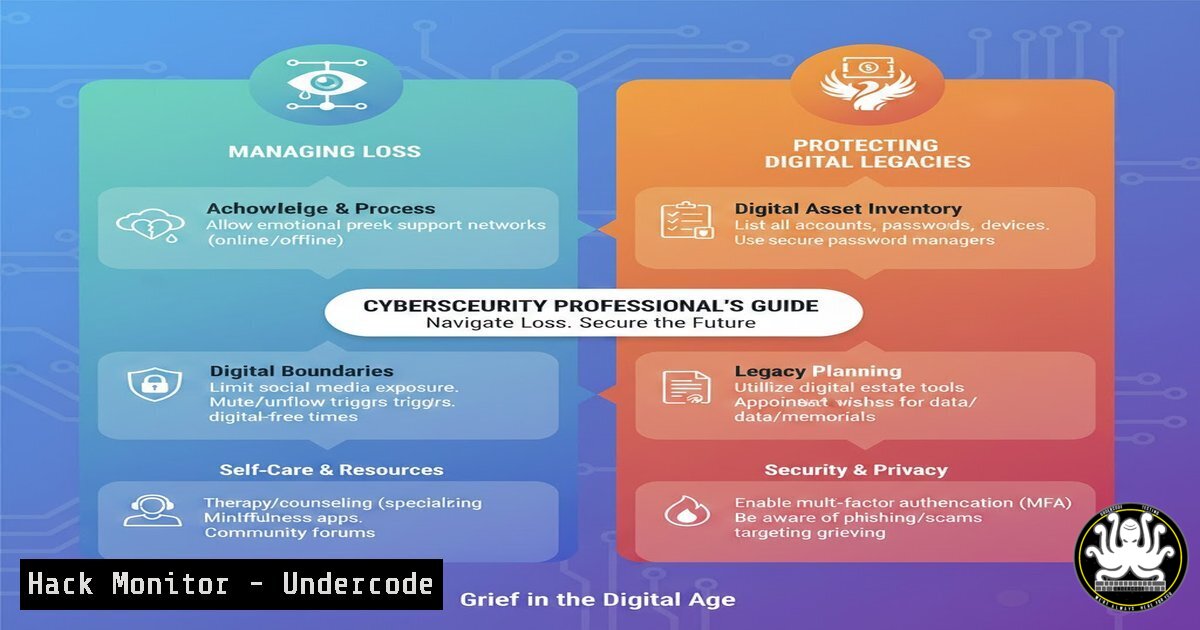
Introduction:
In the demanding world of cybersecurity and IT operations, professionals often operate under high stress, with a culture that prizes resilience. However, the human experience, including profound personal loss, is an undeniable reality that can impact focus, judgment, and security posture. The recent passing of Hugo, a dedicated GIGN operator, is a somber reminder that behind every terminal and security alert is a human being with personal commitments and a digital footprint that extends beyond their professional life. This article explores the critical intersection of personal loss, operational security, and digital legacy management for those in high-stakes technical fields.
Learning Objectives:
- Understand the operational security (OpSec) risks posed by periods of personal grief and distraction.
- Learn to inventory and secure a digital legacy, including social media, financial accounts, and encrypted data.
- Implement technical and procedural controls to ensure continuity and secure handover during unforeseen personal crises.
You Should Know:
- The OpSec Vulnerability of Grief: Recognizing the Human Risk Factor
Extended Version: Cybersecurity isn’t just about firewalls and code; it’s about the human element. A professional experiencing significant personal loss, like the tragic passing of a colleague such as Hugo, faces immense emotional strain. This state can lead to increased cognitive load, reduced attention to detail, and potential lapses in standard security protocols—making them and their organization more vulnerable to social engineering attacks, misconfigurations, or oversight of critical alerts. Adversaries often exploit periods of organizational or personal turmoil.
Step‑by‑step guide:
Acknowledge the Risk: Teams and individuals must formally recognize that personal crises are an operational security risk factor, similar to a newly discovered software vulnerability.
Implement a Buddy System: Pair up with a trusted colleague. During a known period of personal difficulty, the “buddy” should double-check critical actions.
Example: For a sysadmin, this could mean a peer review before applying production server patches or changing firewall rules.
Temporary Privilege Adjustment: For deep grief requiring time off, work with HR and IT to enact a temporary reduction in privileged access or enforce mandatory two-person approval for sensitive actions upon return, following the principle of least privilege.
2. Securing the Digital Legacy: A Technical Inventory
Extended Version: Every professional accumulates a vast digital footprint: password managers, SSH keys, cryptocurrency wallets, domain registrations, cloud server credentials, and social media accounts like LinkedIn. Without a secure and accessible plan, this legacy can become inaccessible to loved ones or, worse, a target for exploitation. Creating a “Digital Will” is a technical and compassionate necessity.
Step‑by‑step guide:
Inventory Digital Assets: Create an encrypted list (e.g., using `gpg` or age) categorizing assets:
Financial: Crypto exchange logins, wallet seed phrases.
Professional: AWS/GCP/Azure console access, GitHub accounts, domain name registrars.
Personal: Email, social media, photo cloud storage.
Use a Password Manager with Emergency Access: Configure emergency access in managers like Bitwarden or 1Password, designating a trusted person (e.g., spouse, lawyer) who can request access after a predefined timeout.
Encrypt and Store Access Instructions: Use strong encryption for critical files like SSH private keys or wallet seeds.
Linux/macOS Command Example: `tar czf legacy_assets.tar.gz ~/.ssh ~/.aws/ && age -r “PUBLIC_KEY_RECIPIENT” -o legacy_assets.tar.gz.age legacy_assets.tar.gz`
This creates an encrypted archive readable only by the recipient’s private key. Store the `.age` file on a secure USB drive with legal documents.
3. Social Media Memorialization and Security
Extended Version: Profiles on platforms like LinkedIn become digital memorials. However, unattended accounts are targets for takeover, which can be used for spear-phishing the deceased’s contacts—a severe threat in security communities. Proactively managing this outcome protects your network.
Step‑by‑step guide:
Designate a Legacy Contact: On platforms like Facebook and LinkedIn, assign a trusted family member or colleague as a “legacy contact” who can manage the account posthumously.
Document Your Wishes: In your digital will, specify whether you want your profile memorialized or deleted.
For Colleagues: If a peer passes, report the account to the platform officially to have it memorialized, preventing malicious login attempts. Encourage the organization to make a formal, secure announcement (e.g., via internal PGP-signed email) to preempt impersonation scams.
4. Secure Communication Protocols for Sensitive News
Extended Version: The initial post about Hugo’s passing was on a public social network. While heartfelt, sensitive news within high-profile organizations (like a national police unit) can be leveraged for misinformation or targeted phishing campaigns against grieving colleagues.
Step‑by‑step guide:
Internal Communication First: Organizations should have a protocol for disseminating sensitive personal news internally via secure channels before any public announcement.
Use Verified Channels: Internal announcements should come from a verified, cryptographically signed source (e.g., S/MIME or PGP-signed email from leadership) to guarantee authenticity.
Phishing Awareness Briefing: Following the news, IT security should issue a brief, targeted alert to staff warning of potential phishing emails exploiting the event, with examples of malicious lures.
5. Continuity Planning for Personal Projects and Infrastructure
Extended Version: Many IT professionals run personal labs, blogs, or API services on home servers or cloud credits (e.g., a personal WireGuard VPN, security tool repository, or training website). These can have dependencies and require maintenance to avoid becoming insecure, abandoned nodes on the internet.
Step‑by‑step guide:
Document Infrastructure as Code (IaC): Use tools like Terraform, Ansible, or Docker Compose files to define your personal infrastructure. Store these in a private repository.
Create a “Shutdown/Runbook” Document: Write a simple guide for your legacy contact to gracefully decommission services.
Example Commands:
`cd ~/personal_lab && docker-compose down` (Stop containerized services)
`aws lightsail delete-instance –instance-name my-ghost-blog –region us-east-1` (Delete a cloud instance)
Automate Where Possible: Use cloud provider functions (AWS Lambda, Cloud Functions) to schedule the stopping of non-critical resources after a long period of no activity from your primary account.
What Undercode Say:
- The Human is the Ultimate Attack Surface. Even the most fortified technical defenses are rendered porous by unaddressed human vulnerability. Security culture must evolve to include protocols for emotional and personal crises.
- Your Digital Estate is Part of Your OpSec. An unmanaged digital legacy is a latent security risk for your family, friends, and professional network. Proactive, encrypted legacy planning is a non-negotiable component of a security professional’s life.
Analysis: The tragic event highlights a critical gap in most security frameworks: the plan for the individual. We drill for ransomware and DDoS attacks, but not for personal loss. A comprehensive security posture must account for the human lifecycle. For organizations like elite police units or security firms, the passing of a member creates both an emotional and an intelligence vulnerability. Adversaries monitor obituaries and social grief for social engineering opportunities. Therefore, treating personal loss management as part of Business Continuity and Disaster Recovery (BCDR) planning is not just compassionate—it’s a strategic security imperative. The technical steps outlined transform a daunting emotional task into a manageable, secure procedure, ensuring that a professional’s digital contributions and assets are handled with the same care and security they practiced in life.
Prediction:
In the next 3-5 years, we will see the emergence of “Digital Legacy and OpSec” as a standard module in corporate security training, particularly for organizations with high-risk personnel. Password managers and IAM (Identity and Access Management) providers will integrate more sophisticated, user-friendly legacy access features as a primary selling point. Furthermore, we will likely see the first major cybersecurity incident publicly attributed to the exploitation of a period of collective organizational grief, such as after the loss of a key executive or team member, leading to a formalization of “grief-aware” security protocols that include mandatory leave, temporary privilege reviews, and monitored communication channels during such times.
▶️ Related Video (76% Match):
🎯Let’s Practice For Free:
IT/Security Reporter URL:
Reported By: Juanagullo Cest – Hackers Feeds
Extra Hub: Undercode MoN
Basic Verification: Pass ✅


