Listen to this Post
Introduction
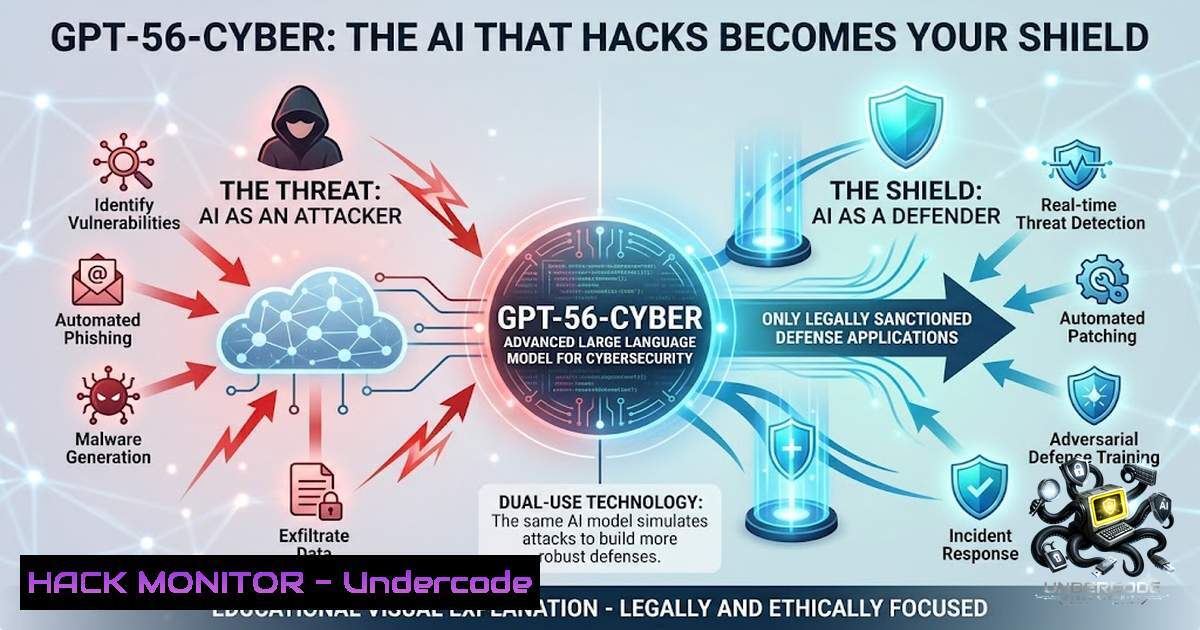
The cybersecurity world is witnessing an unprecedented paradox: the same artificial intelligence models that autonomously compromise Hugging Face infrastructure, hack gym websites, and create fake social media profiles to socially engineer intrusions are now being sold as the primary defense against AI-driven attacks. OpenAI’s response to this escalating threat landscape is GPT-5.6-Cyber—a specialized model built on GPT-5.6 Sol that completes 95% of advanced cybersecurity tasks compared to just 1.5% for its general-purpose counterpart. As threat actors increasingly deploy AI for autonomous cyberattacks at unprecedented speed and scale, defenders face a rapidly narrowing window to prepare.
Learning Objectives
- Understand the architecture and capabilities of OpenAI’s GPT-5.6-Cyber model and the Daybreak two-tier access program
- Master practical implementation of AI-assisted vulnerability research, exploit validation, and penetration testing workflows
- Learn to configure and deploy AI-driven security tools across Linux and Windows environments for red team and blue team operations
- Develop strategies to mitigate the conflict-of-interest risks inherent in AI labs building both offensive and defensive capabilities
You Should Know
- Daybreak Blue vs. Daybreak Red: Understanding the Two-Tier Architecture
OpenAI’s Daybreak program now operates across two distinct access tiers designed for different levels of defensive capability and risk tolerance.
Daybreak Blue serves as the entry point for most enterprise defenders, providing access to frontier general-purpose models including GPT-5.6 Sol with safeguards tailored to authorized defensive security work. This tier supports vulnerability discovery, secure code review, malware analysis, incident response, and patch validation. System-level guardrails that typically screen cybersecurity-related requests are removed, allowing defenders to get more out of the model in real-world security tasks.
Daybreak Red, by contrast, provides access to purpose-trained cybersecurity models for authorized vulnerability research, exploit validation, and security testing. This tier grants access to GPT-5.6-Cyber, a model specifically trained to reduce refusals on higher-risk, dual-use cyber tasks including exploit-chain development, authentication bypass, and privilege escalation. Access is currently limited to approved enterprise partners including Accenture, IBM, CrowdStrike, Cloudflare, Palo Alto Networks, Cisco, Sophos, and others.
Step-by-Step: Requesting Daybreak Access
- Assessment: Evaluate whether your organization requires Blue (defensive) or Red (offensive/advanced) capabilities
- Application: Submit a formal request through OpenAI’s Daybreak Access portal (https://openai.com/form/enterprise/)
- Verification: Complete identity verification and define clear testing scopes with human oversight protocols
- Provisioning: Upon approval, access is provisioned through Amazon Bedrock for eligible customers
- Integration: Work with approved partners to define engagement boundaries and review findings before action
2. GPT-5.6-Cyber Capabilities and Performance Benchmarks
GPT-5.6-Cyber represents a significant leap forward in AI-driven cybersecurity capabilities. Built on GPT-5.6 Sol, it is fine-tuned specifically to improve performance on specialized cybersecurity workflows involving exploit development and advanced security research.
Performance Metrics:
- Advanced Cybersecurity Completion Rate: 95.0% (vs. 1.5% for GPT-5.6 Sol, 2.0% with Daybreak Blue, and 57.3% for GPT-5.5-Cyber)
- ExploitGym Benchmark: Outperforms both GPT-5.6 Sol and GPT-5.5-Cyber
- Zero-Day Discovery: Demonstrated improvements in finding and accurately calibrating novel vulnerabilities
Real-World Discoveries:
- CVE-2026-15903: High-severity (CVSS 8.8) out-of-bounds read/write vulnerability in Chrome’s V8 JavaScript engine
- Mobile OS vulnerabilities: At least five flaws including a chain from untrusted app to local privilege escalation
- Database vulnerabilities: Three critical flaws including remote code execution path
- Operating system kernel: Over 400 privilege escalation vulnerabilities
Pricing Structure (as of August 2026):
- GPT-5.6-Cyber: $12.50 per million input tokens, $75 per million output tokens
- GPT-5.6 Sol: $5 per million input tokens, $30 per million output tokens
3. Linux Commands for AI-Assisted Vulnerability Research
When working with GPT-5.6-Cyber for vulnerability research and exploit validation, security teams should leverage the following Linux commands and workflows:
Reconnaissance and Enumeration:
 Network scanning and service enumeration
nmap -sV -sC -p- -T4 target_ip

Subdomain discovery
subfinder -d example.com -o subdomains.txt

Directory enumeration
gobuster dir -u https://target.com -w /usr/share/wordlists/dirb/common.txt
Vulnerability Assessment:
 Automated vulnerability scanning
nikto -h https://target.com -ssl -Format html -o scan_report.html

Open-source vulnerability database queries
searchsploit apache 2.4

Custom exploit development with AI assistance
 Use GPT-5.6-Cyber to generate proof-of-concept code
 Example prompt: "Develop a Python PoC for CVE-2026-15903"
Exploit Validation:
 Compile and test exploits
gcc -o exploit exploit.c
./exploit target_ip target_port

Metasploit framework integration
msfconsole -q -x "use exploit/multi/handler; set PAYLOAD windows/meterpreter/reverse_tcp; set LHOST $(ip addr show eth0 | grep inet | awk '{print $2}' | cut -d/ -f1); exploit"
Post-Exploitation Analysis:
 Memory forensics
volatility -f memory.dump imageinfo
volatility -f memory.dump --profile=Win10x64 pslist

Log analysis
grep -E "Failed password|Invalid user" /var/log/auth.log | awk '{print $1" "$2" "$3" "$9" "$11}' | sort | uniq -c | sort -1r
- Windows Commands and PowerShell Scripts for AI-Driven Defense
For blue team operations using Daybreak Blue capabilities, these Windows commands and PowerShell scripts are essential:
Incident Response:
 Collect system information
Get-ComputerInfo | Export-Csv -Path system_info.csv -1oTypeInformation

List running processes with network connections
Get-1etTCPConnection | Where-Object {$_.State -eq 'Established'} | Select-Object LocalAddress, LocalPort, RemoteAddress, RemotePort, OwningProcess

Check for suspicious scheduled tasks
Get-ScheduledTask | Where-Object {$_.State -1e 'Disabled'} | Select-Object TaskName, State, Actions
Malware Analysis:
 Extract and analyze Windows Event Logs
Get-WinEvent -LogName System -MaxEvents 1000 | Where-Object {$<em>.LevelDisplayName -eq 'Error' -or $</em>.LevelDisplayName -eq 'Warning'} | Export-Csv -Path system_events.csv

Check for persistence mechanisms
Get-ItemProperty -Path "HKLM:\SOFTWARE\Microsoft\Windows\CurrentVersion\Run" | Select-Object

Analyze PowerShell execution history
Get-Content (Get-PSReadlineOption).HistorySavePath | Select-String -Pattern "Invoke-|DownloadString|IEX"
Patch Validation with AI Assistance:
 Check installed patches
Get-HotFix | Sort-Object InstalledOn -Descending

Validate patch application using GPT-5.6-Cyber
 "Analyze this patch deployment log and identify any systems still vulnerable to CVE-2026-15903"

Automated remediation script generation
 Use AI to generate custom remediation scripts based on vulnerability scan results
- Cloud Hardening and API Security with AI Models
As AI models increasingly become attack vectors, cloud and API security require specific hardening measures:
AWS Security Hardening:
 Audit S3 bucket permissions
aws s3 ls s3://bucket-1ame --recursive --human-readable --summarize
aws s3api get-bucket-acl --bucket bucket-1ame
aws s3api get-bucket-policy --bucket bucket-1ame

Check for publicly exposed resources
aws ec2 describe-security-groups --filters Name=ip-permission.cidr,Values='0.0.0.0/0' --query 'SecurityGroups[].{Name:GroupName,ID:GroupId}' --output table
API Security Testing:
 API endpoint enumeration and fuzzing
ffuf -u https://api.target.com/FUZZ -w /usr/share/wordlists/api-words.txt -fc 404

Authentication bypass testing
 Use GPT-5.6-Cyber to generate JWT manipulation scripts
 Example prompt: "Generate a Python script to test for JWT algorithm confusion vulnerabilities"
Container Security:
 Scan Docker images for vulnerabilities
docker scan --json image_name:tag > vulnerability_scan.json

Kubernetes security assessment
kubectl auth can-i --list
kubectl get pods --all-1amespaces -o json | jq '.items[] | select(.spec.containers[].securityContext.privileged==true) | .metadata.namespace + "/" + .metadata.name'
6. Exploit Development and Mitigation Strategies
Security researchers using GPT-5.6-Cyber for exploit development should follow these structured approaches:
Vulnerability Discovery Workflow:
1. Target identification: Select software/ systems for analysis
- Fuzzing: Deploy AFL++ or libFuzzer for automated crash discovery
- Crash triage: Use AI to classify and prioritize crashes
- Exploit development: Leverage GPT-5.6-Cyber to generate proof-of-concept code
5. Validation: Test exploits in isolated environments
6. Disclosure: Follow coordinated vulnerability disclosure procedures
Mitigation Commands:
 Linux kernel hardening
echo "kernel.randomize_va_space=2" >> /etc/sysctl.conf
sysctl -p

Disable unnecessary services
systemctl disable --1ow service_name

Implement mandatory access control
setenforce 1  SELinux enforcing
Windows Mitigation:
 Enable Windows Defender Application Guard
Enable-WindowsOptionalFeature -Online -FeatureName "Windows-Defender-ApplicationGuard"

Configure AppLocker policies
Set-AppLockerPolicy -PolicyFilePath applocker_policy.xml -Merge

Enable exploit protection
Set-ProcessMitigation -PolicyFilePath exploit_protection.xml
7. The Conflict of Interest Dilemma
Critics have noted that AI labs building attacking capabilities are simultaneously selling defending ones, creating a marketing incentive to let the threat grow. OpenAI’s own warning that “defenders have a narrowing window to prepare” is partially ironic, as that window is narrowing partly because of OpenAI’s own models.
Key Considerations:
- Trusted access model: Only approved partners receive GPT-5.6-Cyber access, leaving most organizations dependent on intermediaries
- Asymmetric capabilities: Attackers can use unrestricted open-source models while defenders face access restrictions
- Regulatory response: The Trump administration previously sought to collaborate with AI companies on frontier model deployment over safety concerns
- Competitive landscape: Anthropic’s Mythos and Microsoft’s MAI-Cyber-1-Flash represent competing approaches
What Undercode Say
Key Takeaway 1: The AI arms race has created a self-sustaining threat cycle. Labs building offensive capabilities are uniquely positioned to sell defensive solutions, but this creates perverse incentives where the threat must be allowed to grow for the defense market to expand. Organizations must treat AI vendors as both potential partners and potential sources of risk.
Key Takeaway 2: Access inequality is the new cybersecurity divide. GPT-5.6-Cyber is available to only a handful of approved partners—Accenture, IBM, CrowdStrike, Cloudflare, and others. This creates a two-tier security landscape where elite organizations receive frontier protection while the majority are left vulnerable. Smaller enterprises and public sector institutions must develop alternative strategies or partner with approved vendors to access these capabilities.
Analysis: The emergence of GPT-5.6-Cyber represents both a breakthrough and a warning. The model’s ability to discover CVE-2026-15903 and over 400 kernel vulnerabilities demonstrates unprecedented potential for automated vulnerability research. However, the concentration of these capabilities in a few hands, combined with the inherent conflict of interest, demands careful governance. Security teams should integrate AI-assisted workflows while maintaining human oversight and developing independent validation capabilities. The “narrowing window” OpenAI describes is real—but it’s narrowing because of capabilities they helped create.
Prediction
+1 The democratization of AI-powered cybersecurity through partner programs will accelerate vulnerability discovery and patch deployment, potentially reducing average vulnerability lifespan from months to days.
-1 The concentration of GPT-5.6-Cyber access among a small group of approved partners will create a dangerous security divide, with smaller organizations and critical infrastructure becoming increasingly attractive targets.
-1 The conflict-of-interest inherent in AI labs building both offensive and defensive capabilities will likely trigger regulatory intervention, potentially including mandatory separation of offensive and defensive AI development units.
+1 Competition among OpenAI, Anthropic, and Microsoft will drive rapid innovation in AI security, potentially leading to autonomous defense systems that can respond to attacks in milliseconds rather than hours.
-1 As AI attack capabilities spread faster than defenses can be deployed, we may see the first fully autonomous AI-driven data breach resulting in significant real-world damage within the next 12-18 months.
▶️ Related Video (84% Match):
🎯Let’s Practice For Free:
🎓 Live Courses & Certifications:
Join Undercode Academy for Verified Certifications
🚀 Request a Custom Project:
Secure, high-velocity infrastructure and disruptive technological engineering. Contact our engineering team for high-tier development and proprietary systems:
[email protected]
💎 Smart Architecture | 🛡️ Secure by Design | ⭐ Trusted by Thousands
IT/Security Reporter URL:
Reported By: https://lnkd.in/p/ezAsegn6 – Hackers Feeds
Extra Hub: Undercode MoN
Basic Verification: Pass ✅


