
Listen to this Post
Introduction
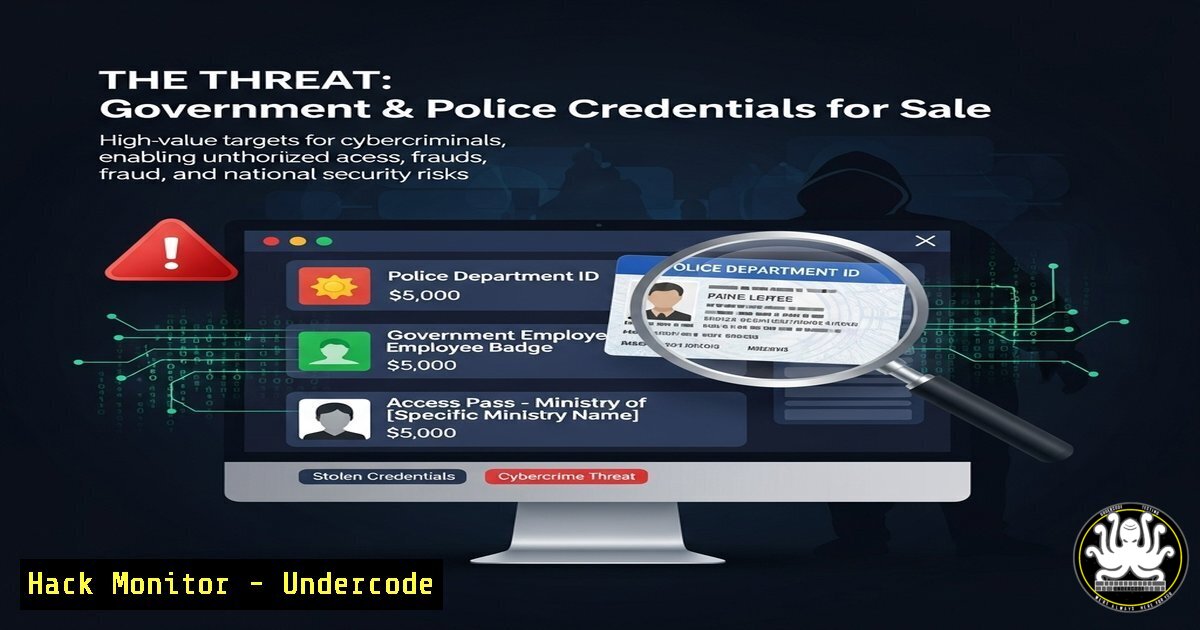
Cybercriminals are selling compromised government and law enforcement email accounts for as little as $40 on underground forums. These credentials, verified as active, allow threat actors to impersonate officials, manipulate investigations, and issue fraudulent legal requests. This breach exposes critical vulnerabilities in institutional security and highlights the urgent need for stronger authentication measures.
Learning Objectives
- Understand how stolen credentials are exploited in cybercrime.
- Learn defensive strategies to protect sensitive accounts.
- Discover tools to detect credential leaks and unauthorized access.
You Should Know
1. How Criminals Verify Stolen Credentials
Threat actors confirm the validity of stolen accounts using:
– License plate lookup systems (e.g., CARFAX law enforcement panels)
– Tech company data request portals (e.g., Facebook’s Law Enforcement Portal)
Step-by-Step:
1. Criminals purchase credentials from dark web markets.
- They log in and verify access via screenshots.
- Use open-source intelligence (OSINT) tools to confirm identities.
-
Detecting Credential Leaks with Have I Been Pwned
Check if your organization’s emails are exposed using:
curl -s "https://haveibeenpwned.com/api/v3/breachedaccount/[email protected]" -H "hibp-api-key: YOUR_API_KEY"
How It Works:
- The API checks breach databases for leaked credentials.
- Replace `[email protected]` with the target email and `YOUR_API_KEY` with a valid API key.
- Enforcing Multi-Factor Authentication (MFA) in Active Directory
Prevent unauthorized access by enforcing MFA via PowerShell:
Set-MsolUser -UserPrincipalName "[email protected]" -StrongAuthenticationRequirements @{State="Enabled"}
Steps:
1. Connect to Azure AD (`Connect-MsolService`).
2. Apply MFA to critical accounts.
3. Monitor login attempts with `Get-AzureADAuditSignInLogs`.
- Blocking Dark Web Traffic with Firewall Rules
Restrict access to known dark web markets using Linuxiptables:sudo iptables -A OUTPUT -d 5mv3fohrlbubwzfy.onion -j DROP
Explanation:
- Blocks outbound connections to `.onion` domains.
- Update the list with known malicious TOR endpoints.
5. Detecting Phishing Subpoenas with Email Filters
Use Procmail to flag suspicious legal requests:
:0
 ^Subject:.(subpoena|urgent|law enforcement)
/dev/null
Implementation:
- Filters emails with legal keywords.
- Logs or quarantines potential phishing attempts.
- Monitoring for Unusual Data Requests with SIEM
Configure Splunk alerts for anomalous data access:
index=firewall dest_ip="tech_company_portal" action=allow
| stats count by user
| where count > 3
Why It Matters:
- Detects repeated access to sensitive portals.
- Triggers alerts for investigation.
7. Securing Cloud APIs with OAuth Scrutiny
Prevent API abuse by validating OAuth tokens:
import requests
token = "OAUTH_TOKEN"
response = requests.get("https://api.domain.com/data", headers={"Authorization": f"Bearer {token}"})
if response.status_code != 200:
log_suspicious_activity(token)
Best Practices:
- Restrict API permissions.
- Monitor abnormal token usage.
What Undercode Say
- Key Takeaway 1: A $40 FBI email can lead to million-dollar breaches—credential security is non-negotiable.
- Key Takeaway 2: Proactive monitoring and MFA could have prevented these sales.
Analysis:
The sale of law enforcement credentials underscores systemic weaknesses in authentication protocols. While tech firms comply with “official” data requests, few verify the legitimacy of the sender. Organizations must adopt zero-trust frameworks, real-time breach monitoring, and strict access controls to mitigate such threats.
Prediction
If unchecked, credential markets will expand, enabling more sophisticated impersonation attacks. Deepfake-aided fraud, AI-generated legal documents, and automated phishing campaigns will escalate, forcing governments to mandate stricter identity verification laws.
Final Thought:
Cybercriminals are weaponizing trust—defending against them requires more than just passwords. It demands relentless vigilance.
🎯Let’s Practice For Free:
IT/Security Reporter URL:
Reported By: Michael Tchuindjang – Hackers Feeds
Extra Hub: Undercode MoN
Basic Verification: Pass ✅


