
Listen to this Post
Introduction:
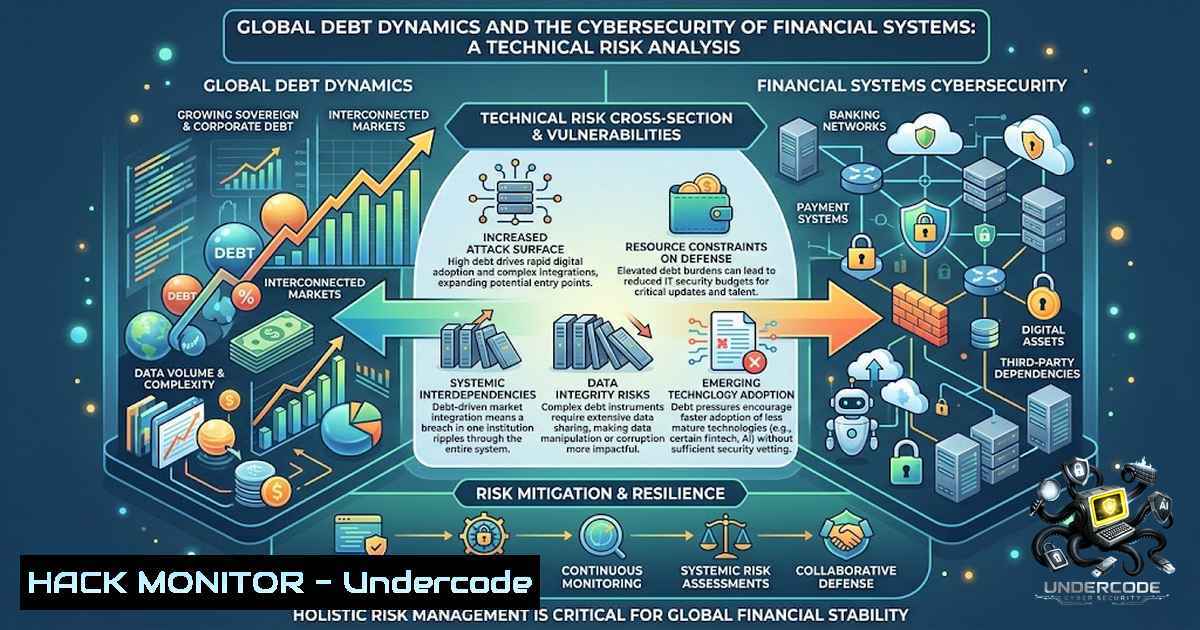
The global financial ecosystem is undergoing a tectonic shift as the composition of U.S. Treasury buyers transforms, with traditional reserve-style anchors like China and Japan reducing their holdings while custody and fund hubs assume a larger role. This transition introduces a new layer of risk to the world’s benchmark asset, where price-insensitive buyers are replaced by price-sensitive entities, fundamentally altering the marginal pricing mechanism. For cybersecurity professionals, this evolving financial landscape presents both threats and opportunities, as the digital infrastructure supporting these transactions becomes increasingly critical and vulnerable to exploitation.
Learning Objectives & Secrets:
- Objective 1: Understand the Three Forces Driving Treasury Yields. Master the bull case built on growth and AI capital bids, the bear case of sticky inflation, and the second bear case concerning debt supply and dollar credibility.
- Objective 2: Secret Tip – Monitor Foreign Holdings in Real-Time. Leverage public APIs and data scraping to track shifts in foreign Treasury holdings, identifying early warning signals of market stress.
- Objective 3: Secret Tip – Model Price-Sensitive Buyer Behavior. Develop algorithms to simulate the impact of price-sensitive buyers on benchmark asset pricing, using Python and financial libraries.
You Should Know:
- Setting Up a Real-Time Treasury Yield Monitoring Dashboard
To track the three forces driving yields, you need a robust monitoring system. This step-by-step guide leverages open-source tools to create a dashboard that pulls data from the U.S. Department of the Treasury and FRED.
- Step 1: Install Required Tools. On Linux, run
sudo apt-get install python3-pip python3-venv git. On Windows, install Python from the official site and usepip install requests pandas plotly dash. - Step 2: Create a Virtual Environment. Use `python3 -m venv treasury_env` and activate it with `source treasury_env/bin/activate` (Linux) or `treasury_env\Scripts\activate` (Windows).
- Step 3: Fetch Treasury Data. Write a Python script using the `requests` library to pull data from the Treasury API:
response = requests.get('https://api.fiscaldata.treasury.gov/services/api/fiscal_service/v1/accounting/od/avg_interest_rates'). - Step 4: Visualize with Dash. Create a simple Dash app to display yield curves and historical trends. Add alerts for when yields breach critical thresholds.
- Step 5: Schedule Updates. Use `cron` on Linux or Task Scheduler on Windows to run the script daily and update your dashboard.
2. Analyzing Foreign Holdings with Public Data
Understanding the composition of foreign buyers requires scraping and parsing data from various sources.
- Step 1: Access TIC Data. The Treasury International Capital (TIC) system provides monthly data. Use `curl -O https://ticdata.treasury.gov/Publish/mfh.txt` to download the latest holdings.
– Step 2: Parse with Python. Write a script to parse the fixed-width format: `import pandas as pd; df = pd.read_fwf(‘mfh.txt’, widths=[…])`. - Step 3: Identify Trends. Calculate moving averages for China and Japan to detect long-term shifts.
df['China_MA'] = df['China'].rolling(window=12).mean(). - Step 4: Set Alerts. Create a threshold alert that triggers when a country’s holdings drop below a certain level, using
if df['China'].iloc[-1] < 1000000000000: send_alert(). - Step 5: Visualize. Use Matplotlib to plot holdings over time, highlighting key events like the 2008 financial crisis.
3. Automating Market Sentiment Analysis
The bull and bear cases are often driven by sentiment. Implement a sentiment analysis pipeline on financial news.
- Step 1: Choose a News API. Sign up for NewsAPI or use the GDELT Project for global news coverage.
- Step 2: Extract Keywords. Focus on “inflation,” “debt ceiling,” and “AI investment.” Use
requests.get('https://newsapi.org/v2/everything?q=treasury+yields'). - Step 3: Analyze Sentiment. Use the `TextBlob` library:
from textblob import TextBlob; blob = TextBlob(article_title); sentiment = blob.sentiment.polarity. - Step 4: Correlate with Yields. Merge sentiment scores with yield data and calculate correlation coefficients.
- Step 5: Deploy as a Service. Containerize with Docker and deploy on AWS or Azure for real-time analysis.
4. Simulating Price-Sensitive Buyer Impact
To understand the marginal pricing shift, build a simulation model.
- Step 1: Define Buyer Types. Create classes for price-insensitive (reserve) and price-sensitive (hedge fund) buyers.
- Step 2: Set Auction Parameters. Use Python’s `numpy` to simulate auction bids with different demand curves.
- Step 3: Run Monte Carlo Simulations. Generate thousands of scenarios where the proportion of price-sensitive buyers increases.
- Step 4: Analyze Volatility. Measure the standard deviation of clearing prices across simulations.
- Step 5: Generate Reports. Use Jupyter Notebook to produce visual reports of your findings.
5. Securing Financial Data Pipelines
As we rely more on data pipelines, securing them becomes paramount.
- Step 1: Encrypt Data in Transit. Always use HTTPS and consider implementing mTLS for internal services.
- Step 2: Implement API Key Rotation. Use HashiCorp Vault to manage and rotate API keys automatically.
- Step 3: Monitor for Anomalies. Set up intrusion detection systems (IDS) like Snort to monitor network traffic.
- Step 4: Use Secure Coding Practices. Avoid SQL injection by using parameterized queries:
cursor.execute("SELECT FROM holdings WHERE country = %s", (country,)). - Step 5: Regular Audits. Perform weekly security audits on your data pipelines, checking for unauthorized access.
6. Mitigating Cloud Vulnerabilities in Fintech Applications
If you’re deploying financial apps in the cloud, ensure proper hardening.
- Step 1: Implement IAM Best Practices. Follow the principle of least privilege. Use AWS IAM roles with specific permissions.
- Step 2: Enable CloudTrail Logging. For AWS, enable CloudTrail to log all API calls for auditing.
- Step 3: Use Security Groups. Restrict inbound traffic to only necessary IP ranges.
- Step 4: Enable WAF. Use AWS WAF to protect against common web exploits like SQL injection and XSS.
- Step 5: Perform Vulnerability Scanning. Use tools like Nessus or OpenVAS to scan your cloud instances regularly.
What Undercode Say:
- Key Takeaway 1: The shift from price-insensitive to price-sensitive buyers introduces new volatility and risk to the global financial system, requiring robust monitoring and security measures.
- Key Takeaway 2: The interplay between AI capital bids and Treasury yields presents a unique opportunity for cyber-financial analysts to develop predictive models and secure the underlying data infrastructure.
The analysis reveals that as the composition of Treasury buyers changes, so does the attack surface for cyber threats. Price-sensitive buyers are more likely to react to real-time data, making the integrity and security of that data critical. The use of AI in capital allocation further complicates this, as algorithmic trading and sentiment analysis become integral to market dynamics. Cybersecurity professionals must now consider the financial markets as a high-value target for state-sponsored and criminal actors. Implementing robust encryption, anomaly detection, and regular security audits are non-1egotiable. The convergence of finance and technology demands a new breed of security analyst who understands both domains. This is not just about protecting data; it’s about protecting the trust and stability of the global economy. The secrets lie in real-time monitoring, predictive modeling, and proactive security measures. The cost of failure is not just financial loss but a potential systemic crisis.
Prediction:
- +1: The integration of AI in financial analysis will lead to more sophisticated security tools that can predict and mitigate cyber threats in real-time.
- -1: The increasing reliance on digital pipelines for financial data will create new vulnerabilities, leading to high-profile breaches in the financial sector.
- +1: The shift in buyer composition will drive innovation in secure, decentralized financial systems, reducing reliance on single points of failure.
- -1: Geopolitical tensions may lead to cyber warfare targeting financial infrastructure, with Treasury markets being a prime target.
- +1: The demand for cybersecurity professionals with financial domain expertise will surge, creating new career opportunities and specialized training programs.
- -1: Without proper regulation and security standards, the adoption of AI in finance could lead to market manipulation and systemic risk.
- +1: Collaborative efforts between governments and private sectors will enhance the resilience of financial systems against cyber threats.
- -1: The current pace of cybersecurity investment in financial institutions may not keep up with the evolving threat landscape, leading to a major incident within the next decade.
▶️ Related Video (82% Match):
🎯Let’s Practice For Free:
🎓 Live Courses & Certifications:
Join Undercode Academy for Verified Certifications
🚀 Request a Custom Project:
Secure, high-velocity infrastructure and disruptive technological engineering. Contact our engineering team for high-tier development and proprietary systems:
[email protected]
💎 Smart Architecture | 🛡️ Secure by Design | ⭐ Trusted by Thousands
IT/Security Reporter URL:
Reported By: https://lnkd.in/p/eytdfjaB – Hackers Feeds
Extra Hub: Undercode MoN
Basic Verification: Pass ✅


