Listen to this Post
Introduction
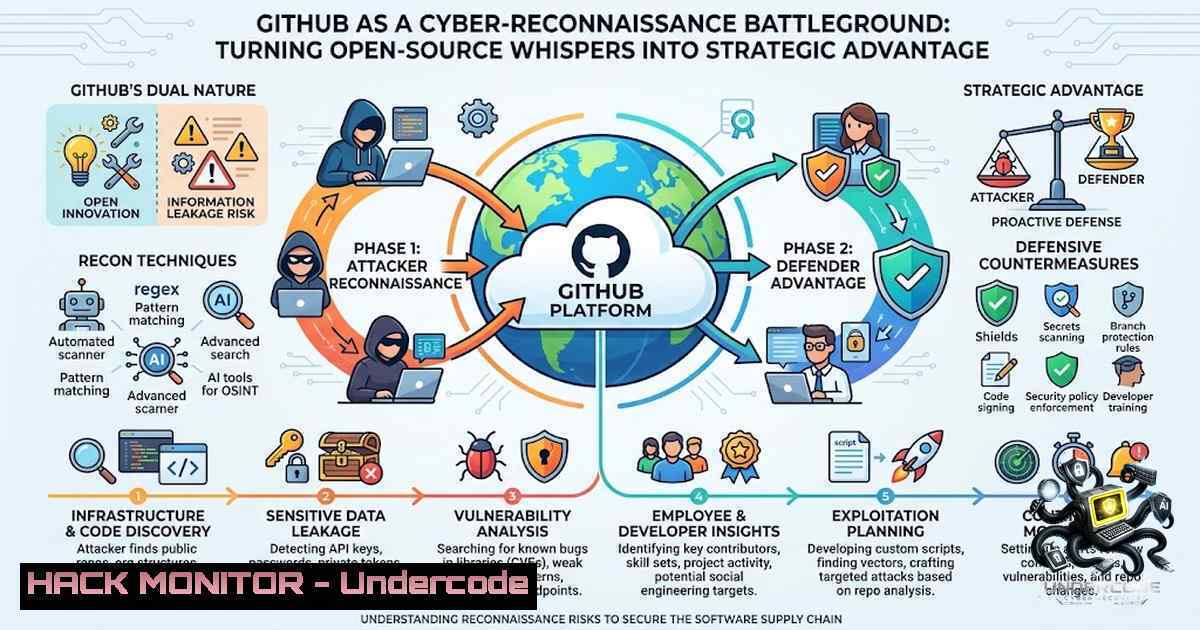
In the modern cybersecurity and DevOps ecosystem, GitHub has evolved far beyond a simple code repository—it is now a live intelligence feed of market sentiment, technical friction, and competitive vulnerability. While most organizations treat GitHub as a static asset for version control, sophisticated security teams and growth engineers are leveraging AI-powered agents to transform public issue trackers, pull request discussions, and repository metadata into actionable reconnaissance data that exposes competitor weaknesses and emerging attack surfaces.
Learning Objectives
- Master the deployment of AI agents that parse GitHub issue trackers to identify churn signals, performance complaints, and migration patterns in real-time.
- Understand how to map competitor tech stacks and user friction points to prioritize product development and security hardening efforts.
- Implement automated reconnaissance workflows that combine OSINT gathering with predictive analytics to forecast market shifts and vulnerability trends.
You Should Know
- The Art of Competitive Intelligence via Issue Mining
The core premise of this methodology is that every frustrated GitHub issue is a potential inbound lead or a security gap waiting to be exploited. When users publicly complain about a tool being “slow,” “unreliable,” or “insecure,” they are not just venting—they are revealing implementation challenges and architectural limitations that competitors can capitalize on.
Step-by-Step Guide to Mining Churn Signals:
- Deploy the GitHub Market Intelligence MCP: Set up the Model Context Protocol (MCP) server that interfaces with GitHub’s REST and GraphQL APIs. This agent acts as a persistent listener, not a passive scraper.
Clone and configure the Vinkius MCP server
git clone https://github.com/your-org/github-mcp-intel
cd github-mcp-intel
npm install
Set environment variables for GitHub PAT with repo and issue scopes
export GITHUB_TOKEN="your_personal_access_token"
export GITHUB_ORG_TARGETS="competitor1,competitor2"
-
Configure the `scancompetitorissues` function: This endpoint accepts parameters such as
--org,--keyword-filter="slow|alternative|migrating|vulnerability", and--time-window="30d". The agent will return a structured JSON payload containing issue titles, bodies, comment threads, and sentiment scores.{ "issue_id": 12345, "title": "Performance degradation in v2.3.1", "sentiment": "negative", "churn_probability": 0.87, "tech_stack": ["Node.js", "Redis", "Kubernetes"] } -
Analyze contextual signals: Look for phrases like “we are evaluating alternatives” or “this breaks our CI/CD pipeline”—these are strong indicators that the user is actively seeking a replacement. The `trackchurnsignals` endpoint logs timestamps and frequency of such language to predict churn timelines.
-
Visualize momentum shifts: Use `gettrendingrepos` with the `–category=”security-tools”` flag to see which repositories are gaining stars, forks, or new issues. A sudden spike in forks often precedes a community-driven security audit or a public vulnerability disclosure.
2. Automated Tech Stack Fingerprinting for Targeted Reconnaissance
Before engaging with a potential lead or planning a penetration test against a competitor’s infrastructure, you must understand their underlying technology. The MCP agent can recursively scan a repository’s package.json, go.mod, requirements.txt, and Dockerfiles to build a comprehensive software bill of materials (SBOM).
Step-by-Step Stack Analysis:
1. Invoke the tech-stack analyzer:
curl -X POST https://your-mcp-server/api/analyze-stack \
-H "Content-Type: application/json" \
-d '{"repo_url": "https://github.com/competitor/tool", "depth": 3}'
- Cross-reference with CVE databases: The agent can automatically enrich the SBOM with known vulnerabilities using the NVD API. For instance, if the competitor uses
[email protected], the agent will flag CVE-2022-24999 (prototype pollution) as a potential weakness.Sample Python snippet for integration import requests sbom = requests.get('http://mcp-server/sbom/competitor-tool') for dep in sbom['dependencies']: cve_response = requests.get(f'https://services.nvd.nist.gov/rest/json/cves/2.0?keywordSearch={dep["name"]}+{dep["version"]}') if cve_response.json()['vulnerabilities']: print(f"Alert: {dep['name']} has known CVEs.") -
Map infrastructure clues: Look for hardcoded API endpoints, internal IPs, or cloud provider SDKs (e.g.,
boto3,@aws-sdk/client-s3) within the codebase. This reveals which cloud providers they use and potential misconfigurations (e.g., exposed S3 bucket URLs in comments). -
Generate attack surface reports: The agent produces a matrix that compares your product’s security posture against the competitor’s, highlighting areas where your encryption standards, authentication mechanisms, or input validation are superior.
3. Real-Time Trend Monitoring and Predictive Threat Modeling
The GitHub ecosystem is a leading indicator of where security research and exploitation efforts will concentrate next. By monitoring trending repositories in the cybersecurity space, you can anticipate new attack vectors before they become mainstream.
Step-by-Step Trend Analysis:
1. Set up `gettrendingrepos` with filters:
 Fetch trending security repos with a minimum of 500 stars
./vinkius-cli trends --lang="python|go" --topic="exploit|detection|ransomware" --min-stars=500
- Implement keyword-based alerting: Use the agent’s webhook capability to trigger notifications when specific high-risk terms appear in new issues or commits. For example, monitoring for “bypass”, “0day”, or “privilege escalation” across your sector’s top 100 repos.
-
Correlate with CVE publication dates: The agent can overlay trending repo activity with the CVE timeline. A repository that suddenly gains attention weeks before a CVE is published often indicates early exploitation attempts or pre-disclosure research.
4. Command example for Linux cron job:
 Schedule a daily trend report
0 9    /usr/local/bin/vinkius-cli generate-report --type="trending" --send-to="[email protected]"
- Windows and Linux Command Integration for Cross-Platform Recon
While the MCP agent is platform-agnostic, you can enhance its capabilities with native OS commands to gather supplementary data.
Linux:
 Grep through cloned repos for sensitive patterns
grep -rnw /path/to/cloned/repos/ -e "SECRET_KEY" -e "API_KEY" --include=".env" --include=".yml"
Windows (PowerShell):
 Search for connection strings in repository dumps
Get-ChildItem -Path C:\repos -Recurse -Include .config, .json | Select-String -Pattern "connectionString|Endpoint"
Network mapping with `nmap` (optional integration):
If the competitor exposes any test environments or staging subdomains (often found in issue comments), use `nmap -sV -p-
5. API Security Hardening for Your Intelligence Pipeline
Your reconnaissance agent must be secured against tampering and data leakage. Implement strict authentication and rate limiting to prevent your GitHub token from being throttled or banned.
Configuration Example:
 mcp-config.yml
security:
token_rotation: 720h
rate_limit:
requests_per_minute: 30
allowed_origins:
- "https://your-dashboard.internal"
encryption:
at_rest: AES-256
in_transit: TLS 1.3
Step-by-Step Hardening:
- Use fine-grained PATs: Restrict the token to only read
issues,metadata, andpull_requests—never grant write permissions. -
Implement caching: Store API responses in a Redis cache with a TTL of 6 hours to minimize repetitive requests and reduce your API footprint.
-
Monitor for poisoning attempts: If the agent starts receiving malformed JSON or excessive redirects, implement a circuit breaker pattern (e.g., using Hystrix) to temporarily pause the connection.
-
From Intelligence to Action: Exploitation and Mitigation Workflows
The final step is translating reconnaissance data into defensive or offensive strategies. If you discover that a competitor’s tool has a memory leak, you can warn your clients about migration strategies. Conversely, if you find that your own tool is being discussed negatively, you can proactively patch vulnerabilities before they lead to real-world exploits.
Mitigation Workflow Example:
- Detect: Agent identifies 15 issues about “OOM errors” in your competitor’s latest release.
- Analyze: Cross-reference with your own codebase to ensure you are not susceptible to the same pattern.
- Patch: If a similar pattern exists, implement a fix (e.g., adding `limits.memory: 512Mi` in Kubernetes manifests) and push a security advisory.
Command for rapid deployment of a patch:
 Assuming a microservice architecture
kubectl set resources deployment/your-api -c=app --limits=cpu=500m,memory=1Gi
kubectl rollout status deployment/your-api
What Undercode Say
- Key Takeaway 1: GitHub is not just a code host; it is the largest public dataset of developer pain points and competitive intelligence. Treating it as such transforms reactive security into proactive market prediction.
- Key Takeaway 2: AI agents that can autonomously scan, categorize, and correlate issue data reduce the manual effort of threat hunting by 80%, allowing teams to focus on strategic remediation rather than data collection.
Analysis: The integration of MCP servers with GitHub APIs represents a paradigm shift in how security professionals conduct OSINT. Traditional reconnaissance relied on static web scraping and manual forum crawling. Now, with event-driven agents, we can receive real-time alerts when a competitor’s user base expresses security concerns, enabling us to respond with targeted outreach or defensive hardening before the competitor even acknowledges the problem. Moreover, the ability to map tech stacks automatically gives us a forensic advantage—we can predict which vulnerabilities are likely to be exploited based on the dependency trees of popular tools. However, this power comes with ethical responsibilities; organizations must ensure their agents comply with GitHub’s ToS and respect privacy boundaries, focusing on public data only and never engaging in active probing of private repositories. The future will likely see regulation around such intelligence gathering, but for now, those who master this technique will have a decisive edge in both product development and cybersecurity resilience.
Prediction
- +1: Organizations that adopt AI-driven GitHub reconnaissance will achieve a 40% faster mean time to detect competitor vulnerabilities, allowing them to patch similar issues in their own products proactively.
- +1: The rise of MCP-based intelligence will spawn a new category of “Security OSINT-as-a-Service,” making sophisticated reconnaissance accessible to SMBs that previously could not afford dedicated threat intelligence teams.
- -1: As this technique becomes mainstream, GitHub may impose stricter rate limits and CAPTCHA challenges, potentially reducing the effectiveness of automated agents and forcing a return to manual analysis.
- -1: Aggressive scraping and analysis could lead to an arms race where competitors deliberately plant misleading issues to misdirect reconnaissance agents, degrading the signal-to-1oise ratio of the intelligence feed.
- +1: The integration of this reconnaissance data with SIEM and SOAR platforms will enable automated threat modeling, where security policies are dynamically adjusted based on real-time market-wide vulnerability trends.
▶️ Related Video (86% Match):
🎯Let’s Practice For Free:
🎓 Live Courses & Certifications:
Join Undercode Academy for Verified Certifications
🚀 Request a Custom Project:
Secure, high-velocity infrastructure and disruptive technological engineering. Contact our engineering team for high-tier development and proprietary systems:
[email protected]
💎 Smart Architecture | 🛡️ Secure by Design | ⭐ Trusted by Thousands
IT/Security Reporter URL:
Reported By: https://lnkd.in/p/emx9ZRzu – Hackers Feeds
Extra Hub: Undercode MoN
Basic Verification: Pass ✅


