Listen to this Post
Introduction:
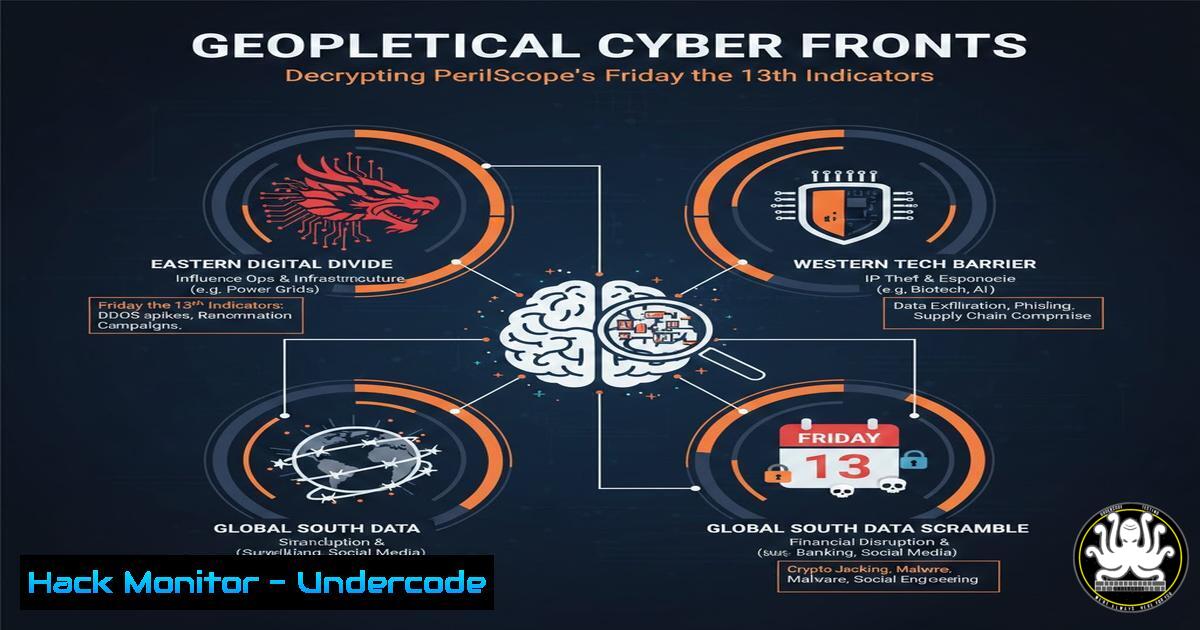
On a symbolic Friday the 13th in Munich, the “PerilScope® Chancellor View” brief highlighted a less visible but equally critical front of alliance credibility: the electromagnetic and digital battlefield. When heads of state discuss deterrence, they are increasingly referring to cyber resilience. This article deconstructs the technical scaffolding required to validate such geopolitical threat models, translating the concept of “alliance load” into log sources, SIEM queries, and hardening checklists that security teams can implement today.
Learning Objectives:
- Objective 1: Analyse geopolitical threat intelligence and map it to MITRE ATT&CK techniques.
- Objective 2: Implement host-level logging and detection rules for espionage-grade adversaries.
- Objective 3: Harden cloud and endpoint configurations against hybrid attacks targeting critical infrastructure.
You Should Know:
- Threat Modelling “Alliance Credibility” with Sigma & YARA
A “credibility under load” scenario implies adversaries are stress‑testing defence networks. We simulate this by creating detection logic for data‑staging behaviours commonly observed before diplomatic leaks.
Step‑by‑step guide – Building a YARA rule for diplomatic document exfiltration:
1. Create a YARA rule to detect `.docx` and `.pdf` files containing NATO/EU geopolitical keywords combined with unusual entropy (packing):
rule PerilScope_Diplo_Leak {
meta:
author = "ERPI Threat Intel"
description = "Detects staged diplomatic documents with high entropy"
strings:
$kw1 = "classified" nocase
$kw2 = "NATO restricted" nocase
$kw3 = "EU limited" nocase
$archive = { 50 4B 03 04 } // ZIP header (docx)
$pdf = { 25 50 44 46 } // PDF header
condition:
($kw1 or $kw2 or $kw3) and (filesize < 5MB) and (1 of ($archive, $pdf))
}
2. Deploy the rule via Velociraptor or Redline across Windows endpoints to hunt for staging folders.
3. On Linux mail relays, use `inotifywait` to monitor `/var/spool/` for bulk encrypted outbound files:
inotifywait -m /var/spool/exim/input -e create |
while read path action file; do
echo "[bash] Potential exfiltration staging: $file" >> /var/log/perilscope.log
done
- Windows Event Log Deep Dive – LSASS Protection Against Credential Dumping
Alliance systems often fall due to stolen privileged accounts. Friday the 13th is a prime time for pass‑the‑hash attacks.
Step‑by‑step guide – Enabling PPL and monitoring Event ID 10 (ProcessAccess):
1. Enable LSA Protection via Registry:
reg add "HKLM\SYSTEM\CurrentControlSet\Control\Lsa" /v RunAsPPL /t REG_DWORD /d 1 /f
2. Reboot and verify with `Get-WinEvent`:
Get-WinEvent -FilterHashtable @{LogName='Security'; ID=10; StartTime=(Get-Date).AddHours(-24)} |
Where-Object {$_.Properties[bash].Value -match "lsass.exe"} |
Format-List TimeCreated, Properties
3. Create a scheduled task to email alert on any `SeDebugPrivilege` misuse. This directly addresses adversary techniques used to undermine “Chancellor‑level” trust.
- Linux Hardening for “Friday the 13th” – Securing SSH and Auditd
Geopolitical load often manifests as SSH brute‑force from allied nations’ IP spaces.
Step‑by‑step guide – geo‑fencing SSH with nftables and auditd persistence:
1. Block non‑EU/NATO SSH traffic except from specific embassies:
nft add table inet geopolitical_filter
nft add chain inet geopolitical_filter input { type filter hook input priority 0\; }
nft add rule inet geopolitical_filter input tcp dport 22 ip saddr { 192.168.1.0/24, 10.0.0.0/8 } accept
nft add rule inet geopolitical_filter input tcp dport 22 counter drop
2. Persist rules: `nft list ruleset > /etc/nftables/geopol.conf` and enable nftables.
3. Auditd rule for `/etc/ssh/sshd_config` tampering:
-w /etc/ssh/sshd_config -p wa -k ssh_key_backdoor
4. Reload auditd: `auditctl -R /etc/audit/rules.d/ssh-hardening.rules`
- API Security – PerilScope Threat Intelligence Feed Ingestion
To operationalise the “Chancellor View”, you need a secure API pipeline for IoCs.
Step‑by‑step guide – Hardening a FastAPI threat‑feed endpoint:
1. Implement rate limiting and JWT validation:
from fastapi import FastAPI, Depends, HTTPException
from slowapi import Limiter, _rate_limit_exceeded_handler
from slowapi.util import get_remote_address

limiter = Limiter(key_func=get_remote_address)
app = FastAPI()
app.state.limiter = limiter
app.add_exception_handler(429, _rate_limit_exceeded_handler)

@app.get("/v1/threat/")
@limiter.limit("100/hour")
async def fetch_threats(api_key: str = Depends(validate_api_key)):
 Return PerilScope indicators
2. Run behind a reverse proxy (Nginx) with `proxy_protocol` to preserve real client IPs.
3. Use `fail2ban` to jail IPs sending malformed JWT tokens.
- Cloud Hardening – AWS S3 Geofencing for Sensitive Reports
European Risk Policy Institute’s cloud assets must not leak despite alliance political pressure.
Step‑by‑step guide – S3 bucket policy restricting access to NATO member states:
1. Deny access unless the request originates from specific countries (using CloudFront with Geo‑Restriction or AWS WAF).
2. Example WAFv2 IP‑set rule limiting to EU/NATO countries (ISO codes):
{
"Name": "GeoRestriction",
"Priority": 1,
"Statement": {
"GeoMatchStatement": {
"CountryCodes": ["US", "GB", "DE", "FR", "IT", "ES", "PL", "NL", "BE", "EL", "PT", "CZ", "DK", "HU", "LT", "LV", "EE", "FI", "SE", "NO", "IS", "CA", "TR"]
}
},
"Action": {"Allow": {}},
"VisibilityConfig": { ... }
}
3. Enable S3 server access logging and Athena queries to detect anomalous access patterns from outside this list.
- Vulnerability Exploitation – CVE‑2023‑4911 (Looney Tunables) on Diplomatic Linux Servers
Allies may target GNU C Library’s buffer overflow in `glibc` to gain root on policy servers.
Step‑by‑step guide – Detection and mitigation:
1. Check glibc version: `ldd –version`.
2. Test for vulnerability (research environment only):
env -i "GLIBC_TUNABLES=glibc.malloc.mxfast=glibc.malloc.mxfast=A" /bin/true
3. If segfault occurs, patch immediately: sudo apt update && sudo apt install libc6.
4. Implement eBPF‑based detection with Tracee:
docker run --name tracee -it --rm \
--pid=host --cgroupns=host --privileged \
-v /etc/os-release:/etc/os-release-host:ro \
aquasec/tracee:full -t e=glibc_tunables_overflow
What Undercode Say:
- Key Takeaway 1: Geopolitical statements are leading indicators of cyber operations; detection rules should be pre‑positioned before a Friday the 13th diplomatic summit.
- Key Takeaway 2: Alliance credibility is not solely political—it is encoded in properly configured PPL flags, S3 geofencing, and auditd watches. Without technical credibility, diplomatic deterrence is hollow.
Analysis: PerilScope® underscores that European risk institutes must evolve from reading threat reports to deploying `nftables` and YARA rules based on current geopolitical friction. The convergence of APT activity and diplomatic calendars demands that blue teams correlate Windows Event ID 1102 (audit log cleared) with NATO meeting schedules. This is proactive defence: not waiting for an alert, but hardening infrastructure when the Chancellor boards the plane to Munich.
Prediction:
By 2026, geopolitical risk platforms will embed SIEM connectors natively. We will see automated S3 bucket lockdowns triggered by NATO “CRITIC” alerts, and SSH access will be temporarily revoked from non‑allied IP spaces during high‑level talks. The “Friday the 13th” effect will transition from superstition to a standardised threat model in ISO 27001 controls.
▶️ Related Video (90% Match):
🎯Let’s Practice For Free:
IT/Security Reporter URL:
Reported By: Ivan Savov – Hackers Feeds
Extra Hub: Undercode MoN
Basic Verification: Pass ✅


