Listen to this Post
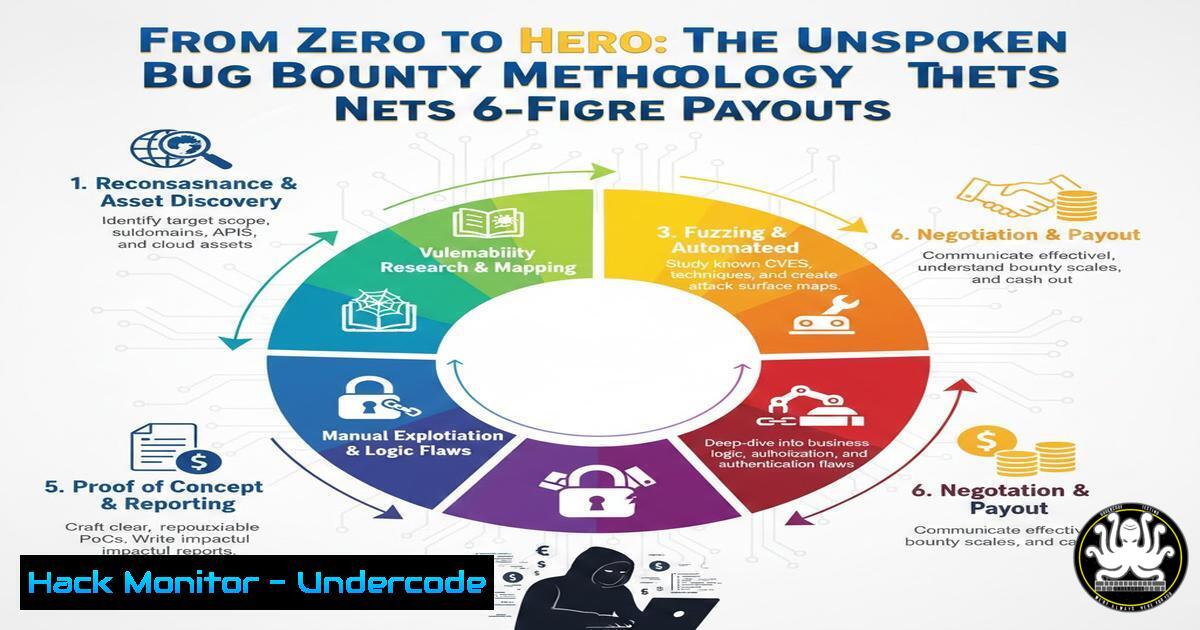
Introduction:
In the high-stakes arena of cybersecurity, bug bounty programs have emerged as a critical line of defense, allowing organizations to crowdsource their security testing from elite ethical hackers. As evidenced by top hunters like Syed Shahwar Ahmad, whose work is recognized by Microsoft, Google, and NASA, success is not accidental but the result of a meticulous, professional methodology. This article deconstructs the essential technical workflow that transforms a casual observer into a recognized security expert, detailing the tools, commands, and systematic approaches required to uncover critical vulnerabilities.
Learning Objectives:
- Master the reconnaissance and asset enumeration phase to identify the broadest possible attack surface.
- Learn to automate initial vulnerability detection and prioritize targets for manual, in-depth testing.
- Understand the professional process of crafting exploit proofs-of-concept and submitting reports that guarantee validation and bounty payouts.
You Should Know:
1. Phase 1: Advanced Reconnaissance & Asset Discovery
The foundation of any successful bug bounty hunt is a comprehensive map of the target’s digital footprint. This goes beyond the main domain to include forgotten subdomains, cloud storage, and exposed source code repositories.
Step‑by‑step guide:
Subdomain Enumeration: Use tools like `amass` and `subfinder` to passively and actively discover subdomains.
amass enum -passive -d target.com -o amass_passive.txt
subfinder -d target.com -o subfinder.txt
Combine and sort results: `cat amass_passive.txt subfinder.txt | sort -u > all_subs.txt`
Service Discovery: Probe discovered hosts with `httpx` to find live web servers and technologies.
cat all_subs.txt | httpx -silent -title -tech-detect -status-code -o live_targets.json`
Finding Exposed Assets: Use `gau` (GetAllURLs) to fetch historical URLs from AlienVault OTX and Common Crawl, and `waybackurls` to parse Wayback Machine data.
echo "target.com" | gau | tee gau_urls.txt
echo "target.com" | waybackurls >> historical_urls.txt
2. Phase 2: Automated Vulnerability Scanning & Triage
Automation separates hobbyists from professionals. The goal is to filter thousands of endpoints down to a handful of promising candidates for manual testing.
Step‑by‑step guide:
Parameter Fuzzing: Use `ffuf` to fuzz for hidden parameters, which are common sources of SQLi, SSRF, and Open Redirects.
ffuf -w /usr/share/wordlists/parameters.txt -u "https://target.com/page?FUZZ=test" -fs 4242
Nuclei for Pattern-Based Detection: Run the `nuclei` engine with curated templates to catch low-hanging fruit.
cat live_targets.txt | nuclei -t /path/to/nuclei-templates/ -severity medium,high,critical -o nuclei_findings.txt
Prioritization: Manually review automated findings. Prioritize endpoints handling authentication, file uploads, payment processing, or administrative functions.
3. Phase 3: Manual Deep-Dive & Exploitation
This is where creativity and deep technical knowledge apply. Focus on business logic flaws, complex chained exploits, and novel vulnerability classes that scanners miss.
Step‑by‑step guide:
Testing for Business Logic Flaws: Intercept a legitimate process (e.g., adding items to a cart, applying coupons) in Burp Suite. Attempt to manipulate sequences, re-use tokens, or alter state-changing parameters.
Chaining Vulnerabilities: Example: An open redirect (/redirect?url=evil.com) might be low severity. Chain it with a post-authentication reflected XSS to steal sessions: /redirect?url=data:text/html,<script>alert(document.cookie)</script>.
API Testing: For modern SPAs and mobile apps, target the API endpoints. Test for insecure direct object references (IDOR), missing rate limits, and mass assignment.
curl -H "Authorization: Bearer <token>" https://api.target.com/v1/user/12345
 Change `12345` to another user's ID to test for IDOR.
4. Phase 4: Proof-of-Concept (PoC) Development & Documentation
A clear, reproducible PoC is non-negotiable for a successful bounty submission. It demonstrates impact and reduces back-and-forth with triagers.
Step‑by‑step guide:
- Document Environment: Clearly state the target URL, tested parameters, and browser/tool versions used.
- Create a Minimal Reproducer: Write a concise script or provide a step-by-step manual reproduction path.
For an SSRF, provide a Python script that uses the vulnerable endpoint to fetch internal metadata: `http://169.254.169.254/latest/meta-data/`.
Include screenshots and Burp Suite request/response pairs.
- Explain Impact: Quantify the risk. Does it lead to data breach, account takeover, or system compromise? Use CVSS scoring if appropriate.
-
Phase 5: Mastering the Reporting & Communication Workflow
The report is your final product. Its quality directly influences payout speed and amount.
Step‑by‑step guide:
- Follow Program Guidelines: Adhere strictly to the bounty platform’s (HackerOne, Bugcrowd) or the organization’s private policy scope and rules.
2. Structure Your Report:
Clear and specific (e.g., “Blind SQL Injection in `/api/filter` parameter leading to database dump”).
Summary: One-paragraph overview.
Steps to Reproduce: Numbered, detailed, and foolproof.
Impact: Clearly stated business risk.
Mitigation Suggestion: Propose a fix (e.g., “Use parameterized queries”).
3. Professional Communication: Be prompt, polite, and professional in all follow-up discussions. Provide additional information when requested.
What Undercode Say:
- Methodology Over Tools: Success is 20% tools and 80% process and mindset. A systematic, documented approach is infinitely more valuable than a collection of random scripts.
- Depth Beats Breadth: Finding ten critical vulnerabilities in one program is more lucrative and reputation-building than finding one low-severity issue across ten programs. Deep specialization is key.
- Analysis: The post from a recognized expert underscores that bug bounty hunting has evolved into a formalized cybersecurity discipline. It’s no longer a game of luck but a structured security assessment conducted in a production environment. The recognition from tier-1 organizations validates this as a legitimate career path and a vital component of modern security ecosystems. The real skill lies not in running a tool, but in knowing where to point it, how to interpret noisy results, and how to chain subtle findings into a demonstrable, high-impact exploit.
Prediction:
Bug bounty programs will continue to mature and become integral to enterprise SDLCs, moving from ad-hoc crowdsourcing to continuous, platform-integrated security testing. We will see a rise in “vertical” bounty platforms focused on specific industries (e.g., DeFi, MedTech) and increased adoption of real-time, automated bounty payout systems triggered by validated findings. Furthermore, the skillset of top bounty hunters will increasingly overlap with and feed into the demand for offensive security engineers in areas like AI/ML security and cloud infrastructure penetration testing, formalizing this path as a premier training ground for cybersecurity talent.
▶️ Related Video (82% Match):
🎯Let’s Practice For Free:
IT/Security Reporter URL:
Reported By: Syed Shahwar – Hackers Feeds
Extra Hub: Undercode MoN
Basic Verification: Pass ✅


