Listen to this Post
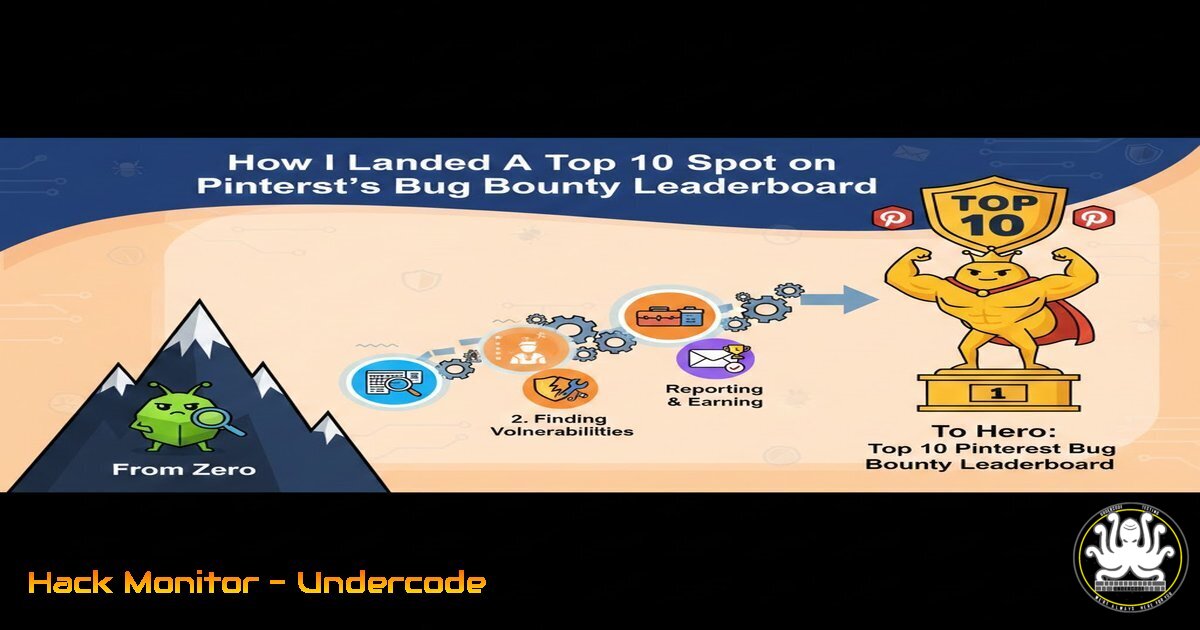
Introduction:
Bug bounty hunting has evolved from a niche hobby into a professional cybersecurity discipline, offering researchers financial rewards and recognition for identifying vulnerabilities in enterprise systems. This article deconstructs the mindset and methodology of a successful hunter, translating a social media victory post into a actionable blueprint for finding critical security flaws in web applications, APIs, and mobile platforms.
Learning Objectives:
- Understand the foundational setup and reconnaissance required for effective bug bounty hunting.
- Master the core tools and techniques for manual testing and exploitation.
- Learn to automate repetitive tasks to scale your testing and validate complex vulnerability chains.
You Should Know:
- Building Your Cyber Arsenal: Essential Tools & Setup
Before hunting, you need a controlled lab. This involves configuring your attack machine, typically a Linux distribution like Kali or Parrot OS, and setting up critical proxy tools.
Step‑by‑step guide explaining what this does and how to use it.
Step 1: Establish a Proxy Interceptor. Burp Suite Community or Professional is the industry standard. Configure your browser (e.g., Firefox) to use Burp as a local proxy (usually 127.0.0.1:8080). Install Burp’s CA certificate to intercept HTTPS traffic.
Linux Command to launch Burp: `java -jar -Xmx4g /path/to/burpsuite_pro.jar`
Step 2: Set Up for Automation. Install Python 3 and key libraries for scripting.
Linux Commands:
sudo apt update && sudo apt install python3 python3-pip -y
pip3 install requests beautifulsoup4
Step 3: Environment Isolation. Use virtual machines or Docker containers to isolate your testing tools from your host OS, preventing accidental damage and keeping your research environment clean.
2. The Hunter’s Mindset: Reconnaissance & Enumeration
Recon is about discovering all accessible surfaces of a target. It’s the most critical phase for finding obscure entry points.
Step‑by‑step guide explaining what this does and how to use it.
Step 1: Passive Subdomain Enumeration. Use tools to find subdomains without directly touching the target.
Linux Commands:
 Using subfinder
subfinder -d target.com -o subdomains.txt
 Using amass (passive mode)
amass enum -passive -d target.com -o amass_subs.txt
Step 2: Service Discovery. Probe discovered hosts to identify running services and open ports.
Linux Command (using nmap):
nmap -sV -sC -oA initial_scan -iL subdomains.txt
Step 3: Content Discovery. Hunt for hidden directories, files, and APIs.
Linux Command (using ffuf):
ffuf -w /usr/share/wordlists/dirb/common.txt -u https://target.com/FUZZ -recursion -e .php,.json,.bak
- Manual Exploitation Core: Access Control & Logic Flaws
Automated tools miss logic bugs. This is where manual testing in Burp Suite shines, especially for IDOR (Insecure Direct Object Reference), privilege escalation, and business logic vulnerabilities.
Step‑by‑step guide explaining what this does and how to use it.
Step 1: Map the Application. Manually browse every feature while Burp logs all requests. Use the Target > Site map tab to understand the structure.
Step 2: Test for IDOR. For any API endpoint like GET /api/v1/user/123/profile, change the `123` to another number (e.g., 124). If you access another user’s data, you’ve found a critical IDOR.
Step 3: Test Parameter Tampering. Send a POST request for a cart checkout, then change the `”price”: 100` parameter to `”price”: 1` in Burp Repeater. If the server accepts it, you’ve found a parameter tampering flaw.
4. API Security Deep Dive: Beyond RESTful Assumptions
Modern apps rely heavily on APIs (GraphQL, REST, SOAP). They are prime targets for data exposure, mass assignment, and broken authentication.
Step‑by‑step guide explaining what this does and how to use it.
Step 1: Discover API Endpoints. Look for /graphql, /api/v1/, /swagger.json, and /api-docs. Use tools like `kiterunner` to brute-force API routes.
Step 2: Analyze GraphQL Introspection. If enabled, introspection leaks the entire API schema. Send a POST query:
{ __schema { types { name fields { name } } } }
Step 3: Test for Batch Operations. Look for endpoints that accept arrays. Try sending `[{“id”:your_id},{“id”:victim_id}]` to see if you can perform actions on multiple users’ data.
- Automating the Hunt: Python Scripting for Validation & Efficiency
Automation separates part-time hunters from leaders. Scripts can fuzz parameters, test hundreds of subdomains for a specific header misconfiguration, or chain low-severity bugs into a critical finding.
Step‑by‑step guide explaining what this does and how to use it.
Step 1: Script to Check for Security Headers. A simple Python script can identify missing `Content-Security-Policy` or `X-Frame-Options` headers.
import requests
targets = ['https://api.target.com', 'https://admin.target.com']
for url in targets:
resp = requests.get(url)
if 'X-Frame-Options' not in resp.headers:
print(f'[!] Missing X-Frame-Options on: {url}')
Step 2: Automate Parameter Fuzzing. Use Burp’s “Logger++” extension or a custom script with the `requests` library to automatically replace parameter values with payloads from a list.
- Mastering the Platforms: Navigating Bugcrowd, HackerOne, and More
Each bug bounty platform (HackerOne, Bugcrowd, Intigriti) has its own rules, scope, and reporting culture. Success requires understanding these nuances.
Step‑by‑step guide explaining what this does and how to use it.
Step 1: Read the Scope Meticulously. The program’s policy defines what’s in and out of bounds. Testing out-of-scope assets can get you banned.
Step 2: Write Exploit-Driven Reports. A good report includes: Clear , Detailed Steps (with screenshots/curl commands), Impact Analysis, and a Suggested Fix. Provide a Proof-of-Concept (PoC) script or video.
Example curl command for a report:
curl -H "Authorization: Bearer YOUR_TOKEN" https://api.target.com/v1/user/5678/data
Step 3: Triage Effectively. Prioritize testing on new assets, recent code changes, and less-common file extensions (.json, .asmx) which often have weaker protections.
What Undercode Say:
- Consistency Over Genius: The top hunters are not necessarily the best coders; they are the most methodical and persistent. Daily reconnaissance and testing, even for an hour, yield more results than sporadic deep dives.
- Automation is Your Force Multiplier: The key to scaling your efforts isn’t just finding one bug, but creating systems that can test for entire classes of bugs across thousands of endpoints. The real skill is writing the script that finds the next 10 vulnerabilities after you discover the first one manually.
Prediction:
The bug bounty landscape will rapidly integrate AI, not just for defense but for offensive hunting. We’ll see the rise of AI-assisted reconnaissance agents that can map attack surfaces, hypothesize vulnerability chains, and even draft initial bug reports. This will raise the bar for human hunters, shifting the focus towards complex, logic-based vulnerabilities that require deep human intuition and understanding of business context. Platforms will increasingly favor hunters who can demonstrate exploit chains that turn multiple medium-severity issues into a narrative of critical impact, moving beyond one-click vulnerabilities.
▶️ Related Video (76% Match):
🎯Let’s Practice For Free:
IT/Security Reporter URL:
Reported By: Mohammed Ashraf – Hackers Feeds
Extra Hub: Undercode MoN
Basic Verification: Pass ✅


