Listen to this Post
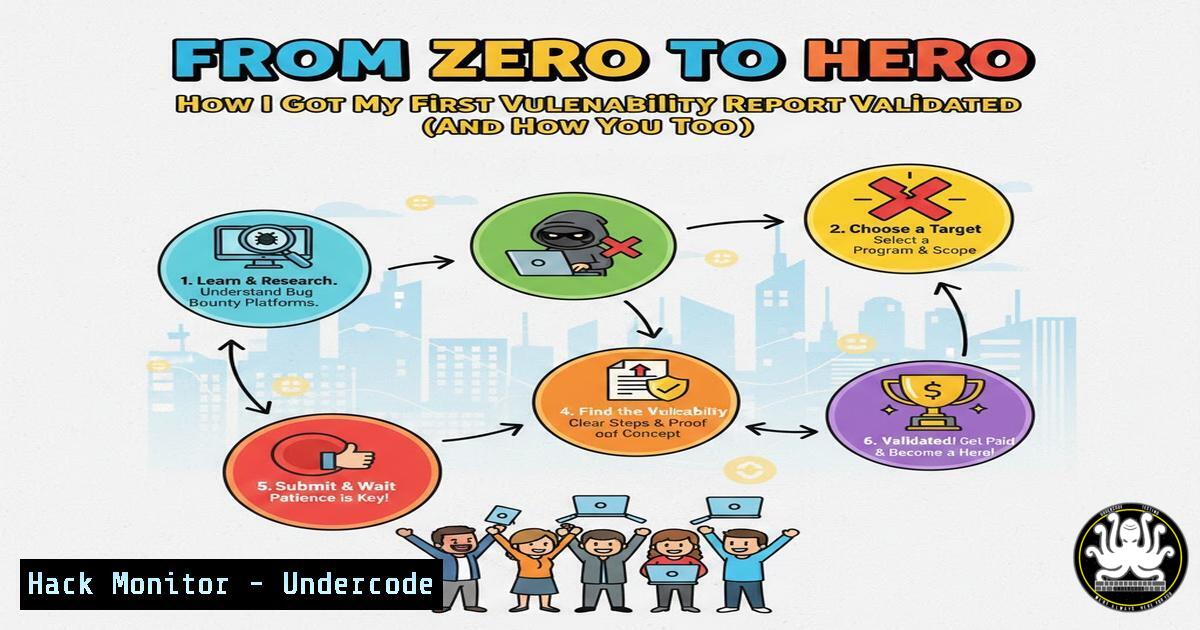
Introduction:
The journey from learning cybersecurity concepts to having a real-world impact is a pivotal moment for any aspiring professional. This article deconstructs the process of responsible vulnerability disclosure, using a recent success story as a framework to provide a actionable blueprint for newcomers. We’ll move beyond theory into the practical tools, methodologies, and communication protocols that transform observation into a validated security contribution.
Learning Objectives:
- Understand the end-to-end workflow of ethical vulnerability discovery and reporting.
- Learn essential reconnaissance and validation commands for both Linux and Windows environments.
- Master the structure and content of a professional vulnerability report that gets results.
You Should Know:
1. The Reconnaissance Phase: Mapping the Attack Surface
Before a single line of a report is written, meticulous reconnaissance is required. This involves ethically probing the target system to understand its structure, services, and potential weak points.
Step‑by‑step guide explaining what this does and how to use it.
Subdomain Enumeration: Use tools like `subfinder` or `amass` to discover all associated subdomains of a target organization.
 Linux Example using subfinder
subfinder -d targetcompany.com -o subdomains.txt
Service Discovery: Employ `Nmap` to identify open ports and running services on discovered hosts or primary domains.
 Basic Nmap scan
nmap -sV -sC targetcompany.com -oA nmap_initial
 For Windows, use the same command in PowerShell if Nmap is installed, or use native cmdlets:
Test-NetConnection -ComputerName targetcompany.com -Port 443
Web Application Fingerprinting: Tools like `Wappalyzer` (browser extension) or `whatweb` can identify technologies (e.g., WordPress 6.0, Apache 2.4.49).
whatweb https://targetcompany.com
2. Vulnerability Identification & Validation
Finding a potential flaw is only the first step; confirming it is critical to avoid false positives.
Step‑by‑step guide explaining what this does and how to use it.
Manual Testing: For logic flaws (e.g., IDOR, Broken Access Control), use a proxy tool like Burp Suite or OWASP ZAP to intercept and modify requests.
Automated Scanning (Cautiously): Use authenticated scanners like Burp Suite Professional or Nessus on authorized targets only. For open-source, `Nikto` can identify generic web server issues.
nikto -h https://targetcompany.com
Proof-of-Concept (PoC) Creation: You must demonstrate the impact. For a misconfigured S3 bucket, show you can list/upload files. For XSS, craft a harmless payload that triggers an alert.
<script>alert(document.domain)</script>
Never exfiltrate real user data.
3. Crafting the Professional Vulnerability Report
A valid finding can be rejected if poorly communicated. Structure is key.
Step‑by‑step guide explaining what this does and how to use it.
1. Clear “Reflected Cross-Site Scripting (XSS) on https://app.targetcompany.com/search endpoint”.
2. Executive Summary: One-paragraph description of the risk.
3. Technical Details:
Vulnerability Type: CWE-79: Cross-Site Scripting.
Affected URL/Endpoint: Full URL.
Steps to Reproduce: Numbered, detailed, and unambiguous steps.
Proof of Concept: Include screenshots, video links (unlisted), or curl commands.
curl -X GET "https://app.targetcompany.com/search?query=<script>alert(1)</script>"
Impact Analysis: What could an attacker achieve? (e.g., session hijacking).
4. Remediation Recommendation: Suggest concrete fixes (e.g., implement output encoding using OWASP ESAPI libraries).
4. Finding the Right Contact & Responsible Disclosure
Submitting the report to the correct team is half the battle.
Step‑by‑step guide explaining what this does and how to use it.
1. Check for a Security Policy: Look for `/security.txt` or `/.well-known/security.txt` on the root domain.
2. Look for Bug Bounty Programs: Platforms like HackerOne, Bugcrowd, or Open Bug Bounty.
3. Email Contact: If no program exists, find a `security@` or `contact@` email. Use PGP encryption if a public key is provided.
4. Set a Responsible Disclosure Timeline: A typical approach is to give the organization 90 days to fix the issue before considering public disclosure, as per Google Project Zero’s guidelines.
5. Post-Submission: Following Up and Handling Responses
Professionalism after submission builds your reputation.
Step‑by‑step guide explaining what this does and how to use it.
1. Send a Receipt Acknowledgement: Request a confirmation that the report was received.
2. Be Patient and Professional: Allow time for triage. Avoid aggressive follow-ups.
3. Collaborate on Clarification: Be prepared to provide additional details or test patches on a staging environment if requested.
4. Accept the Outcome Gracefully: Whether they award a bounty, offer thanks, or dispute the finding, maintain a constructive tone.
6. Building Your Public Profile as a Researcher
A validated report is a career asset.
Step‑by‑step guide explaining what this does and how to use it.
1. Request Permission: Ask the security team if you can list the finding on your LinkedIn (as in the source post) or professional blog.
2. Write a Case Study: Detail your methodology without exposing sensitive data. This demonstrates your analytical process to potential employers.
3. Update Your Profiles: Add “Responsible Disclosure Contributor” or similar to your LinkedIn headline and list the company (with permission) in your experience section as a freelance security tester.
4. Engage with the Community: Share lessons learned in forums without boasting.
7. Continuous Skill Hardening: Recommended Training & Labs
The journey doesn’t stop with one report.
Step‑by‑step guide explaining what this does and how to use it.
Platforms for Practice:
PortSwigger Web Security Academy: Free, in-depth labs on all major web vulnerabilities.
TryHackMe & HackTheBox: Structured paths and penetration testing labs.
PentesterLab & DVWA (Damn Vulnerable Web App): For hands-on exercises.
Essential Knowledge Expansion:
Networking: Solidify understanding of TCP/IP, HTTP/S protocols, and DNS.
Cloud Security (AWS/Azure/GCP): Learn about common misconfigurations in S3, IAM, and storage accounts.
API Security: Practice testing GraphQL and REST APIs using tools like Postman and Burp Suite.
What Undercode Say:
- The Gateway to a Career: A single validated vulnerability report is more impactful for an entry-level SOC analyst resume than multiple uncertified courses. It provides tangible, verifiable proof of skill.
- Process Over Luck: Success stems from a systematic, documented methodology, not random luck. This repeatable process is what the industry values.
This case underscores a shift in cybersecurity hiring, where demonstrable practical skill is increasingly prized alongside formal credentials. For organizations, it highlights the immense value of establishing clear, welcoming channels for external researchers—turning potential adversaries into a cost-effective extension of the security team. The researcher’s public sharing of success, with appropriate discretion, fuels a positive cycle that attracts more talent to the field and raises overall security standards.
Prediction:
The normalization of public vulnerability disclosure acknowledgments, as seen in this post, will accelerate. We will see LinkedIn and professional networks develop more structured features for showcasing validated CVEs and responsible disclosures, integrating them directly with digital professional certifications. This will further democratize security research, forcing organizations worldwide to improve their external vulnerability management programs or risk public reputational damage from unfixed, reported flaws. The line between “aspiring analyst” and “practicing professional” will blur, based on public contribution history.
🎯Let’s Practice For Free:
IT/Security Reporter URL:
Reported By: Noufal Radhitya – Hackers Feeds
Extra Hub: Undercode MoN
Basic Verification: Pass ✅


