
Listen to this Post
Introduction:
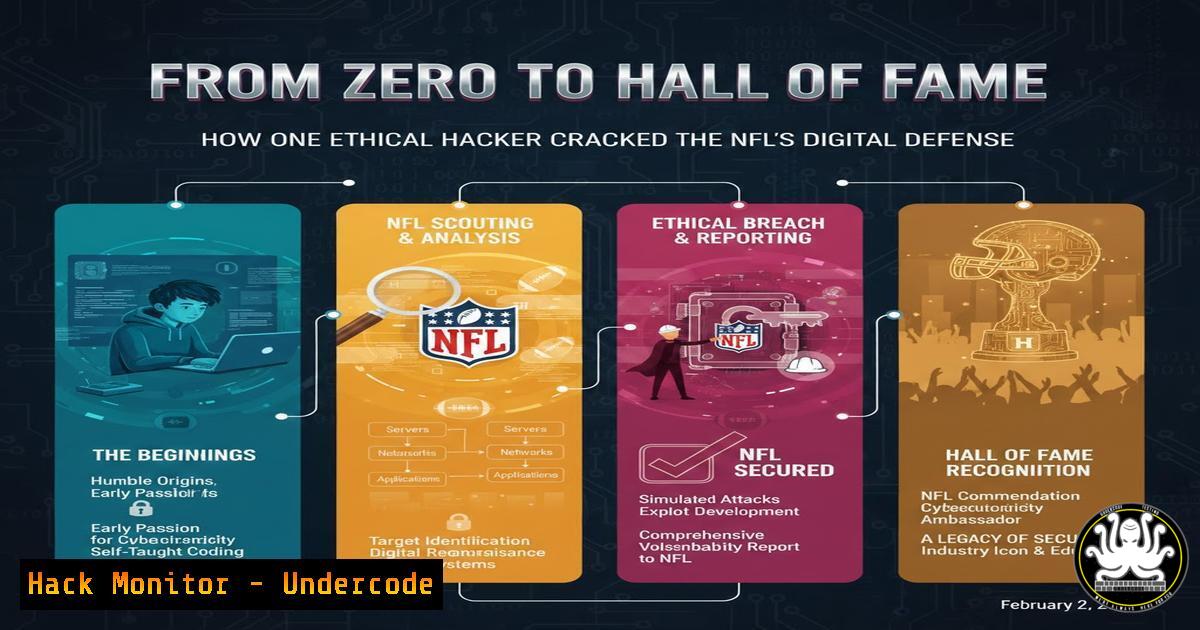
The journey from security enthusiast to recognized professional often hinges on the principled practice of responsible disclosure. This process, where researchers privately report critical vulnerabilities to organizations, is the cornerstone of modern bug bounty programs. The recent recognition of a researcher in the NFL’s Hall of Fame for a P1 (Priority 1) flaw underscores the high-stakes, collaborative nature of securing even the most prominent entities against digital threats.
Learning Objectives:
- Understand the structure and purpose of official Vulnerability Disclosure Programs (VDPs) and bug bounties.
- Learn the step-by-step methodology for responsible disclosure, from discovery to public recognition.
- Gain technical insight into common reconnaissance and testing techniques used to identify critical vulnerabilities in web assets.
You Should Know:
1. Navigating the Vulnerability Disclosure Landscape
Before probing a single endpoint, ethical hackers must operate within legal and ethical frameworks. Official Vulnerability Disclosure Programs (VDPs) provide a sanctioned channel for reporting security flaws. Platforms like HackerOne, Bugcrowd, or an organization’s dedicated security page outline strict rules of engagement, defining in-scope assets, testing limitations, and reporting procedures.
Step‑by‑step guide explaining what this does and how to use it.
1. Identify the Target Program: Search for `
 vulnerability disclosure program` or <code>[bash] bug bounty</code>. For the NFL, this would be the "NFL Vulnerability Disclosure Program" hosted on HackerOne.
2. Review the Scope Document: Meticulously read what systems (e.g., <code>.nfl.com</code>, specific subdomains) are in-scope and, crucially, what is out-of-scope (e.g., physical attacks, social engineering, third-party services).
3. Understand the Rules: Note prohibited actions like Denial-of-Service testing, brute-forcing accounts, or accessing/extracting excessive data. Violating these terms can nullify your report and lead to legal action.
4. Document Your Environment: Keep detailed notes of your testing IP address, tools used, and timestamps. This log is vital for the organization to validate your activities.

<h2 style="color: yellow;">2. The Art of Reconnaissance and Asset Discovery</h2>

The attack surface is often larger than it appears. Comprehensive reconnaissance uncovers hidden subdomains, APIs, and forgotten development servers that may harbor the most critical vulnerabilities.

Step‑by‑step guide explaining what this does and how to use it.
1. Passive Enumeration: Use tools to discover subdomains without directly touching the target.

<h2 style="color: yellow;">Linux Command (using `amass`):</h2>

[bash]
amass enum -passive -d nfl.com -o nfl_subs.txt
Windows Alternative (using PowerShell with `Find-DNSZone`):
Import-Module DnsClient-PS; Find-DNSZone -Domain nfl.com | Select-Object Name
2. Active Subdomain Bruteforcing: Use wordlists to discover potential hosts.
ffuf -w /usr/share/wordlists/SecLists/Discovery/DNS/namelist.txt:FUZZ -u https://FUZZ.nfl.com -o ffuf_results.json
3. Service Fingerprinting: Identify what technologies run on discovered assets.
nmap -sV --script=banner -iL discovered_hosts.txt -oA nfl_service_scan
3. Prioritizing Targets and Identifying Vulnerability Classes
Not all findings are equal. A P1 issue typically involves critical impact like remote code execution (RCE), authentication bypass, or significant data exposure. Focus on authentication endpoints, file upload features, API endpoints, and administrative interfaces.
Step‑by‑step guide explaining what this does and how to use it.
1. Map the Application Flow: Manually browse the target web app, noting all inputs (forms, URL parameters, API calls) and authentication points.
2. Use Automated Scanners (Cautiously): Run a configured scanner to find low-hanging fruit, but never rely solely on it.
nikto -h https://target.nfl.com -o nikto_scan.html -Format html
3. Focus on API Endpoints: Modern apps are API-driven. Intercept traffic (using Burp Suite or OWASP ZAP) and fuzz API parameters for injection flaws (SQLi, Command Injection) and authorization bugs (IDOR).
 Example using `ffuf` to fuzz an API endpoint for IDOR
ffuf -w /usr/share/wordlists/seclists/Fuzzing/6-digits-000000-999999.txt:FUZZ -u https://api.nfl.com/v1/user/FUZZ/profile -H "Authorization: Bearer <token>" -mr "admin"
4. Crafting an Irrefutable Proof of Concept (PoC)
A valid report requires clear, reproducible steps. Your PoC must demonstrate the flaw and its impact without causing actual damage.
Step‑by‑step guide explaining what this does and how to use it.
1. Document Every Step: Use screenshots, videos (e.g., `asciinema` for CLI), and exact HTTP request/response pairs.
2. Isolate the Vulnerability: Craft a minimal, standalone test case. For a SQL injection, show the exact payload in a parameter.
Example Curl Command for a hypothetical flaw:
curl -X GET "https://redacted.nfl.com/user?id=1' AND SLEEP(5)--" -H "Cookie: session=abc123"
Note the delayed response, proving injection.
- Explain the Impact: Clearly state the risk: “This Blind SQL Injection allows an attacker to extract the entire database schema, including user tables.” Link it to the CVSS (Common Vulnerability Scoring System) vector for severity.
5. The Reporting Process and Post-Submission Etiquette
Submitting the report is just the beginning. Professional communication is key to successful disclosure and Hall of Fame eligibility.
Step‑by‑step guide explaining what this does and how to use it.
1. Use the Designated Channel: Submit via the platform’s portal (e.g., HackerOne report form).
2. Structured Report Template:
Clear and concise (e.g., “SQL Injection in `/user/profile` endpoint leading to data exposure”).
Summary: Brief overview.
Technical Details: Step-by-step reproduction path with PoC.
Impact Assessment: The potential business/technical impact.
Suggested Remediation: (Optional) Suggested fix, e.g., “Use parameterized queries.”
3. Practice Patience and Professionalism: Respond promptly to triager questions. Do not demand a timeline for fixes or bounties. Avoid public disclosure until the vendor has remediated the issue and granted permission.
What Undercode Say:
- Ethics are Non-Negotiable: The distinction between a celebrated white-hat and a black-hat hacker is defined solely by adherence to responsible disclosure protocols. Unauthorized access or data exfiltration turns research into crime.
- Methodology Over Luck: Hall of Fame achievements are built on systematic, documented reconnaissance and testing methodologies, not random luck. Building a repeatable process is what turns a one-time find into a consistent track record.
+ analysis around 10 lines.
The NFL’s public recognition via a Hall of Fame is a strategic masterstroke in security public relations. It incentivizes skilled researchers to direct their efforts towards protecting the organization’s assets by offering a valuable currency in the cybersecurity community: credible reputation. This model creates a sustainable, crowdsourced security army. For aspiring ethical hackers, this case demonstrates that critical vulnerabilities exist in all organizations, and that a structured, professional approach to finding and reporting them can build a career and contribute meaningfully to global cybersecurity posture.
Prediction:
The future of vulnerability disclosure will see a tighter integration of AI-assisted tools in both attack surface discovery and initial vulnerability assessment by researchers. However, this will be matched by AI-powered defensive monitoring on the organization’s side. Official programs will evolve to include more continuous, hybrid “security researcher in residence” models, where top contributors are granted deeper, ongoing access under monitored conditions to proactively hunt for flaws in pre-production environments, shifting from a reactive bug bounty to a proactive security partnership.
▶️ Related Video (78% Match):
🎯Let’s Practice For Free:
IT/Security Reporter URL:
Reported By: Lakshmikanthank Honored – Hackers Feeds
Extra Hub: Undercode MoN
Basic Verification: Pass ✅


