
Listen to this Post
Introduction:
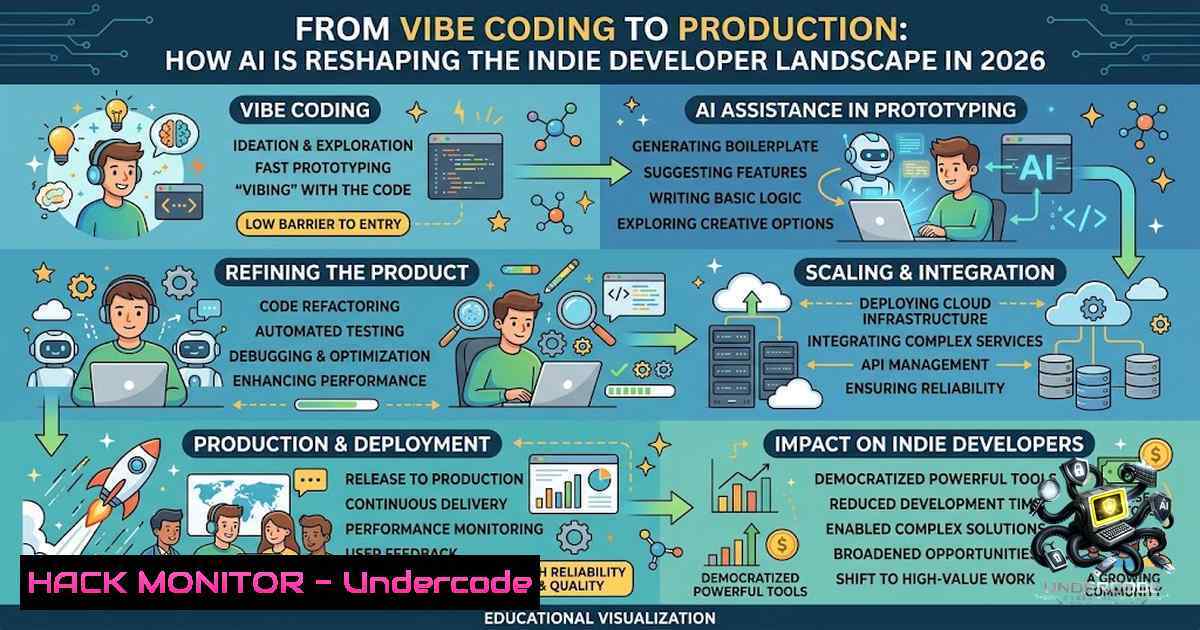
The software development paradigm is undergoing a seismic shift. In early 2022, a backend engineer with a receipt-splitting app idea faced a year of nights and weekends to build a simple prototype. By early 2026, with the advent of advanced AI coding assistants like Claude Code, that same project was polished and production-ready in a single afternoon. This is not merely an anecdote about increased efficiency; it is a fundamental change in the economics and accessibility of software creation. The integration of Large Language Models (LLMs) into the development lifecycle is democratizing app creation, allowing solo developers and small teams to operate with the velocity of entire engineering departments, provided they understand the new workflow, its capabilities, and its inherent security and architectural pitfalls.
Learning Objectives & Secrets:
- Objective 1: Master the AI-Assisted Full-Stack Workflow. Learn to leverage AI coding agents not just for code generation, but for the entire lifecycle: from initial concept and prototyping to design, deployment, and even navigating app store submissions. The secret is using AI as a “co-pilot” for the boring, repetitive tasks (scaffolding, boilerplate, config files) to free up your cognitive load for high-level architecture and user experience.
- Objective 2 Secret Tips: The Art of “Vibe Coding” with Guardrails. The secret to “vibe coding”—describing what you want in natural language and letting the AI build it—is not blind faith. It involves a strict “generate → validate → repair” loop. You must treat the AI’s output like a junior developer’s pull request: review it, test it, and have the AI fix its own bugs. Never deploy AI-generated code without understanding its security posture and performance implications.
- Objective 3 Secret Tips: Continuous Learning and Adaptation. The landscape of AI tools changes monthly. The secret is to treat your AI assistant as a constantly evolving teammate. Stay updated with the latest features (e.g., Claude Code’s dynamic workflows) and integrate them into your daily workflow. The goal is not to replace your engineering skills but to amplify them, allowing you to tackle problems that were previously too time-consuming or complex.
You Should Know:
- The New Development Pipeline: From Prompt to Production
The traditional software development lifecycle (SDLC) is being compressed. The post details a journey from a stalled 2022 project to four live products in 2026, including Splitz (receipt splitting), GeoPunk (a cyberpunk geography game), Mockstack (a suite of developer tools), and Sweaty Imposter (interview prep). This was achieved by using AI to navigate not just coding, but also LLC setup, logo design, and app store submissions.
Step‑by‑Step Guide:
- Idea & Prompting: Start with a clear, high-level description of your application. Use an AI agent like Claude Code or Google’s AI Studio Build mode.
- Rapid Prototyping: Point the AI at your existing repositories or let it scaffold a new project. Iterate on the UI and core logic using natural language prompts.
- Validation & Repair: Implement a “generate → validate → repair” loop. Use the AI to write unit tests and then run them. Have the AI fix any failing tests or security vulnerabilities it identifies.
- Asset & DevOps Generation: Use specialized tools like Mockstack to generate all necessary app store assets (icons, screenshots, feature graphics) in a single click. Use AI to write your infrastructure-as-code (e.g., Terraform, CloudFormation) for deployment.
- Deployment & Monitoring: Deploy your application. Use Firebase Analytics (as seen on Sweaty Imposter) or similar tools for anonymous, privacy-focused usage tracking to understand user behavior without compromising personal data.
2. Harnessing the Power of Specialized AI Tools
General-purpose AI coding assistants are powerful, but the ecosystem is also seeing a rise in specialized AI-powered tools that handle specific tasks with incredible efficiency.
Step‑by‑Step Guide for Using Mockstack:
- Access: Navigate to
mockstack.io. No account or payment is required. - Select a Tool: Choose from the “full bench” of 31 tools. For app store submission, use the Screenshot Editor to frame a screenshot, write a headline, and export every required App Store and Play Store size in a single ZIP.
- Generate Assets: For icons, use the Icon Resizer: upload a single 1024×1024 image, and it will output every required iOS and Android size as a ZIP file.
- Validate: Before submitting, use the Spec Checker to see which store rules your screenshot breaks.
- Web & Brand: Generate a complete set of favicons and PWA icons with the Favicon Generator, which also provides the necessary HTML snippet.
- Data Privacy: Crucially, all processing is done client-side in your browser. “Nothing is uploaded, ever”, ensuring your intellectual property and assets remain secure.
-
Security and Privacy in the Age of AI-Generated Code
The speed of AI-assisted development can lead to overlooking critical security and privacy fundamentals. It’s vital to enforce security checks throughout the pipeline.
Step‑by‑Step Guide to Securing Your AI-Built App:
- API Key Management: Never hardcode API keys. Use environment variables or a secrets manager. For Firebase, use Firebase Authentication and Secrets Manager to securely store API keys.
- Data Privacy by Design: Follow the example of Sweaty Imposter, which uses Firebase Analytics for “anonymous page views and events, no account, no personal data”. Ensure your app does not collect or transmit Personally Identifiable Information (PII) unnecessarily.
- Dependency Scanning: Use tools like `npm audit` or `pip-audit` to scan your AI-generated `package.json` or `requirements.txt` files for known vulnerabilities. Integrate this into your CI/CD pipeline.
- Input Validation and Output Encoding: AI models can sometimes generate code that is vulnerable to injection attacks. Always implement strict input validation and output encoding, especially for web applications and APIs.
- Static Application Security Testing (SAST): Run SAST tools (e.g., SonarQube, Semgrep) on your codebase to identify security flaws that the AI might have introduced, such as SQL injection or cross-site scripting (XSS) vulnerabilities.
4. API Design and Cloud Hardening
Modern apps are rarely monolithic; they rely on a complex web of APIs and cloud services. AI can help design and implement these, but you must ensure they are robust and secure.
Step‑by‑Step Guide for API and Cloud Security:
- API Design: Use AI to draft OpenAPI (Swagger) specifications for your REST APIs. This ensures consistency and allows for automated client generation and documentation.
- Authentication and Authorization: Implement OAuth 2.0 or JSON Web Tokens (JWT) for secure API access. Use Firebase Authentication for a managed, scalable solution.
- Rate Limiting and Throttling: Protect your APIs from abuse and denial-of-service attacks by implementing rate limiting at the API gateway or application level.
- Cloud Hardening: If deploying on AWS, GCP, or Azure, use AI to generate Infrastructure-as-Code (IaC) templates (e.g., Terraform). This allows you to codify and review your cloud security posture, ensuring resources are not publicly exposed and follow the principle of least privilege.
- Monitoring and Logging: Set up comprehensive logging and monitoring for your application and APIs. Use tools like AWS CloudWatch, Google Cloud Operations, or Azure Monitor to detect and respond to security incidents.
5. Performance Optimization and Testing
AI-generated code can sometimes be inefficient. Proactive performance testing and optimization are crucial for a good user experience.
Step‑by‑Step Guide for Performance Testing:
- Load Testing: Use tools like `k6` or Apache JMeter to simulate user traffic and identify bottlenecks. AI can help write the test scripts.
- Profiling: Use profiling tools (e.g., Python’s
cProfile, Node.js’s--inspect) to identify performance hotspots in your AI-generated code. - Database Optimization: Ensure your AI-generated database queries are optimized. Use `EXPLAIN` plans to analyze query performance and add appropriate indexes.
- Caching: Implement caching strategies (e.g., Redis, Memcached, or CDN caching) to reduce latency and database load.
- Continuous Performance Monitoring: Integrate performance testing into your CI/CD pipeline to catch regressions before they reach production.
What Undercode Say:
- Key Takeaway 1: AI is a Force Multiplier, Not a Replacement. The most successful developers in 2026 will not be those who simply ask AI to write code, but those who act as “AI orchestrators.” They understand the entire software lifecycle, from business logic to security to deployment, and use AI as a powerful tool to accelerate each stage. The ability to guide an AI agent with clear, high-level requirements and then critically review and refine its output is the new core competency.
- Key Takeaway 2: The “Indie Renaissance” is Real. The barrier to entry for software entrepreneurship has never been lower. A single individual, armed with the right AI tools and a clear vision, can now build, design, and launch a portfolio of products that would have required a small team just a few years ago. This democratization is leading to a surge in innovation and niche applications, as seen with the diverse offerings from Disco Volante Labs.
Analysis: The post is a testament to the transformative power of AI in the software industry. Jonathan Rhodes’s journey from a stalled side project to a multi-product company in a matter of months is a powerful narrative. The key differentiator is not just the AI itself, but the mindset shift—embracing AI as a partner in the entire creative and technical process. However, this new paradigm also introduces risks. The speed of development can lead to a “move fast and break things” mentality that overlooks security, privacy, and long-term maintainability. The industry must adapt by developing new best practices and tools for securing and validating AI-generated code. The tools like Mockstack and Sweaty Imposter, with their emphasis on client-side processing and anonymous usage, represent a positive trend towards privacy-conscious development in the AI era.
Prediction:
- +1: Explosion of Micro-SaaS and Niche Applications. The trend of AI-assisted development will lead to a Cambrian explosion of micro-SaaS products and niche applications, as more individuals and small teams can bring their ideas to life quickly and cost-effectively.
- -1: The “AI-Generated Code” Security Debt. We will see a significant rise in security vulnerabilities and technical debt stemming from un-reviewed AI-generated code. The industry will need to develop new automated security scanning and code review tools specifically tailored to AI output.
- +1: Evolution of the Software Engineer Role. The role of the software engineer will evolve from a “code writer” to a “systems architect” and “AI orchestrator.” The focus will shift from syntax and boilerplate to high-level design, problem-solving, and ensuring the ethical and secure application of AI.
- -1: Increased Competition and Market Saturation. As the barrier to entry lowers, the software market will become increasingly crowded. Standing out will require not just a functional app, but superior user experience, performance, and a strong go-to-market strategy.
- +1: Rise of “Privacy-First” AI Tools. In response to growing data privacy concerns, we will see a rise in AI tools that process data locally (like Mockstack) and offer transparent, anonymous data collection policies (like Sweaty Imposter). This will become a key differentiator and selling point.
▶️ Related Video (78% Match):
🎯Let’s Practice For Free:
🎓 Live Courses & Certifications:
Join Undercode Academy for Verified Certifications
🚀 Request a Custom Project:
Secure, high-velocity infrastructure and disruptive technological engineering. Contact our engineering team for high-tier development and proprietary systems:
[email protected]
💎 Smart Architecture | 🛡️ Secure by Design | ⭐ Trusted by Thousands
IT/Security Reporter URL:
Reported By: https://lnkd.in/p/eQDeseg7 – Hackers Feeds
Extra Hub: Undercode MoN
Basic Verification: Pass ✅


