Listen to this Post
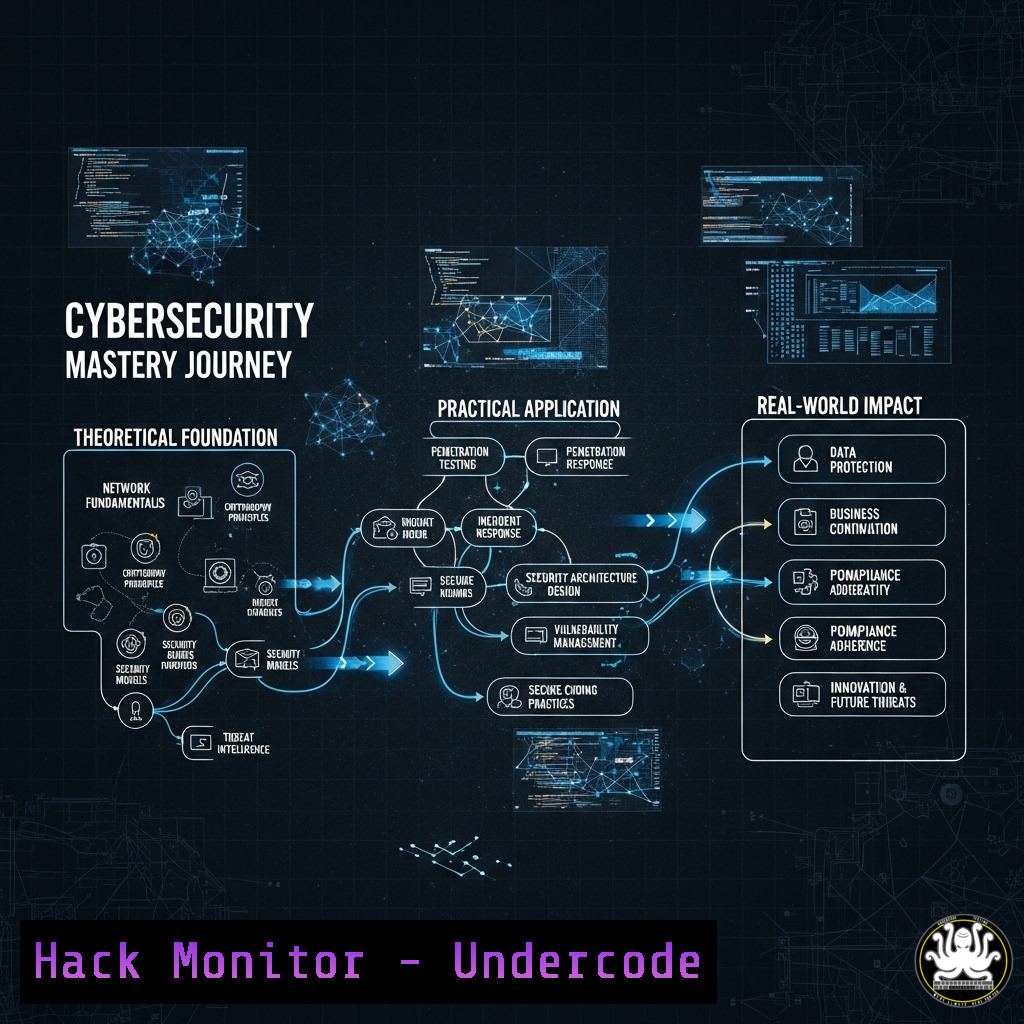
Introduction:
The journey from theoretical knowledge to tangible, recognized impact in cybersecurity is a path few successfully navigate. This article deconstructs the practical skills and methodologies that transform a learner into a practitioner capable of earning official acknowledgments from top-tier institutions, moving beyond certificates to real-world application.
Learning Objectives:
- Understand the core technical processes for vulnerability discovery and responsible disclosure.
- Master essential command-line and tool-based techniques for web security and penetration testing.
- Develop a workflow for systematic reconnaissance, exploitation, and proof-of-concept creation.
You Should Know:
1. The Art of Reconnaissance and Subdomain Enumeration
Effective hacking begins with exhaustive reconnaissance. Subdomain enumeration uncovers hidden attack surfaces that often house vulnerable applications.
Command:
subfinder -d target-iit.ac.in -o subdomains.txt
amass enum -passive -d target-iit.ac.in >> subdomains.txt
assetfinder --subs-only target-iit.ac.in | tee -a subdomains.txt
Step-by-step guide:
This multi-tool approach ensures maximum coverage. Subfinder performs fast passive enumeration. Amass, in passive mode, gathers intel from numerous data sources without making direct requests to the target. Assetfinder is another robust passive tool. The output is appended to a file (>> and tee -a) to create a comprehensive list. This consolidated list must then be cleaned and sorted for further analysis (sort -u subdomains.txt > final_subs.txt).
2. Probing for Live Hosts and HTTP Services
Not all discovered subdomains are active. Filtering for live hosts and identifying web services is the critical next step.
Command:
cat final_subs.txt | httprobe -c 50 -t 3000 | tee live_subdomains.txt
cat live_subdomains.txt | fprobe -p 80,443,8080,3000
Step-by-step guide:
Httprobe takes the list of subdomains and probes them for HTTP/HTTPS services. The `-c 50` flag uses 50 concurrent connections for speed, while `-t 3000` sets a timeout of 3000ms. Fprobe is used to check for open ports beyond just web ports, which can reveal other services like databases or administrative panels. The output of live web targets is saved for vulnerability scanning.
3. Automated Vulnerability Scanning with Nuclei
Once you have a list of live web applications, automated scanning with a powerful tool like Nuclei can quickly identify common low-hanging fruit.
Command:
nuclei -l live_subdomains.txt -t ~/nuclei-templates/ -o nuclei_findings.txt -severity low,medium,high,critical
Step-by-step guide:
This command runs the Nuclei scanner against all live subdomains (-l). The `-t` flag points to the directory containing vulnerability templates (constantly updated via nuclei -update-templates). Findings are output to a file with -o, and the `-severity` flag filters results based on impact level. This provides a solid baseline of potential vulnerabilities like misconfigurations, exposed panels, and known software flaws.
- Manual Testing for Logic Flaws and Advanced IDOR
Automation misses complex business logic vulnerabilities. Manual testing is where critical flaws like Insecure Direct Object References (IDOR) are found.
Scenario:
A user profile page fetches data via an API call: GET /api/user/profile?user_id=12345.
Testing:
Intercept this request in a proxy like Burp Suite and change the `user_id` parameter to another user’s ID (e.g., 12346). If the application returns the other user’s private data without authorization, you have a critical IDOR vulnerability.
Step-by-step guide:
- Map the application’s functionality as a logged-in user.
- Identify all instances where an object identifier (ID, username, email) is used in parameters.
- Use Burp’s Repeater tool to systematically test each parameter by altering its value.
- Test for horizontal (same privilege) and vertical (higher privilege) access control breaches.
5. Crafting the Professional Vulnerability Report
The discovery is only half the battle. A clear, actionable report is essential for responsible disclosure and recognition.
Report Structure Snippet:
IDOR in /api/user/profile endpoint exposing PII
Vulnerability: Insecure Direct Object Reference (IDOR)
Risk: High
Target: https://example.target-iit.ac.in
Steps to Reproduce:
1. Login as user A (email: [email protected]).
2. Navigate to profile page. Observe API call: <code>GET /api/user/profile?user_id=45001</code>.
3. In Burp Repeater, change `user_id` parameter to `45002` (user B).
4. Send the request. Observe HTTP 200 response containing user B's full name, email, and phone number.
Impact: Any authenticated user can retrieve the personal identifiable information (PII) of any other user.
Remediation: Implement proper authorization checks on the server-side for every request.
Step-by-step guide:
A professional report must be concise and reproducible. Include a clear title, risk rating, specific target URL, and numbered steps. The proof-of-concept must be trivial for the security team to verify. Conclude with a clear explanation of the impact and a suggested remediation.
6. Proof-of-Concept (PoC) Scripting for Validation
For more complex vulnerabilities, providing a simple script can make your report stand out and demonstrate the issue unequivocally.
Python PoC Script for IDOR:
import requests

TARGET = "https://vulnerable-api.target-iit.ac.in"
USER_ID_RANGE = range(45001, 45050)
COOKIES = {"session": "your_authenticated_session_cookie"}

for user_id in USER_ID_RANGE:
response = requests.get(f"{TARGET}/api/user/profile?user_id={user_id}", cookies=COOKIES)
if response.status_code == 200:
print(f"[+] Fetched data for User ID: {user_id}")
print(response.text)
Step-by-step guide:
This Python script automates the testing of a range of user IDs. It uses the `requests` library to send HTTP GET requests while maintaining an authenticated session via cookies. A successful response (status code 200) indicates the ID was accessible. This script serves as irrefutable evidence of the vulnerability’s existence and scope in your report.
7. Maintaining an Ethical Stance: The `security.txt` Contact
Responsible disclosure requires finding the correct contact channel. The `security.txt` standard provides a defined way to report vulnerabilities.
Command:
curl -s https://target-iit.ac.in/.well-known/security.txt | cat
 or
curl -s https://target-iit.ac.in/security.txt | cat
Step-by-step guide:
Before any testing, always check for a `security.txt` file. The Internet Security Research Group (ISRG) standard dictates this file should be placed under `/.well-known/` or at the root. It contains contact information (often an email like [email protected]) for reporting security issues. Using this official channel demonstrates professionalism and an ethical approach, increasing the likelihood of a positive response and acknowledgment.
What Undercode Say:
- Execution Trumps Certification: The market is saturated with certified professionals who lack practical experience. The ability to execute, proven by a validated bug bounty or acknowledgment, is becoming the true differentiator in the cybersecurity job market.
- The Methodology is Repeatable: This success is not a one-off event. It is the result of applying a systematic, learnable methodology encompassing automated recon, manual testing, and professional reporting. This blueprint can be replicated by any dedicated individual.
This case study exemplifies a major shift in the industry’s value system. While foundational knowledge from certifications remains important, the demonstrated ability to find and report real vulnerabilities is what ultimately creates security impact and builds a professional reputation. This hands-on, proof-oriented skillset is what organizations are desperately seeking, making it the most reliable path to a standout career in cybersecurity.
Prediction:
The demonstrated model of skill validation—where independent researchers prove their worth through acknowledged real-world impact—will increasingly disrupt traditional credential-based hiring. We predict a rise in corporate “acknowledgment programs” that publicly thank researchers, creating a verifiable, crowdsourced reputation system that will eventually be integrated into professional profiles and hiring platforms, becoming as scrutinized as a university degree.
🎯Let’s Practice For Free:
IT/Security Reporter URL:
Reported By: Rohithrachapudi96 This – Hackers Feeds
Extra Hub: Undercode MoN
Basic Verification: Pass ✅


