Listen to this Post
Introduction:
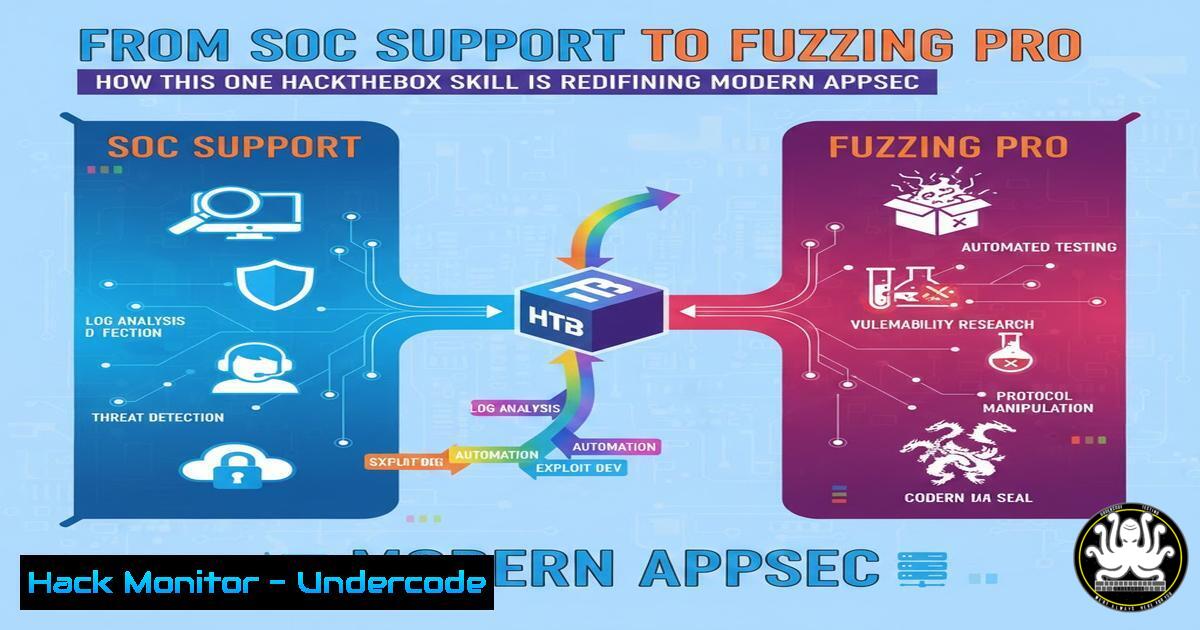
In the evolving landscape of cybersecurity, offensive security techniques like fuzzing have transitioned from niche skills to core competencies for defenders. As highlighted by a SOC engineer’s achievement of the “Fuzzing is power” badge on HackTheBox Academy, understanding how attackers probe for weaknesses is crucial for building robust defenses. This article deconstructs the art and science of fuzzing, providing a professional roadmap to implement these techniques for both penetration testing and proactive security hardening.
Learning Objectives:
- Understand the core principles and types of fuzzing (black-box, white-box, grammar-based).
- Learn to deploy industry-standard fuzzing tools against web applications and APIs.
- Develop methodologies to interpret fuzzing results and transition findings into actionable patches.
You Should Know:
- Fuzzing 101: The Engine of Modern Bug Discovery
Fuzzing, or fuzz testing, is the automated process of injecting invalid, unexpected, or random data (called “fuzz”) into a program to discover coding errors and security loopholes. For a SOC engineer, this isn’t just an attack vector—it’s a critical proactive security measure. By simulating attacker behavior, you can identify vulnerabilities like buffer overflows, SQL injection (SQLi), cross-site scripting (XSS), and input validation flaws before they are exploited in production.
Step‑by‑step guide:
- Identify the Target: Choose a target parameter. This could be a login form field, an API endpoint expecting JSON, or a URL parameter.
- Choose a Payload: Select a wordlist appropriate for the test. For directories, use lists like
/usr/share/wordlists/dirb/common.txt. For XSS/SQLi, use lists from `SecLists` repository (/usr/share/seclists/Fuzzing/). - Execute a Basic Fuzz: Using a tool like `ffuf` (Fast Web Fuzzer), run a simple directory discovery command.
Linux/macOS (ffuf)
ffuf -w /usr/share/wordlists/SecLists/Discovery/Web-Content/common.txt -u http://TARGET/FUZZ
- Analyze Output: Filter responses by size or status code to identify hidden pages (
-fs 4242to filter out size 4242, or `-fc 404` to filter 404s). -
Tool Deep Dive: FFUF & Wfuzz for Web Endpoint Discovery
While the post celebrates the HackTheBox Academy badge, practical application requires mastery of specific tools. `FFUF` is renowned for its speed, while `Wfuzz` offers powerful integration with Burp Suite and complex payload handling.
Step‑by‑step guide:
- Installation: `FFUF` can be installed via Go:
go install github.com/ffuf/ffuf@latest. `Wfuzz` is Python-based:pip install wfuzz. - Multi-Parameter Fuzzing: Fuzz multiple inputs simultaneously. For a login endpoint with parameters `user` and
pass:Using ffuf with two wordlists ffuf -w users.txt:USER -w passwords.txt:PASS -u http://TARGET/login.php?user=USER&pass=PASS -fs 0
-
Recursive Fuzzing: Discover content recursively from found directories.
ffuf -w wordlist.txt -u http://TARGET/FUZZ -recursion -recursion-depth 2
-
API Fuzzing: The Critical Frontier for Cloud-Native Apps
Modern SOCs must secure REST and GraphQL APIs. These present a large attack surface where fuzzing is exceptionally effective.
Step‑by‑step guide:
- Capture API Schema: Use Burp Suite or browser dev tools to capture a legitimate API request to
api/v1/user/update. - Identify Fuzz Points: Mark the `id` parameter and the JSON body values as injection points.
- Craft a Targeted Fuzz: Use `wfuzz` to inject payloads into a JSON parameter.
wfuzz -z file,/usr/share/seclists/Fuzzing/SQLi/quick-SQLi.txt -d '{"user_id":"FUZZ","action":"get"}' -H "Content-Type: application/json" http://TARGET/api/v1/user - Look for Anomalies: Monitor for 500 errors, unusual response times, or unexpected data leakage.
4. Mutation vs. Generation-Based Fuzzing: Beyond Wordlists
Advanced fuzzing moves beyond static wordlists. Mutation-based fuzzers alter existing valid data samples, while generation-based (grammar) fuzzers build inputs from a model of the protocol or format.
Step‑by‑step guide (Using a Simple Python Mutation Fuzzer):
1. Create a base valid input: `{“query”: “user”}`
- Write a simple Python script to mutate it:
import random base_input = '{"query": "user"}' mutators = [lambda s: s.replace('"', "'"), lambda s: s + '/ /', lambda s: s + ' OR 1=1--'] for _ in range(10): mutator = random.choice(mutators) print(mutator(base_input)) - Pipe this output into a tool like `curl` or use within an automated framework.
-
Integrating Fuzzing into the SDLC: From Attack to Defense
For the SOC engineer, the goal is to operationalize fuzzing findings. This means creating detection rules and guiding patch development.
Step‑by‑step guide:
- Triage Findings: Correlate fuzzing crashes with CWE classifications (e.g., CWE-79 for XSS, CWE-89 for SQLi).
- Create Mitigations: For a discovered XSS pattern, implement contextual output encoding. For SQLi, mandate parameterized queries.
- Write Detection Signatures: Convert the malicious payload that triggered the vulnerability into a SIEM or WAF detection rule.
Suricata/Snort Example: `alert tcp any any -> $HTTP_SERVERS 80 (msg:”SQLi Detection – Common Test”; content:”‘ OR ‘1’=’1″; http_client_body; sid:1000001;)`
Splunk Query: `web_logs | search “‘ OR ‘1’=’1″`
6. Hardening Your Own Systems Against Fuzz Attacks
Understanding offense informs defense. Harden your applications by implementing strict input validation, rate limiting, and web application firewalls (WAF).
Step‑by‑step guide (Linux/nginx WAF with ModSecurity):
- Install ModSecurity for nginx: `sudo apt-get install libmodsecurity3 nginx-mod-modsecurity`
2. Download the OWASP Core Rule Set (CRS): `git clone https://github.com/coreruleset/coreruleset /etc/nginx/modsec/crs/`
3. Configure nginx to use the rules:
modsecurity_rules_file /etc/nginx/modsec/modsecurity.conf;
modsecurity_rules_file /etc/nginx/modsec/crs/crs-setup.conf;
modsecurity_rules_file /etc/nginx/modsec/crs/rules/.conf;
4. Test with a malicious request: `curl http://your-server/?id=’ OR 1=1–`
What Undercode Say:
- Key Takeaway 1: Fuzzing is no longer optional. The HackTheBox Academy badge symbolizes its essential role in a modern security professional’s toolkit, bridging the gap between red team offense and blue team defense.
- Key Takeaway 2: Effective fuzzing is a structured, iterative process—not just blind automation. It requires careful target selection, intelligent payload crafting, and, most critically, skilled analysis of results to move from noise to actionable vulnerabilities.
The professionalization of fuzzing through platforms like HackTheBox Academy indicates a market shift. Organizations now demand that their defenders possess systematic attack methodologies. For the SOC engineer, this skill directly translates to improved threat hunting (knowing what to look for in logs), better detection engineering (writing rules for payloads that actually work), and more authoritative collaboration with development teams on secure coding practices. It turns reactive alert responders into proactive security architects.
Prediction:
The convergence of AI/ML with fuzzing (AI-powered fuzzing) will exponentially increase the speed and depth of vulnerability discovery, pushing vulnerabilities to be found in hours, not months. This will force a paradigm shift in DevSecOps, making real-time, automated security testing within CI/CD pipelines an absolute necessity. Simultaneously, defenders will increasingly deploy “defensive fuzzing” bots against their own production systems as a continuous compliance and resilience check, creating a new layer of autonomous cyber defense. The SOC of the near future will monitor these automated fuzzing agents as critically as they monitor EDR alerts today.
🎯Let’s Practice For Free:
IT/Security Reporter URL:
Reported By: O Mhayech – Hackers Feeds
Extra Hub: Undercode MoN
Basic Verification: Pass ✅


