Listen to this Post
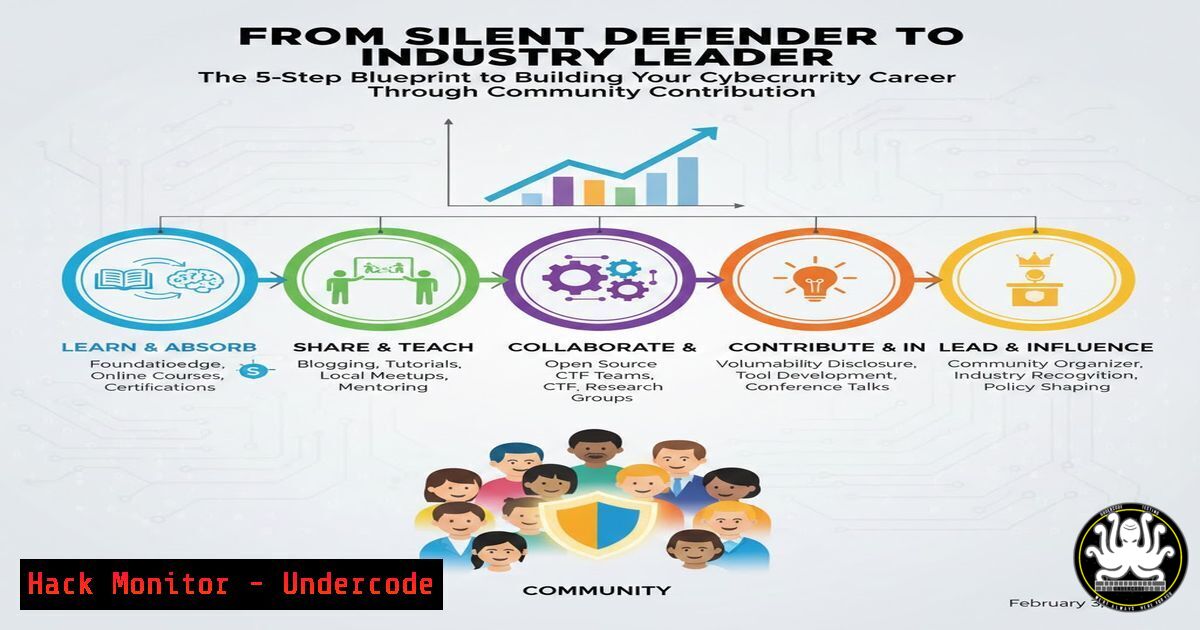
Introduction:
In a recent LinkedIn post, Security Architect Jaime Guimerá Coll highlighted a critical but often overlooked career catalyst: community contribution. By acknowledging peers who exemplify diverse approaches—from deep technical research to human-centric communication—Coll underscored that professional growth in cybersecurity is no longer a solitary climb. This article deconstructs that ethos into an actionable technical and strategic blueprint, demonstrating how active participation in the security community can directly enhance your skills, expand your network, and solidify your professional reputation.
Learning Objectives:
- Learn how to leverage public tools like Microsoft Sentinel and KQL to produce and share unique threat intelligence, transforming from a consumer to a contributor of knowledge.
- Develop a systematic approach to building a personal lab environment for safe exploit development, tool testing, and proof-of-concept creation.
- Master the strategies for effectively engaging with and contributing to open-source security projects (OSSP) and professional networks to accelerate career advancement.
You Should Know:
1. From Consumer to Contributor: Sharing Technical Analysis
The transition begins with shifting your mindset from solely consuming information to producing it. A powerful starting point is analyzing public datasets or your own sanctioned lab data to uncover novel attack patterns or validate detection rules.
Step‑by‑step guide:
- Identify a Dataset: Use a resource like the Azure Sentinel GitHub repository for sample logs or a lab environment you control.
- Formulate a Hypothesis: Ask a question. E.g., “Can I identify the specific techniques of the latest phishing campaign using KQL?”
- Develop and Test the Query: In your Sentinel or Log Analytics workspace, craft a KQL query.
// Example KQL query hunting for suspicious PowerShell execution patterns SecurityEvent | where EventID == 4688 and Process contains "powershell" | where CommandLine contains "-EncodedCommand" or CommandLine contains "-e " | where CommandLine has_any ("IEX", "Invoke-Expression", "DownloadString") | project TimeGenerated, Computer, Account, CommandLine | summarize AlertCount=count() by Computer, Account, bin(TimeGenerated, 5m) - Document Your Findings: Write a brief analysis. What does the query detect? What’s the potential impact?
- Share Publicly: Post the query and analysis on a platform like GitHub Gist, your personal blog, or LinkedIn with the hashtag KQL ThreatHunting.
2. Building and Weaponizing Your Home Lab
A personal lab is non-negotiable for deep technical exploration. It’s a safe space to reverse engineer malware, test security tools, and simulate attacks without operational risk.
Step‑by‑step guide:
- Choose Your Hypervisor: Install VMware Workstation Player or VirtualBox on your host machine (Windows/Linux).
- Set Up a Victim Machine: Download a vulnerable OVA like “Metasploitable2” or create a Windows 10/11 VM with default settings.
- Set Up an Attacker Machine: Install Kali Linux or Parrot Security OS in a separate VM.
- Isolate the Network: In your hypervisor, create a new Host-Only or NAT network and attach both VMs to it.
- Practice and Document: Run a basic Nmap scan from your attacker to your victim machine. Document the commands and outcomes.
On Kali Linux VM
sudo nmap -sV -sC -O 192.168.1.[victim-ip] -oN initial_scan.txt
- Automate Setup: Use a script to snapshot VMs pre-and-post configuration for easy reset.
PowerShell for Hyper-V (Admin)
Checkpoint-VM -Name "Win10-Lab" -SnapshotName "Clean_Base"
-
The Art of the Write-Up: From Exploit to Explanation
Technical skill is amplified by clear communication. A well-structured write-up turns a successful proof-of-concept into a valuable community asset.
Step‑by‑step guide:
- Structure: Use a consistent format: Executive Summary, Technical Details (TTPs, IOCs), Step-by-Step Reproduction, Mitigation Recommendations.
- Visuals: Include screenshots, network diagrams (use draw.io), and snippets of critical code or commands.
- Code Repositories: Host full exploit scripts, configuration templates, or detection rules on GitHub with a detailed README.md.
- Publish: Share the final article on platforms like Medium, Dev.to, or your professional blog. Cross-link to your GitHub repository.
4. Strategic Networking: Beyond Connection Requests
Engagement must be substantive. Commenting with technical insights on a peer’s post is more valuable than a generic “Congrats!”
Step‑by‑step guide:
- Identify Key Voices: Follow security researchers, architects, and tool developers in your niche (e.g., Microsoft Security, AI/ML Security).
- Engage with Value: When they share research, ask a thoughtful technical question or share a related experience from your lab.
- Contribute to Discussions: In forums like r/netsec on Reddit or specific tool Discord channels, answer questions to the best of your ability. The act of teaching solidifies your own knowledge.
5. Contributing to Open Source Security Tools (OSSP)
Direct code or documentation contributions are a pinnacle of community impact and a formidable resume item.
Step‑by‑step guide:
- Find a Project: Explore GitHub for tools like `Sigma` (generic SIEM rules),
Velociraptor, orAtomic Red Team. - Start Small: Look for “good first issue” tags. Often, fixing documentation, adding a detection example, or improving a test case is the best entry point.
- Fork and Clone: Fork the repository to your GitHub account and clone it locally.
git clone https://github.com/YOUR-USERNAME/sigma.git
cd sigma
- Make Your Change: Create a new branch, make your edits (e.g., add a new Sigma rule for a discovered technique), and commit.
git checkout -b add-new-sigma-rule
git add rules/windows/process_creation/my_new_rule.yml
git commit -m "Added Sigma rule for suspicious wmic execution pattern"
- Submit a Pull Request (PR): Push your branch and create a PR on the original project. Clearly describe the purpose and context of your change.
-
Leveraging AI and Automation to Scale Your Impact
As highlighted in the original post, AI is integral to modern security. Use it to automate the analysis and sharing of findings.
Step‑by‑step guide:
- Automate Threat Intel Feeds: Write a Python script using the `requests` library to fetch and parse a feed (e.g., CISA’s Known Exploited Vulnerabilities).
- Cross-Reference with KQL: Use the script’s output to automatically generate or validate KQL hunting queries in your Sentinel workspace.
- Create Automated Reports: Use PowerShell or Python with the
python-docx/pandaslibraries to generate weekly summary reports of your lab findings or tool testing.PowerShell snippet to get Azure Sentinel alerts and export to CSV Connect-AzAccount $Alerts = Get-AzSentinelAlertRule -ResourceGroupName "MyRG" -WorkspaceName "MyWorkspace" $Alerts | Select-Object DisplayName, Enabled, Severity | Export-Csv -Path ".\Sentinel_Rules_Review.csv" -NoTypeInformation
- Share the Automation: Publish your scripts on GitHub with clear documentation, demonstrating your ability to bridge AI/automation with practical security operations.
What Undercode Say:
- Community Currency is Technical Currency: The value you derive from professional networks is directly proportional to the technical value you inject. Sharing curated knowledge, validated scripts, and detailed analyses establishes credibility far more effectively than a profile filled only with certifications.
- The Holistic Professional is the Future-Proof Professional: The intersection of deep technical skill (exploit development, KQL), operational practice (lab work, tool configuration), and soft skills (communication, mentoring) creates a defensible career moat. Specialization is key, but the ability to articulate and share that specialty is what creates leaders.
Prediction:
The cybersecurity landscape will increasingly bifurcate between tactical practitioners and strategic influencers. Those who adopt the “contributor model” early will not only accelerate their own learning curve through community feedback but will also become nodal points in the professional network. This will lead to a compounding advantage: access to private beta tools, invitations to collaborative research, and priority consideration for strategic roles. The future security leader will be measured not just by the incidents they resolve, but by the detection rules they’ve shared globally, the tools they’ve improved, and the peers they’ve helped to uplift. The human approach to technology, as referenced in the inspiring post, will become the primary differentiator in an AI-augmented industry.
▶️ Related Video (74% Match):
🎯Let’s Practice For Free:
IT/Security Reporter URL:
Reported By: Jaimeguimera Interesting – Hackers Feeds
Extra Hub: Undercode MoN
Basic Verification: Pass ✅


