Listen to this Post
Introduction:
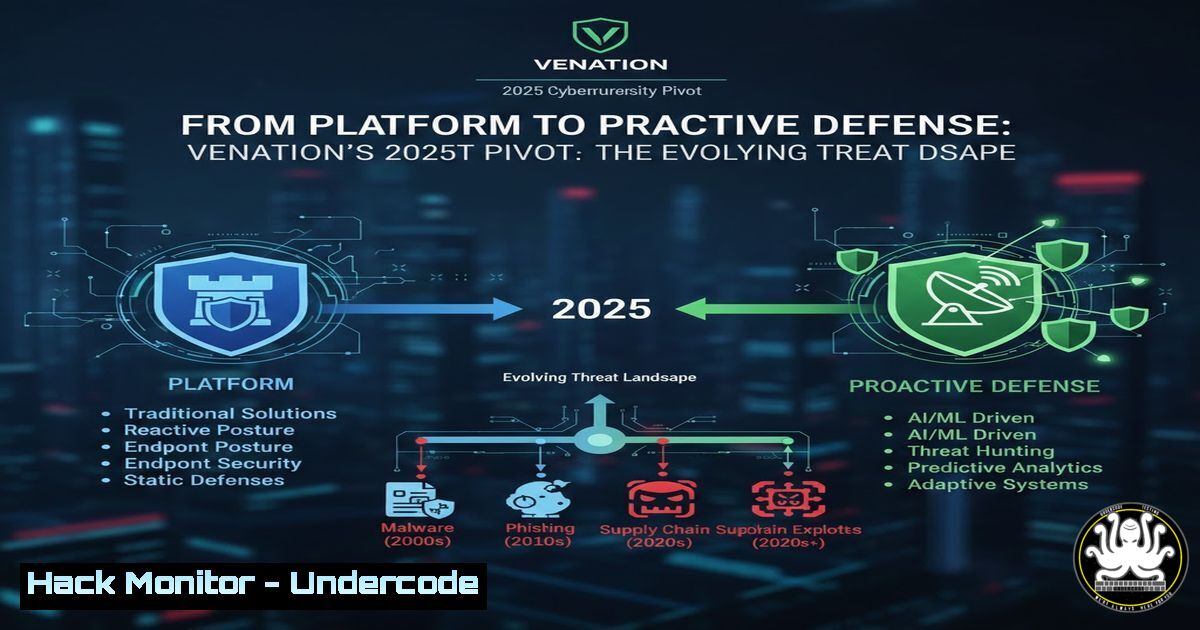
The cybersecurity landscape is witnessing a critical strategic shift, moving away from passive, platform-centric solutions toward active, intelligence-driven resilience. As chronicled in a 2025 year-in-review post by Venation, a bootstrapped cybersecurity firm, the market is demanding hands-on, service-first engagement that translates threat data into actionable defense. This evolution underscores a growing industry consensus that true security is not a software purchase but a continuous operational investment built on deep, contextual intelligence and skilled human analysis.
Learning Objectives:
- Understand the strategic and operational drivers behind the shift from product-first to service-first cybersecurity models.
- Learn how to leverage geographically distributed security teams for enhanced threat detection and 24/7 coverage.
- Discover methods for building and operationalizing a proprietary threat intelligence database for proactive defense.
You Should Know:
- The “Kill Your Darlings” Pivot: From Platform to Proactive Services
The most significant lesson from 2025 was the necessity to abandon a “build it and they will come” platform strategy. Venation spent 4-5 months repositioning to a “services-first” model, recognizing that most organizations are overwhelmed by raw data and need hands-on help to build operational resilience before they need another content portal. This involves expert-led services like Threat-Led Penetration Testing (TLPT) to validate defenses against real-world adversary behaviors.
Step-by-step guide:
Step 1: Conduct a Capability Gap Analysis. Before buying new tools, assess your team’s ability to operationalize existing ones. Use frameworks like MITRE ATT&CK to map your defensive coverage.
Command Example (Linux): Use `pspy` (a Unix process spy tool) to monitor for suspicious, hidden process executions that might indicate a gap in EDR visibility: ./pspy64 -pf -i 1000. Review logs for parent process anomalies.
Step 2: Engage in Adversary Emulation. Move beyond checklist compliance. Define a specific adversary (e.g., FIN7) and use their documented TTPs (Tactics, Techniques, and Procedures) to test your environment.
Tool Configuration: Use the CALDERA adversary emulation framework. After deployment, configure an agent and run a specific adversary profile: `python3 server.py –insecure` (for setup), then use the web GUI to execute the emulation plan.
Step 3: Prioritize Mitigations Based on Impact. The findings from emulation must drive strategic action. Focus on mitigating techniques that offer the highest disruption to the adversary’s kill chain.
2. Consistency Compounds: Building a Bootstrapped Intelligence Engine
Venation highlights three years of bootstrapped growth, emphasizing that relentless, consistent effort in threat research creates an unreplicable competitive advantage. This “moat” is built not on venture capital but on the continuous curation of scenarios and documentation of hundreds of attack paths. This creates a living database of contextual intelligence that clients can immediately apply.
Step-by-step guide:
Step 1: Establish a Structured Data Capture Process. Every security incident, test finding, or threat report should be decomposed into structured data. Mandate the use of a consistent taxonomy (like MITRE ATT&CK IDs) in all reports.
Step 2: Build an Internal “Threat Library.” Use a wiki (like Confluence or Obsidian) or a simple SQL database to store these curated scenarios. Each entry should include: TTPs, Indicators of Compromise (IOCs), contextual notes, and proven mitigation steps.
Code Example (Simple Python Log Parser): Automate extraction of potential TTPs from endpoint logs.
import re
import json
def parse_syslog_for_ttp(log_line):
 Example: Detect potential credential dumping (T1003)
t1003_patterns = [r"lsass.exe.accessed", r"mimikatz", r"procdump.lsass"]
for pattern in t1003_patterns:
if re.search(pattern, log_line, re.IGNORECASE):
return {"technique": "T1003", "log_entry": log_line.strip()}
return None
 Example usage with a syslog file
with open('/var/log/syslog', 'r') as f:
for line in f:
result = parse_syslog_for_ttp(line)
if result:
print(json.dumps(result, indent=2))
Step 3: Operationalize Through Weekly Threat Reviews. Dedicate time each week for the security team to review and add to this library. This ritual compounds knowledge and ensures intelligence remains active.
- 6x Beats 1x: Sharpening the Offering with TLPT
Venation’s growth in Threat-Led Penetration Testing (TLPT) engagements—from 1 to 6 in a year—signals market maturity. Companies are beginning to view resilience as a strategic investment. This success stems from clearer storytelling that aligns security testing with business outcomes, demonstrating how specific threats translate to tangible financial and operational risk.
Step-by-step guide:
Step 1: Map Threats to Business Assets. Don’t talk about vulnerabilities in isolation. Start by identifying crown jewel assets (e.g., customer database, source code repository) and then research which threat actors actively target them.
Step 2: Develop a Bespoke Engagement Plan. A TLPT for a financial firm fearing ransomware should differ entirely from one for a tech company fearing source code theft. Tailor every emulation plan to the client’s unique digital footprint and threat model.
Step 3: Report in the Language of Risk. The final report must clearly articulate how the adversary’s path maps to business disruption, data loss, or financial cost, providing a clear rationale for mitigation budgets.
- Geography is a Feature: Architecting 24/7 Cyber Defense
A globally distributed team, often seen as a coordination challenge, is reframed as a strategic asset. It provides inherent 24/7 coverage for monitoring and incident response, a capability single-geography competitors cannot match. This structure also fuels a diverse “intelligence partner research program,” bringing varied perspectives to threat analysis.
Step-by-step guide:
Step 1: Implement a Follow-the-Sun SOC Model. Structure Security Operations Center (SOC) shifts across time zones (e.g., North America, EMEA, APAC) to ensure continuous alert monitoring and initial triage without burning out a single team.
Step 2: Standardize Tools and Playbooks Globally. Use a centralized SIEM (like Splunk, Elastic Security) and SOAR platform to ensure all analysts work from the same data and execute consistent, documented playbooks for common alert types.
Cloud Hardening (AWS): Ensure CloudTrail logs from all global regions are aggregated to a central, locked-down S3 bucket for the SOC team: aws cloudtrail create-trail --name Global-Trail --s3-bucket-name central-security-logs --is-multi-region-trail. Apply strict bucket policies.
Step 3: Establish Overlap Windows for Knowledge Transfer. Mandate 1-2 hour daily overlaps between regional teams for videoconference handoffs, ensuring context on ongoing incidents or emerging threats is never lost.
- Content is the Moat: Building an Unassailable Knowledge Base
The ultimate competitive barrier is not a flashy UI but years of accumulated, curated threat content. Venation’s database of scenarios and attack paths represents a form of institutional capital that cannot be quickly replicated. This deep content allows for rapid client understanding and provides the foundation for all other services.
Step-by-step guide:
Step 1: Systematically Document Attack Paths. For every red team exercise or incident response case, document not just the entry point, but the entire “attack graph”—the chain of vulnerabilities, misconfigurations, and trust relationships exploited.
Step 2: Create Reusable Detection Logic. Translate each documented attack path into detection rules for your SIEM or EDR.
Example SIGMA Rule (YAML): A rule for detecting suspicious Schtasks creation (often used for persistence).
title: Scheduled Task Creation via Unusual Process
id: a5b3c7d1-8e9f-42ab-8cde-1234567890ab
status: experimental
logsource:
product: windows
service: sysmon
detection:
selection:
EventID: 1  Process creation
ParentImage|endswith: '\cmd.exe'
Image|endswith: '\schtasks.exe'
CommandLine|contains: '/create'
condition: selection
falsepositives:
- Legitimate administrative activity
level: high
Step 3: Productize Knowledge into Training. Use the curated database to develop advanced training modules for clients, turning the “moat” into a value-added service that upskills their own teams.
What Undercode Say:
The Human Analyst is the Ultimate Platform: The core takeaway is that the industry’s highest value is shifting from pure software to software augmented by deep expert analysis. The future belongs to firms that can productize their analysts’ cumulative experience.
Resilience as Revenue Center: Forward-thinking companies are transitioning from viewing security as a cost center to funding it as an investment in operational reliability. This change in perception is creating markets for high-touch, outcome-based services like TLPT.
Analysis: Venation’s 2025 reflections are a microcosm of a broader industry correction. The era of silver-bullet platforms is fading, exposed by complex supply chain attacks and AI-augmented threats. The market is rewarding firms that offer clarity and proven defensive outcomes over feature lists. Their bootstrapped, consistency-driven growth is particularly telling; it proves demand exists for sustainable, expertise-led security, not just venture-capital-fueled hype. The strategic use of a global team and an intelligence moat presents a viable, durable business model for the next decade of cyber defense.
Prediction:
The trends observed in 2025 will accelerate through 2026 and beyond. We will see a formal bifurcation in the cybersecurity market: one segment dominated by large, consolidated platform vendors offering broad but shallow automation, and another comprised of agile, expert-led “cyber resilience firms” that integrate threat intelligence, testing, and response into a single service fabric. The winners will be those who best operationalize AI to augment—not replace—the human analyst, using it to query massive, proprietary knowledge bases (like Venation’s “moat”) in real-time during incidents. This will make deep, contextual threat intelligence a real-time, actionable utility, fundamentally changing the speed and precision of cyber defense.
▶️ Related Video (80% Match):
🎯Let’s Practice For Free:
IT/Security Reporter URL:
Reported By: Gertjanbruggink Wow – Hackers Feeds
Extra Hub: Undercode MoN
Basic Verification: Pass ✅


