
Listen to this Post
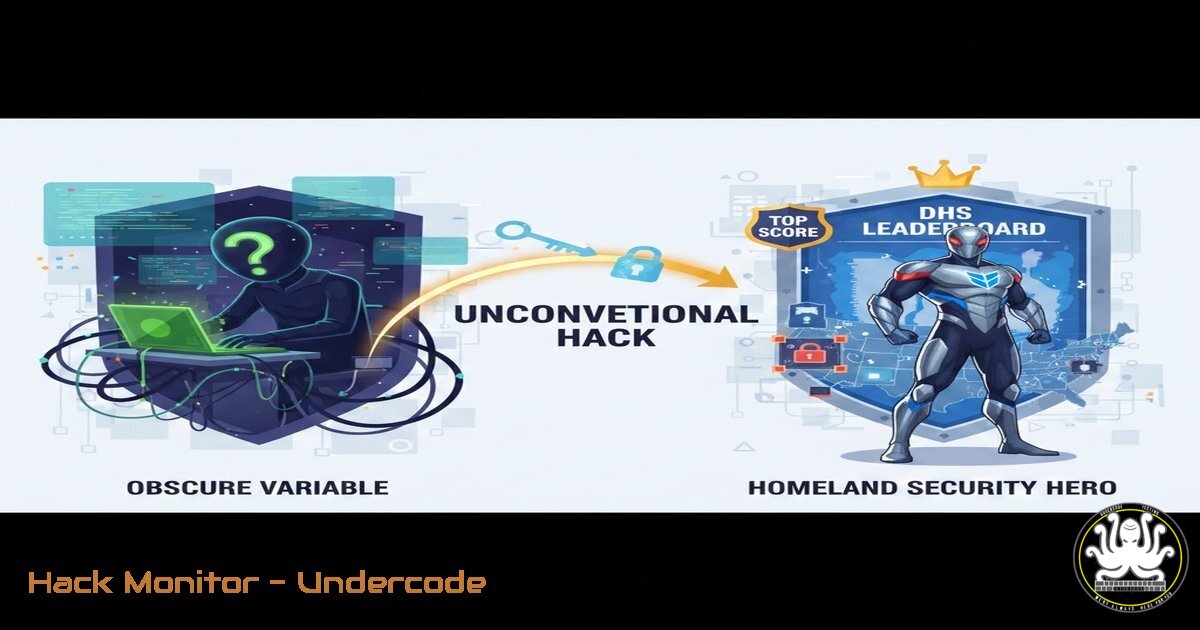
Introduction:
What began as a routine check of a visa petition status evolved into a six-month research campaign that netted 8 out of 11 critical vulnerabilities across Department of Homeland Security (DHS) systems. This journey from curiosity to becoming the 1 ranked researcher on the DHS Vulnerability Disclosure Program (VDP) demonstrates that systematic methodology and creative thinking can uncover deep-seated security flaws in even the most critical national infrastructure.
Learning Objectives:
- Understand how to fingerprint developer patterns and scale reconnaissance across thousands of assets.
- Learn techniques for client-side analysis and API reverse-engineering in modern web applications.
- Master creative information gathering methods like Google Dorking to bypass access barriers.
You Should Know:
- The Power of Pattern Recognition and Systematic Enumeration
The initial breakthrough came not from a complex exploit, but from recognizing an odd pattern. A discovered website contained exposed, esoteric variable names in its client-side code. The key insight was that government contractors often reuse code and patterns across projects. This allowed the researcher to fingerprint these unique patterns and hunt for them at scale.
Step-by-step guide explaining what this does and how to use it.
- Initial Discovery and Fingerprinting: Manually inspect your initial target using browser developer tools (F12). Look in the `Sources` tab for JavaScript files or the `Console` for logged errors containing unique strings, variable names, or API paths that seem non-standard.
- Asset Enumeration: Use a tool like `subfinder` to discover all subdomains associated with a target organization’s scope. For a large program like DHS, this can reveal tens of thousands of assets.
Example: Enumerating subdomains
subfinder -dL targets.txt -silent -o subdomains.txt
- Automated Pattern Hunting: Write a script to crawl the enumerated domains and search for the fingerprinted patterns. This can be done with a simple bash loop using `curl` and
grep.Basic script to search for a pattern across a list of URLs for url in $(cat subdomains.txt); do echo "Checking $url"; curl -s $url | grep -i "your_unique_pattern_here" && echo "[+] Pattern found in $url"; done
- Analysis and Prioritization: Manually review the sites where the pattern was detected. These are high-priority targets likely built by the same developers or teams, and thus prone to similar classes of vulnerabilities.
-
Deep Dive into Client-Side Analysis and API Reverse Engineering
Modern single-page applications (SPAs), like those built with React, bundle a wealth of information in their client-side code, including API endpoints, data structures, and sometimes secrets. Without an account, you can still map the application’s attack surface.
Step-by-step guide explaining what this does and how to use it.
- Map the JavaScript Landscape: Open the target SPA, open DevTools (
F12), and go to the `Sources` tab. Look for Webpack bundles or `chunk.js` files. Search within these files (Ctrl+Shift+F) for keywords like"api","endpoint","fetch","axios",".then", or"async". - Extract API Endpoints: Compile a list of all discovered API endpoints. Note the methods (
GET,POST), required parameters, and any visible headers. - Test for Insecure Direct Object References (IDOR): This was the source of a critical finding. If an endpoint includes an object ID (e.g.,
/api/v1/document/12345), test for IDOR by altering the ID.Using curl to test for IDOR by iterating through document IDs for id in {12340..12360}; do response=$(curl -s -o /dev/null -w "%{http_code}" "https://target.com/api/doc/$id"); if [ "$response" == "200" ]; then echo "[+] Vulnerable endpoint found: ID $id is accessible"; fi done - Analyze Request Flow: Use the browser’s `Network` tab to observe all requests made during normal use. Look for authentication tokens, predictable headers, or sequential IDs that could be manipulated.
-
Bypassing Barriers with Google Dorking and Open-Source Intelligence (OSINT)
A significant obstacle was needing a special “company license ID” to access certain application features. This alphanumeric ID was too long to brute-force but was found exposed through public sources.
Step-by-step guide explaining what this does and how to use it.
- Define the Target Information: Precisely identify what you need. In this case, it was a specific form of license ID used by companies registered with DHS.
- Craft Precise Google Dorks: Use advanced search operators to find documents that may contain this information. The successful dork was:
intext:"LicenseName" filetype:pdf.
– `site:nasa.gov “api_key” filetype:env` – To find exposed API keys on NASA domains.
– `”aws_access_key_id” “AKIA” site:target.gov` – To hunt for exposed AWS keys. - Expand the Search: Don’t stop on the first page of results. The critical license ID was found on page 16 of the search results, embedded in an indexed PDF on a company’s Google Drive.
- Verify and Utilize: Once found, verify the ID’s format and use it to authenticate to the target application, unlocking new API surfaces and functionality for testing.
4. Identifying and Exploiting Infrastructure Misconfigurations
While application logic bugs are common, infrastructure misconfigurations often provide severe, low-hanging fruit. A parallel finding on DHS assets involved LDAP (Lightweight Directory Access Protocol) anonymous binding.
Step-by-step guide explaining what this does and how to use it.
- Port Discovery: During reconnaissance, note if port 389 (LDAP) or 636 (LDAPS) is open.
Basic nmap scan for LDAP
nmap -p 389,636 -sV target.dhs.gov
- Test for Anonymous Binding: Use the `ldapsearch` utility to attempt an unauthenticated bind and dump directory information.
Command to test for anonymous LDAP access
ldapsearch -x -H ldap://target.dhs.gov:389 -s base -b "" "(objectClass=)" "" +
A successful response with user data, system information, or directory structure confirms the vulnerability.
- Enumerate with Nmap Scripts: Nmap has built-in scripts for more thorough LDAP enumeration.
nmap -n -sV --script "ldap and not brute" target.dhs.gov -p 389
- Assess Impact: Anonymous LDAP access can leak usernames, email addresses, organizational structure, and system data, which is invaluable for further attacks like phishing or brute-forcing.
5. The Core Failure: Applying Zero Trust Principles
The researcher’s analysis concluded that most critical vulnerabilities stemmed from a fundamental lack of Zero Trust architecture. Zero Trust’s core tenet—”never trust, always verify”—was violated in multiple ways.
Step-by-step guide for implementing key verifications.
- Implement Authorization Checks on Every Endpoint: Ensure every API call validates the user’s permissions for the requested resource, not just that they are authenticated. This mitigates IDOR.
Pseudocode for a proper authorization check def get_document(user, document_id): document = db.get_document(document_id) if document.owner_id != user.id and user.role != "admin": Critical Check raise UnauthorizedError("You do not own this document.") return document - Use Unpredictable Identifiers: Replace sequential integer IDs (1, 2, 3) with Universally Unique Identifiers (UUIDs) for database objects. This makes IDOR attacks vastly more difficult.
- Secrets Management: Never hardcode API keys, credentials, or JWT signing keys in client-side code or repositories. Use secure secret management services and environment variables loaded on the server side only.
- Adopt the Principle of Least Privilege: Ensure systems and users have only the minimum access necessary. An S3 bucket, like one found in a NASA-related finding, should never have public “list” or “write” permissions if it’s not intended for public use.
What Undercode Say:
- Methodology Over Magic: The standout factor was not a single exotic exploit, but a repeatable, scaled methodology combining pattern recognition, automation, and persistence. Curiosity sparked the hunt, but systemization led to dominance on the leaderboard.
- The Human Factor in Code: The chain of vulnerabilities often began with developer assumptions—that client-side code is safe, that IDs are not guessable, that internal configurations won’t be found. This case study underscores that securing the development lifecycle is as critical as securing the production environment.
The researcher’s work, which led to thank-you letters from DHS leadership, highlights a pivotal shift. It proves that crowdsourced security, when met with a responsive and serious program like the DHS VDP, can tangibly harden national infrastructure. The dramatic drop in critical vulnerabilities on the DHS CrowdStream in the six months following this intensive research period suggests the fixes were systemic, addressing root causes rather than just symptoms.
Prediction:
This case will accelerate the mandatory adoption of Zero Trust principles across all federal agencies and their contractors. Expect more VDPs to reward researchers who find architectural flaws and pattern-based vulnerabilities, not just individual bugs. Furthermore, government procurement for IT services will increasingly bake secure development practices and third-party security audits into contracts, holding contractors to a higher standard for the code they deliver. The researcher’s success demonstrates that the most significant threats are often simple oversights multiplied across vast systems, a lesson that will reshape both offensive security research and defensive government cybersecurity strategy.
▶️ Related Video (80% Match):
🎯Let’s Practice For Free:
IT/Security Reporter URL:
Reported By: Abhirup Konwar – Hackers Feeds
Extra Hub: Undercode MoN
Basic Verification: Pass ✅


