
Listen to this Post
Introduction:
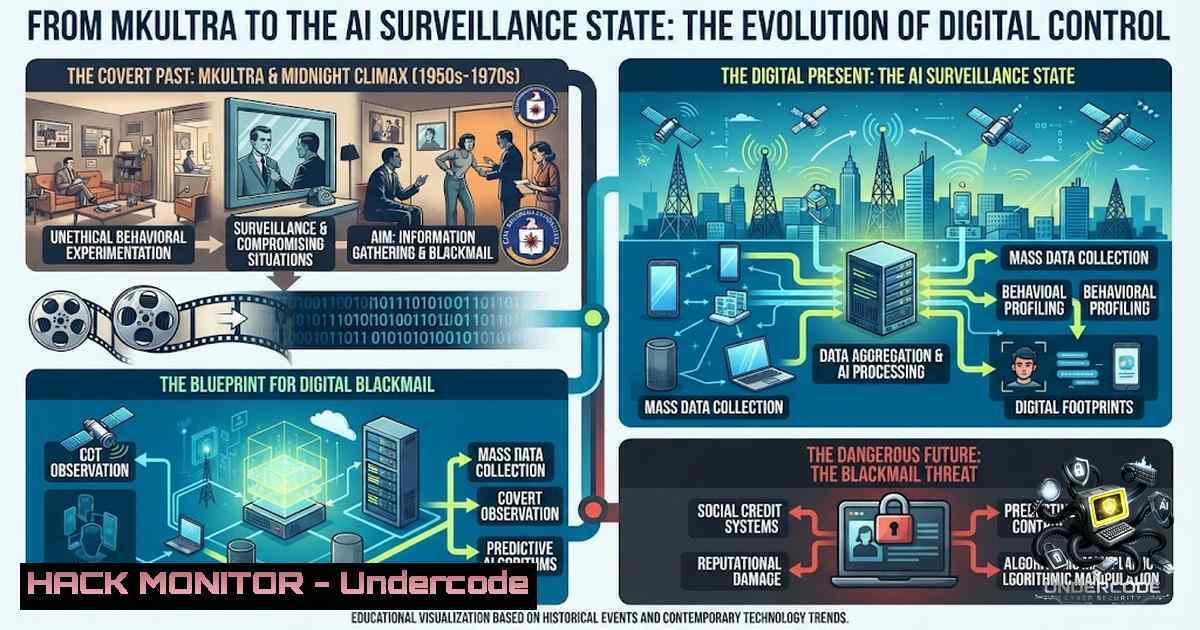
From 1955 to 1965, the CIA, under Project MKULTRA, lured hundreds of unsuspecting American citizens into San Francisco safehouses, dosed them with LSD without consent, and observed their most intimate moments through two-way mirrors. This was Operation Midnight Climax—a pilot program designed to build a permanent infrastructure of compromised individuals, blackmail-ready assets, and contractor-executed operations. Fast forward to today, and the architectural blueprint remains eerily intact. The CIA’s newly established Cyber Mission Center now elevates offensive AI to “digital nuclear” status, while private-sector firms staffed by former intelligence officers run surveillance, influence campaigns, and cyber operations with deliberately obscured attribution. The question is no longer whether one program begat the other—it is why this blueprint keeps resurfacing, and who ultimately controls it.
Learning Objectives:
- Understand the historical continuum from Cold War-era MKULTRA operations to modern AI-driven cyber intelligence frameworks
- Analyze the structural parallels between Midnight Climax’s blackmail infrastructure and today’s surveillance-contracting ecosystem
- Identify practical cybersecurity countermeasures against AI-powered surveillance, data exfiltration, and corporate espionage tactics
- Master Linux and Windows command-line techniques for detecting and mitigating unauthorized monitoring and data leakage
- Evaluate the ethical and operational implications of outsourcing offensive cyber capabilities to the private sector
- The Midnight Climax Playbook: A Blueprint for Digital Blackmail
Operation Midnight Climax was not an aberration—it was a proof of concept for a permanent intelligence infrastructure. The CIA established a web of safehouses in San Francisco, Mill Valley, and New York, where federal agents lured men with prostitutes, dosed them with LSD, and observed their behavior through two-way mirrors. The operational model was simple: create secluded venues, establish financial and sexual leverage, destroy records, and classify everything beyond reach. The goal was to produce “blackmail-ready assets”—individuals who could be controlled through compromised information.
Today, that same playbook operates in the digital domain. Modern intelligence agencies and private contractors collect vast amounts of behavioral, financial, and communications data, creating digital dossiers that can be weaponized for coercion. The shift from physical safehouses to data brokers, from LSD to algorithmic manipulation, represents an evolution, not a departure.
Practical Countermeasures: Digital OpSec for the Modern Era
To protect against digital blackmail and surveillance, implement the following Linux-based operational security measures:
 Check for unauthorized network listeners and established connections
sudo netstat -tulpn | grep LISTEN
sudo ss -tunap | grep ESTAB

Audit system logs for suspicious access patterns
sudo journalctl -f -1 100
sudo grep "Failed password" /var/log/auth.log

Monitor file integrity with AIDE (Advanced Intrusion Detection Environment)
sudo aide --init
sudo aide --check

Encrypt sensitive communications using OpenSSL
openssl enc -aes-256-cbc -salt -in sensitive.txt -out sensitive.enc
For Windows environments, use PowerShell to detect surveillance indicators:
 List all established network connections
Get-1etTCPConnection | Where-Object {$_.State -eq 'Established'}

Check for suspicious scheduled tasks
Get-ScheduledTask | Where-Object {$_.State -1e 'Disabled'}

Audit Windows Event Logs for authentication anomalies
Get-WinEvent -LogName Security | Where-Object {$_.Id -in 4624,4625} | Select-Object TimeCreated, Message
2. The Contractor Model: Outsourcing Covert Operations
From the 1950s to today, the CIA has consistently outsourced high-risk operations to external hands. Operation Midnight Climax was executed by Federal Bureau of Narcotics agents and contractors operating under CIA direction. This model provided plausible deniability—if operations were exposed, the agency could distance itself from the actors involved.
The pattern has only intensified. Following 9/11, intelligence agencies turned to private contractors to rapidly expand cyber and surveillance capabilities. Companies like Booz Allen Hamilton, Palantir, Lockheed Martin, and Raytheon secured massive contracts to fill critical gaps. Today, the intelligence community consumes up to 70 percent of its budget on private contractors, who now perform mission-critical functions including offensive cyber operations, interrogation, and signals intelligence.
The CIA’s recent reorganization formalizes this reliance. The agency has signed approximately 400 technology contracts and accelerated procurement timelines from years to just six months. The new Cyber Mission Center will oversee offensive cyber operations, while the Mission Systems Directorate focuses on defensive cybersecurity and data infrastructure.
Hardening Cloud and API Security Against Contractor Exploitation
Given the extensive contractor access to sensitive systems, organizations must implement robust API security and cloud hardening measures:
 Audit AWS IAM policies for over-privileged roles
aws iam list-roles --query 'Roles[?contains(AssumeRolePolicyDocument, "Principal")]'

Check for publicly accessible S3 buckets
aws s3 ls --recursive | grep -i "public"

Enforce bucket encryption
aws s3 put-bucket-encryption --bucket your-bucket --server-side-encryption-configuration '{"Rules": [{"ApplyServerSideEncryptionByDefault": {"SSEAlgorithm": "AES256"}}]}'

Review CloudTrail logs for unusual API calls
aws cloudtrail lookup-events --lookup-attributes AttributeKey=EventName,AttributeValue=CreateUser --max-items 20
For API security testing against unauthorized access:
 Use OWASP ZAP for API vulnerability scanning
zap-cli quick-scan --self-contained --start-options "-config api.disablekey=true" https://api.yourdomain.com

Test for rate limiting and brute-force protections
for i in {1..100}; do curl -X POST https://api.yourdomain.com/login -d '{"username":"admin","password":"guess'$i'"}' ; done
- AI as “Digital Nuclear Weapons”: The New Frontier of Offensive Intelligence
CIA Director John Ratcliffe recently described frontier AI models as “digital nuclear weapons,” stating they are “rewriting the reality of warfare”. The CIA’s reorganization prioritizes the digital domain as a core battlefield, with a new Cyber Mission Center dedicated to offensive cyber operations. Ratcliffe emphasized that “more CIA officers must become as familiar with handling computer code as they are with managing human intelligence sources”.
This represents a fundamental shift. The same logic that drove MKULTRA—the need to control human behavior through chemical and psychological manipulation—now drives the development of AI systems capable of mass surveillance, influence campaigns, and automated targeting. The difference is scale: AI can process intelligence, intercept communications, and generate targets at speeds impossible for human analysts.
AI-Powered Threat Detection and Mitigation
To defend against AI-driven surveillance and cyber operations, deploy these detection and response techniques:
 Monitor for anomalous network traffic using Zeek (formerly Bro)
zeek -r capture.pcap -C local

Detect data exfiltration patterns with Snort
snort -A console -q -c /etc/snort/snort.conf -i eth0

Use Suricata for real-time threat detection
suricata -c /etc/suricata/suricata.yaml -i eth0

Analyze DNS logs for C2 communication patterns
grep -E "(dns|DNS)" /var/log/suricata/.log | cut -d' ' -f10 | sort | uniq -c | sort -1r
For Windows-based AI threat hunting:
 Collect and analyze PowerShell script block logs for obfuscation
Get-WinEvent -LogName 'Microsoft-Windows-PowerShell/Operational' | Where-Object {$_.Id -eq 4104} | Select-Object TimeCreated, Message

Monitor for suspicious WMI activity
Get-WinEvent -LogName 'Microsoft-Windows-WMI-Activity/Operational' | Where-Object {$_.Id -in 5858,5859}

Check for unusual scheduled task creation
Get-ScheduledTask | Where-Object {$_.Actions -match "powershell|cmd|wscript"}
- The Attribution Problem: Deniability Built Into the Contracting Model
One of the most dangerous aspects of the modern intelligence-contracting ecosystem is the deliberate obscuration of attribution. When private firms execute surveillance, influence campaigns, and cyber operations, responsibility becomes fragmented. Who is accountable when a contractor’s AI system targets the wrong individual? When data collected for “security” purposes is repurposed for blackmail?
This mirrors the Midnight Climax model, where the CIA could deny knowledge of operations conducted by “contractors” like George Hunter White. The pattern extends through history: Gladio’s false flags, Northwoods’ proposed terror attacks, and now, AI-powered cyber operations outsourced to the private sector.
Digital Forensics for Attribution and Accountability
Organizations and security professionals can use these forensic techniques to trace unauthorized activities and establish accountability:
 Extract and analyze metadata from suspicious files
exiftool -a -u suspicious_file.pdf
binwalk -e suspicious_file.bin

Recover deleted files from storage media
testdisk /dev/sda
photorec /dev/sda

Analyze network packet captures for malicious traffic
tshark -r capture.pcap -Y "http.request or dns" -T fields -e ip.src -e ip.dst -e http.request.uri -e dns.qry.name

Generate hash values for file integrity verification
sha256sum /path/to/suspicious/file
md5sum /path/to/suspicious/file
For Windows forensic analysis:
 Collect system information and running processes
Get-Process | Out-File -FilePath processes.txt
Get-Service | Out-File -FilePath services.txt

Examine Prefetch files for executed programs
Get-ChildItem C:\Windows\Prefetch -Filter .pf | ForEach-Object { $_.Name }

Check for recent file access and modifications
Get-ChildItem -Path C:\Users\ -Recurse | Where-Object {$_.LastWriteTime -gt (Get-Date).AddDays(-7)}
- Blackmail Infrastructure: From Physical Safehouses to Digital Dossiers
The Midnight Climax blueprint was always about leverage—creating compromised individuals who could be controlled. The safehouses, the drugs, the two-way mirrors—all were tools to generate compromising material. Today, that infrastructure exists in digital form. Data brokers collect and sell behavioral profiles. Social media platforms log every interaction. Corporate surveillance tools monitor employee communications. Government agencies access metadata en masse.
The question posed by Andy Jenkinson of Whitethorn Shield is critical: “Why the blueprint keeps surfacing—and who ultimately manages and controls it”. The answer lies in the continuity of institutional logic. Whether through LSD or AI, the goal remains the same: control through compromise.
Protecting Personal and Organizational Data from Digital Blackmail
Implement these data protection and encryption strategies:
 Full disk encryption with LUKS
cryptsetup luksFormat /dev/sdX
cryptsetup open /dev/sdX encrypted_volume
mkfs.ext4 /dev/mapper/encrypted_volume

Secure file deletion (prevent recovery)
shred -vfz -1 10 sensitive_file.txt
wipe -rf /path/to/sensitive/directory

Email encryption with GPG
gpg --full-generate-key
gpg --encrypt --recipient [email protected] message.txt
gpg --decrypt message.txt.gpg

Secure communication with SSH tunneling
ssh -D 1080 [email protected]
ssh -L 8443:target-server:443 [email protected]
Windows-based encryption and data protection:
 Enable BitLocker encryption
Enable-BitLocker -MountPoint "C:" -EncryptionMethod XtsAes256

Securely delete files using cipher
cipher /w:C:\path\to\directory

Configure Windows Defender Firewall for outbound filtering
New-1etFirewallRule -DisplayName "Block Outbound Suspicious" -Direction Outbound -Action Block -RemoteAddress 192.168.1.0/24

Audit local group policy for security settings
Get-GPResultantSetOfPolicy -ReportType Xml -Path C:\policy.xml
- The Human Element: Why Final Decisions Must Remain Human
Despite the rapid advancement of AI, Ratcliffe has stressed that “only humans can ultimately decide which direction is correct”. The CIA’s reorganization explicitly prioritizes “human oversight in AI-driven warfare”. This reflects a recognition that algorithmic decision-making, however sophisticated, cannot replace human judgment—particularly when lives and liberty are at stake.
This is the critical distinction between Midnight Climax and modern AI surveillance. The former involved direct human manipulation; the latter involves algorithmic systems that can operate at scale, often without meaningful oversight. The danger is not merely that AI will be used for surveillance, but that it will be used to automate coercion—identifying vulnerabilities, predicting behavior, and generating leverage without human intervention.
Building Human-Centric Security Frameworks
Security professionals should implement these measures to maintain human oversight and accountability:
 Implement mandatory access control with SELinux
setenforce 1
semanage boolean -l | grep -i "allow"

Configure auditd for critical system events
auditctl -w /etc/passwd -p wa -k identity_changes
auditctl -w /etc/sudoers -p wa -k sudoers_changes
auditctl -e 1

Set up two-factor authentication for SSH
apt-get install libpam-google-authenticator
google-authenticator
 Then configure /etc/pam.d/sshd and /etc/ssh/sshd_config
For Windows identity and access management:
 Enforce multi-factor authentication via policy
Set-ADFSProperties -EnableIdpInitiatedSignonPage $true

Configure Windows Hello for Business
Set-WindowsHelloForBusiness -Enable $true

Audit privileged access groups
Get-ADGroupMember -Identity "Domain Admins" | Select-Object Name

Implement AppLocker policies
Get-AppLockerPolicy | Set-AppLockerPolicy -PolicyXml C:\AppLocker.xml
What Undercode Say:
- The Architecture Endures: The operational blueprint of Midnight Climax—secluded venues, leverage creation, contractor execution, and record destruction—has been seamlessly translated into the digital age. The safehouses are now data centers; the LSD is now algorithmic manipulation; the two-way mirrors are now AI-powered surveillance systems.
-
Attribution Is the Achilles’ Heel: The deliberate obscuration of responsibility through private contracting creates systemic vulnerabilities. When accountability is fragmented, abuses proliferate. The cybersecurity community must develop forensic and attribution capabilities that can pierce through this veil of deniability.
-
AI Amplifies, It Does Not Replace: The CIA’s emphasis on human oversight is not merely rhetorical. AI can process data at scale, but it cannot replicate human judgment, ethical reasoning, or contextual understanding. Security frameworks must embed human decision-making at critical junctures.
-
The Blackmail Economy Is Real: The collection of behavioral, financial, and communications data creates a digital dossier that can be weaponized. Organizations and individuals must adopt aggressive data minimization, encryption, and operational security practices to reduce their exposure.
-
History Repeats, but We Can Learn: The pattern from Gladio to Northwoods to Midnight Climax to modern AI surveillance reveals a consistent institutional logic. Recognizing this pattern is the first step toward building countermeasures that protect privacy, autonomy, and democratic accountability.
Prediction:
-
+1 The cybersecurity industry will experience a surge in demand for AI-driven threat detection, privacy-preserving technologies, and zero-trust architectures as organizations seek to defend against state-sponsored and contractor-operated surveillance.
-
-1 The normalization of AI-powered surveillance and offensive cyber operations will accelerate the erosion of privacy rights, with governments and corporations amassing unprecedented levels of behavioral data that can be weaponized for coercion and control.
-
-1 The lack of meaningful oversight and accountability in intelligence contracting will lead to high-profile abuses, as private firms prioritize profit over mission effectiveness and ethical constraints.
-
+1 Open-source intelligence (OSINT) and decentralized technologies will emerge as critical counterweights, enabling civil society, journalists, and security researchers to expose and challenge abuses of power.
-
-1 The “digital nuclear” arms race will intensify geopolitical tensions, with rival nations accelerating AI development and cyber capabilities, increasing the risk of miscalculation and escalation.
-
+1 The security community will develop standardized frameworks for AI governance, ethical hacking, and responsible disclosure, establishing norms that can constrain the most dangerous applications of surveillance technology.
-
-1 The outsourcing model will continue to expand, with intelligence agencies relying on private contractors for an ever-growing share of offensive cyber operations, further blurring the line between state action and corporate profit.
-
+1 Whistleblower protections and digital rights advocacy will gain momentum, as the public becomes increasingly aware of the scale and scope of modern surveillance infrastructure.
-
-1 The most vulnerable populations—activists, journalists, dissidents, and marginalized communities—will bear the brunt of AI-powered surveillance and algorithmic targeting, exacerbating existing inequalities.
-
+1 The cybersecurity profession will evolve to include specialized roles in AI ethics, surveillance countermeasures, and digital forensics, creating new career pathways for those committed to protecting human rights in the digital age.
▶️ Related Video (68% Match):
https://www.youtube.com/watch?v=AWfX_hwTAwQ
🎯Let’s Practice For Free:
🎓 Live Courses & Certifications:
Join Undercode Academy for Verified Certifications
🚀 Request a Custom Project:
Secure, high-velocity infrastructure and disruptive technological engineering. Contact our engineering team for high-tier development and proprietary systems:
[email protected]
💎 Smart Architecture | 🛡️ Secure by Design | ⭐ Trusted by Thousands
IT/Security Reporter URL:
Reported By: Andy Jenkinson – Hackers Feeds
Extra Hub: Undercode MoN
Basic Verification: Pass ✅


