Listen to this Post
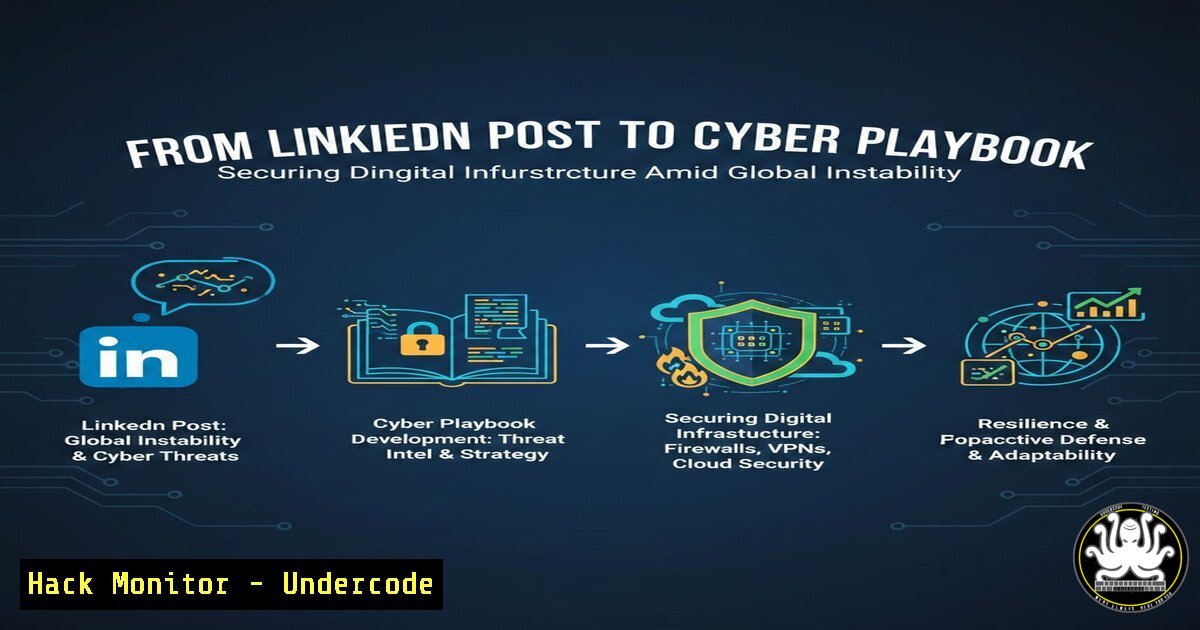
Introduction:
While the original post discusses the geopolitical implications of international conflict, for cybersecurity professionals, such global instability signals a surge in digital warfare. Nation-state actors often accompany kinetic military actions with aggressive cyber campaigns, targeting critical infrastructure, supply chains, and public communications. This article pivots from geopolitical analysis to a technical reality: how to harden your digital assets against the cyber shockwaves of international conflict. We will explore threat intelligence gathering, infrastructure hardening, and incident response protocols to prepare for the inevitable spillover of state-sponsored hacking.
Learning Objectives:
- Understand how to monitor and analyze threat intelligence feeds during geopolitical crises.
- Learn to implement rapid hardening techniques for cloud and on-premise infrastructure.
- Master incident response steps specific to nation-state actor tactics (DDoS, data wipers, supply chain attacks).
- Identify and secure potential entry points exploited in conflict-driven cyber campaigns.
You Should Know:
- Proactive Threat Intelligence Gathering: Monitoring the Digital Battlefield
Before a conflict erupts, threat actors engage in reconnaissance. During active conflict, this escalates to exploitation. You must shift from passive defense to active intelligence gathering.
Step‑by‑step guide: Setting up a threat intelligence feed focused on geopolitical hotspots.
This process involves aggregating data from open-source intelligence (OSINT), commercial feeds, and government alerts to predict and identify attacks targeting your sector.
- Identify Relevant Sources: Subscribe to alerts from CISA (US), NCSC (UK), and ANSSI (France). For conflict-specific intelligence, monitor cybersecurity vendor blogs (Mandiant, CrowdStrike, Unit 42) and dark web forums via specialized tools.
- Automate Feed Collection: Use a SIEM (like Splunk or Wazuh) or a Threat Intelligence Platform (MISP – Malware Information Sharing Platform) to aggregate RSS feeds and API data.
Linux Command to fetch and parse a feed (using `curl` andjq):curl -s "https://api.threatintelplatform.com/v1/indicators/actor=Iran" | jq '.[] | {ip: .ip_address, confidence: .confidence_score}' - Create a Watchlist: Develop indicators of compromise (IoCs) specific to the region/actor. This includes IP addresses, domains, and file hashes associated with groups like APT33 (Elfin) or APT34 (OilRig).
- Integrate IoCs into Defenses: Automatically block identified IoCs at the firewall (iptables) or WAF level.
Windows PowerShell command to add a firewall rule blocking a suspicious IP:New-NetFirewallRule -DisplayName "Block Threat Actor IP" -Direction Inbound -LocalPort Any -Protocol Any -RemoteAddress 192.0.2.45 -Action Block
2. Hardening Public-Facing Assets Against DDoS and Defacement
Conflicts often trigger hacktivist and state-sponsored DDoS attacks aimed at disrupting public services and spreading propaganda via website defacement. Your edge must be resilient.
Step‑by‑step guide: Implementing a rapid DDoS mitigation and web hardening protocol.
1. Enable Rate Limiting on Web Servers: Configure your reverse proxy (Nginx/Apache) to limit requests from a single IP.
Nginx Configuration Snippet (in `server` block):
limit_req_zone $binary_remote_addr zone=mylimit:10m rate=10r/s;
server {
location / {
limit_req zone=mylimit burst=20 nodelay;
proxy_pass http://your_backend;
}
}
2. Activate WAF in Blocking Mode: If you use Cloudflare, AWS WAF, or ModSecurity, ensure your ruleset is updated to block common attack patterns (SQLi, XSS) and not just log them.
3. Implement Geo-Blocking (with caution): If your organization has no business presence in the conflict zone, temporarily block all traffic from that region at the firewall level.
Linux (iptables) command to block traffic from a specific country (using xtables-addons):
 Download and load the GeoIP database, then block Iran (IR)
iptables -A INPUT -m geoip --src-cc IR -j DROP
- Securing the Software Supply Chain Against Tainted Updates
During the Ukraine conflict, we saw supply chain attacks where legitimate software updates were weaponized. Attackers compromise dev tools or update mechanisms to deploy malware (wipers, backdoors) widely.
Step‑by‑step guide: Verifying software and dependency integrity.
- Enforce Signed Commits: Ensure all code in your repository is signed with GPG keys. Reject any unsigned commits.
Git command to verify a commit signature:
git log --show-signature
2. Pin and Verify Package Hashes: Do not rely on dynamic version tags (e.g., latest) in your Dockerfiles or requirements.txt. Use specific version hashes.
Dockerfile example using hash verification for an Alpine package:
 Instead of: RUN apk add curl
 Download and verify checksum before installing
RUN wget -O curl.tar.gz https://example.com/curl.tar.gz && \
echo "expected_sha256_hash curl.tar.gz" | sha256sum -c && \
tar -xzf curl.tar.gz
3. Monitor Internal Systems for Beaconing: Deploy a network monitoring tool like Zeek (formerly Bro) to detect unusual outbound connections from servers that could indicate a compromised update phoning home.
4. Incident Response: The “Wiper” Attack Playbook
A hallmark of modern conflict-zone cyberattacks is the “wiper” – malware designed to destroy data and render systems inoperable. Speed of isolation is critical.
Step‑by‑step guide: Containing a suspected wiper outbreak.
- Immediate Network Isolation: Do not shut down the machine (forensic data in memory may be lost), but pull the network cable immediately. In a virtualized environment, block the VM’s virtual NIC.
- Identify Patient Zero and Lateral Movement: Check logs to see which system first exhibited the behavior (e.g., massive file renames) and which accounts were used.
- Block Compromised Accounts: Disable the affected user accounts in Active Directory immediately.
Windows PowerShell (AD Module) to disable a user:
Disable-ADAccount -Identity "username"
4. Restore from Immutable Backups: If you have an immutability policy on your backups (e.g., AWS S3 Object Lock), this is the time to use it. Wipers often target backups first. Ensure your recovery process is practiced and documented.
5. Cloud Infrastructure Hardening: Assuming Breach During Wartime
In times of high geopolitical tension, assume that credentials could be leaked or cloud APIs targeted. Implement “blast radius” reduction.
Step‑by‑step guide: Implementing emergency cloud access controls.
- Enforce Conditional Access: Require phishing-resistant MFA (e.g., FIDO2 keys) for all console access. Temporarily disable API keys that are not strictly necessary.
- Review IAM Policies: Run a script to identify any over-privileged roles. Use tools like `aws iam simulate-principal-policy` to test what a specific user can actually do.
- Enable Cloud Trail/Log Analytics at Maximum: Increase verbosity of logs. In AWS, enable S3 server access logs and CloudTrail for all regions (including read events) to detect reconnaissance.
- Harden Kubernetes Clusters: If you run containers, review your `PodSecurityPolicies` or use OPA/Gatekeeper to prevent privileged containers from being deployed, which could be used to escape to the host node.
What Undercode Say:
- Geopolitics is a Threat Vector: Cybersecurity can no longer be separated from international relations. A conflict between nations is a digital conflict waiting to happen, and your infrastructure is a potential battlefield.
- Preparation Over Reaction: The organizations that survive a wave of state-sponsored attacks are those that have practiced their incident response, hardened their configurations, and established offline, immutable backups before the bombs start falling or the news cycle explodes.
The pattern of modern warfare is clear: kinetic strikes are preceded, accompanied, and followed by sustained cyber campaigns targeting not just military, but civilian infrastructure, energy grids, and financial systems. The chaos described in the original post regarding ground wars is mirrored in the digital realm by data chaos, system downtime, and the destruction of information integrity. We must shift our mindset from defending a perimeter to ensuring mission resilience.
Prediction:
As proxy conflicts escalate, we will see a rise in “hack-for-hire” groups and non-state actors being contracted to carry out cyber-attacks, muddying the attribution waters further. The next major cyber event will not be a simple data breach, but a coordinated, multi-vector attack combining DDoS, wipers, and disinformation campaigns designed to paralyze a nation’s critical functions simultaneously, exploiting the confusion of a kinetic event to maximize damage and erode public trust in digital infrastructure.
▶️ Related Video (84% Match):
🎯Let’s Practice For Free:
IT/Security Reporter URL:
Reported By: Hanslak Peace – Hackers Feeds
Extra Hub: Undercode MoN
Basic Verification: Pass ✅


