Listen to this Post
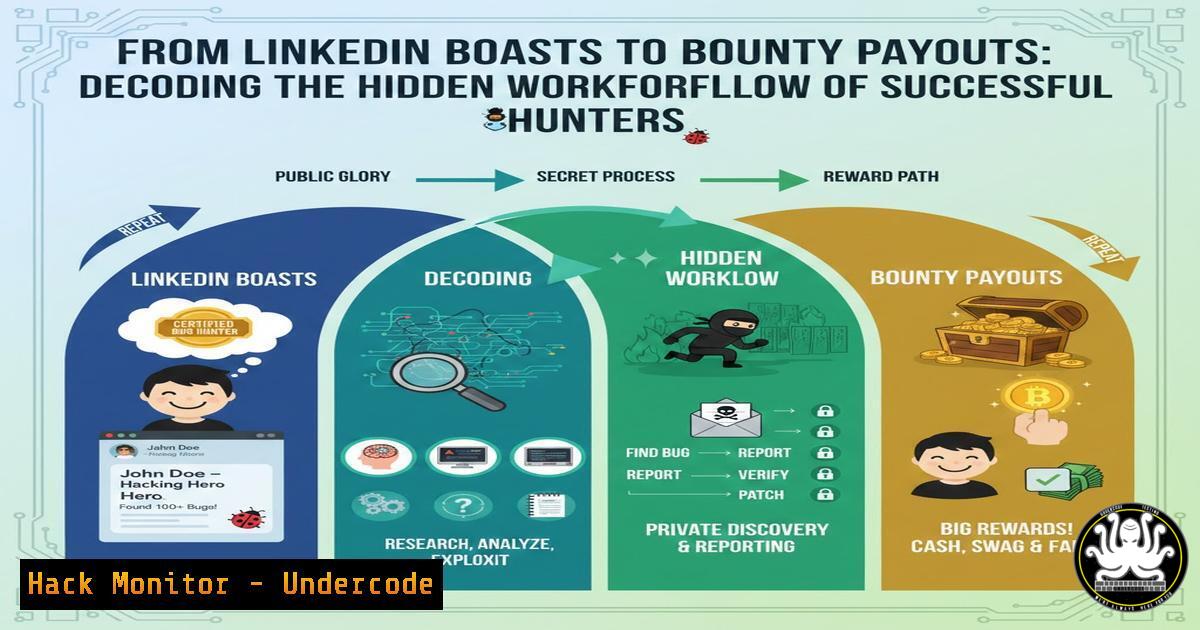
Introduction:
A cryptic LinkedIn post celebrating found vulnerabilities reveals more than just success; it hints at a rigorous, methodical process behind every “bounty won” announcement. For aspiring penetration testers and bug hunters, understanding this hidden workflow—from reconnaissance to proof-of-concept to professional disclosure—is the key to transitioning from social media congratulations to actual cash rewards. This article deconstructs the unspoken technical journey, providing the actionable steps that transform enthusiasm into effective, ethical security research.
Learning Objectives:
- Master the foundational reconnaissance methodology for modern web applications.
- Learn to effectively utilize automated scanners while understanding their critical limitations.
- Develop a manual testing mindset to find logic flaws and complex chained vulnerabilities.
- Construct a legally and professionally sound vulnerability disclosure report.
You Should Know:
1. The Art of Passive and Active Reconnaissance
Before a single payload is sent, successful hunters map the target’s digital footprint. This phase identifies all attack surfaces, including forgotten subdomains, exposed APIs, and third-party services.
Step‑by‑step guide:
- Passive Enumeration: Use OSINT (Open-Source Intelligence) tools to collect information without touching the target’s servers.
Subdomain enumeration using amass and subfinder
amass enum -passive -d target.com -o amass_passive.txt
subfinder -d target.com -o subfinder.txt
sort -u amass_passive.txt subfinder.txt > all_subs.txt
- Active Enumeration: Probe the discovered assets to find live hosts and web services.
Use httpx to filter live HTTP servers from the subdomain list
cat all_subs.txt | httpx -silent -o live_targets.txt
Use naabu for fast port scanning on critical targets
naabu -list live_targets.txt -top-ports 100 -o naabu_ports.txt
- Technology Fingerprinting: Identify technologies (CMS, frameworks, servers) to tailor your attacks.
Use webanalyze or wappalyzer CLI
webanalyze -hosts live_targets.txt -crawl 2 -output json
2. Leveraging Automated Scanners Wisely
Automated vulnerability scanners are force multipliers, not replacements for skill. They are best used for finding low-hanging fruit and augmenting manual analysis.
Step‑by‑step guide:
- Run a Targeted Nuclei Scan: Use projectdiscovery’s nuclei with templates for your target’s tech stack.
Scan for common vulnerabilities on live targets
nuclei -list live_targets.txt -t ~/nuclei-templates/http/exposures/ -o nuclei_exposures.txt
Scan for specific tech vulnerabilities, e.g., WordPress
nuclei -list live_targets.txt -t ~/nuclei-templates/http/wordpress/ -o nuclei_wordpress.txt
- Analyze Results Critically: False positives are rampant. Manually verify every finding. A scanner might flag a potential SQL injection, but you must confirm it’s exploitable and not a sanitized parameter.
3. Manual Vulnerability Discovery & Exploitation
This is where skill shines. Hunt for business logic flaws, insecure direct object references (IDOR), and complex injection attacks.
Step‑by‑step guide for testing IDOR:
- Log into an application with two user accounts (e.g., `userA` and
userB). - Note an API endpoint or parameter that accesses a resource (e.g.,
/api/v1/orders/123). - In
userB‘s session, try to accessuserA‘s resource by changing the ID (e.g.,/api/v1/orders/124). - If successful, you’ve found an IDOR. Document the request/response cycle with a tool like Burp Suite.
Example SQL Injection Proof-of-Concept:
 Using sqlmap for a verified, ethical PoC on a test endpoint
sqlmap -u "https://target.com/search?q=test" --batch --risk=1 --level=1 --dbs
Always have explicit, written permission before running exploitation tools like sqlmap against any system.
4. Proof-of-Concept (PoC) Development
A valid PoC demonstrates impact without causing damage. For a stored XSS, this might be a harmless alert box. For an SSRF, it could be a callback to a controlled server like Burp Collaborator.
Example SSRF PoC Test:
- Set up a listener on Burp Collaborator or
interact.sh. - Inject the listener URL into a vulnerable parameter (e.g., `url=https://yourpayload.burpcollaborator.net`).
3. A callback received confirms the vulnerability.
5. Crafting the Professional Disclosure Report
This is your billable deliverable. It must be clear, concise, and actionable.
Step‑by‑step guide:
- Clear severity and issue (e.g., “Critical – Unauthenticated Remote Code Execution via File Upload”).
2. Summary: Brief description of the vulnerability.
3. Affected Component: Exact URL, parameter, API endpoint.
- Steps to Reproduce: Numbered, detailed steps from an unauthenticated state.
- Proof of Concept: Screenshots, video, or curl commands.
- Impact: Analysis of what an attacker could achieve (data breach, system compromise).
- Remediation: Suggested fix (e.g., “Implement input validation and use allow-lists for file uploads.”).
6. Secure Communication and Follow-up
Use the platform’s designated security channel (HackerOne, Bugcrowd, or a security@ email). Encrypt sensitive details with PGP if available. Be patient and professional in all follow-up communications.
What Undercode Say:
- The Celebration is the Tip of the Iceberg: Every social media post about a found bug is the endpoint of a silent, grueling process involving systematic research, meticulous documentation, and professional etiquette. The technical work is only half the battle.
- Tools Don’t Find Bugs, Minds Do: While automated scanners are essential, the highest-value vulnerabilities—business logic errors, complex authorization bypasses—are found through manual, creative analysis that understands the application’s unique workflow.
The LinkedIn post exemplifies a growing culture of public recognition in cybersecurity, which drives competition and learning. However, it risks glamorizing the outcome while obscuring the critical, less glamorous process. True proficiency isn’t shown in a screenshot of a bounty but is embodied in the reproducible methodology that consistently finds flaws. The difference between a hobbyist and a professional is often found in the quality of the disclosure report and the adherence to responsible practices, not just the discovery itself.
Prediction:
The future of bug hunting will be shaped by AI-assisted reconnaissance and vulnerability discovery, where tools will move beyond simple pattern matching to understanding application context and suggesting novel attack vectors. This will raise the baseline skill floor, forcing hunters to specialize further in complex domains like cloud infrastructure, blockchain smart contracts, and AI model security. Platforms will increasingly prioritize hunters who can demonstrate not just exploitation, but also provide AI-augmented, context-aware remediation advice, turning the bug bounty marketplace into a premier source for advanced security research and automated fix generation. The social media post will evolve from a boast to a linked, verifiable record of a found vulnerability within a larger, AI-curated reputation graph.
▶️ Related Video (80% Match):
🎯Let’s Practice For Free:
IT/Security Reporter URL:
Reported By: Ahmed Ghazy – Hackers Feeds
Extra Hub: Undercode MoN
Basic Verification: Pass ✅


