Listen to this Post
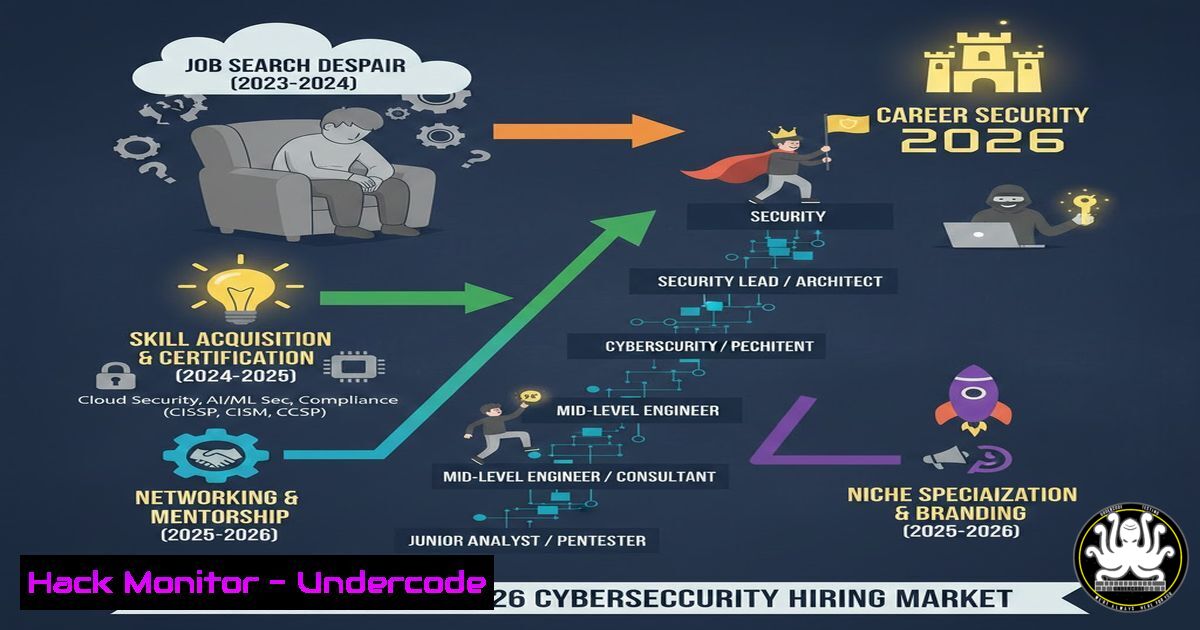
Introduction:
The 2026 job market forecasts a tense landscape, with unemployment potentially rising and competition intensifying, especially in technical fields like cybersecurity and IT infrastructure. This article translates a recruiter’s five core strategies for job seekers into a actionable, technical playbook for cybersecurity professionals, system administrators, and cloud engineers to systematically target, engage, and secure their next role.
Learning Objectives:
- Learn how to perform targeted reconnaissance on potential employers and tailor application artifacts (CV, GitHub, portfolio) for maximum impact.
- Master the technical “elevator pitch” and understand how to demonstrate actionable skills in under 10 seconds during initial screenings.
- Develop a low-pressure, high-value network reactivation and engagement strategy using professional platforms and community contributions.
You Should Know:
1. Strategic Targeting: Reconnaissance and Precision Application
The scattergun approach of applying to every open req is inefficient and exhausting. For a technical role, precision is key. This involves active reconnaissance on the target company’s tech stack, threat landscape, and public infrastructure to tailor your application.
Step‑by‑step guide explaining what this does and how to use it.
Step 1: Infrastructure Mapping. Use passive reconnaissance tools to understand their public footprint. For a sysadmin or cloud engineer role, this shows initiative.
Command (Linux): `nslookup -type=MX targetcompany.com` (Identifies mail servers).
Command (Linux): `dig ANY targetcompany.com` (Gets various DNS records).
Tool: Use `whois` or online ASN lookups to identify their hosting provider (AWS, Azure, OVH).
Step 2: Tech Stack Analysis. Inspect their career page and engineering blog. Use browser developer tools (F12) on their main website to identify JavaScript frameworks, web servers, and APIs.
Step 3: Tailor Your Artifacts. Adjust your CV and cover letter. If you see they use Proxmox/VMware and are seeking a Windows/Linux admin, highlight your Hyper-V, powershell, or `ansible` experience in the context of their needs. Mention the tools you used in Step 1.
2. The 10-Second Readability Audit: Quantifying Your Skills
Recruiters and hiring managers skim. Your LinkedIn headline, CV summary, and GitHub README must communicate value instantly. Avoid vague “team player” statements; use concrete, quantified, keyword-rich language.
Step‑by‑step guide explaining what this does and how to use it.
Step 1: Audit Your Public Profiles. View your LinkedIn and GitHub as a stranger. Is your headline “IT Professional” or “Cybersecurity Analyst | SIEM (Splunk) & EDR (CrowdStrike) Deployment | Reduced MTTR by 30%”?
Step 2: Craft a Technical Summary. Use this formula: `[bash] specializing in [Core Tech 1], [Core Tech 2]. Experienced in [Key Activity] resulting in [Quantifiable Outcome].` Example: “Systems Administrator specializing in Linux hardening, AWS infrastructure, and containerization (Docker). Automated patch deployments via Ansible, reducing critical vulnerability window by 70%.”
Step 3: Pinnacle Project. Pin a GitHub repository that solves a real problem. Include a clean `README.md` with an “Abstract” section at the top explaining the tool’s purpose, tech stack, and how to run it in two commands.
3. Preparing Your Technical Pitch and Narrative
Your pitch is not a biography; it’s a story of problem, action, and result using technology. Structure your interview narrative around STAR (Situation, Task, Action, Result) but with technical depth.
Step‑by‑step guide explaining what this does and how to use it.
Step 1: Script Your Scenarios. Prepare 3-5 stories. For a cybersecurity anecdote: “Situation: Recurring phishing incidents. Task: Improve user resilience. Action: Deployed a custom `gophish` campaign with tailored training modules. Result: Phish-click rate dropped from 15% to 3% in one quarter.”
Step 2: Demonstrate Command-Line Fluency. Be ready to explain concepts simply. If asked about log analysis, you might say: “I’d start with `grep` for pattern matching, then use `awk` to extract specific fields, and pipe to `sort | uniq -c` to count occurrences, potentially feeding that into a simple Python script for alerting.”
Step 3: Whiteboard Basics. Practice diagramming a secure network architecture or explaining the lifecycle of a malware sample from detection to containment.
4. Reactivating Your Network with Value, Not Pressure
A sincere, value-driven message trumps a generic “I’m looking for a job” request. Share an insight, an article, or contribute to a discussion.
Step‑by‑step guide explaining what this does and how to use it.
Step 1: Identify Targets. Use LinkedIn search: “Security Engineers at [Target Company]” or “Former Colleagues.”
Step 2: Craft the Message Template. “Hi [bash], I was reviewing your recent post on API security and it reminded me of a project where I implemented rate-limiting and JWT validation using `nginx` and a custom Lua script. I’m currently exploring new opportunities in [specific area] and would appreciate any insights you might have about the landscape. No pressure at all, but if you have 10 minutes for a virtual coffee, I’d love to connect.” This demonstrates skill and context.
Step 3: Engage in Communities. Answer a question on Stack Overflow, contribute a small fix to an open-source tool on GitHub, or share a useful iptables/Windows Firewall rule in a relevant subreddit. This builds visible credibility.
5. Protecting Your Energy: Automating the Grind
Job hunting is stressful. Use technology to automate tedious tasks, freeing mental energy for high-value activities like studying and networking.
Step‑by‑step guide explaining what this does and how to use it.
Step 1: Automate Application Tracking. Don’t use a spreadsheet manually. Use a tool like `obsidian` or a simple self-hosted CRM.
Step 2: Set Up Alert Automation. Use `python` with the `requests` and `beautifulsoup4` libraries (respecting robots.txt) to scrape job boards for specific keywords, or better, use platform APIs if available.
Step 3: Dedicated “Search” Environment. Create a separate browser profile for job hunting to avoid mixing personal and professional browsing, keeping cookies and sessions clean.
What Undercode Say:
- The Technical Differentiator is Narrative: In a crowded market, the ability to frame hard technical skills (like using `nmap` or configuring
Group Policy) within a compelling story of business risk and impact is the ultimate differentiator. It’s not just what you can do, but why you did it and what it saved. - Visibility is a Security Parameter: Treat your professional online presence like a public-facing server. Harden it (remove outdated info), monitor it (track who views your profile), and ensure it’s serving the correct “service” (your desired career path) without vulnerabilities (typos, inconsistencies).
The recruiter’s post underscores a human truth in a digital hiring ecosystem: connection and clarity win. For technical professionals, this translates to leveraging your analytical and automation skills not just on the job, but on the job search itself. The candidate who demonstrates systematic, tool-assisted precision in their hunt inherently proves their capability for the role.
Prediction:
The convergence of a tight job market and escalating cyber threats will create a bifurcation in 2026. Generic IT generalists will struggle more, while specialists who can articulate and demonstrate skills in high-demand areas like cloud security posture management (CSPM), AI-augusted threat hunting, and zero-trust architecture implementation will see increased demand. The hiring process will further integrate practical, hands-on technical assessments (like brief blue team/red team scenarios in isolated labs) as a standard filter, moving beyond theoretical interviews. Professionals who build and maintain a “living portfolio” of scripts, configurations, and write-ups will navigate this shift most effectively.
▶️ Related Video (76% Match):
🎯Let’s Practice For Free:
IT/Security Reporter URL:
Reported By: Murvyn Si – Hackers Feeds
Extra Hub: Undercode MoN
Basic Verification: Pass ✅


