Listen to this Post
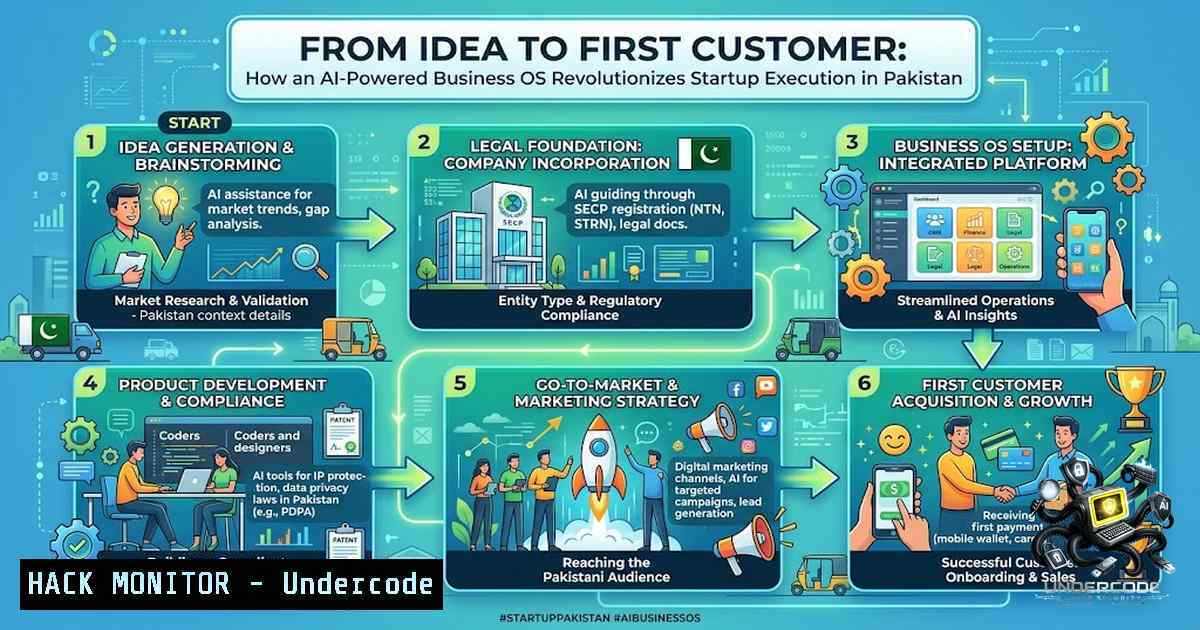
Introduction:
The chasm between a brilliant business idea and a revenue-generating reality is often fraught with paralysis, misinformation, and financial risk. In emerging markets, the lack of structured guidance and technical infrastructure stifles innovation before it can even take root. Recognizing this critical gap, a new initiative is leveraging Generative AI and Python automation to build a comprehensive Business Operating System (OS) designed to democratize entrepreneurship and bridge the gap between ambition and execution.
Learning Objectives:
- Understand the technical architecture of an AI-powered business validation and execution platform.
- Identify key IT and security considerations for building a SaaS platform for entrepreneurs.
- Learn essential automation scripts and API security practices for protecting user data and scaling operations.
You Should Know:
1. Securing the Developer’s Sandbox: Initial Environment Hardening
Before a single line of code is written for the AI Business OS, the underlying infrastructure must be fortified. This involves securing the development environment against supply chain attacks and unauthorized access. For a Python-heavy project relying on Generative AI libraries, dependency confusion is a significant risk.
To mitigate this, developers must utilize virtual environments and strict package management. On Linux, securing the environment begins with system updates and firewall configuration:
sudo apt update && sudo apt upgrade -y
sudo ufw enable
sudo ufw allow 22/tcp  SSH
sudo ufw allow 443/tcp  HTTPS
For Windows environments (WSL2), the process involves similar steps alongside Windows Defender Firewall configuration via PowerShell:
New-1etFirewallRule -DisplayName "Allow HTTPS" -Direction Inbound -LocalPort 443 -Protocol TCP -Action Allow
Furthermore, integrating tools like `pip-audit` into the CI/CD pipeline ensures that no vulnerable Python packages are deployed. This proactive stance on vulnerability management is crucial to protect the startup’s intellectual property and user data.
- Building the AI Core: API Security and Key Management
The platform’s intelligence relies on external Large Language Models (LLMs) and automation APIs. The most common failure vector in AI SaaS products is the exposure of API keys in client-side code or version control systems. To build a secure “intelligent platform,” developers must implement robust API key management using environment variables and secrets management tools like HashiCorp Vault or cloud-1ative solutions (AWS Secrets Manager, Azure Key Vault).
Here is a Python snippet demonstrating secure key retrieval:
import os
from dotenv import load_dotenv
load_dotenv()
API_KEY = os.getenv("OPENAI_API_KEY")
Additionally, implementing rate limiting and input validation is critical. Without it, the system is vulnerable to injection attacks and API abuse. A simple Flask middleware approach:
from flask_limiter import Limiter
from flask_limiter.util import get_remote_address
limiter = Limiter(app, key_func=get_remote_address)
@limiter.limit("5 per minute")  Protect the AI generation endpoint
def generate_roadmap():
 Logic here
This ensures that the “personalized launch roadmaps” are generated reliably without incurring crippling costs or allowing threat actors to exploit the service.
3. Cloud Hardening for the AI-Powered SaaS
The vision of “building something bigger than just software” requires a scalable cloud architecture. However, misconfigurations in cloud storage (like AWS S3 or Azure Blob) remain the leading cause of data leaks. For the Business OS, which will store sensitive user business ideas and financial data, enforcing “Private by Default” is non-1egotiable.
Using the AWS CLI, one can ensure that a new S3 bucket blocks public access:
aws s3api create-bucket --bucket my-business-os-data --region us-east-1 --create-bucket-configuration LocationConstraint=eu-west-1
aws s3api put-public-access-block --bucket my-business-os-data --public-access-block-configuration BlockPublicAcls=true,IgnorePublicAcls=true,BlockPublicPolicy=true,RestrictPublicBuckets=true
Furthermore, enabling logging and monitoring via AWS CloudTrail is essential for incident response. This allows the team to trace any unauthorized access attempts. In the context of Pakistan’s growing tech ecosystem, such rigorous security measures build the “confidence” and trust needed to attract early adopters.
- Vulnerability Exploitation and Mitigation: The OWASP Top 10
The platform’s features—such as “Validate business ideas” and “Track daily execution”—often involve user-input forms. This opens the door to Cross-Site Scripting (XSS) and SQL Injection attacks if not properly sanitized. For a Python/Django stack, using ORM (Object-Relational Mapping) inherently protects against SQLi. However, front-end developers must ensure that any data rendered in the browser is escaped.
For Linux-based servers, implementing a Web Application Firewall (WAF) like ModSecurity can provide an additional defense layer:
sudo apt install libapache2-mod-security2
sudo a2enmod security2
sudo systemctl restart apache2
This secures the “Front-End Developer” aspect of the product, ensuring that the user interface remains a safe gateway for entrepreneurs.
5. Automation and Monitoring: The Linux Administrator’s View
To manage the server infrastructure efficiently, Linux system administration skills are vital. Automating backups of the user database is a “must-avoid” mistake outlined in the post. A simple cron job can automate daily backups:
0 2 /usr/bin/pg_dump -U postgres mybusinessdb > /backups/db_$(date +\%Y-\%m-\%d).sql
To track system performance and detect anomalies (indicative of a potential DDoS or brute-force attack), tools like `htop` and `fail2ban` are indispensable. This proactive monitoring ensures the “Real impact” the founder aims for is sustainable.
6. Securing the Development to Deployment Pipeline
The platform promises to share the “entire journey publicly.” While this “Build in Public” strategy is great for marketing, it poses a security risk if secrets are accidentally exposed. Developers must use `.gitignore` effectively:
.env
<strong>pycache</strong>/
.log
Moreover, implementing Git hooks to scan for sensitive data (like using trufflehog) before a commit can prevent catastrophic leaks. This technical discipline separates a “hobby project” from a “serious startup.”
What Undercode Say:
- Key Takeaway 1: The success of an AI-powered Business OS hinges less on the intelligence of the model and more on the security of the data pipeline. Without stringent API key management and cloud hardening, the platform is a liability.
- Key Takeaway 2: The “execution gap” in Pakistan is not just a business problem; it is a technical problem. By standardizing the roadmap generation through secure automation, the platform reduces human error and allows founders to focus on growth rather than guesswork.
Expected Output:
- Introduction: A robust technical security framework is the foundation of any startup aiming for scale and “confidence.”
- What Undercode Say:
- Key Takeaway 1: Prioritize hardening the Linux server and implementing WAF before launching the “Validation” feature to prevent early-stage exploitation.
- Key Takeaway 2: The integration of `pip-audit` and proper Git hygiene is the silent guardian of the “Build in Public” strategy, ensuring transparency doesn’t lead to vulnerability.
Prediction:
- +1: This initiative will catalyze a wave of technical literacy in Pakistan, emphasizing DevOps and security alongside business acumen.
- +1: The focus on structured execution will create a new market for secure SaaS solutions tailored to emerging economies.
- -1: If security is treated as an afterthought, the AI OS could become a prime target for data exfiltration, damaging the trust it seeks to build.
▶️ Related Video (76% Match):
🎯Let’s Practice For Free:
🎓 Live Courses & Certifications:
Join Undercode Academy for Verified Certifications
🚀 Request a Custom Project:
Secure, high-velocity infrastructure and disruptive technological engineering. Contact our engineering team for high-tier development and proprietary systems:
[email protected]
💎 Smart Architecture | 🛡️ Secure by Design | ⭐ Trusted by Thousands
IT/Security Reporter URL:
Reported By: Muneeb Ahmed – Hackers Feeds
Extra Hub: Undercode MoN
Basic Verification: Pass ✅


