
Listen to this Post
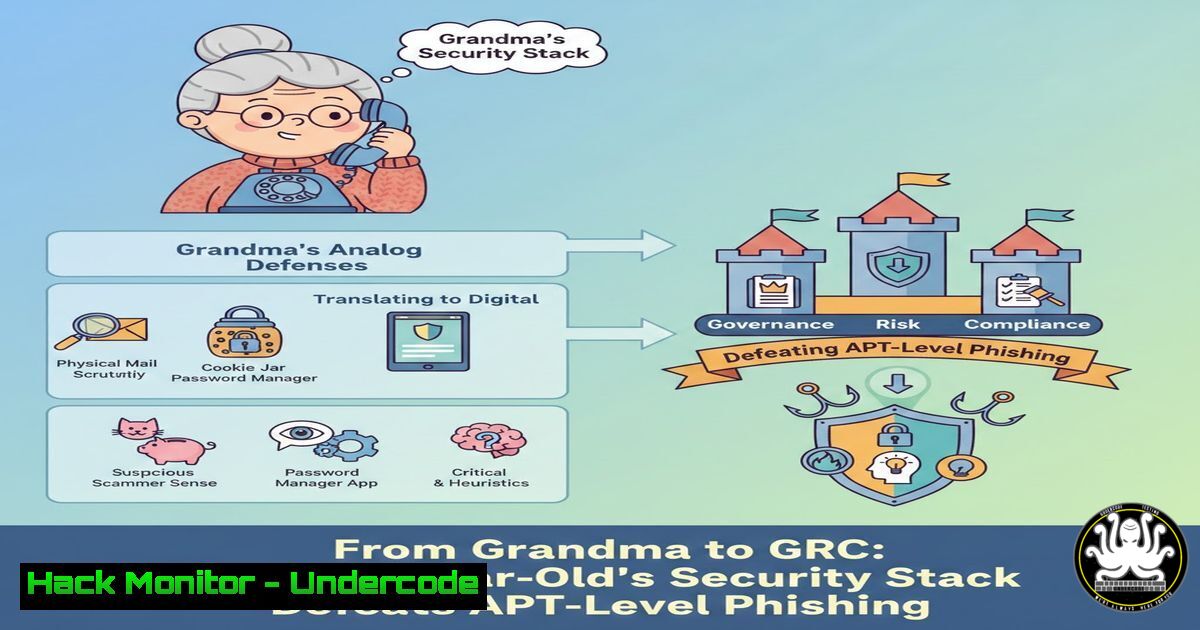
Introduction:
While enterprises deploy billion-dollar defense budgets, the average home user remains defenseless against credential harvesters, OSINT profiling, and SIM swaps. This article bridges the gap between holistic security culture and technical implementation—extracting actionable hardening techniques from the `hvck.academy` grassroots initiative. You will learn how to translate infosec vernacular into Linux CLI commands, Windows lockdown procedures, and privacy-first browser configurations designed for non-technical families.
Learning Objectives:
- Implement DNS-level filtering and browser isolation on consumer-grade routers and end-user devices.
- Execute OSINT self-assessment using command-line tools to quantify personal digital footprint.
- Deploy passwordless authentication and credential stuffing mitigation without enterprise infrastructure.
You Should Know:
- DNS Hardening: Pi-Hole on Raspberry Pi vs. Windows Hosts File
Ryan’s “97-year-old grandma” cannot manage a SIEM, but she can benefit from sinkholing. For community trainers, the most cost-effective method is DNS filtering.
Linux Deployment (Raspberry Pi Zero 2W):
 Install Pi-Hole
curl -sSL https://install.pi-hole.net | bash
 Set static IP and configure upstream DNS (Cloudflare 1.1.1.2 malware blocking)
sudo pihole -a setdns 1.1.1.2 1.0.0.2
 Update gravity blocklists for ads, malware, and phishing
sudo pihole -up
sudo pihole -g
Windows Alternative (No hardware):
 Run as Administrator - Append malicious domains to hosts file
Add-Content -Path C:\Windows\System32\drivers\etc\hosts -Value "<code>n0.0.0.0 facebook.com</code>n0.0.0.0 doubleclick.net"
 Flush DNS cache
ipconfig /flushdns
Explanation: Pi-Hole acts as a network-wide ad/tracker blocker; the hosts file method offers per-device protection. Both mitigate drive-by downloads without requiring user intervention.
2. OSINT Footprint Reduction: Recon-ng & Bleachbit
To cultivate a grassroots security culture, individuals must first understand their exposure. The following commands mirror tactics used by adversaries during initial reconnaissance.
Linux Recon-ng (Profile Discovery):
recon-ng
marketplace install all
workspace create community_audit
use recon/domains-hosts/brute_hosts
set source @USERDOMAINS
run
Windows Privacy Sweep:
 Remove prefetch files (application traces)
del C:\Windows\Prefetch. /s /q
 Clear Edge/Chrome DNS cache
RunDll32.exe InetCpl.cpl, ClearMyTracksByProcess 255
 Obfuscate MAC address for public Wi-Fi
Get-NetAdapter | ForEach-Object { Disable-NetAdapter -Name $<em>.Name -Confirm:$false; Set-NetAdapter -Name $</em>.Name -MacAddress 'RandomValue'; Enable-NetAdapter -Name $_.Name -Confirm:$false }
Explanation: The Linux side demonstrates how easily a domain yields subdomains; the Windows sweep removes forensic artifacts that social engineers exploit to build trust.
- Passwordless for Grandparents: Windows Hello & YubiKey Bridge
HVCK’s methodology removes friction. Mandating 16-character complex passwords for elders fails; biometrics succeed.
Windows Hello Deployment Script (PowerShell):
 Check TPM availability
Get-Tpm
 Configure PIN complexity for non-admin users (Group Policy via PowerShell)
Set-ItemProperty -Path "HKLM:\SOFTWARE\Policies\Microsoft\Windows\System" -Name "AllowDomainPINLogon" -Value 1
Set-ItemProperty -Path "HKLM:\SOFTWARE\Policies\Microsoft\Windows\System" -Name "MinimumPINLength" -Value 4
 Enable Windows Hello provisioning
Add-WindowsCapability -Online -Name "Hello.Face.2018~~~~0.0.1.0"
Phishing-Resistant Fallback: Configure a YubiKey as a smart card (requires yubico-piv-tool). For Linux:
sudo yubico-piv-tool -a generate -s 9c -k
sudo yubico-piv-tool -a verify-pin -a selfsign-certificate -s 9c -S "/CN=HVCK Community/"
sudo yubico-piv-tool -a import-certificate -s 9c -k
Explanation: This eliminates password reuse. The smart card standard is universally compatible and presents as a certificate to login managers.
- API Security Misuse: Simulating Account Takeover via Exposed Keys
Grassroots defenders must understand how “life altering digital crimes” occur—often through leaked API keys in mobile apps or GitHub.
Testing Exposure (Linux):
 TruffleHog for high-entropy strings
docker run -it -v "$PWD:/pwd" trufflesecurity/trufflehog:latest filesystem /pwd --entropy=true
 GitLeaks for local repos
gitleaks detect --source . --verbose
Simulated Exploitation (cURL):
 If a Google Maps API key is exposed
curl -L -o output.png "https://maps.googleapis.com/maps/api/staticmap?center=45%2C10&zoom=7&size=400x400&key=ACTUAL_KEY_HERE"
 If a Twilio account SID is found
curl -X POST https://api.twilio.com/2010-04-01/Accounts/[bash]/Messages.json \
--data-urlencode "Body=This is a bill shock test" \
--data-urlencode "From=+1234567890" \
--data-urlencode "To=+0987654321" \
-u [bash]:[bash]
Mitigation: Instruct users to scan repos with `detect-secrets` pre-commit hook. Community educators should show the literal cost of abuse—financial impact is the best teacher.
5. Cloud Hardening for Community Groups
Non-profits and community organizations often utilize free-tier cloud, misconfiguring S3 buckets or Azure blob storage containing membership PII.
AWS S3 Block Public Access (CLI):
aws s3api put-public-access-block --bucket hvck-community-resources --public-access-block-configuration BlockPublicAcls=true,IgnorePublicAcls=true,BlockPublicPolicy=true,RestrictPublicBuckets=true
Azure Storage Firewall (PowerShell/Azure CLI):
az storage account update --name hvckacademy --default-action Deny
az storage account network-rule add --account-name hvckacademy --ip-address 82.32.90.0/24
Explanation: A single misconfigured bucket can expose years of community member data. These commands enforce a deny-by-default posture with specific allow-listing for shared offices or libraries.
6. Phishing Simulation for Home Users
HVCK’s “good culture” requires safe failure. Deploy Gophish on a cheap VPS to train families without LinkedIn echo-chamber jargon.
Server Setup (Ubuntu 20.04+):
wget https://github.com/gophish/gophish/releases/download/v0.12.1/gophish-v0.12.1-linux-64bit.zip
unzip gophish.zip
chmod +x gophish
sudo ./gophish
Campaign Logic: Use subjects like “Your Netflix payment failed” and send to family members (with consent). The dashboard tracks clicks. Pair this with immediate, non-punitive education.
7. Router Hardening: WPA3 & DoT
A “holistic” view extends to the perimeter. Most community members use ISP-issued routers with known CVEs.
OpenWRT Deployment (SSH into Router):
opkg update
opkg install luci-app-openvpn luci-proto-wireguard
 Enforce WPA3-SAE
uci set wireless.radio0.htmode='VHT80'
uci set wireless.@wifi-iface[bash].encryption='sae'
uci set wireless.@wifi-iface[bash].key='sufficientlyComplexPassphrase'
 DNS over TLS
uci set dhcp.@dnsmasq[bash].noresolv='1'
uci set dhcp.@dnsmasq[bash].server='127.0.0.15053'
uci commit
/etc/init.d/dnsmasq restart
Windows Fallback (Stubby DNS):
 Install Stubby via Chocolatey
choco install stubby
 Edit C:\Program Files\stubby\stubby.yml to enable Cloudflare TLS
Restart-Service Stubby
Result: This prevents ISP-level hijacking and mitigates ARP spoofing attacks common in public housing Wi-Fi environments.
What Undercode Say:
- Key Takeaway 1: Security culture cannot be taught solely through risk frameworks; it requires physical, tactile exercises—modifying a hosts file, running a Pi-Hole, or rotating a YubiKey creates muscle memory that fear cannot override.
- Key Takeaway 2: The “97-year-old grandma” standard is the ultimate litmus test. If your defense mechanism requires reading a manual, it fails. The commands and configurations above succeed because they are set-and-forget, shifting the cognitive load from the end-user to the infrastructure.
- Analysis: The cybersecurity industry suffers from “solutionism”—selling products to solve problems that could be eliminated through community skill transfer. Ryan Williams’ post is a direct attack on the economic gatekeeping of safety. The extraction of technical workflows from his manifesto proves that the barrier is not complexity, but distribution. We do not need another EDR; we need educators fluent in both `grep` and grandmothers.
Prediction:
Within 24 months, we will witness the rise of “Community CISO” as a recognized role—non-corporate practitioners embedded in housing associations, religious institutions, and senior centers. Insurance carriers will begin offering premium discounts to policyholders who can demonstrate grassroots security training participation, forcing a trickle-up effect. LinkedIn will continue to amplify enterprise thought leaders, but the real defense of the internet will be built by those running `pihole -up` in their spare time, weaponizing open-source tools against a threat landscape that refuses to discriminate by paycheck.
▶️ Related Video (84% Match):
🎯Let’s Practice For Free:
IT/Security Reporter URL:
Reported By: Ryan Williams – Hackers Feeds
Extra Hub: Undercode MoN
Basic Verification: Pass ✅


