Listen to this Post
Introduction:
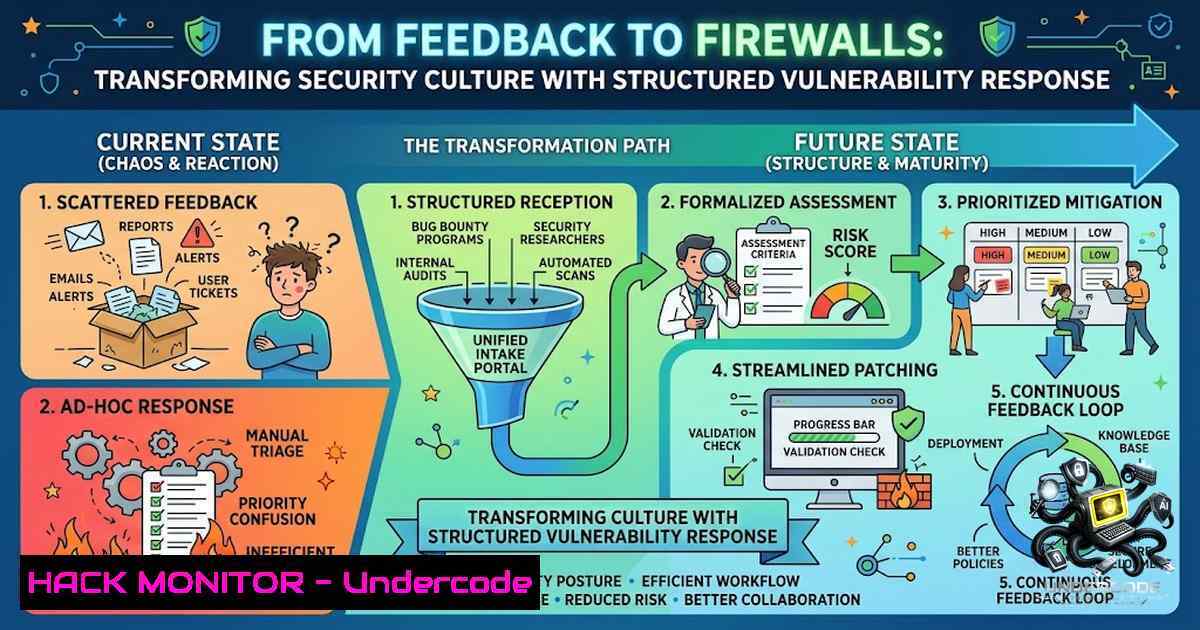
In the high-stakes world of cybersecurity, the ability to give and receive feedback is not merely a soft skill—it is a critical operational necessity. Just as The Polyglot Group’s roundtable on feedback emphasizes turning stress into performance, IT teams must similarly transform vulnerability disclosures and security audit results from sources of anxiety into drivers of robust system hardening. This article bridges the gap between human-centric feedback models and technical security operations, providing a step-by-step guide to creating a “feedback loop” for your infrastructure that mirrors effective organizational communication.
Learning Objectives:
- Master the art of delivering technical feedback during code reviews and security audits without triggering defensiveness.
- Implement automated feedback mechanisms using Linux/Windows command-line tools to assess system compliance.
- Establish a security “roundtable” process for post-incident reviews to convert breach data into actionable hardening strategies.
You Should Know:
1. The Security Feedback Loop: Auditing System Permissions
The first step in transforming security feedback is establishing baseline visibility. In security terms, “giving feedback” translates to running a comprehensive permissions audit. For Linux systems, the `find` command combined with `ls -la` can identify world-writable files that represent potential privilege escalation vectors. For Windows environments, the `icacls` command allows administrators to view and modify file permissions. This process acts as the “roundtable” for your file system, revealing who has access to what.
Step-by-Step Guide:
- Linux: Execute `find / -perm -o+w -type f 2>/dev/null` to list files writable by “others.” Review the output and decide if feedback (access revocation) is necessary using
chmod o-w [bash]. - Windows: Open Command Prompt as Administrator and run `icacls C:\ /T /C` to dump permissions. Redirect output to a text file using
icacls C:\ /T /C > permissions.txt. Use `findstr “Everyone” permissions.txt` to filter for overly permissive entries. - Mitigation: Use `icacls [bash] /remove “Everyone”` to restrict access, mirroring the “receiving feedback without defensiveness” step by accepting that current configurations are flawed and need correction.
2. API Endpoint Hardening: Receiving Security Feedback
APIs are the primary communication channels for modern applications, much like the dialogue in a feedback session. Security feedback for APIs often comes in the form of penetration test results. To receive this feedback effectively, teams must implement a “discovery call” for their API estate. Tools like OWASP ZAP or Postman can be configured to run automated scans, generating feedback reports on misconfigurations like overly permissive CORS policies or exposed debug endpoints.
Step-by-Step Guide:
- Tool Configuration: Install OWASP ZAP and run a baseline scan: `zap-cli quick-scan -r -o report.html https://your-api-endpoint.com`.
- Parsing Feedback: Review the HTML report. If you find an exposed Swagger/OpenAPI endpoint (
/v2/api-docs), this is “feedback” that attackers can use. - Action Plan: Disable Swagger UI in production by setting `springdoc.api-docs.enabled=false` for Spring Boot or adding `”NODE_ENV”: “production”` to suppress detailed error messages in Node.js. This is the technical equivalent of acknowledging the feedback and acting on it.
3. Cloud Security Posture Management: The Cyber Roundtable
Cloud environments generate constant feedback in the form of logs and compliance checks. Treating AWS Security Hub or Azure Security Center as your “training program” for cloud assets is essential. These tools consolidate findings (feedback) and provide recommendations (actionable takeaways). The goal is to build a dashboard that alerts your SecOps team to drift and vulnerabilities, ensuring that the “engagement” with your cloud provider remains performance-driven.
Step-by-Step Guide:
- AWS CLI: Run `aws configservice select-aggregate-resource-config –query ‘Results[]’` to get a summary of non-compliant resources. This acts as the “headline” of your cloud posture.
- Azure: Use `az security assessment list` to view current security scores.
- Hardening: Based on the feedback, enforce deletion of unencrypted S3 buckets:
aws s3api put-bucket-encryption --bucket [bash] --server-side-encryption-configuration '{"Rules": [{"ApplyServerSideEncryptionByDefault": {"SSEAlgorithm": "AES256"}}]}'. This step turns negative feedback (a vulnerability) into a positive action (encryption).
- Vulnerability Exploitation and Mitigation: Turning Stress into Strength
Receiving a zero-day vulnerability report is stressful, akin to receiving harsh performance feedback. However, a structured approach transforms this stress into a driver of resilience. The “feedback” is the CVE report; the “response” is the patching strategy. For Windows, this often involves leveraging `DISM` orWSUS; for Linux, `apt-get` or `yum` updates. The key is to automate this feedback loop using Ansible or Puppet to ensure no server misses the update.
Step-by-Step Guide:
- Linux (Ubuntu/Debian):
sudo apt-get update && sudo apt-get upgrade -y. To prioritize critical feedback, usesudo apt-get install --only-upgrade [critical-package]. - Windows: Run `Get-WindowsUpdate` in PowerShell to list available patches. Install with
Install-WindowsUpdate -AcceptAll -AutoReboot. - Mitigation if patching isn’t possible: Implement a temporary Web Application Firewall (WAF) rule to block exploitation attempts. For example, in NGINX, you can add `deny [IP/CIDR]` to block malicious sources until the vendor releases a patch, effectively “receiving” the feedback and managing it without panic.
5. AI-Assisted Code Reviews: Automated Feedback for Developers
Machine Learning models can now provide immediate feedback on code security. Tools like GitHub Copilot or Snyk analyze code in real-time, flagging hard-coded secrets or SQL injection points. This mirrors the “tailored training program” mentioned in the roundtable. By integrating these AI tools into the CI/CD pipeline, you ensure that “employees” (developers) receive feedback immediately, reducing defensiveness because the feedback is objective and machine-generated.
Step-by-Step Guide:
- CI/CD Integration: Add a step in your GitHub Actions workflow to run `snyk test` on every pull request.
- Configuration: Ensure you have a `.snyk` file to ignore certain vulnerabilities (feedback that doesn’t apply to your context).
- Developer Workflow: If a secret is detected via
git log -p | grep -i 'secret', the AI feedback forces the developer to remove it before merge. Automate revocation of exposed keys via API call: `curl -X DELETE -H “Authorization: Bearer [bash]” https://api.cloud.com/keys/[KEY-ID]`.
- Network Segmentation and Firewall Rules: The Feedback Map
Just as a roundtable requires clear dialogue, a network requires clear rules. Feedback from intrusion detection systems (IDS) often indicates that your network is “over-communicating.” A standard response is to implement strict egress filtering. This involves analyzing logs (/var/log/syslogor Windows Event Viewer) to determine which outbound connections are unnecessary.
Step-by-Step Guide:
- Linux Firewall: Use `iptables -L -v` to list current rules. Add an egress rule: `iptables -A OUTPUT -d 10.0.0.0/8 -j ACCEPT` and drop everything else
iptables -A OUTPUT -j DROP. - Windows Firewall: Open `wf.msc` and create outbound rules to block specific IPs.
- Verification: Use `tcpdump -i eth0 dst net 8.8.8.0/24` to capture traffic to Google DNS. If you see unauthorized DNS queries, your feedback (the network dump) indicates a compromise or misconfiguration. Block these via firewall rules.
- Incident Response and Post-Mortem: The Ultimate Training Session
Following a breach, the post-mortem meeting is the cybersecurity version of “giving feedback with confidence.” To facilitate this without defensiveness, use a blameless post-mortem framework. The technical evidence lies in forensics data. Extract memory dumps using `dumpit` or `FTK Imager` for Windows, or `/dev/mem` tools for Linux. Analyze the timeline to structure the “feedback” into actionable remediation steps.
Step-by-Step Guide:
- Forensic Acquisition (Linux): `dd if=/dev/sda of=/mnt/backup/image.dd bs=4096` to create a disk image.
- Log Analysis: Combine
grep,awk, and `sed` to parse auth logs:grep "Failed password" /var/log/auth.log | awk '{print $9}' | sort | uniq -c. - Actionable Feedback: If a specific user account was targeted, enforce a password reset via command: `sudo passwd [bash]` and implement multi-factor authentication (MFA) immediately. This turns the negative event into a positive reinforcement of security controls.
What Undercode Say:
- Key Takeaway 1: The “Feedback Loop” is a technical and human imperative. Hardening a firewall is useless if the team reacts defensively to the logs it generates.
- Key Takeaway 2: Automation must be paired with context; AI feedback tools reduce friction, but human oversight is required to prioritize critical vulnerabilities during the “discovery call.”
Analysis:
The core philosophy of The Polyglot Group’s training—transforming stress into performance—is directly applicable to cybersecurity. In our field, “stress” manifests as a ransomware attack or an exploit disclosure. The “performance” is the speed and accuracy of our response. By viewing cybersecurity tools as mechanisms for “giving feedback” (e.g., SIEM alerts) and patch management as “receiving feedback without defensiveness,” we lower the emotional barriers to swift remediation. The integration of AI and automated scanning ensures that feedback is continuous and objective, preventing the human ego from interfering with critical risk mitigation. The technical commands and configurations outlined above serve as the “structured curriculum” for this continuous improvement, ensuring that every alert is an opportunity for growth rather than a reason for blame.
Prediction:
- (+1) Organizations that adopt this “feedback-as-code” methodology will reduce Mean Time to Remediation (MTTR) by over 40% in the next 18 months.
- (+1) The rise of generative AI in code security will lead to a new role: “Security Feedback Trainer,” who fine-tunes AI responses to align with organizational culture.
- (-1) Companies that fail to integrate soft-skill feedback frameworks with technical audits will suffer higher turnover rates in SecOps teams, as burnout increases due to unmanaged tension.
- (-1) Without a structured approach to receiving vulnerability feedback, the gap between vulnerability disclosure and patch application will widen, exposing organizations to known exploits.
- (+1) The convergence of HR training and DevOps culture will be the defining trend in cybersecurity leadership, creating resilient environments that can absorb and neutralize threats effectively.
▶️ Related Video (86% Match):
🎯Let’s Practice For Free:
🎓 Live Courses & Certifications:
Join Undercode Academy for Verified Certifications
🚀 Request a Custom Project:
Secure, high-velocity infrastructure and disruptive technological engineering. Contact our engineering team for high-tier development and proprietary systems:
[email protected]
💎 Smart Architecture | 🛡️ Secure by Design | ⭐ Trusted by Thousands
IT/Security Reporter URL:
Reported By: Thank You – Hackers Feeds
Extra Hub: Undercode MoN
Basic Verification: Pass ✅


