
Listen to this Post
Introduction:
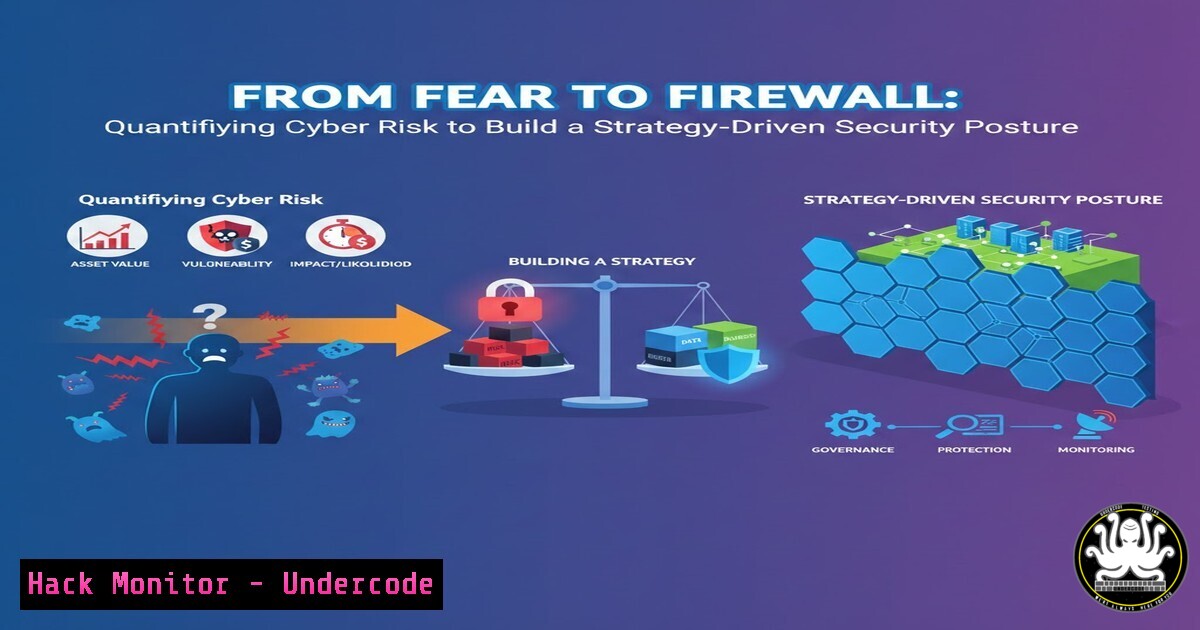
The traditional approach to cybersecurity sales has long relied on fear, uncertainty, and doubt (FUD) to motivate investment. However, a paradigm shift is underway, moving towards a strategy-driven model where security risk is quantified, benchmarked, and communicated in terms of business impact—revenue and trust. This evolution empowers Managed Service Providers (MSPs) and businesses to transition from reactive panic to proactive, data-informed defense.
Learning Objectives:
- Understand the methodologies and tools for quantifying cybersecurity risk in financial and operational terms.
- Learn how to perform industry-specific security benchmarking to contextualize your organization’s posture.
- Acquire practical steps to implement continuous posture management and proactive hardening using modern platforms.
You Should Know:
1. Quantifying Risk: Translating Threats into Financial Language
To move beyond fear, you must speak the language of the boardroom: money. Quantifying risk involves calculating the Likelihood of an event and its potential Financial Impact (often called Single Loss Expectancy or Annualized Loss Expectancy).
Step-by-step guide:
- Identify Critical Assets: List crown jewel data and systems (e.g., customer DB, source code repositories). Use tools like `nmap` for discovery.
Example: Discover active hosts and services on your network
nmap -sV -O 192.168.1.0/24 -oN network_inventory.txt
- Define Threat Scenarios: Model specific threats (e.g., ransomware attack on file server, BEC compromise).
- Assign Values: Estimate the cost of downtime, data recovery, regulatory fines, and reputational damage per incident. Utilize frameworks like FAIR (Factor Analysis of Information Risk).
- Calculate Probabilities: Use historical data (internal logs, industry reports like Verizon DBIR) to estimate annualized rates of occurrence.
- Present the Math:
Risk ($) = Probability (event/year) x Financial Impact ($/event). This creates a clear, quantifiable argument for security investments. -
The Power of Benchmarking: Contextualizing Your Security Posture
A security metric is meaningless without context. Benchmarking against industry peers (e.g., other SMBs in healthcare, legal, or manufacturing) reveals if you are leading, lagging, or on par.
Step-by-step guide:
- Gather Your Data: Use compliance and security tools to generate a baseline. Export findings from tools like Microsoft Secure Score, Wazuh, or compliance scanners.
Example: Get Microsoft 365 Secure Score via PowerShell (MSGraph module required)
Get-MgSecuritySecureScore -Top 1 | Select CurrentScore, MaxScore
- Leverage Industry Frameworks: Map your controls to standards like CIS Critical Security Controls or NIST CSF. Many tools provide benchmarking reports against these.
- Utilize Specialized Platforms: Adopt platforms (e.g., Guardz, Arctic Wolf) that offer built-in benchmarking against anonymized aggregates of similar companies.
- Analyze Gaps: Identify control areas where you deviate significantly from the industry benchmark. Prioritize remediation based on the quantified risk from Step 1.
3. Implementing Continuous Security Posture Management
Strategy-driven security requires continuous monitoring, not periodic audits. This involves the automated collection and analysis of security telemetry across endpoints, networks, and cloud environments.
Step-by-step guide:
- Centralize Logging: Aggregate logs from all systems to a SIEM or dedicated platform.
Example: Configure rsyslog on Linux to forward logs to a SIEM server
echo ". @<SIEM_IP>:514" | sudo tee -a /etc/rsyslog.conf
sudo systemctl restart rsyslog
- Deploy EDR/XDR: Install Endpoint Detection and Response agents on all workstations and servers for deep visibility and response capabilities.
- Configure Cloud Security Posture Management (CSPM): For AWS, Azure, or GCP, enable native tools like AWS Security Hub or Azure Defender for Cloud to continuously check configurations against best practices.
Example: Trigger an AWS Security Hub scan for a specific region
aws securityhub start-configuration-policy-disassociation --target-region us-east-1
- Automate Alert Triage: Use playbooks to automatically enrich alerts with context (e.g., asset value, user role) to prioritize incidents based on business risk.
4. Hardening Assets: Proactive Configuration and Patch Management
A benchmarked, quantified strategy highlights specific hardening needs. System hardening is the process of reducing the attack surface.
Step-by-step guide:
- Follow Hardening Guides: Apply CIS Benchmarks to your operating systems and applications. Use automated tools like CIS-CAT or Ansible playbooks.
Example Ansible task to enforce a CIS benchmark rule (disable USB storage)</li>
</ol>

- name: Disable USB Storage Module
lineinfile:
path: /etc/modprobe.d/disable-usb-storage.conf
line: 'install usb-storage /bin/false'
create: yes
2. Prioritize Patching: Base patch priority on the CVSS score and the quantified risk of the affected asset. Use a patch management solution that integrates with your asset inventory.
3. Implement Application Allowlisting: On critical servers (e.g., domain controllers, financial systems), use tools like Windows Defender Application Control to only allow authorized software to execute.5. Building a Strategy-Driven Narrative for Stakeholders
Armed with data, you must construct a compelling narrative for executives, clients, or board members.
Step-by-step guide:
- Start with Business Objectives: Align your security discussion with goals like “ensure service continuity” or “protect customer data.”
- Present Benchmark Data: Visually show your posture vs. the industry. “Our secure score is 45/100, while our peer average is 68.”
- Connect to Quantified Risk: “This gap in endpoint protection corresponds to a 25% higher likelihood of a ransomware incident, which we calculate would cost approximately $250,000.”
- Propose Targeted Investments: “An investment of $20,000 in managed EDR would close this gap, reducing the probable annual loss by $62,500, yielding a clear ROI.”
- Commit to Ongoing Reporting: Provide regular dashboards showing posture score trends, benchmark comparison, and reduced risk exposure over time.
What Undercode Say:
- Key Takeaway 1: The era of selling cybersecurity through scare tactics is over. Sustainable, trusted partnerships are built on translating technical vulnerabilities into clear business financials—Probability x Impact = Quantifiable Risk.
- Key Takeaway 2: Isolation is insecurity. True understanding of your security posture is only achieved through continuous, contextual benchmarking against your specific industry, turning abstract “best practices” into relevant, prioritized action items.
The analysis underscores a maturation of the cybersecurity industry. For MSPs and internal teams, this shift is existential. Those who master the toolkit of risk quantification (FAIR, integrated platforms), continuous posture assessment (CSPM, SIEM, benchmarking), and business-aligned communication will transition from being viewed as a cost center to a strategic business enabler. The technical steps—from running discovery scans to enforcing CIS benchmarks—are the mechanics that feed the strategy. The future belongs to those who can articulate not just how an attack works, but what it truly costs and how likely it is to happen to you.
Prediction:
Within three years, strategy-driven, quantified risk assessment will become the default expectation for cyber insurance underwriting, M&A due diligence, and board-level reporting. AI will accelerate this by dynamically modeling complex risk scenarios and predicting attack paths with associated financial impacts. MSPs that fail to adopt this data-driven, business-out approach will be marginalized, competing only on price, while those that embrace it will command premium services by demonstrating direct contributions to client profitability and resilience. The “Cyber Confidential Podcast” discussion highlights the vanguard of this inevitable shift.
▶️ Related Video (82% Match):
🎯Let’s Practice For Free:
IT/Security Reporter URL:
Reported By: Dor Eisner – Hackers Feeds
Extra Hub: Undercode MoN
Basic Verification: Pass ✅🔐JOIN OUR CYBER WORLD [ CVE News • HackMonitor • UndercodeNews ]
📢 Follow UndercodeTesting & Stay Tuned:


