Listen to this Post
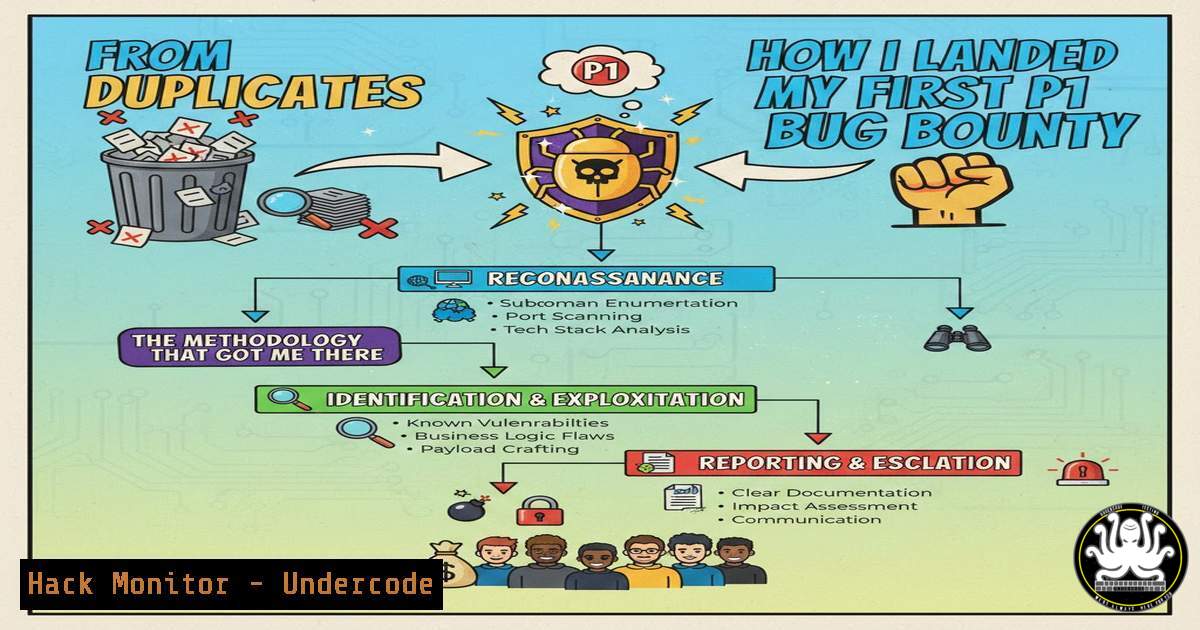
Introduction:
Breaking into competitive bug bounty platforms like Bugcrowd and HackerOne is a formidable challenge, often characterized by a daunting “loop of Duplicates, Informatives, and N/As.” This article deconstructs the journey from initial frustration to validating critical vulnerabilities, translating a personal success story into a actionable, technical methodology for aspiring penetration testers and security researchers. We’ll move beyond the celebration to examine the core processes, tools, and mindset shifts required to transition from submitting common flaws to discovering high-impact security weaknesses.
Learning Objectives:
- Understand a structured methodology for systematic reconnaissance and target mapping to increase the odds of unique findings.
- Learn to differentiate between low-value, automated results and manually verified, high-severity vulnerabilities like Insecure Direct Object References (IDOR) or Server-Side Request Forgery (SSRF).
- Develop a testing workflow that incorporates both automated tooling and deep manual investigation to bypass common duplicate reports.
You Should Know:
1. The Foundation: Reconnaissance & Asset Enumeration
The most common pitfall is attacking the obvious surface. High-impact bugs often reside in neglected subdomains, forgotten API endpoints, or third-party integrated services. A broad attack surface is key.
Step‑by‑step guide explaining what this does and how to use it.
Subdomain Enumeration: Use tools like subfinder, amass, and `assetfinder` to discover every possible domain associated with the target program.
 Linux Command Examples
subfinder -d target.com -silent | tee subdomains.txt
amass enum -passive -d target.com -o amass_subs.txt
assetfinder --subs-only target.com | anew all_subs.txt
Port & Service Discovery: Scan identified subdomains and IP ranges for open ports and running services to identify non-standard web ports, API gateways, or administrative interfaces.
 Using Nmap with service detection
nmap -sV -sC -T4 -p- -iL target_ips.txt -oA nmap_full_scan
 For a quick top-ports scan on a list of subdomains
naabu -list subdomains.txt -top-ports 1000 -o naabu_ports.txt
Content Discovery: Use fuzzing to find hidden directories, files, and parameters on every discovered web endpoint. This often reveals staging sites, backup files, and undocumented API paths.
 Using ffuf with a common wordlist
ffuf -u https://target.com/FUZZ -w /usr/share/wordlists/dirb/common.txt -mc all -c -o ffuf_scan.json
2. Filtering the Noise: Target Prioritization
Not all assets are created equal. After enumeration, you must prioritize. Look for:
New subdomains (less likely to have been tested thoroughly).
Features involving file uploads, password changes, payment processing, or data exports.
APIs (especially GraphQL or WebSocket endpoints) and mobile app backends.
Assets marked as `out-of-scope` in the program’s policy—sometimes adjacent or similar in-scope assets are overlooked.
3. The Manual Edge: Beyond Automated Scanners
Automated scanners (Burp Suite Pro, Nuclei) are excellent for finding low-hanging fruit but are the primary source of duplicate reports. Your critical finds will come from manual testing.
Stateful Testing with Burp Suite: Configure your browser through Burp, meticulously map the entire application, and use the Logger and Target tabs to study every request/response. Pay attention to unique identifiers (user IDs, document IDs, UUIDs).
Parameter Analysis: For every POST and GET parameter, ask: Can I tamper with this? What is its function? Use Burp’s Intruder or Repeater to systematically test parameters for IDOR, SQLi, and logic flaws.
4. Exploitation Primer: Testing for Common P1/P3 Vulnerabilities
Insecure Direct Object Reference (IDOR): The classic P1/P2. When you see an object ID (e.g., ?document_id=12345), try changing it to access another user’s data. Test for horizontal and vertical privilege escalation.
 Original Request
GET /api/v1/user/orders?user_id=11223 HTTP/1.1
 Tampered Request - Test for IDOR
GET /api/v1/user/orders?user_id=11224 HTTP/1.1
Authorization: Bearer <your_token>
Cross-Site Scripting (XSS): Often a P3. Don’t just test with <script>alert(1)</script>. Test for stored XSS in profile fields, comments, or file uploads (SVG, HTML). Use more sophisticated payloads that demonstrate impact, like stealing cookies or making authenticated requests on behalf of the user.
Server-Side Request Forgery (SSRF): A critical P1. Look for functionality that fetches URLs (webhooks, image upload from URL, PDF generators). Test if you can make the server call internal (127.0.0.1, `169.254.169.254` for cloud metadata) or restricted services.
5. The Validation & Report Writing Process
A “Valid” finding requires clear proof of concept (PoC). For a bug bounty report:
1. Clear “IDOR in /api/v1/downloadInvoice allows access to any user’s invoices without authorization”
2. Detailed Steps: A numbered list, exactly how the triager can reproduce it. Include all HTTP requests and responses (use Burp’s “Copy as curl command” feature).
3. Proof of Impact: Screenshots or videos showing unauthorized access. For an IDOR, show two different user accounts accessing each other’s data.
4. Remediation Advice: Suggest a fix—e.g., “Implement proper authorization checks on the server-side, using the session user context rather than trusting user-supplied IDs.”
6. Mindset & Continuous Learning
Embrace Duplicates: They are data. Analyze them to understand what others are finding and shift your focus elsewhere.
Mentorship & Community: As highlighted in the original post, engagement with experienced researchers (like Hasan Sheet) can provide crucial guidance on methodology and scope interpretation.
Build a Lab: Use platforms like HackTheBox, TryHackMe, or PortSwigger’s Web Security Academy to practice techniques in a safe environment before hitting live targets.
What Undercode Say:
- Methodology Over Luck: Consistent, high-severity bug bounty success is not accidental; it is the direct result of a disciplined, expansive reconnaissance process followed by deep, manual interrogation of application logic that automated tools cannot replicate. The shift from duplicates to valid critical findings is a transition from surface-level scanning to understanding business logic and stateful user interactions.
- The Human Network is a Force Multiplier: The acknowledged role of mentorship underscores a critical, non-technical pillar of infosec growth. Access to experienced practitioners who can review approaches, clarify scope nuances, and provide encouragement is often the catalyst that transforms theoretical knowledge into practical, rewarded results.
Analysis: The journey described is a microcosm of the professional pentesting pathway. It validates that foundational networking and computer science knowledge (as noted by the individual’s student status) combined with curated, hands-on offensive security training (eJPTv2) creates a potent launchpad. However, the breakthrough occurred through applied practice, community engagement, and iterative refinement of technique. This model—formal base + practical certification + active participation in crowdsourced security—is increasingly the definitive career pipeline for offensive security roles. The post also subtly highlights the economic and reputational mechanics of the bug bounty ecosystem, where resilience in the face of automated rejection is a required filter for successful researchers.
Prediction:
The bar for beginner-level bug bounty findings will continue to rise as automated scanning becomes more accessible and integrated into SDLCs. Future impact will see a greater stratification in the hacker community: automated “noise” will increase, while the premium for sophisticated, manual researchers who can chain vulnerabilities, exploit complex business logic flaws, and audit modern architectures like serverless functions and GraphQL APIs will skyrocket. Platforms will likely develop more advanced AI-assisted triage to filter duplicates, but simultaneously, the most severe and novel vulnerabilities will become even more valuable, solidifying ethical hacking as a field where deep, creative technical analysis trumps all.
▶️ Related Video (70% Match):
🎯Let’s Practice For Free:
IT/Security Reporter URL:
Reported By: Ahmad Ghaddar – Hackers Feeds
Extra Hub: Undercode MoN
Basic Verification: Pass ✅


