Listen to this Post
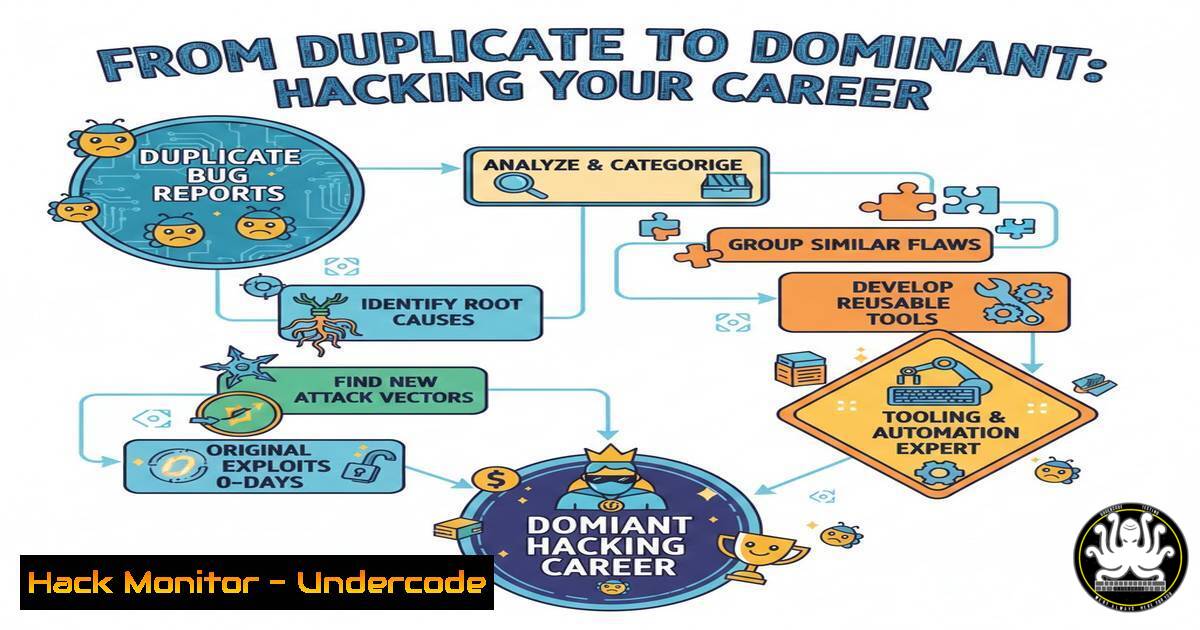
Introduction:
In the competitive world of bug bounty hunting, a “duplicate” report tag can feel like a dead end. However, as demonstrated by researchers on platforms like YesWeHack, it can be a validation of skill and a stepping stone to a successful career in penetration testing. This article deconstructs the methodology behind consistent, high-value bug discovery, transforming perceived setbacks into a structured professional workflow.
Learning Objectives:
- Develop a hunter’s mindset that values process and learning over immediate reward.
- Implement a rigorous, repeatable reconnaissance and vulnerability assessment methodology.
- Master the art of professional report writing and platform engagement to build reputation and resilience.
You Should Know:
1. The Hunter’s Mindset: Process Over Payout
The core of professional bug hunting is treating it as a systematic security audit, not a lottery. A “duplicate” finding proves your methodology is correct and aligned with what real-world attackers look for.
Step‑by‑step guide explaining what this does and how to use it.
Shift Focus: Track metrics like “vulnerability classes investigated per day” instead of just bounty earnings.
Document Everything: Use a notebook (like Obsidian or a physical log) to record every tested parameter, unusual behavior, and dead end. This builds institutional knowledge.
Analyze Dupes: When you get a duplicate, request details (if allowed) or hypothesize what the original finder might have seen. This is free training.
2. The Reconnaissance Engine: Automating Your Attack Surface
Before a single vulnerability test, comprehensive reconnaissance is non-negotiable. This phase identifies all possible entry points.
Step‑by‑step guide explaining what this does and how to use it.
Subdomain Enumeration: Use tools like amass, subfinder, and assetfinder.
subfinder -d target.com -silent | tee subdomains.txt
amass enum -passive -d target.com -o amass_subs.txt
cat subdomains.txt amass_subs.txt | sort -u > final_subs.txt
Live Host & Port Discovery: Probe your list for active services with `httpx` and naabu.
cat final_subs.txt | httpx -silent -o live_hosts.txt
naabu -list live_hosts.txt -top-ports 1000 -o naabu_ports.txt
Screenshot & Tech Stack Analysis: Use `gowitness` for visual reconnaissance and `wappalyzer` (CLI or browser extension) to identify technologies.
3. Vulnerability Hunting: From Theory to Proof-of-Concept
With a mapped target, apply focused testing based on the identified tech stack and application behavior.
Step‑by‑step guide explaining what this does and how to use it.
Automated Initial Scanning: Use `nuclei` with curated templates to catch low-hanging fruit.
nuclei -list live_hosts.txt -t /nuclei-templates/ -severity medium,high,critical -o nuclei_findings.txt
Manual Testing Core: For web apps, systematically test for OWASP Top 10 issues.
SQL Injection: Use `sqlmap` judiciously on non-production endpoints or with explicit permission.
sqlmap -u "https://target.com/page?id=1" --batch --level=2
Cross-Site Scripting (XSS): Manually probe every user input with payloads from the `XSStrike` repository.
Broken Access Control: Manipulate URL parameters (e.g., `/api/user/123/profile` to /api/user/456/profile) and test for Insecure Direct Object References (IDOR).
- The Art of the Report: From Finding to Compensation
A well-written report is what turns a finding into a reward, even when duplicated. It demonstrates professionalism.
Step‑by‑step guide explaining what this does and how to use it.
1. Clear “Reflected XSS via unvalidated `search` parameter on https://app.target.com”.
2. Step-by-Step Reproduction: Detail every click, input, and observation. Number each step.
3. Impact Analysis: Explain what an attacker could achieve (e.g., session hijacking, defacement).
4. Remediation Advice: Provide a specific fix (e.g., “Implement context-aware output encoding using OWASP Java Encoder”).
5. Attachments: Include annotated screenshots, videos (.webm), and clean HTTP request/response captures (from Burp Suite).
5. Building Consistency: The 30-Day Challenge Blueprint
The proposed 30-day challenge is a perfect framework for skill internalization. Consistency beats sporadic effort.
Step‑by‑step guide explaining what this does and how to use it.
Daily Time Block: Dedicate a fixed, non-negotiable 2-3 hour block.
Weekly Focus: Dedicate each week to a specific vulnerability type (Week 1: XSS, Week 2: IDOR, etc.).
Tool Deep Dive: Each week, also master one new tool (ffuf for fuzzing, `jwt_tool` for JWT attacks).
Review & Reflect: Spend 30 minutes each Sunday reviewing the week’s logs, understanding why certain paths didn’t yield results.
6. Platform Mastery: Navigating YesWeHack and Beyond
Choosing the right platform and understanding its culture is key. YesWeHack is noted for its researcher-friendly approach.
Step‑by‑step guide explaining what this does and how to use it.
1. Read the Scope & Rules: Meticulously study the program’s scope.md. Ignoring scope leads to rejected reports.
2. Engage with Triage: If a report is unclear, politely ask the triager for clarification. This builds rapport.
3. Leverage Hall of Fame (HoF): Even a duplicate with points can land you in the HoF—a powerful credibility badge for your LinkedIn profile and resume.
4. Diversify: Don’t rely on one platform. Use `Intelx.io` or `Bugcrowd` to find programs matching your skill set.
7. From Hunter to Professional: Packaging Your Experience
The ultimate goal is to translate bug hunting into a career as a penetration tester or security engineer.
Step‑by‑step guide explaining what this does and how to use it.
Build a Portfolio: Create a professional website or a detailed PDF portfolio showcasing your non-sensitive methodology and HoF entries.
Quantify Impact: State findings not as “found 10 bugs,” but as “identified critical vulnerabilities impacting 2M users, leading to the implementation of a new input validation framework.”
Network: Engage respectfully with triagers and other hunters. Many jobs are filled through community referrals.
Pursue Structured Learning: Use courses like those on PentesterAcademy or Offensive Security’s PEN-200 (OSCP) to formalize your knowledge and gain certifications.
What Undercode Say:
- A Duplicate is a Validation, Not a Failure. It confirms your technical approach is sound and you are looking in the right places. The Hall of Fame credit is a tangible asset for career growth.
- The Methodology is the Product. The real value you develop is not a single bug, but the repeatable, systematic process that consistently finds flaws. This process is what employers pay for.
Analysis: The original post highlights a critical evolution in cybersecurity: bug bounty platforms are becoming de facto training grounds and talent pipelines for the industry. Platforms that offer fair triage and recognize duplicates, like YesWeHack, are effectively curating a community of skilled practitioners. The researcher’s plan for a 30-day challenge underscores the discipline required; modern ethical hacking is a marathon of continuous learning and process refinement, not a sprint for a single payout. This shift represents the professionalization of hacking, where consistency, documentation, and communication are as valuable as the technical exploit itself.
Prediction:
The integration of AI-assisted vulnerability discovery (e.g., using LLMs for code review or fuzzing payload generation) will become mainstream in the hunter’s toolkit within 2-3 years. However, this will elevate, not replace, the skilled hunter. The “duplicate” rate may initially rise as AI finds common bugs, but the value will shift to hunters who can perform complex, context-aware, chained attacks that AI cannot yet conceptualize. Platforms will increasingly reward severity and creativity over volume, and hunters with a disciplined methodology and the ability to exploit business logic flaws will become the most sought-after professionals, both on platforms and in the corporate world.
▶️ Related Video (78% Match):
🎯Let’s Practice For Free:
IT/Security Reporter URL:
Reported By: Mufij Topinkatti – Hackers Feeds
Extra Hub: Undercode MoN
Basic Verification: Pass ✅


