Listen to this Post
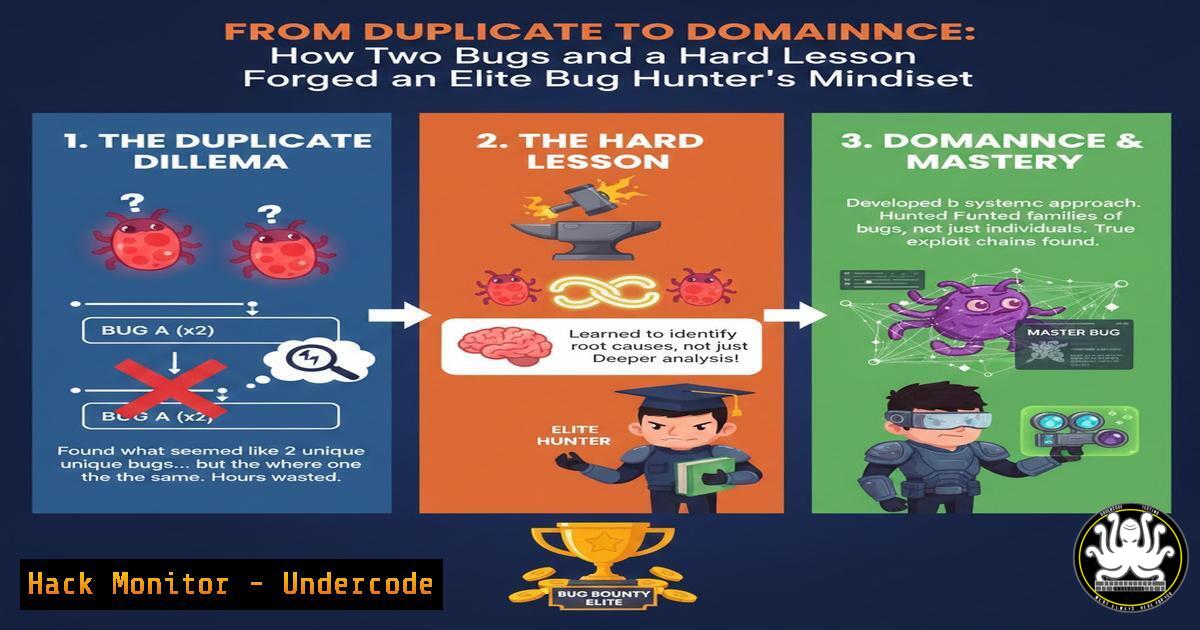
Introduction:
In the competitive arena of bug bounty hunting, a “valid duplicate” is often seen as a dead end. However, for the seasoned researcher, it represents a critical inflection point—a masterclass in timing, methodology, and mindset. This article deconstructs the journey from submitting a report to receiving a duplicate verdict, transforming that experience into a strategic blueprint for uncovering high-severity vulnerabilities like Account Takeover (ATO) and Race Conditions.
Learning Objectives:
- Decode the hidden lessons in “valid duplicate” bug reports to refine your hunting methodology.
- Master the practical exploitation of Race Condition vulnerabilities for ATO and privilege escalation.
- Develop a resilient and analytical mindset to systematically conquer competitive bug bounty programs.
You Should Know:
- The Anatomy of a “Valid Duplicate” – It’s Not a Failure
The sting of a duplicate report is real, but the professional hunter mines it for intelligence. A “valid duplicate” confirms your vulnerability assessment was correct and your attack vector was viable. The lesson lies in the timing. This forces a critical analysis: Was your reconnaissance thorough enough? Did you automate the initial attack chain for speed? Understanding the program’s velocity and the competition’s typical findings is as crucial as the technical exploit itself.
Step-by-Step Guide to Post-Duplicate Analysis:
- Document the Vector: Immediately record the exact endpoint, parameters, and payload used. Example: `POST /api/v1/email/change` with
{"new_email":"[email protected]"}. - Timeline Reconstruction: Note the exact time of submission. Use tools like `Burp Suite’s Logger` or a custom script to track your own testing pace.
- Scope Expansion: Identify all similar functional endpoints. For an email change flaw, immediately test: password reset, 2FA disable, phone number change, and user profile updates.
- Automation Scripting: Develop a lightweight Python script using `requests` or `aiohttp` to rapidly fuzz these endpoints in future tests.
import requests
import sys
targets = ['/change-email', '/change-password', '/disable-2fa']
for target in targets:
resp = requests.post(f'https://target.com{target}', json={"user_id": "victim_id"}, cookies=session_cookie)
print(f"{target}: {resp.status_code} - {len(resp.content)} bytes")
2. Unlocking Account Takeover (ATO) Via Race Conditions
Race conditions exploit the tiny window where a system processes concurrent requests without proper state locking. In ATO, this often manifests during state-changing operations like email or password updates.
Step-by-Step Guide to Exploiting a Registration/Email Change Race:
- Identify the Target: Find an endpoint that performs a multi-step process (e.g., “Step 1: Submit new email, Step 2: Verify token”).
- Craft the Concurrent Requests: Use a tool like `Turbo Intruder` (Burp Suite) or `racepwn` to send multiple verification requests for a single token.
Example using racepwn
python3 racepwn.py -u "https://target.com/verify?token=TOKEN123" -t 50 -m POST
- Analyze the Result: If successful, you may cause the system to:
Link your attacker-controlled email to the victim’s account.
Apply a single password reset token to multiple sessions.
Bypass OTP verification limits.
3. Windows/Linux OS-Level Race Condition Hunting
Race conditions aren’t limited to web apps. Local privilege escalation (LPE) often hinges on file system or process race conditions.
Step-by-Step Guide to a Symlink Race (Linux):
- Find a SUID binary that writes to a user-controlled location. Use:
find / -type f -perm -4000 2>/dev/null. - Identify a vulnerable pattern where the binary creates, writes to, or reads from a temporary file.
- Exploit using a symlink attack in a race window.
Script example (conceptual)
while true; do
rm -f /tmp/vuln_target
ln -s /etc/passwd /tmp/vuln_target
done &
Simultaneously run the vulnerable SUID binary that writes to /tmp/vuln_target
- Result: The binary may overwrite a sensitive system file like
/etc/passwd, leading to privilege escalation.
4. Hardening API Endpoints Against Race Condition Attacks
Defense requires moving from procedural checks to atomic transactions.
Step-by-Step Mitigation Guide for Developers:
- Implement Database-Level Locks: Use `SELECT FOR UPDATE` in SQL or equivalent in NoSQL to lock the user row during a state-change transaction.
BEGIN TRANSACTION;
SELECT  FROM users WHERE id = 123 FOR UPDATE;
-- Perform email update checks and changes
UPDATE users SET email = '[email protected]' WHERE id = 123;
COMMIT;
- Use Redis-Based Distributed Locks: For microservices, implement a lock with a unique request UUID and a TTL.
import redis
redlock = RedisLock(client, "user:123:email_change", ttl=5000)
if redlock.acquire():
Process change
redlock.release()
- Idempotency Keys: Require a unique client-generated key for all state-changing requests to prevent duplicate processing.
5. Building Your Personal Bug Hunting Reconnaissance Engine
Speed wins bounties. Automate the discovery of fresh attack surfaces.
Step-by-Step Guide to Automated Surface Discovery:
- Combine Subdomain Enumeration & Wayback Machine: Use `subfinder` and
waybackurls.subfinder -d target.com -silent | waybackurls | grep -E "api.|oauth.|auth.|v[0-9].|/user/|/account/" > potential_targets.txt
- Screenshot & JavaScript Analysis: Use `Aquatone` or `gowitness` to visualize targets and `subjs` to extract JS endpoints.
cat potential_targets.txt | gowitness -H "Authorization: Bearer token" file -s -
- Automated Initial Probe: Use a tool like `ffuf` with a lightweight wordlist for quick parameter discovery on API endpoints.
ffuf -u 'https://api.target.com/v1/user/FUZZ' -w common_api_parameters.txt -fc 404 -H "Content-Type: application/json"
-
The Mindset Gym: Training Your Analytical Response to Setbacks
Technical skill is half the battle. The elite hunter trains their psychological response.
Step-by-Step Mindset Conditioning:
- The “Five Whys” Post-Mortem: When you get a duplicate, ask “Why?” five times to reach the root cause (e.g., “Why was I late?” -> “Manual testing was slow.” -> “Why?” -> “No automation for this test class.”).
- Pre-Play Visualization: Before a testing session, spend 10 minutes visually walking through your planned methodology, anticipating roadblocks.
- Daily “Lesson Log”: Maintain a simple markdown file documenting one new technical thing learned and one process improvement idea each day.
What Undercode Say:
- A Duplicate is a Data Point, Not a Defeat. The most valuable asset in bug bounty hunting is not any single bug, but the continuously refined, data-informed methodology built from every submission—accepted or duplicate.
- Speed is a Feature of Your Tooling, but Depth is a Feature of Your Mind. Automation lets you compete on the clock, but the deep, logical analysis of why a vulnerability exists in a specific context is what allows you to find novel chains and critical impacts that others miss.
Analysis: The original post perfectly encapsulates the professional bug hunter’s evolution. The initial focus is on the technical win (“2 valid bugs”), but the true value is the “one big lesson.” This lesson is multifaceted: it involves competitive intelligence, precise timing, and the psychological resilience to immediately convert perceived failure into a strategic pivot. The hunter who only celebrates accepted reports will plateau. The hunter who reverse-engineers the timeline of a duplicate, analyzing the gap between their submission and the first reporter’s, is building a sustainable competitive advantage. This transforms hunting from a sporadic technical exercise into a systematic intelligence operation against a target, where every interaction—even a rejection—feeds your understanding of the target’s defenses and the habits of your competitors.
Prediction:
The increasing automation of vulnerability discovery (through fuzzing, static analysis, and AI-assisted code review) will make the “low-hanging fruit” race even more frenetic. The future high-value bug hunter will therefore specialize in complex, stateful vulnerability chains that machines cannot easily reason about. Logical flaws, multi-step race conditions affecting business workflows, and vulnerabilities arising from the complex interaction between microservices (like distributed transaction failures) will become the premium bounty domain. Success will depend less on running the fastest tool and more on constructing the most accurate mental model of the target application’s logic, making the analytical mindset highlighted in this “duplicate lesson” the most critical skill of the next decade.
▶️ Related Video (74% Match):
🎯Let’s Practice For Free:
IT/Security Reporter URL:
Reported By: Md Nawshad – Hackers Feeds
Extra Hub: Undercode MoN
Basic Verification: Pass ✅


