
Listen to this Post
Introduction:
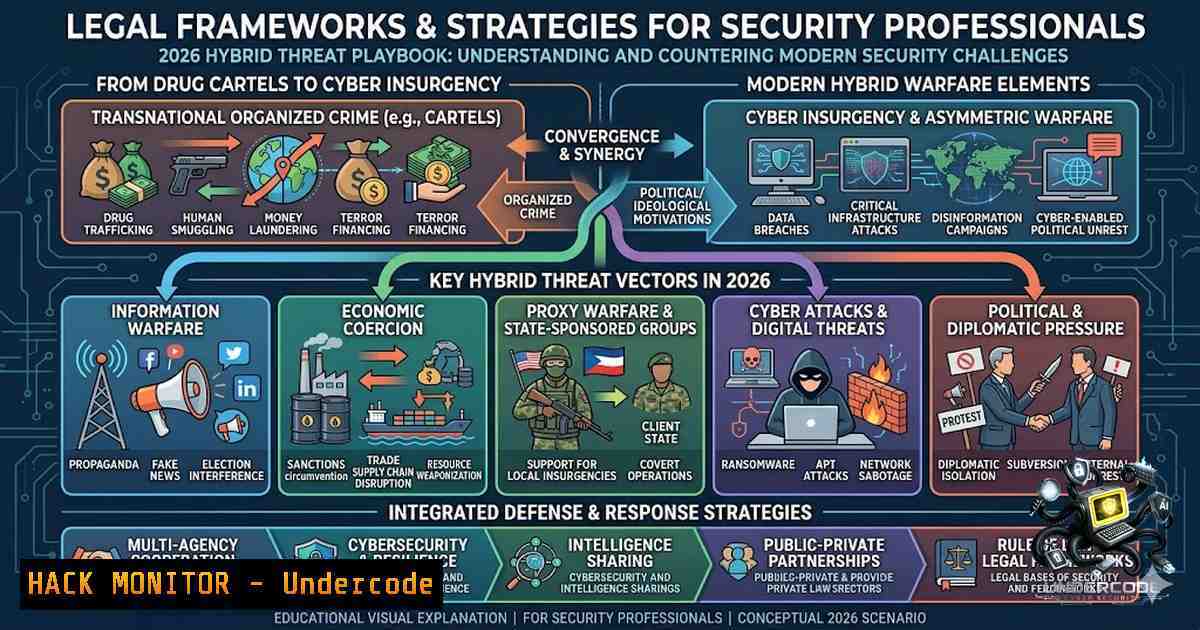
The convergence of organized crime and terrorism in Latin America has evolved beyond traditional drug trafficking into a sophisticated hybrid threat model that combines territorial control, coercive violence, and advanced technology. The March 2026 report from Chile’s National Center for Studies on Terrorism and its Financing (CNT) reveals how criminal organizations in Mexico, Colombia, and Ecuador are now operating as quasi-insurgent entities, leveraging drones, encrypted communications, and cyber capabilities to challenge state authority. For cybersecurity and IT professionals, this paradigm shift demands a renewed understanding of how criminal networks exploit digital infrastructure, deploy AI-enabled scams, and conduct cyber intrusions as part of their strategic arsenal.
Learning Objectives:
- Understand the convergence of organized crime, terrorism, and cyber operations in Latin America’s evolving threat landscape
- Identify early warning indicators (EWIs) for hybrid threats, including cyber intrusion patterns and drone warfare tactics
- Apply technical countermeasures—from Linux/Windows security hardening to AI-driven threat detection—against criminal cyber capabilities
You Should Know:
- The CJNG Cyber Arsenal: From Cartel to APT
The Jalisco New Generation Cartel (CJNG) has transcended traditional narcotrafficking to become a hybrid actor with significant cyber offensive capabilities. Following the death of leader “El Mencho,” the organization demonstrated resilience through coordinated reprisals and continued operational capability, including sophisticated cyber operations. Intelligence reports indicate that CJNG has recruited young tech experts to breach security agencies, including Mexico’s Secretariat of Security, the National Intelligence Center, and state-run oil company networks. The cartel employs AI, large language models, and cryptocurrencies combined with phishing and ransomware business models. Their technical sophistication extends to exploiting VPN and perimeter security flaws in products from Citrix, Fortinet, Palo Alto, and CheckPoint.
Step‑by‑step guide: Hardening Against Cartel-Sponsored Cyber Intrusions
Step 1: Implement Zero-Trust Architecture
 Linux: Set up Zero-Trust network segmentation using iptables
sudo iptables -A INPUT -m state --state ESTABLISHED,RELATED -j ACCEPT
sudo iptables -A INPUT -p tcp --dport 22 -m recent --set --1ame SSH
sudo iptables -A INPUT -p tcp --dport 22 -m recent --update --seconds 60 --hitcount 4 --1ame SSH -j DROP
Step 2: Deploy Advanced Endpoint Detection and Response (EDR)
 Windows PowerShell: Enable advanced audit logging
auditpol /set /subcategory:"Detailed File Share" /success:enable /failure:enable
auditpol /set /subcategory:"File System" /success:enable /failure:enable
auditpol /set /subcategory:"Registry" /success:enable /failure:enable
Step 3: Monitor for VPN and Perimeter Exploits
Criminal groups heavily target VPN vulnerabilities. Regularly audit and patch:
– Citrix ADC/Gateway (CVE-2023-3519)
– Fortinet FortiOS (CVE-2024-21762)
– Palo Alto PAN-OS (CVE-2024-3400)
– CheckPoint Security Gateways
Step 4: Deploy AI-Driven Threat Detection
 Python script for anomaly detection in network traffic
import pandas as pd
from sklearn.ensemble import IsolationForest
 Load netflow data and detect outliers indicating C2 communications
model = IsolationForest(contamination=0.01)
predictions = model.fit_predict(network_features)
2. Drone Warfare and Counter-UAS Operations in Colombia
Colombia is experiencing a “drone war” where ELN and FARC dissident groups employ drones for reconnaissance, explosive delivery, and armed harassment. These groups have received encrypted communication training and drone instruction, possibly facilitated by connections with Hezbollah. The tactical escalation toward quasi-military capabilities means security teams must now defend against both physical drone threats and the digital infrastructure that controls them.
Step‑by‑step guide: Implementing Counter-Drone Security Measures
Step 1: Deploy RF-Based Drone Detection
 Linux: Setup RTL-SDR for drone signal detection
sudo apt-get install rtl-sdr
rtl_sdr -f 2400M -s 2.048M -g 20 - | python3 drone_detector.py
Step 2: Implement Protocol Manipulation Countermeasures
Advanced counter-drone solutions like Sentrycs use Protocol Manipulation (Cyber over RF) to detect, track, and neutralize unauthorized drones, including coordinated swarms. Consider deploying similar RF cyber technologies.
Step 3: Secure Drone Communication Channels
 Windows: Block unauthorized drone communication ports
netsh advfirewall firewall add rule name="Block Drone C2" dir=in action=block protocol=UDP localport=14550,14551
netsh advfirewall firewall add rule name="Block Drone Video" dir=in action=block protocol=UDP localport=5600,5601
Step 4: Monitor for Drone-Related Cyber Activity
Use threat intelligence feeds to track drone-related TTPs (Tactics, Techniques, and Procedures). ELN and FARC dissidents have been observed using encrypted messaging and digital payment systems for drone operations.
- Ecuador’s Transnational Crime Hub: Cyber and Financial Intelligence
Ecuador remains a critical transnational crime hub where organized crime leverages drug trafficking routes, illegal mining, and prison-based criminal governance. The recent “Operation Deep Sea” with Europol exposed sophisticated money laundering through cryptocurrency transactions and legitimate export companies used as cover for drug smuggling. Criminal networks use encrypted platforms like Sky ECC to coordinate cocaine shipments in banana and tuna containers.
Step‑by‑step guide: AML and Cyber Threat Intelligence for Financial Institutions
Step 1: Implement Blockchain Analytics for Cryptocurrency Tracing
 Python: Basic cryptocurrency transaction analysis
from blockchain_analytics import TransactionAnalyzer
analyzer = TransactionAnalyzer()
suspicious_txs = analyzer.detect_patterns(
min_amount=10000,
mixers_used=True,
cross_chain=True
)
Step 2: Deploy Encrypted Communication Monitoring
 Linux: Setup SIEM integration for encrypted traffic analysis
sudo apt-get install suricata
sudo suricata -c /etc/suricata/suricata.yaml -i eth0
 Configure Suricata to detect Sky ECC and other encrypted messaging patterns
Step 3: Strengthen KYC and Transaction Monitoring
 Windows PowerShell: Automate suspicious transaction reporting
Get-EventLog -LogName Security -InstanceId 4624 |
Where-Object {$_.Message -match "foreign.bank.transfer"} |
Export-Csv -Path "suspicious_transactions.csv"
Step 4: Collaborate with International Law Enforcement
Ecuador’s cooperation with Europol demonstrates the importance of information sharing. Establish secure channels for threat intelligence exchange using encrypted platforms.
4. Institutional Capture and Corruption: The Human Element
The CNT report identifies institutional capture as a key factor enabling criminal governance. Criminal organizations corrupt state institutions through bribery, coercion, and infiltration, creating parallel governance structures. This human vulnerability is as critical as any technical flaw.
Step‑by‑step guide: Building Resilient Institutional Security
Step 1: Implement Privileged Access Management (PAM)
 Linux: Set up PAM with multi-factor authentication
sudo apt-get install libpam-google-authenticator
echo "auth required pam_google_authenticator.so" >> /etc/pam.d/sshd
Step 2: Deploy Insider Threat Detection
 Windows: Enable PowerShell logging for insider threat detection
Set-ItemProperty -Path "HKLM:\SOFTWARE\Policies\Microsoft\Windows\PowerShell\ScriptBlockLogging" -1ame "EnableScriptBlockLogging" -Value 1
Step 3: Conduct Regular Security Awareness Training
Focus on identifying social engineering attempts, reporting suspicious activities, and understanding the signs of coercion or corruption.
5. AI-Enabled Scams and Ransomware Campaigns
Criminal organizations are increasingly using AI, large language models, and cryptocurrencies combined with phishing and ransomware business models. AI-enabled scams are becoming more sophisticated, making detection and prevention more challenging.
Step‑by‑step guide: Defending Against AI-Enabled Cyber Threats
Step 1: Deploy AI-Powered Email Filtering
 Python: Implement machine learning for phishing detection
from sklearn.feature_extraction.text import TfidfVectorizer
from sklearn.naive_bayes import MultinomialNB
 Train model on phishing vs legitimate emails
vectorizer = TfidfVectorizer(max_features=1000)
X = vectorizer.fit_transform(email_texts)
clf = MultinomialNB().fit(X, labels)
Step 2: Implement Ransomware Prevention
 Windows: Enable Controlled Folder Access
Set-MpPreference -EnableControlledFolderAccess Enabled
Add-MpPreference -ControlledFolderAccessProtectedFolders "C:\Users\Documents"
Step 3: Monitor for Ransomware C2 Frameworks
Track emerging ransomware groups like Gentlemen ransomware, which uses the G-BOT C2 framework targeting Hyper-V and exploiting Fortinet vulnerabilities.
Step 4: Deploy Behavioral Analytics
 Linux: Monitor for unusual process behavior
auditctl -a always,exit -F arch=b64 -S execve -k process_monitoring
ausearch -k process_monitoring --format text | grep -E "wget|curl|powershell"
6. Early Warning Indicators (EWIs) for Hybrid Threats
The CNT report emphasizes monitoring early warning indicators such as frequency of blockades, attacks, leadership definitions, emergence of new factions, use of advanced weaponry, levels of extortion, and signs of corruption. For cybersecurity professionals, these indicators have digital equivalents.
Step‑by‑step guide: Setting Up a Hybrid Threat Monitoring Dashboard
Step 1: Aggregate Threat Intelligence Feeds
 Python: Fetch and aggregate threat intelligence
import requests
feeds = [
"https://api.threatintel.com/v1/indicators",
"https://feeds.cybercrime-tracker.net/latest.json"
]
for feed in feeds:
data = requests.get(feed).json()
 Process and store indicators
Step 2: Implement Dark Web Monitoring
Monitor dark web forums for discussions about targeting Latin American institutions, recruitment of tech-savvy individuals, and sale of exploits.
Step 3: Deploy Network Traffic Analysis
 Linux: Setup Zeek for network traffic analysis
sudo apt-get install zeek
zeek -i eth0 local "Site::local_nets += { 192.168.0.0/16 }"
Step 4: Create Automated Alerting
!/bin/bash
 Bash script for automated EWI alerting
if [ $(grep -c "CJNG|ELN|FARC|Los Lobos" /var/log/threat_intel.log) -gt 5 ]; then
echo "HIGH: Hybrid threat indicators detected" | mail -s "EWI Alert" [email protected]
fi
What Undercode Say:
- Key Takeaway 1: The convergence of organized crime and terrorism into hybrid threats demands a multidisciplinary response that integrates cybersecurity, physical security, and intelligence analysis. Criminal organizations are no longer just drug traffickers; they are sophisticated cyber actors with APT-like capabilities.
-
Key Takeaway 2: Early warning indicators—both physical and digital—are crucial for anticipating the trajectory of these threats. Monitoring for cyber intrusion patterns, drone activity, encrypted communications, and corruption signals can provide critical lead time for defensive measures.
Analysis:
The CNT report’s findings underscore a fundamental shift in the nature of criminal violence in Latin America. What was once primarily a law enforcement challenge has become a complex security problem requiring expertise in cybersecurity, counter-drone technology, financial intelligence, and institutional resilience. The CJNG’s recruitment of tech experts, the ELN’s use of encrypted communications and drones, and Ecuador’s integration into global cybercrime networks all point to a future where criminal organizations operate with the sophistication of nation-state actors. For cybersecurity professionals, this means expanding threat models to include physical security convergence, developing AI-driven detection capabilities, and building resilience against both technical and human vulnerabilities. The hybrid threat model is here to stay, and those who fail to adapt will find themselves increasingly vulnerable to a new generation of criminal adversaries.
Prediction:
-P The convergence of organized crime and cyber capabilities will accelerate, with cartels developing their own ransomware-as-a-service (RaaS) offerings and AI-powered attack tools by 2027.
-1 The fragmentation of criminal organizations following leader decapitations will create more decentralized, harder-to-track cyber threat actors, increasing the complexity of defense.
-P The demand for cybersecurity professionals with expertise in Latin American threat landscapes will surge, creating new career opportunities in threat intelligence and incident response.
-1 The use of drones for both physical attacks and cyber reconnaissance will expand, requiring organizations to invest in integrated physical-cyber security solutions.
-P International cooperation, as seen with Europol’s involvement in Ecuador, will become a critical success factor in combating transnational hybrid threats.
-P AI-enabled detection and response tools will become essential for keeping pace with the speed and sophistication of criminal cyber operations.
▶️ Related Video (80% Match):
🎯Let’s Practice For Free:
🎓 Live Courses & Certifications:
Join Undercode Academy for Verified Certifications
🚀 Request a Custom Project:
Secure, high-velocity infrastructure and disruptive technological engineering. Contact our engineering team for high-tier development and proprietary systems:
[email protected]
💎 Smart Architecture | 🛡️ Secure by Design | ⭐ Trusted by Thousands
IT/Security Reporter URL:
Reported By: Mthomasson Organized – Hackers Feeds
Extra Hub: Undercode MoN
Basic Verification: Pass ✅


