
Listen to this Post
Introduction:
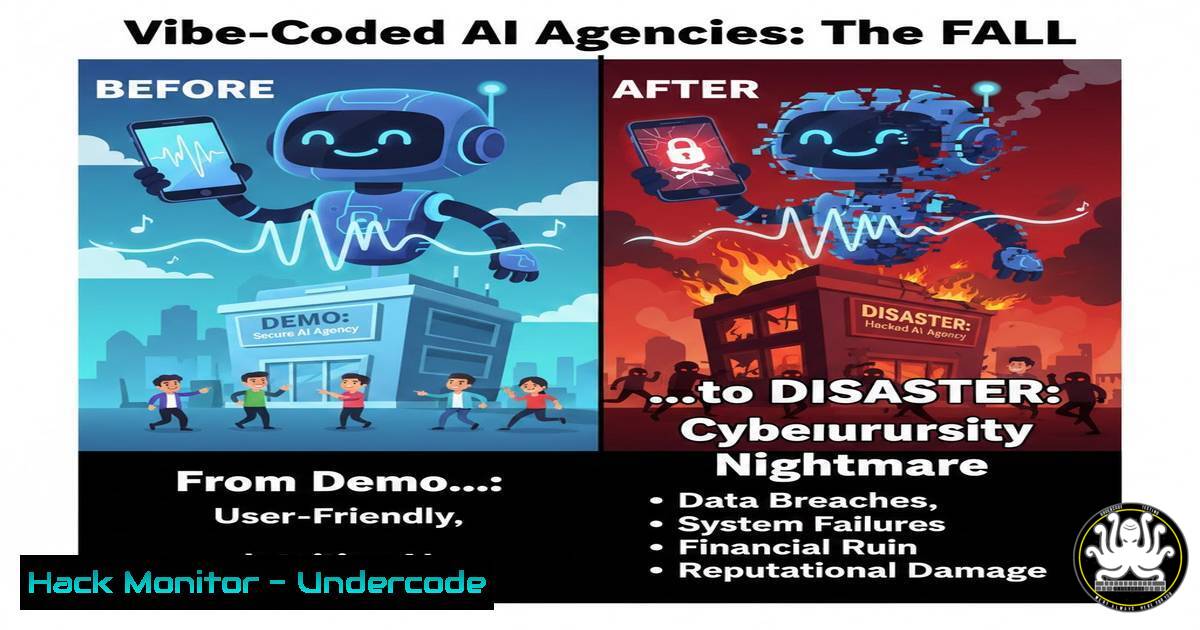
The rush to launch AI assistant agencies using platforms like OpenClaw has created a surge of fragile, production-ready applications. While the focus is often on rapid prototyping and “vibecoding,” this approach dangerously neglects the foundational engineering, infrastructure, and operational rigor required for secure, scalable software. What begins as a simple local inference demo can quickly evolve into a vulnerable system lacking observability, cost controls, and critical security boundaries, creating prime targets for exploitation.
Learning Objectives:
- Understand the critical infrastructure gaps between an AI demo and a production-grade AI product.
- Implement core operational practices including versioned deployments, observability, and security hardening.
- Apply specific commands and configurations to secure and monitor an AI application stack.
You Should Know:
1. Versioned Deployments: Beyond `git commit -m “update”`
A production system cannot rely on a single, ever-changing codebase. Versioned deployments ensure you can roll back a broken or compromised update instantly. This is a cornerstone of both reliability and security incident response.
Step‑by‑step guide:
- Containerize Your Application: Use Docker to create immutable, versioned images.
Example Dockerfile for a Python AI app
FROM python:3.11-slim
WORKDIR /app
COPY requirements.txt .
RUN pip install --no-cache-dir -r requirements.txt
COPY . .
CMD ["gunicorn", "--bind", "0.0.0.0:8000", "wsgi:app"]
- Tag and Push: Tag your Docker images with semantic versions.
docker build -t my-ai-app:v1.2.0 .
docker tag my-ai-app:v1.2.0 myregistry.com/my-ai-app:v1.2.0
docker push myregistry.com/my-ai-app:v1.2.0
- Orchestrate with Kubernetes: Deploy using Kubernetes manifests, where the image tag is explicitly defined. This allows precise control over which version is running.
deployment.yaml snippet
spec:
containers:</li>
</ol>

- name: ai-app
image: myregistry.com/my-ai-app:v1.2.0  Pinned version
ports:
- containerPort: 8000
4. Rollback Command: If a new version (
v1.3.0) fails, revert to the last known good version.kubectl rollout undo deployment/my-ai-app
- Observability & Logging: Your First Line of Defense
Without comprehensive logs and metrics, you are blind to both performance issues and security breaches. Attackers rely on this lack of visibility.
Step‑by‑step guide:
- Structured Logging: Implement JSON-formatted logs in your application to capture context.
import json
import logging
import sys</li>
</ol>

logging.basicConfig(stream=sys.stdout, level=logging.INFO,
format='%(asctime)s %(levelname)s %(message)s')
logger = logging.getLogger(<strong>name</strong>)

Structured log entry
logger.info("Inference request processed", extra={
'user_id': 'u123',
'model': 'gpt-4',
'duration_ms': 450,
'input_tokens': 120
})
2. Centralized Log Aggregation: Ship logs to a central system. Use the ELK Stack (Elasticsearch, Logstash, Kibana) or Grafana Loki.
 Using Loki Docker driver for container logs
docker run --log-driver=loki --log-opt loki-url="http://localhost:3100/loki/api/v1/push" my-ai-app
3. Monitor Key Metrics: Use Prometheus to track HTTP request rates, error rates, latency, and model inference cost/latency. Export metrics from your app and define alerts.
3. Implementing Security Boundaries for AI Endpoints
Exposing an AI model API without controls is like leaving your front door open. You must authenticate, authorize, and throttle access.
Step‑by‑step guide:
- API Gateway Configuration: Use an API Gateway (Kong, APISIX) as a reverse proxy to enforce security policies.
Add a Kong API route and plugin for key authentication curl -X POST http://localhost:8001/services \ --data "name=ai-service" \ --data "url=http://ai-app:8000" curl -X POST http://localhost:8001/services/ai-service/routes \ --data "paths[]=/infer" curl -X POST http://localhost:8001/routes/{route-id}/plugins \ --data "name=key-auth" - Rate Limiting: Prevent abuse and Denial-of-Wallet attacks (where attackers run up your AI API costs).
Add rate-limiting plugin in Kong curl -X POST http://localhost:8001/routes/{route-id}/plugins \ --data "name=rate-limiting" \ --data "config.minute=10" \ --data "config.policy=local" - Input Sanitization & Prompt Injection Guarding: Treat all user input as potentially malicious. Use a middleware to sanitize inputs and monitor for suspicious patterns that indicate prompt injection attempts.
4. Cost Controls and Throughput Planning
Uncontrolled scaling of local or cloud-hosted LLMs can lead to financial ruin or system collapse.
Step‑by‑step guide:
- Implement Queuing: Use a message queue (Redis, RabbitMQ) to decouple requests from processing and manage backpressure.
Producer (API endpoint) import redis r = redis.Redis(host='localhost', port=6379) r.lpush('inference_queue', json.dumps(user_request)) Consumer (Worker process) while True: job_data = r.brpop('inference_queue') process_inference(job_data) - Dynamic Scaling with Metrics: Configure Kubernetes Horizontal Pod Autoscaler (HPA) based on queue length or CPU.
kubectl autoscale deployment ai-worker --cpu-percent=70 --min=1 --max=10
- Hard Budget Limits: Use cloud provider budget alerts and implement application-level circuit breakers that stop processing if a daily cost threshold is met.
5. Failure Modes and Rollbacks: Preparing for Breaches
Assume components will fail and attackers will probe. Your architecture must limit “blast radius.”
Step‑by‑step guide:
- Network Segmentation: Isolate your inference workload in a private subnet. Use a Zero-Trust model.
Example AWS CLI to create a private subnet and security group
aws ec2 create-subnet --vpc-id vpc-abc123 --cidr-block 10.0.1.0/24
aws ec2 create-security-group --group-name PrivateAI-SG --description "AI App SG" --vpc-id vpc-abc123
Ingress only from the API Gateway on port 8000
- Secrets Management: Never hard-code API keys (e.g., for OpenClaw). Use a secrets manager.
Access a secret in Kubernetes via a mounted volume
Pod spec snippet:
spec:
containers:</li>
</ol>

- name: app
volumeMounts:
- name: secret-volume
mountPath: /etc/secrets
volumes:
- name: secret-volume
secret:
secretName: openclaw-api-key
3. Incident Response Playbook: Document and drill the process for a suspected breach: 1) Isolate affected pods, 2) Rotate secrets, 3) Analyze logs from the aggregated system, 4) Rollback to a known secure version.
What Undercode Say:
- Key Takeaway 1: The “vibecoding” or demo-centric approach to AI application development inherently creates systemic risk by prioritizing functionality over the operational and security controls that constitute a true product. This gap is not a feature shortfall but a fundamental architectural deficiency.
- Key Takeaway 2: Security in AI systems is not a bolt-on feature; it is the emergent property of rigorous engineering practices—versioning, observability, bounded scaling, and hardened access controls. Neglecting these for speed builds a fragile business on a foundation of digital sand.
The analysis reveals that the core issue is a misconception of “production.” In cybersecurity terms, production readiness is the state of resilience against both failure and malice. The described playbook of watching a tutorial and running local inference completely bypasses the design of security boundaries (network, identity, application), audit trails (comprehensive, immutable logging), and failure containment (rollbacks, segmentation). This creates a predictable attack surface where a single prompt injection could exfiltrate data, a lack of rate limiting could lead to financial exhaustion, and the absence of observability would mean the breach goes undetected for months. The operational context is the security context.
Prediction:
Within the next 12-18 months, the wave of hastily built AI agencies will face a concurrent wave of incidents—from debilitating cost overruns due to unthrottled API calls to significant data breaches involving prompt injection and model manipulation. This will trigger a market correction where clients and investors prioritize demonstrable operational and security maturity over flashy demos. The fallout will lead to the first major regulatory discussions specific to AI application security, focusing on accountability for data handled by these systems. Agencies that invested early in the unglamorous work of engineering rigor will not only survive but define the new standard for trustworthy AI deployment.
🎯Let’s Practice For Free:
IT/Security Reporter URL:
Reported By: Markcampbell88 Hot – Hackers Feeds
Extra Hub: Undercode MoN
Basic Verification: Pass ✅🔐JOIN OUR CYBER WORLD [ CVE News • HackMonitor • UndercodeNews ]
📢 Follow UndercodeTesting & Stay Tuned:
- API Gateway Configuration: Use an API Gateway (Kong, APISIX) as a reverse proxy to enforce security policies.
- Observability & Logging: Your First Line of Defense


