Listen to this Post
Introduction:
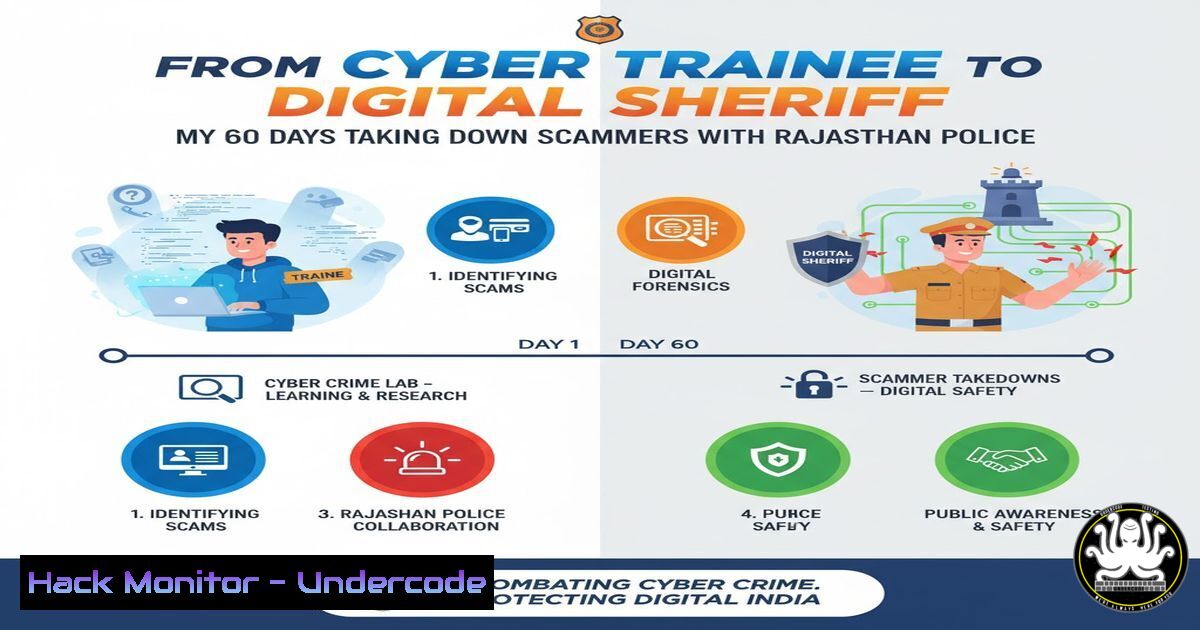
The digital frontier is the new Wild West, and cyber cells are the modern sheriffs’ departments battling an onslaught of sophisticated fraud. This first-hand account from a 60-day industrial training with the Rajasthan Police Cyber Cell pulls back the curtain on the practical, ground-level fight against cybercrime. It reveals not just the tools and techniques, but the crucial human element involved in hunting down scammers, tracking stolen devices, and bringing a measure of justice to victims.
Learning Objectives:
- Understand the practical application of OSINT, mobile forensics, and fraud chain analysis in real-world cyber investigations.
- Learn how to leverage official portals like CEIR for device tracking and the methodologies behind taking down fraudulent websites.
- Grasp the concept of “reverse phishing” and how ethical hackers can turn an attacker’s methods against them.
You Should Know:
- Unmasking Fraudulent Networks with Transaction and Call Detail Record (CDR) Analysis
Step‑by‑step guide explaining what this does and how to use it.
Analyzing the flow of illicit funds and communication patterns is foundational to dismantling criminal operations. By mapping transaction chains, investigators can follow the money to its source, while CDR analysis visualizes the network of accomplices.Step 1: Data Acquisition. Obtain the bank statements of the victim and the fraudulent account details from the initial transaction. Simultaneously, secure a court order for the suspect’s Call Detail Records from their telecom provider.
Step 2: Transaction Mapping. Use tools like Maltego or custom scripts to map the flow of funds. Input all account numbers involved. The tool will visualize how money is moved, often through multiple layers of “mule” accounts to obfuscate the trail.
Example Linux command to parse transaction logs:
`grep “FRAUD_ACCOUNT_NUMBER” transaction_dump.csv | awk -F’,’ ‘{print $3, $5}’ > flow_analysis.txt`
Step 3: CDR Visualization. Load the CDR data into a network analysis tool like Gephi. Correlate frequent contacts with the transaction map. A phone number that appears consistently in the CDR of multiple money mules is likely a key orchestrator.
2. Takedown Arsenal: Neutralizing Fraudulent Websites
Step‑by‑step guide explaining what this does and how to use it.
Fake websites, especially for hotels or banks, are a primary tool for phishing and advance-fee scams. Taking them down requires a methodical approach to prove malicious intent to the hosting provider.
Step 1: Evidence Collection. Perform a comprehensive screenshot of the entire website. Use `wget` on Linux to mirror the site for offline analysis.
Example Linux command:
wget --mirror --convert-links --adjust-extension --page-requisites --no-parent http://fake-hotel-website.com`whois fake-hotel-website.com | grep -i “registrar\|name server”`
Step 2: WHOIS and Hosting Investigation. Identify the hosting provider and domain registrar using the `whois` command.
<h2 style="color: yellow;"> Example Linux command:</h2>
<h2 style="color: yellow;">
Step 3: Abuse Report. Draft a formal abuse report to the hosting provider’s abuse desk. Include the collected evidence, point out trademark infringement (if applicable), and detail the fraudulent activity. Legal authority from a police cyber cell significantly accelerates this process.
- The Central Equipment Identity Register (CEIR): Tracking and Blocking Stolen Devices
Step‑by‑step guide explaining what this does and how to use it.
The CEIR portal is a powerful government-initiated system that tracks mobile devices via their unique IMEI (International Mobile Equipment Identity). Blocking an IMEI renders a stolen phone useless on all Indian networks.Step 1: IMEI Retrieval. The victim must provide their device’s IMEI, usually found on the original box or retrieved digitally by dialing `06` on the phone.
Step 2: Police Report. A formal First Information Report (FIR) must be filed at a police station. The IMEI number is a critical piece of information in this report.
Step 3: CEIR Blocking Request. Authorized cyber cell officers log into the CEIR portal, input the IMEI from the FIR, and submit a blocking request. Once approved, the IMEI is blacklisted across all telecom networks, preventing the device from making any calls or using data.
4. Offensive OSINT: E-mail, Website, and Persona Investigation
Step‑by‑step guide explaining what this does and how to use it.
Open-Source Intelligence (OSINT) is the art of finding what people leave exposed online. It’s used to identify suspects, gather evidence, and establish connections.
Step 1: E-mail OSINT. Take a known email address and search it across platforms like Hunter.io, EmailHippo, or breach databases like Have I Been Pwned. Use theHarvester in Kali Linux to find accounts associated with it.
Example Linux command:
`theHarvester -d target-domain.com -b google,linkedin`
Step 2: Website OSINT. Beyond whois, use tools like BuiltWith or Wappalyzer to identify the technologies used on a site. Check the site’s `robots.txt` file for hidden directories: `curl http://target-site.com/robots.txt`.
Step 3: Image Reverse Search. Use Google Reverse Image Search or Tineye on profile pictures from fake accounts to find other platforms where the same persona is active, potentially revealing their real identity.
- Digital Forensics: Evidence Acquisition from Mobiles and USB Drives
Step‑by‑step guide explaining what this does and how to use it.
Forensics is about extracting data without altering it, maintaining a chain of custody for legal admissibility.Step 1: Isolation and Imaging. Immediately place the device in a Faraday bag to prevent remote wiping. For a USB drive, create a forensically sound bit-for-bit copy (image) using `dd` on Linux.
Example Linux command (be very careful with targetof=):
`sudo dd if=/dev/sdb of=./evidence_USB.img bs=4M status=progress`
Step 2: Analysis with Autopsy. Load the image into a forensic tool like Autopsy or FTK Imager. These tools can recover deleted files, extract browser history, and parse application data from the image without touching the original evidence.
Step 3: Hashing for Integrity. Always generate a hash of the original evidence and the image to prove they are identical.
Example Linux command:
`sha256sum /dev/sdb evidence_USB.img`
- The Hunter Becomes the Bait: Reverse Phishing via IP Logging
Step‑by‑step guide explaining what this does and how to use it.
Reverse phishing involves deceiving the attacker into revealing their own information, such as their IP address, by engaging with them under a controlled, deceptive persona.Step 1: Create a Credible Lure. Set up a fake social media or Telegram profile that would be attractive to the target criminal (e.g., a potential money mule).
Step 2: Deploy an IP Logger. Use a service like Grabify or a self-hosted web server with logging. Create a shortened URL that points to a seemingly legitimate or enticing resource (e.g., a “leaked” document or a payment link).
Step 3: Engagement and Tracking. Share the link with the suspect during conversation. When they click it, the logger captures their IP address, approximate location, and device information. This data can then be used with a legal order to identify their ISP and physical address.
What Undercode Say:
- The Human Firewall is the First and Last Line of Defense. This experience underscores that technology alone cannot stop scams; it requires vigilant individuals who can recognize social engineering tactics.
- The Blurring Line Between Defense and Offense. Effective modern cybersecurity, especially in law enforcement, requires a proactive, hunter-minded approach, using offensive tactics for defensive outcomes.
This account is a powerful testament to the evolving nature of cybersecurity careers. It moves beyond theoretical certifications into the gritty reality of digital investigation. The most critical analysis is the demonstrated synergy between formal IT knowledge and seasoned, field-level expertise. The trainee shared IT concepts, while the mentor provided context on criminal psychology and procedural law. This model is the future of effective cyber defense: not just building stronger walls, but training smarter, more proactive sentinels who understand both the code and the criminal mind.
Prediction:
The tactics demonstrated here—particularly the aggressive use of OSINT and reverse phishing—will become standard not just for law enforcement but for corporate security teams combating fraud and espionage. We will see a rise in “Active Defense” units within organizations, operating in legal gray zones to disrupt attackers. Furthermore, as criminals increasingly use AI for hyper-realistic scams, the counter-response will also become AI-driven, leading to an automated “AI vs. AI” battleground in the cyber underworld, where investigations will pivot on analyzing the algorithms used by attackers rather than just their IP addresses.
🎯Let’s Practice For Free:
IT/Security Reporter URL:
Reported By: Samyakkatiyar Few – Hackers Feeds
Extra Hub: Undercode MoN
Basic Verification: Pass ✅


