Listen to this Post
Introduction:
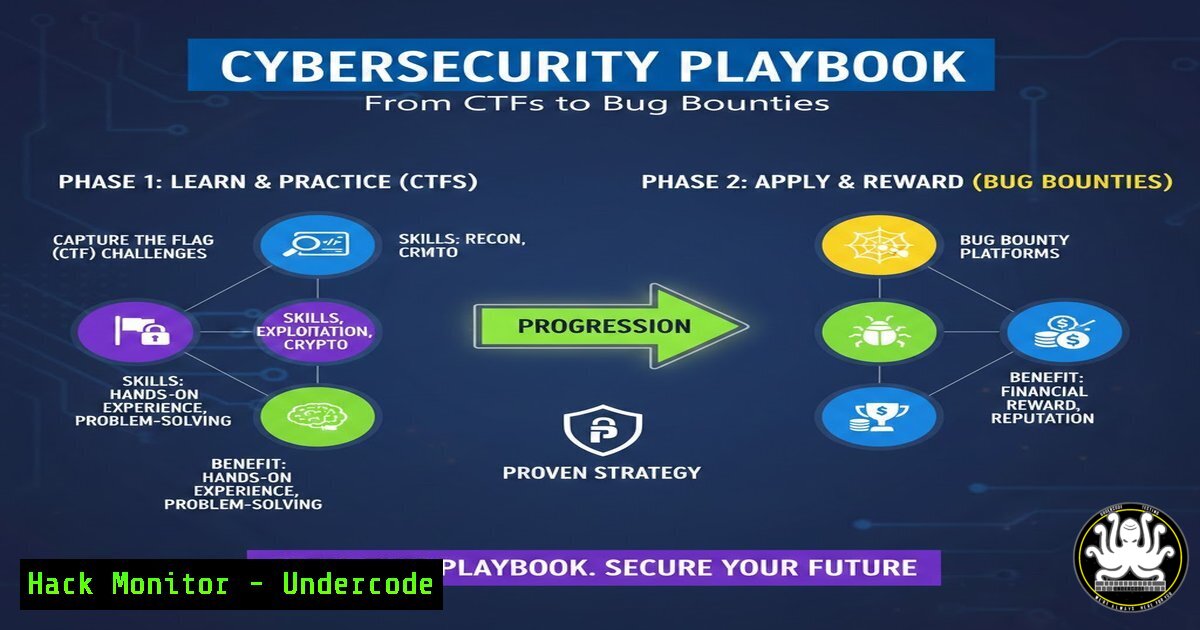
The journey from a curious novice to a professional penetration tester is rarely a straight line, but it is almost always paved with hands-on practice. As highlighted in a recent industry discussion between cybersecurity professionals Belal Fergani and Ammar Ashraf, the path often winds through technical education, competitive Capture The Flag (CTF) challenges, and the high-stakes world of Bug Bounty programs. This article breaks down the core principles of that journey, providing a technical roadmap for aspiring security engineers to build the skills required to find vulnerabilities before the bad guys do.
Learning Objectives:
- Understand the foundational value of CTF platforms in building practical penetration testing skills.
- Learn the structured methodology for approaching a Bug Bounty program, from reconnaissance to reporting.
- Identify key Linux and command-line tools used in modern web application security assessments.
You Should Know:
1. Leveling Up: The CTF Grind
Competitive platforms like Hack The Box, TryHackMe, and CTFtime are the modern-day dojos for security engineers. They simulate real-world vulnerabilities in a controlled environment, allowing you to understand the “why” behind an exploit, not just the “how.”
Step‑by‑step guide to setting up your practice environment:
Before you hack anything, you need a legal sandbox. Here is how to set up a basic penetration testing lab on your local machine using VirtualBox.
1. Install VirtualBox:
- Windows/Linux/macOS: Download the installer from the official VirtualBox website and run it. Ensure your BIOS/UEFI has virtualization technology (VT-x/AMD-V) enabled.
- Command (Linux – Debian based): `sudo apt update && sudo apt install virtualbox -y`
2. Download a Target Machine:
- Go to a platform like VulnHub and download a vulnerable VM (e.g., “Mr-Robot: 1”).
- Import the downloaded `.ova` file into VirtualBox (File -> Import Appliance).
3. Set Up Your Attack Machine (Kali Linux):
- Download the Kali Linux VirtualBox image from the official website.
- Import the `.ova` file. Ensure the network adapter for both the Kali VM and the Target VM is set to “NAT Network” or “Host-Only Adapter” so they can communicate privately.
- Boot Kali and find the target’s IP address using:
– `sudo netdiscover -r 192.168.1.0/24` (Adjust the range to your network). - Or simply `ifconfig` to see your IP, then `nmap -sn 192.168.1.0/24` to ping sweep for the target.
This isolated environment is where you practice the techniques discussed in podcasts and forums, moving from theory to execution without risking legal consequences.
2. The Bug Bounty Methodology: Recon to Payout
Transitioning from CTFs to live Bug Bounty programs requires a shift in mindset. CTFs have a “flag” you are meant to find. Bug Bounties require you to prove a business impact. The first and most critical phase is Reconnaissance (Recon).
Step‑by‑step guide to subdomain enumeration:
Finding forgotten or poorly secured subdomains is a goldmine for bug bounty hunters. Here’s a command-line workflow using common tools on a Linux machine.
- Asset Discovery: Start with a known root domain, e.g.,
target.com.
2. Using Assetfinder:
- Install: `go install github.com/tomnomnom/assetfinder@latest`
– Run: `assetfinder –subs-only target.com | tee assetfinder_subs.txt`
– Explanation: This command finds all related domains and subdomains associated with `target.com` and saves the list to a file.
3. Brute-Forcing Subdomains:
- Use a tool like `gobuster` or `ffuf` to brute force subdomains using a wordlist.
- Install ffuf: `sudo apt install ffuf -y`
– Run: `ffuf -w /usr/share/wordlists/seclists/Discovery/DNS/subdomains-top1million-5000.txt -H “Host: FUZZ.target.com” -u https://target.com -fc 200`
– Explanation: This uses a wordlist (-w) to replace `FUZZ` in the Host header, sending requests to see which subdomains resolve. It filters out responses that return a 200 status code (-fc 200) to find hidden vhosts.
4. Probing for Alive Hosts:
- Use `httpx` to check which of your discovered domains have active web servers.
- Install: `go install github.com/projectdiscovery/httpx/cmd/httpx@latest`
– Run: `cat assetfinder_subs.txt | httpx -silent -status-code -title -tech-detect | tee live_hosts.txt`
– Explanation: This pipes your list of subdomains into httpx, which checks for HTTP/HTTPS services, returning the status code, page title, and detected technologies. This gives you a clean list of attack surfaces.
- Exploitation in Practice: The Anatomy of an IDOR
One of the most common and lucrative vulnerabilities found in Bug Bounties is Insecure Direct Object References (IDOR). This occurs when an application exposes a reference to an internal object (like a database ID) without proper access control checks.
Step‑by‑step guide to testing for IDOR:
Let’s assume you found a legitimate endpoint during your recon: `https://target.com/api/user/12345`.
1. Intercept with a Proxy:
- Open Burp Suite (Community Edition is fine) or OWASP ZAP.
- Configure your browser to route traffic through the Burp proxy (usually
127.0.0.1:8080). - Navigate to the endpoint. You will see the request in Burp’s “HTTP History” or “Proxy” tab.
2. Send to Repeater:
- Right-click the request and select “Send to Repeater”.
3. Manipulate the Parameter:
- In Repeater, change the user ID from `12345` to
12346. - Click “Send”.
4. Analyze the Response:
- If the response returns the personal data (email, address, private messages) of user
12346, you have found a critical IDOR vulnerability. - Windows/Linux Note: While Burp Suite is a GUI application, you can also perform this manually using `curl` on the command line:
– `curl -X GET https://target.com/api/user/12346 -H “Cookie: session=YOUR_SESSION_COOKIE”`
What Undercode Say:
- Theory Must Meet Practice: Certifications and degrees provide the framework, but platforms like CTFs and Bug Bounties build the muscle memory required to actually find flaws in code.
- Automation is a Force Multiplier: Manual testing is crucial, but mastering command-line tools like `ffuf` and `httpx` allows an engineer to cover massive amounts of attack surface efficiently, turning hours of work into minutes.
The discussion between Belal Fergani and Ammar Ashraf underscores a critical truth in the cybersecurity industry: the gap between academic knowledge and practical application is best bridged by relentless, hands-on experimentation. The security landscape is an attacker’s paradise of misconfigurations and logic flaws, waiting to be discovered by those disciplined enough to run the tools, analyze the outputs, and persistently question the developer’s assumptions. Ultimately, a hacker’s value is not measured by the number of tools they can name, but by the unique chain of exploits they can construct from them.
Prediction:
As AI-powered code assistants become ubiquitous, we will see a surge in common, AI-hallucinated vulnerabilities and dependency confusion attacks. The future Bug Bounty hunter will pivot from finding simple SQLi to auditing AI-generated code for logic flaws and poisoning public datasets to influence enterprise AI models. The “Prompt Engineer” will soon become a standard role on any mature Bug Bounty squad.
▶️ Related Video (82% Match):
🎯Let’s Practice For Free:
IT/Security Reporter URL:
Reported By: Belalfergani %D8%A7%D8%B3%D8%AA%D9%85%D8%AA%D8%B9%D8%AA – Hackers Feeds
Extra Hub: Undercode MoN
Basic Verification: Pass ✅


