Listen to this Post
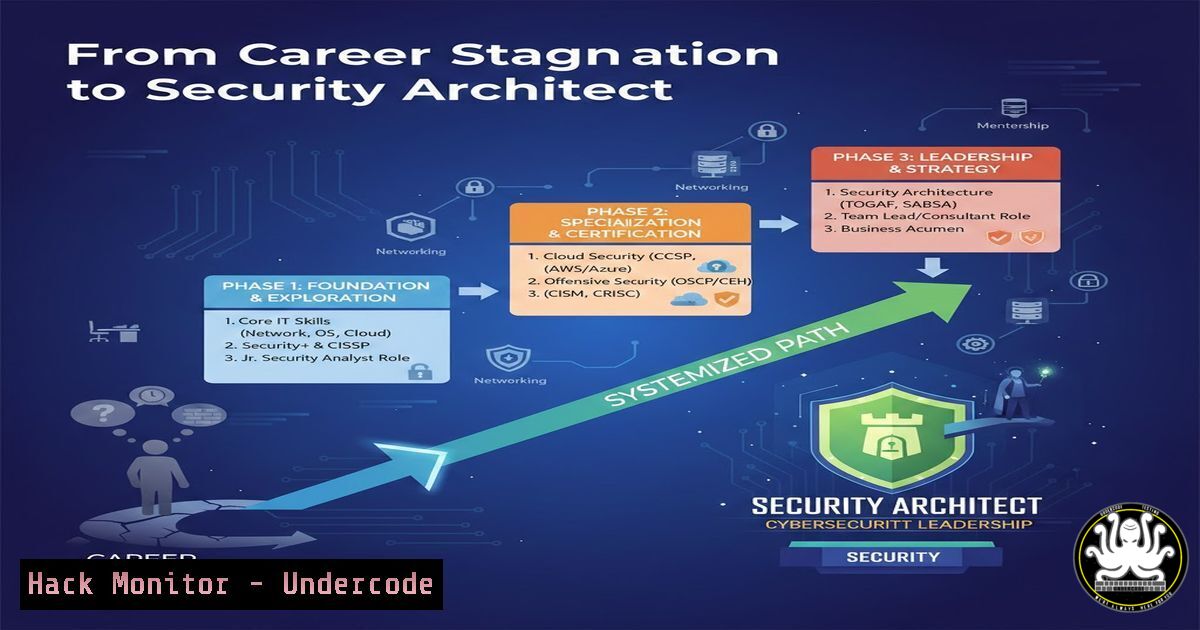
Introduction:
In an era where cyber threats evolve daily, career stagnation for IT professionals isn’t just a lack of direction—it’s a critical vulnerability. Moving from reactive job-chasing to building intentional, systemized expertise is the cornerstone of becoming an indispensable security leader. This structured approach mirrors the methodology required to harden systems and defend enterprises.
Learning Objectives:
- Architect a personalized, systematic learning path for cybersecurity specialization.
- Build and configure a practical home lab to translate theoretical knowledge into hands-on skill.
- Develop a T-shaped skill profile: deep expertise in one security domain coupled with broad IT fluency.
You Should Know:
- Building Your Cybersecurity Home Lab: The Foundation of Practical Skill
A theoretical cert alone is insufficient. Your home lab is your perpetual learning engine, a safe environment to test, break, and understand systems.
Step‑by‑step guide:
Objective: Create an isolated network to safely run vulnerable VMs, security tools, and practice attacks/defenses.
Step 1 – Choose Your Hypervisor: Install a Type-2 hypervisor like Oracle VM VirtualBox or VMware Workstation Player.
Step 2 – Isolate Your Lab Network: In your hypervisor, create a new Host-Only Network or NAT Network. This keeps lab traffic off your main home network.
VirtualBox Command: `VBoxManage natnetwork add –netname SecLabNet –network “10.0.10.0/24” –enable`
Step 3 – Deploy Core VMs: Start with these base images:
Kali Linux: The premier penetration testing distribution.
Metasploitable2/3: Intentionally vulnerable Ubuntu/Windows VMs for target practice.
Security Onion: A Linux distro for intrusion detection (IDS) and network security monitoring (NSM).
Step 4 – Configure Networking: Attach all lab VMs to the isolated network you created (e.g., SecLabNet). Ensure they can ping each other.
- Mastering the Core Toolchain: From Recon to Hardening
Intentional growth requires mastery of fundamental tools that form the security practitioner’s daily workflow.
Step‑by‑step guide:
Objective: Conduct a basic vulnerability assessment on your lab target.
Step 1 – Reconnaissance with `nmap`:
 Discover live hosts on your lab subnet
nmap -sn 10.0.10.0/24
 Perform a service/version detection scan on your target (e.g., Metasploitable2)
nmap -sV -sC -O 10.0.10.50
Step 2 – Vulnerability Scanning with `nessus` or openvas:
Install the Nessus Essentials (free) or OpenVAS scanner on a dedicated VM.
Configure it to scan the target IP. Analyze the generated CVE reports.
Step 3 – Exploitation Practice with `metasploit`:
msfconsole
use exploit/unix/ftp/vsftpd_234_backdoor
set RHOSTS 10.0.10.50
exploit
Goal: Gain a shell. Then, practice post-exploitation commands like whoami, ifconfig, and searching for sensitive files.
3. Developing T-Shaped Expertise: Deep Specialization
Choose a vertical and drill deep. For example, in Cloud Security (AWS):
Step 1 – Harden an S3 Bucket (AWS CLI):
 Check for and disable public access
aws s3api get-public-access-block --bucket my-bucket
aws s3api put-public-access-block --bucket my-bucket --public-access-block-configuration "BlockPublicAcls=true,IgnorePublicAcls=true,BlockPublicPolicy=true,RestrictPublicBuckets=true"
 Enable server-side encryption
aws s3api put-bucket-encryption --bucket my-bucket --server-side-encryption-configuration '{"Rules": [{"ApplyServerSideEncryptionByDefault": {"SSEAlgorithm": "AES256"}}]}'
Step 2 – Implement Infrastructure as Code (IaC) Security: Use `checkov` or `tfsec` to scan Terraform templates for misconfigurations before deployment.
checkov -d /path/to/terraform/code
4. Building Your “Security Operations” Playbook
Documented processes are key. Create runbooks for common incidents.
Incident Response Playbook (Phishing):
- Contain: Isolate affected endpoint (Windows: `net stop` service, or use EDR console).
- Investigate: Collect artifacts (Linux: `grep` for suspicious processes; Windows: analyze `Security.evtx` logs with
Get-WinEvent). - Eradicate & Recover: Remove persistence, restore from clean backup.
5. The Mentorship & Clarity System: Strategic Networking
Direction comes from those ahead. Systemize your learning.
Step 1 – Identify: Use platforms like Cybersecurity Mentorship Program (CMMP) or find architects on LinkedIn.
Step 2 – Engage: Ask specific, technical questions. Present your lab work or code for review.
Step 3 – Contribute: Share your documented learnings (e.g., a GitHub repo of security scripts) to attract peer review.
What Undercode Say:
- Intentional Skill Building Trumps Cert Collecting: A targeted, project-based approach to learning one domain deeply (e.g., mastering `Wireshark` filters for threat hunting) creates more value than a shelf of unrelated entry-level certs. Employers seek demonstrable skill, not just passed exams.
- Your Lab is Your Career Catalyst: The systematic construction, maintenance, and expansion of a home lab mirrors the professional rigor required for security architecture. It provides tangible evidence of initiative and practical ability during interviews, far beyond discussing theoretical concepts.
Prediction:
The convergence of AI-driven threat actors and automated defense systems will rapidly bifurcate the cybersecurity job market. Low-skill, reactive “alert-monitor” roles will be fully automated within 5-7 years. Conversely, demand will explode for strategic, system-thinking professionals who can architect secure-by-design systems, develop advanced detection algorithms, and understand the adversarial mindset well enough to anticipate novel attack vectors. The professionals who adopt the intentional, mentorship-guided, and lab-focused path outlined here will transition into these high-value roles—becoming the crisis commanders and security innovators—while those waiting for direction from job descriptions will find their roles obsolete.
▶️ Related Video (84% Match):
🎯Let’s Practice For Free:
IT/Security Reporter URL:
Reported By: Alokkhare Career – Hackers Feeds
Extra Hub: Undercode MoN
Basic Verification: Pass ✅


