Listen to this Post
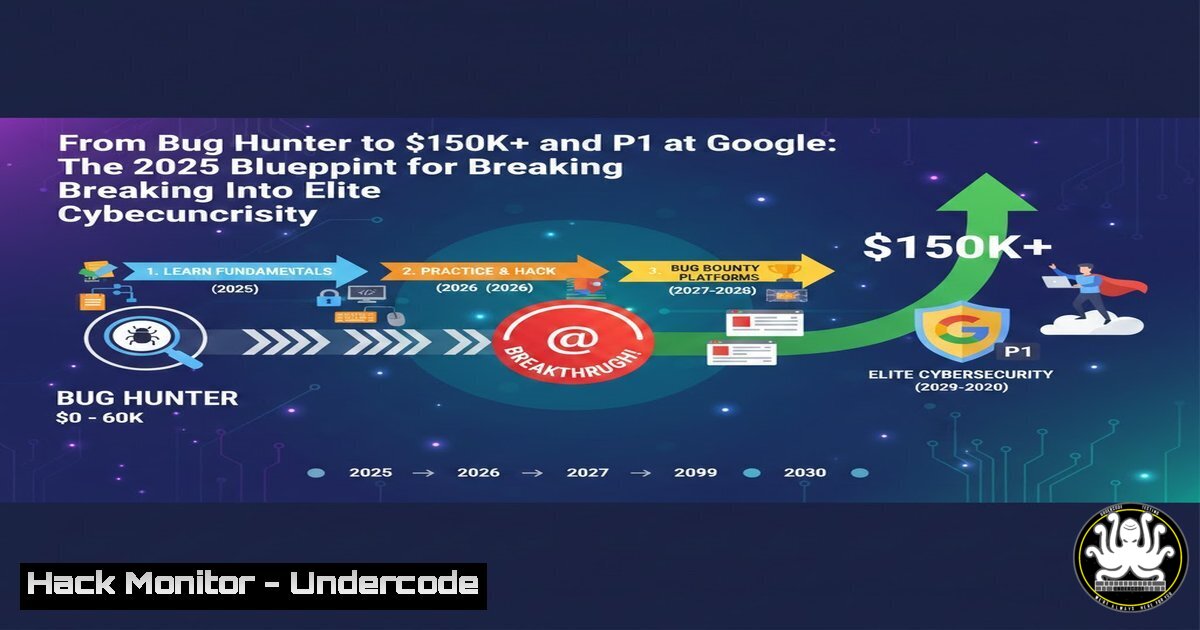
Introduction:
The journey from aspiring security enthusiast to a recognized professional earning significant bug bounties and contributing to major platforms like Google and Microsoft is a structured path of skill development, methodology, and persistence. This article deconstructs the key technical domains—Application Security, API Security, and Vulnerability Research—highlighted in a top researcher’s 2025 success story, providing actionable steps to emulate this career trajectory.
Learning Objectives:
- Understand and implement the core methodologies for modern web application and API penetration testing.
- Develop a systematic approach to vulnerability research and responsible disclosure that leads to high-severity findings (P1/S1).
- Build a continuous learning and practice regimen using proven resources and platforms to advance from beginner to professional.
You Should Know:
- Mastering the Modern Web Attack Surface: OWASP Top 10 in Action
The foundation of Application Security lies in understanding the OWASP Top 10. A researcher’s success with Cross-Site Scripting (XSS) and other web flaws starts here. This isn’t about random testing; it’s about methodical probing for injection points.
Step‑by‑step guide explaining what this does and how to use it.
Step 1: Reconnaissance & Mapping: Use tools to map the target application. Identify all user inputs, parameters, and endpoints.
Command (CLI): `gau target.com | grep “=” | sort -u` (Uses `gau` to fetch known URLs and filters for parameters).
Tool: Burp Suite’s Target tab and Site Map. Spider the application to build a comprehensive map.
Step 2: Probing for Common Vulnerabilities: Systematically test each input.
XSS Test: Inject payloads like `` or use a list from PayloadsAllTheThings.
SQLi Test: Use automated tools cautiously and follow up manually. A classic test is injecting `’` or `”` and observing errors.
Command (Tool): Use `sqlmap` on a potentially vulnerable parameter: sqlmap -u "https://target.com/search?q=1" --batch --level=2.
Step 3: Context-Aware Exploitation: Not all payloads work everywhere. For reflected XSS, your payload must align with the output context (HTML, JavaScript string, attribute). Use Burp Suite’s Repeater to experiment with encoding and different tag closures.
- API Security: The Hidden Goldmine for Bug Hunters
APIs, especially GraphQL and REST, power modern applications and are rich targets. Misconfigured authentication, excessive data exposure, and broken object-level authorization (BOLA) are common critical findings.
Step‑by‑step guide explaining what this does and how to use it.
Step 1: Endpoint Discovery: Find API endpoints.
Command (CLI): Use `ffuf` for fuzzing: ffuf -w /path/to/wordlist.txt -u https://target.com/api/FUZZ -mc 200.
Source: Check mobile app APKs (using apktool), JavaScript files, and `/robots.txt` or /api/v1/swagger.json.
Step 2: Analyze Authentication & Authorization: Test if endpoints properly validate user identity and permissions.
BOLA Test: Access an object belonging to another user by changing an ID in the request (e.g., `GET /api/v1/orders/123` to GET /api/v1/orders/456).
Tool: Use Burp Suite’s “Compare Site Maps” feature to see differences between a low-privilege and high-privilege user’s access.
Step 3: Test for Mass Assignment & Injection: Send unexpected parameters in POST/PUT requests. Test for GraphQL-specific flaws like introspection leaks or batch query attacks.
3. Vulnerability Research: Beyond Automated Scanners
Elite bug reports (P1/S1) often involve chaining issues or finding logic flaws scanners miss. This requires understanding the application’s business logic.
Step‑by‑step guide explaining what this does and how to use it.
Step 1: Manual Business Logic Analysis: Ask, “What is this feature supposed to do, and what can I make it do?”
Example: A “forgot password” function that sends a reset code. Can you brute-force the 6-digit code? Is there a rate limit? Can you request codes for other users?
Step 2: Source Code Analysis (When Possible): For open-source projects or bug bounty programs with source access, use `grep` to find security-sensitive functions.
Command (Linux): grep -r "exec\|eval\|shell_exec\|deserialize" /path/to/source/ --include=".py" --include=".php".
Step 3: Chaining Low-Severity Issues: A low-severity Open Redirect can be chained with a high-severity XSS to create a more impactful attack vector (e.g., `https://target.com/redirect?url=https://evil.com/xss.js`).
4. Building a Professional Secure SDLC Mindset
Understanding how vulnerabilities are introduced and caught in the Software Development Life Cycle (SDLC) makes you a better hunter and opens doors to AppSec roles.
Step‑by‑step guide explaining what this does and how to use it.
Step 1: Shift-Left Security Practices: Learn to spot vulnerabilities in code during the design and development phase.
Tutorial: Use a SAST tool like `semgrep` on a demo project: semgrep --config "p/security-audit" /path/to/code.
Step 2: Threat Modeling: Practice deconstructing an application (e.g., a simple blog) using a framework like STRIDE (Spoofing, Tampering, Repudiation, Information Disclosure, Denial of Service, Elevation of Privilege). Diagram data flows and identify threats.
5. The Operational Rhythm of a Successful Hunter
Consistency, as highlighted in the 2025 recap, is key. This involves structured practice and report writing.
Step‑by‑step guide explaining what this does and how to use it.
Step 1: Dedicated Practice: Use deliberately vulnerable platforms.
Platforms: PortSwigger’s Web Security Academy, Hack The Box (especially its application-focused tracks), PentesterLab, and TryHackMe.
Step 2: Master Report Writing: A well-written report is as important as the finding. It must be clear, concise, and demonstrate impact.
Template: , Executive Summary, Steps to Reproduce (numbered, with screenshots), Impact, Suggested Fix, References.
Step 3: Engage with the Community: Follow researchers on Twitter/LinkedIn, read public disclosure reports on HackerOne or Bugcrowd, and participate in CTFs and live hacking events.
What Undercode Say:
- Skill Specialization Drives Success: Broad awareness coupled with deep, practiced expertise in specific areas like API security or logic flaws is what uncovers high-value bugs, not just running tools.
- The Mindset is the Multiplier: Technical skill is mandatory, but the growth mindset—persistence through rejected reports, continuous learning, and analyzing failures—is what transforms a hobbyist into a top-tier researcher.
- analysis: The 2025 recap underscores a non-linear path to cybersecurity excellence. It reveals a hybrid model: deep technical rigor in vulnerability research combined with the soft skills of professional communication and community engagement. The $150K+ milestone is not merely a financial figure but a metric of consistent, high-quality output recognized by industry giants. This blueprint demystifies elite success, showing it’s built on public learning resources, methodical practice, and treating each bug report as a learning iteration. The integration of Secure SDLC knowledge indicates the modern researcher’s evolution from a finder of bugs to a strategic partner in the software security process.
Prediction:
The trajectory from individual bug hunting to roles in architectural security (like Associate Architect) will accelerate. Platforms will increasingly automate simple vulnerability classes, pushing researchers towards advanced domains like AI system security, cloud infrastructure misconfigurations, and complex logic flaws in business-critical applications. Live hacking events will become primary talent pipelines for corporations, and the ability to articulate risk and remediation in business terms will become as valued as the technical find itself. The community-driven knowledge sharing model will formalize, with successful researchers building educational platforms, further lowering barriers to entry but raising the bar for professional mastery.
▶️ Related Video (74% Match):
🎯Let’s Practice For Free:
IT/Security Reporter URL:
Reported By: Vishal Bharad – Hackers Feeds
Extra Hub: Undercode MoN
Basic Verification: Pass ✅


