Listen to this Post
Introduction:
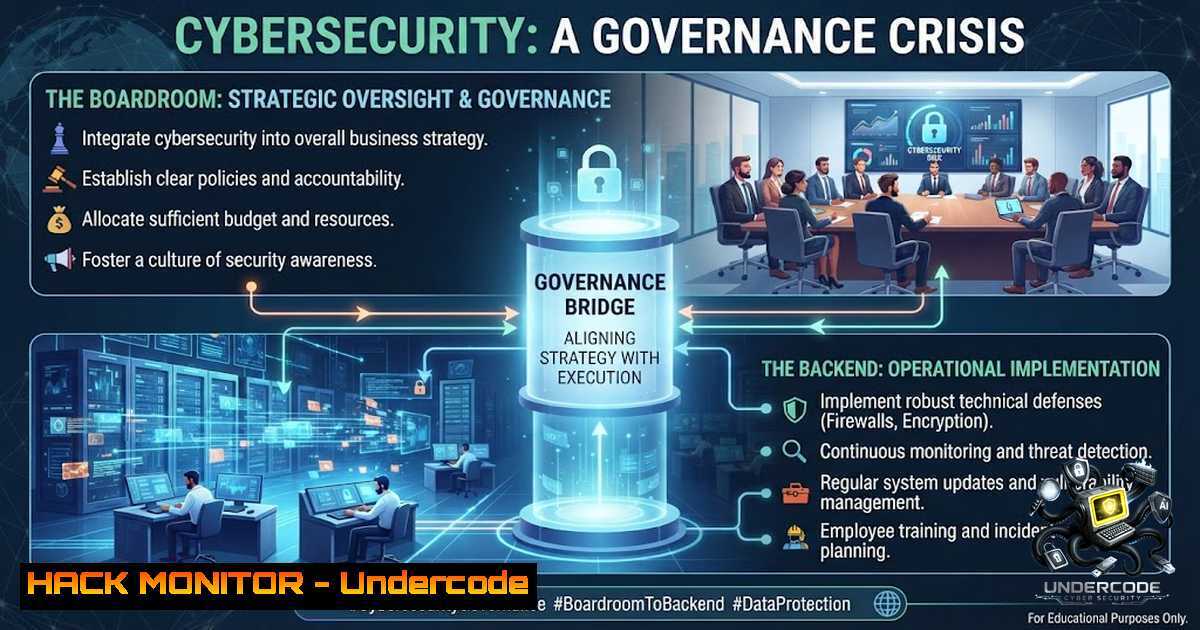
The quest for cybersecurity has entered a new, escalating phase, driven by the advent of generative AI and the proliferation of highly advanced, state-sponsored criminal hacking organizations. As Stephen Pitt-Walker, a board advisor and certified information security manager, points out, the challenge is no longer purely technical but fundamentally human. In this new paradigm, organizations must treat brand equity and cybersecurity not as siloed IT issues, but as strategic assets demanding the same rigorous oversight as capital allocation and risk management. This article bridges the gap between high-level governance and technical implementation, providing a comprehensive guide for leaders and practitioners navigating the AI-driven threat landscape.
Learning Objectives:
- Understand the critical interdependency between AI advancements and the evolving cybersecurity threat landscape.
- Learn to implement robust governance frameworks and technical controls to mitigate AI-specific risks.
- Acquire practical Linux, Windows, and cloud-hardening commands to defend against sophisticated attacks.
You Should Know:
1. The AI-Cybersecurity Interdependency: A Double-Edged Sword
While AI offers unprecedented capabilities for threat detection and response, it also equips adversaries with tools to launch more sophisticated attacks. Attackers are leveraging AI to automate vulnerability scanning, craft highly convincing phishing emails, and bypass traditional security controls. This section outlines the technical steps to leverage AI for defense while hardening your environment against AI-powered attacks.
Step‑by‑step guide: Hardening Against AI-Powered Threats
- Implement AI-Driven Threat Hunting: Deploy open-source tools like `Velociraptor` for endpoint visibility and `TheHive` for incident response. On Linux, use `auditd` to monitor for anomalous process execution indicative of AI-assisted malware.
- Harden API Endpoints (OWASP Top 10): AI models often expose APIs. Use `OWASP ZAP` or `Burp Suite` to scan for vulnerabilities. Implement rate limiting using `iptables` on Linux:
iptables -A INPUT -p tcp --dport 443 -m connlimit --connlimit-above 100 -j REJECT. On Windows, use `New-1etFirewallRule` in PowerShell to restrict inbound traffic. - Deploy Adversarial ML Defenses: Use `Adversarial Robustness Toolbox` (ART) to test model resilience. Employ input sanitization and anomaly detection to prevent prompt injection attacks.
2. Governance Frameworks for AI and Data Privacy
Integrating AI requires a governance framework that addresses ethics, compliance, and risk management. With certifications like CIPP/US and AIGP becoming critical for board members, organizations must align their technical controls with legal standards.
Step‑by‑step guide: Building a Compliant AI Governance Program
- Conduct a Data Inventory: Map all data flows involving AI models. Use `Splunk` or `ELK Stack` to log data access and model inference requests.
- Implement Privacy-Enhancing Technologies (PETs): Use tools like `OpenDP` for differential privacy or `Homomorphic Encryption` libraries (e.g., Microsoft SEAL) to protect training data.
- Automate Compliance Checks: Use `OpenSCAP` on Linux to scan for compliance with frameworks like NIST and CIS. Command:
oscap xccdf eval --profile xccdf_org.ssgproject.content_profile_hipaa --results scan.html /usr/share/xml/scap/ssg/content/ssg-rhel9-ds.xml. - Establish a Model Registry: Use `MLflow` or `Kubeflow` to track model versions, training data, and performance metrics for audit trails.
3. The Threat Landscape: Securing Critical Infrastructure
Critical infrastructure sectors (CNI) are prime targets for state-sponsored groups. The Australian government’s updates to cyber legislation emphasize the need for proactive defense and enterprise risk management.
Step‑by‑step guide: Hardening Industrial Control Systems (ICS) and OT
– Network Segmentation: Use VLANs and firewall rules to isolate OT networks. On Cisco IOS: `vlan 10` and access-list 100 deny ip any any.
– Implement Secure Remote Access: Use jump hosts with multi-factor authentication (MFA). On Linux, configure `sshd` to use public key authentication and disable password login: PasswordAuthentication no.
– Continuous Monitoring: Deploy `Wazuh` (a SIEM) to monitor for Indicators of Compromise (IoCs). Create custom rules to detect anomalous PLC behavior.
4. Best Practices for AI-Driven Cybersecurity Solutions
Organizations must invest in AI-driven solutions while fostering a culture of security awareness. This involves continuous monitoring and a proactive “forward defense” posture.
Step‑by‑step guide: Implementing a Proactive Defense Strategy
- Deploy Endpoint Detection and Response (EDR): Use `CrowdStrike` or open-source `Osquery` to monitor endpoints. Osquery command: `SELECT FROM processes WHERE name LIKE ‘%malware%’;`
– Automated Patching: Use `Ansible` to automate patch management across Linux and Windows servers. Playbook example:- name: Update all packages, hosts: all, tasks: - name: Update apt, apt: upgrade: dist. - User and Entity Behavior Analytics (UEBA): Implement tools like `Apache Spot` to analyze user behavior and detect insider threats.
5. Regulatory Environment and Compliance
With new SEC cyber rules and evolving global regulations, organizations must stay compliant to avoid penalties.
Step‑by‑step guide: Navigating the Regulatory Landscape
- Map Controls to Frameworks: Align technical controls with NIST CSF, ISO 27001, and GDPR. Use `GRC` tools like `RSA Archer` for management.
- Conduct Regular Audits: Use `PowerShell` on Windows to audit user permissions:
Get-ADUser -Filter -Properties MemberOf | Export-Csv -Path user_permissions.csv. - Incident Response Planning: Develop and test IR plans. Use `TheHive` and `Cortex` for case management and automated response.
6. Collaboration and Knowledge Sharing
Strengthening cybersecurity resilience requires collaboration among government, industry, and academia.
Step‑by‑step guide: Fostering a Collaborative Security Culture
- Establish an Information Sharing and Analysis Center (ISAC): Participate in sector-specific ISACs to share threat intelligence.
- Conduct Tabletop Exercises: Simulate AI-powered cyberattacks to test response capabilities. Use tools like `AttackIQ` or open-source `Caldera` for adversary emulation.
- Develop a Security Champions Program: Train developers in secure coding practices. Use `SonarQube` to scan for vulnerabilities in code.
What Undercode Say:
- Key Takeaway 1: Cybersecurity is a human and governance problem, not just a technological one. Boards must develop the knowledge to ask the right questions.
- Key Takeaway 2: The integration of AI introduces new risks that require robust frameworks, continuous monitoring, and a culture of security awareness.
Analysis:
Stephen Pitt-Walker’s insights underscore a paradigm shift: cybersecurity is now a strategic business imperative. The rise of generative AI has democratized sophisticated attack capabilities, making it essential for organizations to move beyond reactive measures to proactive, AI-driven defense. However, technology alone is insufficient. Effective governance, encompassing ethical AI use, data privacy, and regulatory compliance, is the bedrock of resilience. The certifications like CISM and AIGP reflect this interdisciplinary approach, equipping leaders to navigate the complex intersection of technology, law, and strategy. For technical teams, this means implementing not just firewalls and EDR, but also robust API security, adversarial ML defenses, and automated compliance checks. The collaboration between stakeholders is crucial to building a collective defense against an ever-evolving threat landscape.
Prediction:
- -1: The increasing sophistication of AI-powered attacks will lead to a surge in high-profile data breaches, particularly targeting critical infrastructure and AI supply chains, resulting in significant financial and reputational damage.
- +1: The demand for integrated governance, risk, and compliance (GRC) solutions that incorporate AI will skyrocket, creating a new market for cybersecurity professionals who bridge the gap between technical implementation and strategic oversight.
- -1: Regulatory fragmentation across jurisdictions will create compliance nightmares for multinational corporations, potentially stifling AI innovation.
- +1: The adoption of privacy-enhancing technologies (PETs) and adversarial ML defenses will become a competitive differentiator, building trust with customers and investors.
- +1: Collaborative initiatives like ISACs and industry-wide threat intelligence sharing will mature, leading to faster detection and mitigation of zero-day vulnerabilities.
▶️ Related Video (78% Match):
🎯Let’s Practice For Free:
🎓 Live Courses & Certifications:
Join Undercode Academy for Verified Certifications
🚀 Request a Custom Project:
Secure, high-velocity infrastructure and disruptive technological engineering. Contact our engineering team for high-tier development and proprietary systems:
[email protected]
💎 Smart Architecture | 🛡️ Secure by Design | ⭐ Trusted by Thousands
IT/Security Reporter URL:
Reported By: Stephen Pitt – Hackers Feeds
Extra Hub: Undercode MoN
Basic Verification: Pass ✅


