Listen to this Post
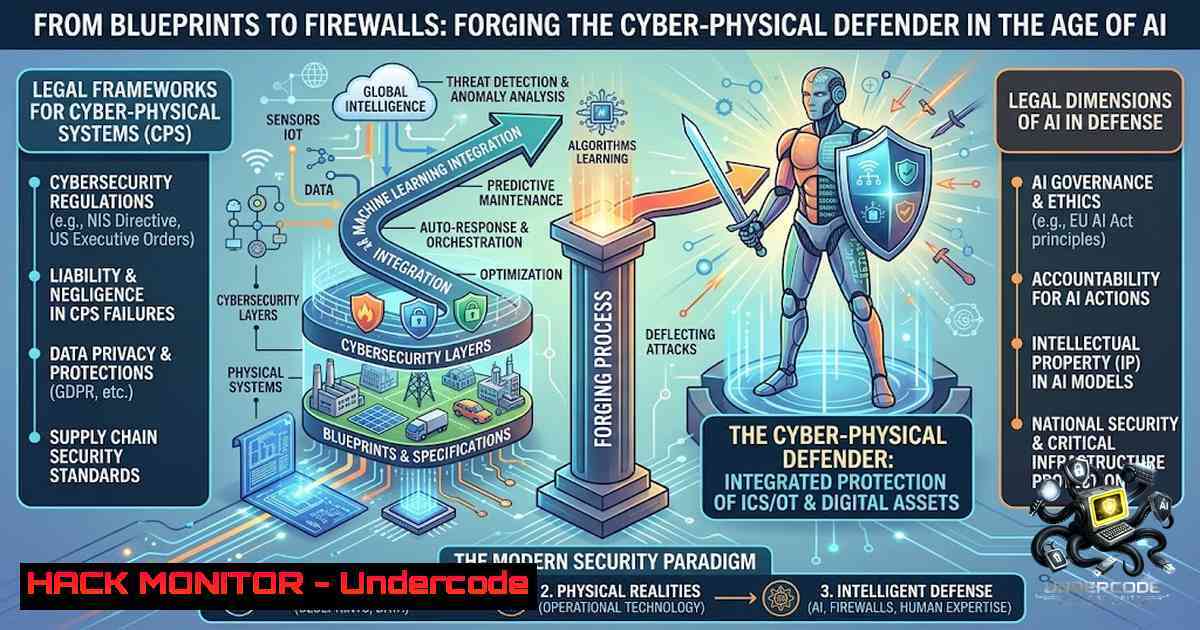
Introduction:
The traditional silos of civil engineering and cybersecurity are rapidly dissolving as our physical infrastructure becomes increasingly digitized. For the modern engineer, understanding load-bearing walls is no longer sufficient; one must also comprehend the digital pillars that support smart cities, AI-driven structural health monitoring, and interconnected construction management systems. This convergence presents a unique opportunity for professionals who can bridge the gap between physical and digital security, transforming potential vulnerabilities into fortified assets.
Learning Objectives:
- Understand the fundamental synergies between civil engineering principles and cybersecurity frameworks in protecting critical infrastructure.
- Master the essential Linux and Windows commands for system hardening and vulnerability assessment.
- Develop practical skills in AI evaluation, data annotation, and ethical hacking to secure next-generation cyber-physical systems.
You Should Know:
- The Convergence of Concrete and Code: Securing Cyber-Physical Systems
The journey from traditional engineering to digital defense is not a departure but an evolution. Civil engineering instills a mindset of problem-solving, critical thinking, and designing resilient structures. These are precisely the qualities needed in cybersecurity, where professionals must build robust defenses against ever-evolving threats. The future demands professionals who can understand both physical infrastructure and emerging digital technologies. This dual expertise is crucial for securing smart buildings, intelligent transportation systems, and AI-driven construction platforms.
Step-by-Step Guide to Assessing Your Cyber-Physical Attack Surface:
- Inventory Your Digital Assets: Begin by cataloging all digital components connected to your physical systems. This includes IoT sensors, building management systems, SCADA controllers, and any cloud-based monitoring platforms.
- Map Data Flow: Diagram how data moves from physical sensors to digital dashboards. Identify all points where data is transmitted, stored, or processed.
- Identify Single Points of Failure: Determine which digital components, if compromised, could lead to physical consequences (e.g., a hacked HVAC system in a data center, or manipulated sensor data in a bridge monitoring system).
- Apply the CIA Triad: For each asset, assess its needs for Confidentiality, Integrity, and Availability. A sensor reporting structural stress prioritizes Integrity and Availability over Confidentiality.
- Conduct a Basic Vulnerability Scan: Use tools like Nmap to discover open ports and services on your network.
Discover live hosts on your network
sudo netdiscover -r 192.168.1.0/24
Perform a detailed scan on a target
nmap -sV -A <target_IP_address>
This command performs version detection (
-sV) and OS/script scanning (-A) to provide a comprehensive overview of the target’s exposed services.
2. Linux Hardening: Building a Fortified Foundation
Linux is the backbone of most servers and embedded systems in critical infrastructure. Hardening a Linux system is about reducing its attack surface by removing unnecessary services, restricting access, and enforcing strict security policies. This process is essential for any engineer managing the digital infrastructure of a modern project.
Step-by-Step Guide to Linux Server Hardening:
- Update and Patch: The first and most crucial step is to ensure your system has the latest security patches.
For Debian/Ubuntu systems
sudo apt update && sudo apt upgrade -y
For RHEL/CentOS/Fedora systems
sudo dnf update -y
- Audit Running Services: Identify and disable services that are not required for the server’s core function.
List all running services
systemctl list-units --type=service --state=running
Check open ports and the services listening on them
ss -tulpen
This command (
ss -tulpen) shows all TCP (-t) and UDP (-u) ports that are listening (-l), along with the process ID (-p) and user (-1). - Secure SSH Access: SSH is the primary gateway for administrative access and must be secured.
– Edit the SSH configuration file: `sudo nano /etc/ssh/sshd_config`
– Disable root login: `PermitRootLogin no`
– Disable password authentication (use SSH keys instead): `PasswordAuthentication no`
– Change the default port (optional, but reduces automated attacks): `Port 2222`
– Restart SSH: `sudo systemctl restart sshd`
4. Configure a Firewall: Use `ufw` (Uncomplicated Firewall) on Ubuntu or `firewalld` on RHEL-based systems to restrict network access.
 On Ubuntu
sudo ufw allow 2222/tcp  Allow SSH on the new port
sudo ufw allow 443/tcp  Allow HTTPS
sudo ufw enable
 On RHEL-based systems
sudo firewall-cmd --permanent --add-port=2222/tcp
sudo firewall-cmd --reload
5. Enable Auditing: Set up system auditing to monitor for suspicious activity. Tools like `auditd` can track file access, system calls, and user logins.
3. Windows Security Hardening: Fortifying the Enterprise Endpoint
Windows systems are ubiquitous in corporate and engineering environments, making them a prime target for attackers. Hardening Windows involves configuring built-in security features, applying security baselines, and using PowerShell for automation.
Step-by-Step Guide to Windows Security Hardening with PowerShell:
- Install the Harden Windows Security Module: This module centralizes the configuration of essential security settings.
Install the module (requires PowerShell 7.5+)
Install-Module -1ame 'Harden-Windows-Security-Module' -Force
View available cmdlets
Get-Command -Module Harden-Windows-Security-Module
- Apply Security Baselines: The core command,
Protect-WindowsSecurity, applies recommended settings from the Windows Security Baseline.Apply Microsoft Security Baselines, Defender settings, and ASR rules Protect-WindowsSecurity -Categories 'MicrosoftSecurityBaselines', 'MicrosoftDefender', 'AttackSurfaceReductionRules'
This single command enforces a wide range of security policies, from user account control to attack surface reduction rules.
- Manage Optional Windows Features: Disable unnecessary features to reduce the attack surface.
Disable a feature like SMBv1 (if not needed)
Disable-WindowsOptionalFeature -Online -FeatureName SMB1Protocol
- Harden Network Security: Configure Windows Firewall and disable insecure protocols.
Block all inbound connections by default (strict mode)
Set-1etFirewallProfile -All -DefaultInboundAction Block
Disable insecure TLS versions (requires registry edits or GPO)
-
AI Evaluation and Data Annotation: The New Frontier of Security
As AI becomes integral to engineering and security, ensuring its reliability is paramount. This involves rigorous data annotation and evaluation to prevent biases, hallucinations, and vulnerabilities. Just as a structural engineer tests materials, a security professional must test AI models.
Step-by-Step Guide to AI Data Annotation and Evaluation:
- Set Up a Data Annotation Toolkit: A professional-grade pipeline can automate labeling and evaluation.
Clone the repository
git clone <repo-url>
cd ai-annotation-evaluation-tools
Install dependencies
pip install -r requirements.txt
- Configure API Keys: Set environment variables for the LLM providers you will use.
export OPENAI_API_KEY="sk-..."
export ANTHROPIC_API_KEY="sk-..."
- Run the Autonomous Pipeline: This script uses SOTA LLMs to categorize text data, evaluate responses, and generate embeddings.
python scripts/pipeline_autonomous.py \
--input data/demo_texts.jsonl \
--output data/processed.jsonl \
--embeddings data/embeddings/index.json \
--model gpt-4
- Validate the Dataset: Check for schema violations, duplicates, and coverage.
python scripts/validate_dataset.py --input data/processed.jsonl --csv
- Generate Analytics: Analyze the distribution and quality of your annotated dataset.
python scripts/analytics.py --input data/processed.jsonl
5. API Security Hardening: Protecting the Digital Glue
APIs are the connective tissue of modern applications, linking frontends, backends, and third-party services. Securing them is critical to prevent data breaches and unauthorized access.
Step-by-Step Guide to API Gateway Hardening:
- Enforce TLS Everywhere: Ensure all traffic is encrypted using TLS 1.2 or higher. TLS 1.0 and 1.1 are deprecated.
Nginx configuration example
server {
listen 443 ssl http2;
ssl_protocols TLSv1.2 TLSv1.3;
ssl_ciphers 'ECDHE-ECDSA-AES128-GCM-SHA256:ECDHE-RSA-AES128-GCM-SHA256';
ssl_prefer_server_ciphers on;
add_header Strict-Transport-Security "max-age=31536000; includeSubDomains" always;
}
– Verification:
 Test that TLS 1.1 is rejected
openssl s_client -connect api.example.com:443 -tls1_1 2>&1 | grep -i "handshake failure"
 Check HSTS header
curl -I https://api.example.com | grep -i "strict-transport-security"
2. Configure CORS Properly: Never use a wildcard (“) for `Access-Control-Allow-Origin` in production. Always use an explicit allowlist of trusted domains.
 Good CORS configuration
cors:
allowOrigins:
- https://app.example.com
- https://admin.example.com
allowMethods: ["GET", "POST", "PUT", "DELETE"]
allowCredentials: true
3. Implement Rate Limiting: Protect your API from denial-of-service attacks by limiting the number of requests from a single IP address.
4. Validate All Inputs: Use schema validation (e.g., with Zod, Joi, or Pydantic) on all API endpoints to prevent injection attacks.
What Undercode Say:
- Key Takeaway 1: The future of engineering is interdisciplinary. Professionals who can bridge the gap between physical infrastructure and digital security will be highly sought after. Combining a civil engineering background with cybersecurity and AI skills creates a unique and powerful profile.
- Key Takeaway 2: Practical, hands-on skills are paramount. Continuous learning, building a portfolio of projects, and connecting with like-minded professionals are essential for growth in this dynamic field.
The journey from civil engineering to cybersecurity is not about abandoning one’s roots but about building upon them. The analytical mindset, problem-solving skills, and understanding of complex systems gained from engineering are directly transferable to securing our digital future. This path is not merely about collecting qualifications but about developing the practical skills and vision to solve the critical challenges of our increasingly interconnected world. By mastering both the physical and digital realms, one can become a true guardian of the modern world.
Prediction:
- +1 The demand for professionals with hybrid skills in civil engineering, cybersecurity, and AI will surge as smart city initiatives and critical infrastructure digitization accelerate.
- +1 Educational institutions will increasingly integrate cybersecurity and AI modules into traditional engineering curricula, creating a new generation of cyber-physical engineers.
- -1 The complexity of securing interconnected systems will lead to new classes of vulnerabilities, making continuous learning and adaptive defense strategies more critical than ever.
- +1 AI-driven security tools will become essential for managing the scale and complexity of defending modern infrastructure, creating new opportunities for those skilled in AI evaluation and deployment.
▶️ Related Video (82% Match):
🎯Let’s Practice For Free:
🎓 Live Courses & Certifications:
Join Undercode Academy for Verified Certifications
🚀 Request a Custom Project:
Secure, high-velocity infrastructure and disruptive technological engineering. Contact our engineering team for high-tier development and proprietary systems:
[email protected]
💎 Smart Architecture | 🛡️ Secure by Design | ⭐ Trusted by Thousands
IT/Security Reporter URL:
Reported By: https://lnkd.in/p/ezKc8zgg – Hackers Feeds
Extra Hub: Undercode MoN
Basic Verification: Pass ✅


