Listen to this Post
Introduction:
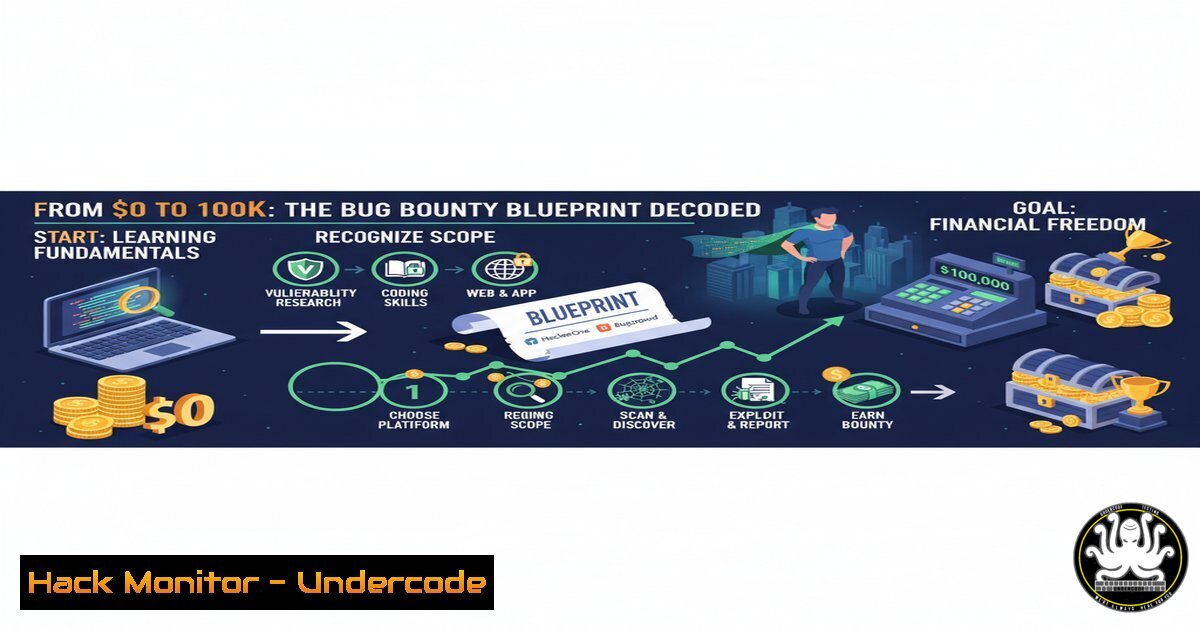
Aastha Pareek’s recent announcement of crossing $100,000 in earnings on the HackerOne platform highlights the immense potential of bug bounty hunting as a viable cybersecurity career. This achievement, accelerated by transitioning to full-time research, provides a compelling case study in the methodologies and technical skills required for success. This article dissects the essential toolkit and practices that separate top earners from the crowd.
Learning Objectives:
- Master the core reconnaissance and subdomain enumeration techniques used to maximize target scope.
- Understand the methodology for automated vulnerability scanning and initial exploitation.
- Learn the critical steps for proof-of-concept development and professional report writing.
You Should Know:
1. Mastering Subdomain Enumeration with `amass`
Reconnaissance is the foundation of any successful bug bounty hunt. Expanding the attack surface begins with discovering every possible subdomain associated with a target. The `amass` tool is an industry standard for passive and active subdomain enumeration.
Step-by-step guide:
`amass enum -passive -d target.com -o subdomains_passive.txt`
This command performs a passive enumeration, gathering data from various public sources without directly interacting with the target. It’s fast and stealthy.
`amass enum -active -d target.com -brute -w /usr/share/wordlists/subdomains-top1million-5000.txt -o subdomains_active.txt`
This active enumeration command is more intrusive but thorough. It uses DNS brute-forcing with a wordlist to discover hidden subdomains. Combine the results for a comprehensive list: cat subdomains_passive.txt subdomains_active.txt | sort -u > all_subdomains.txt.
- Probing for Live Hosts and HTTP Services with `httpx`
With a list of subdomains, the next step is to identify which are active and what HTTP/HTTPS services they are running. `httpx` is a fast and feature-rich tool designed for this purpose.
Step-by-step guide:
`cat all_subdomains.txt | httpx -silent -ports 80,443,8080,8443 -o live_subdomains.txt`
This command takes the list of subdomains, probes them on common web ports, and outputs only the live hosts. The `-silent` flag suppresses extra output. For a more in-depth scan, you can add `-title -status-code` to the command to retrieve the page title and HTTP status code for each live host, which can help prioritize targets.
3. Automated Vulnerability Scanning with `nuclei`
Efficiency is key. Using automated scanners like `nuclei` allows hunters to quickly identify low-hanging fruit and common misconfigurations across a large number of targets. `nuclei` uses a community-powered template engine to check for thousands of known vulnerabilities.
Step-by-step guide:
`nuclei -l live_subdomains.txt -t /path/to/nuclei-templates/ -o nuclei_scan_results.txt`
This command runs `nuclei` against all live subdomains using the entire template library. To avoid overloading targets and to focus on critical issues, it’s often better to start with specific template categories: nuclei -l live_subdomains.txt -t /path/to/nuclei-templates/exposures/ -t /path/to/nuclei-templates/misconfiguration/ -severity critical,high -o initial_scan.txt.
4. Manual Testing for Logic Flaws: IDOR Exploitation
Automated tools miss complex business logic vulnerabilities like Insecure Direct Object Reference (IDOR). These often yield the highest bounties. Testing involves manipulating object references (e.g., user IDs, account numbers) in requests.
Step-by-step guide:
Imagine a URL: https://api.target.com/v1/user/12345/profile`. A hunter would change the `12345` ID to another number, say12346, to see if they can access another user's profile. This can be done withcurl:curl -H “Authorization: Bearer
If this request returns a 200 OK response with data that should not be accessible, you have found a critical IDOR vulnerability. Always use an authenticated session when testing.
5. SQL Injection Discovery and Exploitation with `sqlmap`
Despite being a well-known vulnerability, SQL Injection remains a prevalent and high-impact finding. `sqlmap` automates the process of detecting and exploiting SQLi flaws.
Step-by-step guide:
First, identify a potential injection point, such as a search parameter: https://target.com/search?q=test`. You can test and exploit this withsqlmap:sqlmap -u “https://target.com/search?q=test” –batch –dump`.
`sqlmap -u "https://target.com/search?q=test" --batch --level=3 --risk=3`
The `--batch` flag runs the tool in non-interactive mode, using default choices. `--level` and `--risk` increase the thoroughness of the tests. If a vulnerability is found, `sqlmap` can automatically dump database contents:
6. Cross-Site Scripting (XSS) Verification
XSS vulnerabilities allow attackers to execute malicious scripts in a victim’s browser. Testing involves injecting a payload and confirming execution.
Step-by-step guide:
A basic proof-of-concept payload is <script>alert(document.domain)</script>. Inject this into every form field and URL parameter you find. A more reliable method is to use a tool like dalfox:
`dalfox url “https://target.com/search?q=test” -b https://your-blindxss-canary.xss.ae`
This command checks for reflected and blind XSS. The `-b` flag specifies a blind XSS server to catch callbacks if the payload executes in an admin panel.
7. Crafting the Perfect Bug Bounty Report
A well-written report is as important as the finding itself. It must be clear, concise, and demonstrate impact. The key components are a descriptive title, clear steps to reproduce, evidence (screenshots, videos), and a impact analysis.
Step-by-step guide:
- “IDOR vulnerability allowing any user to view all support tickets via `ticket_id` parameter manipulation.”
2. Steps to Reproduce:
Step 1: Log into your test account.
Step 2: Navigate to the support ticket page. Notice your ticket ID is 1001.
Step 3: Change the `ticket_id` parameter in the URL to 1002.
Step 4: Observe that ticket 1002, belonging to another user, is fully visible.
3. Proof of Concept: Include a screenshot of the browser URL bar showing `ticket_id=1002` and the contents of the unauthorized ticket.
4. Impact: This vulnerability compromises user privacy and violates data confidentiality, potentially exposing sensitive information.
What Undercode Say:
- Methodology Over Tools: Success is not about having the most tools, but about having a rigorous, repeatable methodology. Reconnaissance → Enumeration → Testing → Validation → Reporting is the non-negotiable cycle.
- Quality and Depth Trump Quantity: Submitting ten well-researched, high-impact bugs is far more valuable than one hundred low-quality duplicates. Focus on understanding application logic and business workflows to find vulnerabilities scanners cannot.
Aastha’s milestone underscores a fundamental shift in the cybersecurity landscape: bug bounties are a legitimate and potent force for securing the digital ecosystem. This is not a get-rich-quick scheme; it is a career built on continuous learning, relentless curiosity, and meticulous work. The technical commands outlined are merely the entry point. The real differentiator is the hunter’s ability to think creatively and persistently like an adversary, transforming obscure technical flaws into demonstrable security risks that organizations are compelled to pay for. This model benefits everyone—companies improve their security, and researchers are rewarded fairly for their expertise.
Prediction:
The success of top bounty hunters like Aastha will catalyze a “professionalization” of the bug bounty economy. We will see a rise in specialized platforms catering to niche domains (e.g., API-only bounties, SCADA systems), and the emergence of full-time, salaried “bounty hunter” positions within large enterprises. AI will become integrated into the hunter’s workflow, not as a replacement, but as an advanced co-pilot capable of automating tedious aspects of reconnaissance and even suggesting novel attack vectors based on code analysis, allowing human researchers to focus on complex logic exploitation. The line between red teaming and bug bounty hunting will continue to blur.
🎯Let’s Practice For Free:
IT/Security Reporter URL:
Reported By: Aastha Pareek – Hackers Feeds
Extra Hub: Undercode MoN
Basic Verification: Pass ✅


