
Listen to this Post
Introduction:
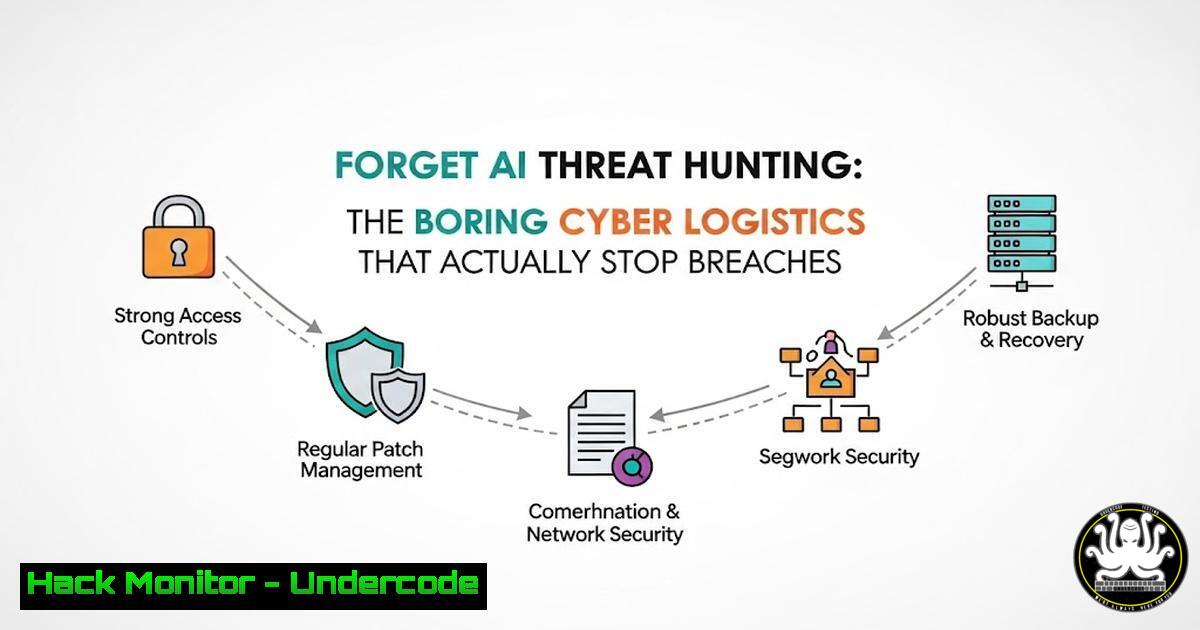
In an industry obsessed with the next AI-powered silver bullet, a critical vulnerability is being ignored: operational resilience. This article argues that true cybersecurity dominance isn’t won with detection algorithms alone, but through mastering the unglamorous logistics of your infrastructure—the ability to patch, recover, and communicate when everything is compromised. We shift the focus from the “how” of the attack to the “how” of your own survival.
Learning Objectives:
- Understand the core components of “Cyber Logistics”: patching, recovery, and redundant communications.
- Implement practical, command-level steps to harden backup systems and ensure operational continuity.
- Develop a mindset that balances innovative tools with foundational, battle-tested resilience engineering.
You Should Know:
- Patching Logistics: From 4 Weeks to 4 Hours
The original post highlights patching cycles as a critical failure point. Speed and reliability are paramount. This isn’t just about deploying updates; it’s about having a verified, automated pipeline that functions under duress.
Step‑by‑step guide explaining what this does and how to use it.
Inventory & Prioritize: You cannot patch what you don’t know. Use agent-based and network discovery tools to maintain a real-time asset inventory.
Linux Command: Use `dpkg` or `rpm` to list software on critical servers: `dpkg -l | grep ^ii` or rpm -qa.
Windows Command: Use PowerShell to get OS and installed software info: `Get-WmiObject -Class Win32_OperatingSystem | Select-Object Caption, Version` and Get-WmiObject -Class Win32_Product | Select-Object Name, Version.
Automate with Staged Rollouts: Use configuration management tools to create a phased deployment pipeline (Dev -> Canary -> Production).
Ansible Playbook Example (Core): Create a simple playbook (patch.yml) to update security packages on a group of web servers.
<ul>
<li>hosts: webservers
become: yes
tasks:</li>
<li>name: Update apt cache (Debian/Ubuntu)
apt:
update_cache: yes
when: ansible_os_family == "Debian"</p></li>
<li><p>name: Upgrade only security packages (Debian/Ubuntu)
apt:
upgrade: dist
update_cache: yes
default_release: "{{ ansible_lsb.codename }}-security"
when: ansible_os_family == "Debian"</p></li>
<li><p>name: Update all packages (RHEL/CentOS)
yum:
name: ''
state: latest
security: yes
when: ansible_os_family == "RedHat"
Validate & Rollback: Every patch cycle must include a health check script for services and a documented, tested rollback procedure. Automation is useless if it breaks core functionality.
2. Securing Your Recovery Infrastructure: The Last Stand
As a commenter astutely noted, an unsecured Disaster Recovery (DR) environment is just another beachhead for attackers. Hardening these systems is non-negotiable.
Step‑by‑step guide explaining what this does and how to use it.
Network Segmentation: Isolate backup and recovery networks. Use strict firewall rules. This isn’t “air-gapping” in the traditional sense but controlling access with zero-trust principles.
Linux (iptables) Example: Only allow backup traffic from specific management hosts to the backup server.
iptables -A INPUT -p tcp --dport 22 -s 10.0.1.0/24 -j ACCEPT  SSH from management net
iptables -A INPUT -p tcp --dport 873 -s 10.0.2.5 -j ACCEPT  Rsync from backup client
iptables -A INPUT -j DROP  Drop everything else
Access Control & Logging: Implement multi-factor authentication (MFA) for all administrative access to backup systems (e.g., Veeam, Rubrik, bacula). Enable detailed audit logging.
Immutable Backups: Configure backup storage to be immutable (Write-Once-Read-Many) for a defined retention period, protecting against ransomware encryption or deletion.
AWS S3 CLI Example: Apply a write-once object lock policy to a backup bucket.
aws s3api put-object-lock-configuration \
--bucket my-cyber-logistics-backups \
--object-lock-configuration '{ "ObjectLockEnabled": "Enabled", "Rule": { "DefaultRetention": { "Mode": "COMPLIANCE", "Years": 1 } } }'
- Redundant Communications: When Email and VoIP Go Dark
The post asks a vital question: How does your team communicate when primary channels are compromised? This requires pre-established, low-tech and high-tech solutions.
Step‑by‑step guide explaining what this does and how to use it.
Establish a “Grey Space” Channel: Designate a low-bandwidth, out-of-band communication method that is not dependent on corporate infrastructure.
Option A – Secure Messaging App with Pre-Configured Group: Use a platform like Signal, with group chats created before an incident. Document the process for activating this group in your IR plan.
Option B – Hardened Standalone Server: Provision a minimal cloud VM, in a separate account, running an end-to-end encrypted service like Mattermost or Wire. Harden it meticulously.
Basic Server Hardening (Linux):
 Update, add a non-root user, and disable root SSH login
sudo apt update && sudo apt upgrade -y
sudo adduser incidentcommander
sudo usermod -aG sudo incidentcommander
sudo sed -i 's/^PermitRootLogin yes/PermitRootLogin no/' /etc/ssh/sshd_config
sudo systemctl restart sshd
Document and Drill: The communication plan is worthless if no one knows it. Include contact methods and activation triggers in your Incident Response (IR) runbooks. Conduct tabletop exercises that simulate a total comms outage.
- Hardware and Configuration as Code: Be Your Own Supply Chain
Waiting months for hardware is a luxury you don’t have during a major incident. The solution is abstraction and automation.
Step‑by‑step guide explaining what this does and how to use it.
Embrace Infrastructure as Code (IaC): Define every critical server, network device, and security appliance (firewall rules, IDS policies) as code (Terraform, CloudFormation, Ansible).
Terraform Snippet (AWS EC2): This defines a recoverable web server.
resource "aws_instance" "critical_app" {
ami = "ami-0c55b159cbfafe1f0"
instance_type = "t3.medium"
subnet_id = aws_subnet.recovery.id
vpc_security_group_ids = [aws_security_group.recovery_sg.id]

user_data = filebase64("${path.module}/bootstrap.sh")

tags = {
Name = "Critical-App-Recovery"
}
}
Maintain “Golden Images”: For physical or virtual appliances that cannot be fully IaC, maintain validated, patched, and pre-configured golden images (VM templates, AMIs, Docker images) that can be deployed within minutes, not months.
5. Continuous Validation: Tabletop Exercises with Teeth
Logistics fail under stress if not tested. Move beyond theoretical discussions to simulated execution.
Step‑by‑step guide explaining what this does and how to use it.
Scenario: “Ransomware has encrypted all Windows domain controllers and your primary backup server. The network team reports lateral movement into the backup VLAN.”
Actions to Drill:
- Activate the out-of-band communication plan (e.g., move to the Signal group).
- Isolate the compromised backup VLAN using pre-defined network automation scripts or direct CLI commands to switches/firewalls.
- Deploy a clean, hardened domain controller from a golden image or IaC template in an isolated recovery network.
- Initiate restoration of critical identity services from immutable, offline backups.
- Metric: Time to restore a critical business function (e.g., single sign-on). Aim to cut this time in half with each exercise.
What Undercode Say:
- Key Takeaway 1: Resilience is a Technical Discipline, Not a Buzzword. It is defined by measurable, executable processes like patch velocity, recovery time objectives (RTO), and communication channel redundancy. These are built with code, configuration, and relentless testing.
- Key Takeaway 2: Your Recovery Environment is Your Highest-Value Target. It must be secured with even more rigor than your production environment, employing strict segmentation, immutable storage, and privileged access management. An attacker in your recovery system owns your future.
The core analysis is that the industry’s tool-centric “arms race” has created a dangerous asymmetry: organizations are increasingly sophisticated at seeing attacks but remain operationally fragile in withstanding them. The comment thread correctly identifies that resilience without security is a trap, and security without resilience is a dead end. The future belongs to organizations that engineer their “cyber logistics” with the same creativity and resourcefulness typically reserved for offensive tooling. This means security architects must also become masters of deployment automation, infrastructure as code, and recovery orchestration.
Prediction:
Within the next 3-5 years, “Cyber Logistics Engineering” will emerge as a distinct and valued specialization within security teams. Breach simulations will evolve to primarily stress-test recovery and continuity capabilities, not just detection and response. The market will see a surge in integrated platforms that combine security posture management with automated recovery workflows, moving beyond mere backup. CISOs will be evaluated not on their threat intel feeds, but on their empirically measured mean time to recovery (MTTR) and their infrastructure’s innate ability to regenerate after a catastrophic attack.
▶️ Related Video (84% Match):
🎯Let’s Practice For Free:
IT/Security Reporter URL:
Reported By: Austinjonesli Why – Hackers Feeds
Extra Hub: Undercode MoN
Basic Verification: Pass ✅


