Listen to this Post
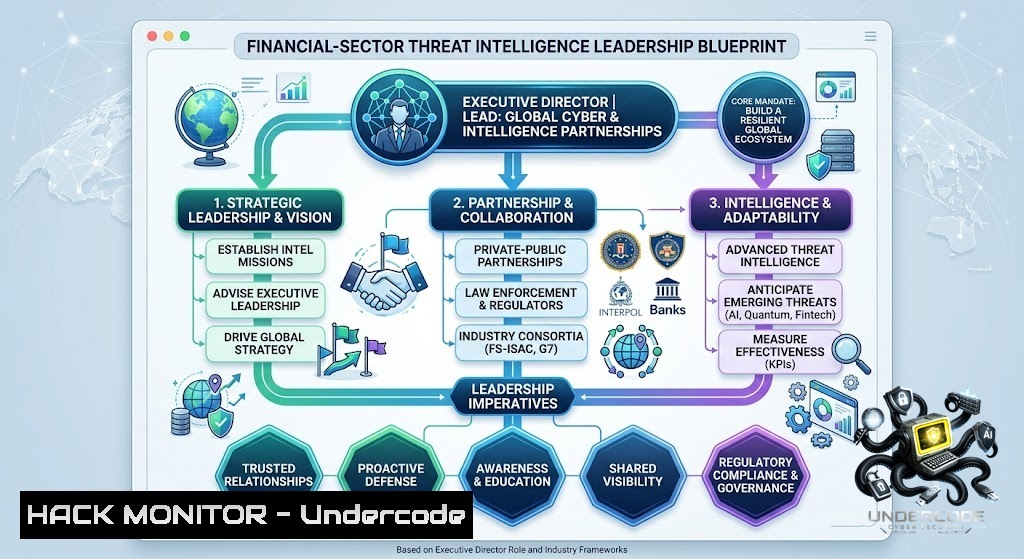
Introduction:
In an era where cyber threats target the global financial system with nation-state sophistication, the line between institutional defense and sector-wide resilience has vanished. Morgan Stanley’s search for an Executive Director to lead its Global Cyber and Intelligence Partnerships program underscores a critical industry truth: cybersecurity is no longer a siloed function but a collaborative intelligence enterprise. This role—tasked with owning global engagement strategies across government agencies, peer financial institutions, and industry associations—represents the apex of modern cyber leadership, where technical acumen meets diplomatic strategy to defend the financial ecosystem.
Learning Objectives:
- Master the architecture of public-private cyber intelligence partnerships, including FS-ISAC frameworks and government liaison protocols.
- Implement STIX/TAXII-based threat intelligence sharing pipelines for real-time indicator exchange.
- Develop vendor risk management workflows that operationalize sector-relevant threat intelligence.
You Should Know:
1. The Intelligence-Sharing Ecosystem: FS-ISAC and Beyond
The Financial Services Information Sharing and Analysis Center (FS-ISAC) serves as the cornerstone of sector-wide cyber defense. This member-driven, not-for-profit organization enables financial institutions to share intelligence and coordinate response to systemic threats. For a Global Cyber and Intelligence Partnerships Lead, understanding FS-ISAC’s operational rhythm—daily intelligence briefings, incident response coordination, and working groups—is non-1egotiable.
Beyond FS-ISAC, the role requires navigating relationships with government bodies like the U.S. Department of Homeland Security and the intelligence community. Morgan Stanley’s participation in IBM’s Project Lightwell, an open-source cybersecurity initiative alongside Goldman Sachs and JPMorgan, demonstrates the firm’s commitment to collaborative defense.
Step-by-Step Guide: Integrating with FS-ISAC Threat Intelligence Feeds
- Establish Membership and Access: Complete FS-ISAC membership onboarding to gain access to the Intelligence Exchange portal.
- Configure TAXII Client: Set up a TAXII 2.1 client to pull STIX 2.1-formatted intelligence. Most modern SIEMs, EDRs, and firewalls support this protocol natively.
- Define Collection Filters: Specify which intelligence collections to subscribe to (e.g., ransomware indicators, phishing campaigns, vulnerability exploits).
- Automate Ingestion: Use the TAXII poll service to retrieve indicators added within a specified time window.
- Normalize and Enrich: Ingest STIX bundles into your threat intelligence platform (TIP) for deduplication and enrichment.
- Disseminate to Security Tools: Push enriched indicators to firewalls (block malicious IPs), EDR platforms (block file hashes), and SIEMs for alerting.
Linux Command: Testing TAXII Server Connectivity
curl -k -X GET "https://taxii-server.example.com/taxii2/collections/" \
-H "Accept: application/taxii+json" \
-H "Authorization: Basic $(echo -1 'username:password' | base64)"
Windows PowerShell: Ingesting STIX Indicators
$headers = @{
"Accept" = "application/taxii+json"
"Authorization" = "Basic " + [bash]::ToBase64String([Text.Encoding]::ASCII.GetBytes("username:password"))
}
$response = Invoke-RestMethod -Uri "https://taxii-server.example.com/taxii2/collections/{collection_id}/objects/" -Headers $headers -Method Get
$response.objects | Where-Object { $_.type -eq "indicator" } | Export-Csv -Path "indicators.csv"
2. Building Government and Peer-to-Peer Intelligence Channels
The Executive Director role demands primary ownership of North America engagement, serving as the Firm’s liaison to government agencies on cybersecurity matters. This involves representing Morgan Stanley at industry events, working groups, and intelligence committees. Effective government liaison requires understanding classified threat briefings, coordinating with agencies like CISA and the FBI’s Cyber Division, and participating in joint exercises such as Cyber Storm.
Peer financial institution partnerships are equally critical. The role facilitates timely access to sector-relevant intelligence by maintaining trust-based relationships with other major banks. This is where cyber fusion centers come into play—bringing together threat intelligence, incident response, forensic teams, and even AML units to cross-share information.
Step-by-Step Guide: Establishing a Peer Intelligence Sharing Program
- Identify Key Partners: Map peer financial institutions and establish formal information-sharing agreements (ISA) with legal and compliance review.
- Define Priority Intelligence Requirements (PIRs): Align on threat scenarios most relevant to the sector (e.g., supply chain compromise, insider threats, credential theft).
- Select Sharing Platforms: Deploy secure collaboration tools—encrypted chat channels, secure portals, or TAXII servers—for real-time exchange.
- Conduct Regular Intel Briefings: Schedule bi-weekly or monthly peer working groups to discuss emerging threats and TTPs.
- Establish Escalation Protocols: Define clear procedures for sharing critical, time-sensitive intelligence during active incidents.
- Measure Effectiveness: Track metrics like time-to-detection improvement, number of shared IOCs, and joint incident response outcomes.
Python Script: Automated Indicator Sharing via STIX
import stix2
import requests

Create STIX 2.1 Indicator
indicator = stix2.Indicator(
pattern="[ipv4-addr:value = '192.168.1.100']",
pattern_type="stix",
valid_from="2026-07-30T00:00:00Z",
custom_properties={"confidence": 85}
)

Share via TAXII 2.1
taxii_url = "https://taxii-server.example.com/taxii2/collections/{collection_id}/objects/"
headers = {"Content-Type": "application/taxii+json"}
response = requests.post(taxii_url, json=indicator.serialize(), headers=headers, auth=('user', 'pass'))
print(f"Indicator shared: {response.status_code}")
3. Vendor Risk Management and Threat-Informed Defense
The job description explicitly mentions ensuring vendor risk functions are informed of sector-relevant threats. This reflects a broader industry shift toward supply chain security—threat actors increasingly target third-party vendors to compromise financial institutions. The role requires translating raw threat intelligence into actionable vendor risk assessments.
Modern threat intelligence programs are built on platforms that unify data ingestion, automate enrichment, and embed intelligence directly into detection workflows. For a senior leader, this means selecting and overseeing TIPs that can handle STIX/TAXII feeds, integrate with SIEM/SOAR, and produce executive-level reporting.
Step-by-Step Guide: Operationalizing Threat Intelligence for Vendor Risk
- Inventory Critical Vendors: Identify third-party vendors with access to sensitive data or critical infrastructure.
- Map Vendor Threat Landscape: For each vendor, define relevant threat scenarios (e.g., ransomware, data exfiltration, credential compromise).
- Ingest Vendor-Specific Intel: Configure TIP to pull intelligence relevant to vendor technologies and geographies.
- Automate Risk Scoring: Develop a risk scoring model that incorporates threat intelligence—e.g., if a vendor’s software has a critical CVE, automatically elevate their risk score.
- Integrate with GRC: Push risk scores and threat context into governance, risk, and compliance (GRC) platforms for vendor review cycles.
- Continuous Monitoring: Establish ongoing monitoring of vendor-related IOCs and vulnerabilities, with alerting for critical changes.
Linux Command: Checking for Vendor-Specific Vulnerabilities
 Check for Log4j vulnerability in vendor applications
find /opt/vendor_apps -1ame ".jar" -exec grep -l "JndiLookup" {} \;
 Query NVD API for vendor CVEs
curl -X GET "https://services.nvd.nist.gov/rest/json/cves/2.0?keywordSearch=vendor_name"
- Cyber Threat Intelligence Maturity: From Data to Decision
A mature CTI program transforms raw threat data into actionable security decisions. The Executive Director must drive this transformation across the organization. This involves establishing priority intelligence requirements (PIRs), creating alignment between intelligence outputs and enterprise risk management objectives, and ensuring that intelligence feeds directly into detection and response workflows.
Morgan Stanley’s recent achievements—shrinking vulnerability windows from 45 minutes to under 90 seconds using Google Cloud Security and Wiz—exemplify machine-speed defense. This was achieved by building a proactive approach to threat mitigation, stopping bugs before they hit production.
Step-by-Step Guide: Building a Threat-Led Cybersecurity Program
- Develop a Threat Model: Identify critical assets, threat actors, and likely attack vectors.
- Define PIRs: Establish 2-3 priority threat scenarios tied to critical assets and regulatory obligations.
- Select Technology Stack: Choose TIP, SIEM, EDR, and SOAR tools that support STIX/TAXII and offer automation capabilities.
- Capture Intelligence Requirements: Engage stakeholders across security, fraud, and GRC to identify unmet technical needs.
- Operationalize Intelligence: Embed intelligence into detection rules, threat hunting, and incident response playbooks.
- Measure and Refine: Track metrics like mean time to detect (MTTD), mean time to respond (MTTR), and number of threat-informed detections.
SIEM Query: Detecting Threat Actor TTPs
-- Splunk query for credential dumping indicators
index=security EventCode=4688 (ProcessName="mimikatz" OR ProcessName="procdump")
| stats count by host, user, ProcessName
| where count > 1
5. AI and Automation in Threat Intelligence
The financial sector is rapidly adopting AI to keep pace with machine-speed attacks. Morgan Stanley’s partnership with Google Cloud Security and Wiz demonstrates how AI-driven investigation and cloud environment mapping can enable proactive defense. The firm also awarded Armis its 2025 Innovation Award for an AI-driven cybersecurity platform.
For the Global Cyber and Intelligence Partnerships Lead, understanding AI’s role in threat intelligence is essential. AI can automate data ingestion, enrichment, and even initial triage of threat indicators. It can also identify patterns and correlations that human analysts might miss.
Step-by-Step Guide: Incorporating AI into Threat Intelligence Programs
- Identify Automation Opportunities: Pinpoint repetitive tasks—data ingestion, enrichment, alert triage, report generation.
- Select AI-Enabled TIP: Choose a platform with built-in AI/ML capabilities for pattern recognition and anomaly detection.
- Train Models on Historical Data: Use past threat intelligence and incident data to train ML models.
- Implement Automated Enrichment: Configure AI to automatically enrich IOCs with context (e.g., geolocation, reputation scores, threat actor attribution).
- Deploy AI-Assisted Alert Triage: Use AI to prioritize alerts based on severity, confidence, and potential impact.
- Continuously Refine: Monitor AI performance and retrain models with new threat data.
Python Script: AI-Powered IOC Enrichment
import requests
import json

def enrich_ioc(ioc_type, ioc_value):
 Query VirusTotal API for enrichment
url = f"https://www.virustotal.com/api/v3/{ioc_type}/{ioc_value}"
headers = {"x-apikey": "YOUR_API_KEY"}
response = requests.get(url, headers=headers)
if response.status_code == 200:
data = response.json()
 Extract key attributes
return {
"reputation": data.get("data", {}).get("attributes", {}).get("reputation", 0),
"last_analysis_stats": data.get("data", {}).get("attributes", {}).get("last_analysis_stats", {}),
"threat_labels": data.get("data", {}).get("attributes", {}).get("threat_labels", [])
}
return None

Example: Enrich an IP address
enrichment = enrich_ioc("ip_addresses", "8.8.8.8")
print(json.dumps(enrichment, indent=2))
What Undercode Say:
- Strategic Cyber Leadership is Diplomatic as Much as Technical: The role requires navigating complex government and industry relationships, translating technical threats into strategic risks for executive and regulatory audiences.
- Collaborative Defense is the New Normal: No single institution can defend against sophisticated threat actors alone—sharing intelligence across FS-ISAC, peer banks, and government agencies is essential for sector-wide resilience.
- Threat Intelligence Must Be Operationalized: Raw data is useless without integration into detection, response, and vendor risk workflows. Leaders must drive the technology stack and process alignment that turns intelligence into action.
- AI and Automation Are Force Multipliers: Morgan Stanley’s reduction of vulnerability windows to under 90 seconds shows that machine-speed defense is achievable with the right partnerships and technology.
- The Role is a Career-Defining Opportunity: For senior cyber leaders, this position offers the chance to shape global cybersecurity strategy at one of the world’s premier financial institutions, directly influencing how the sector defends against emerging threats.
Prediction:
- +1: The role will increasingly focus on AI-driven threat intelligence sharing, with automated STIX/TAXII pipelines becoming the industry standard for real-time IOC exchange across financial institutions.
- +1: Public-private partnerships will expand beyond information sharing to include joint red-team exercises and coordinated response drills, driven by frameworks like TIBER-EU.
- -1: Geopolitical tensions will complicate intelligence sharing, requiring the role to navigate conflicting government expectations while maintaining trust-based peer relationships.
- +1: The integration of threat intelligence with vendor risk management will become a regulatory expectation, with examiners scrutinizing how financial institutions operationalize sector-relevant threats in third-party oversight.
- -1: The talent pool for this role remains shallow, as it demands a rare combination of technical depth, diplomatic skill, and executive presence—organizations will compete fiercely for qualified candidates.
▶️ Related Video (76% Match):
🎯Let’s Practice For Free:
🎓 Live Courses & Certifications:
Join Undercode Academy for Verified Certifications
🚀 Request a Custom Project:
Secure, high-velocity infrastructure and disruptive technological engineering. Contact our engineering team for high-tier development and proprietary systems:
[email protected]
💎 Smart Architecture | 🛡️ Secure by Design | ⭐ Trusted by Thousands
IT/Security Reporter URL:
Reported By: Russell Schuhart – Hackers Feeds
Extra Hub: Undercode MoN
Basic Verification: Pass ✅


