
Listen to this Post
Introduction:
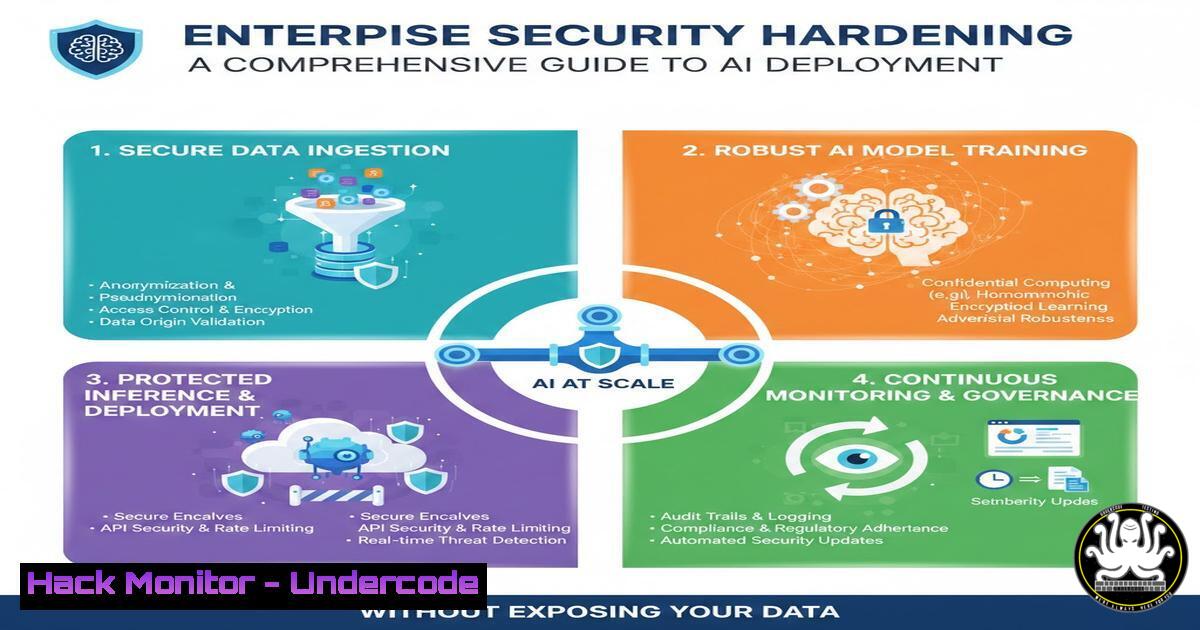
As organizations race to integrate large language models (LLMs) like into their core operations, the conversation shifts from “how to deploy” to “how to deploy securely.” The recent LinkedIn query about contacting Enterprise representatives underscores the growing demand for enterprise‑grade AI solutions, but with that demand comes a critical responsibility: ensuring that sensitive corporate data and intellectual property remain protected. This article provides a technical blueprint for hardening Enterprise deployments, covering network segmentation, API security, infrastructure hardening, and continuous monitoring—essential steps for any security‑conscious organization.
Learning Objectives:
- Understand the security architecture and threat landscape of enterprise LLM deployments.
- Implement network, application, and data‑level controls to protect Enterprise interactions.
- Configure monitoring, auditing, and incident response mechanisms for AI workloads.
You Should Know:
1. Securing API Communications with Enterprise
The first line of defense is protecting the API channels through which your applications talk to . Start by enforcing mutual TLS (mTLS) to ensure both client and server identities are verified. Generate a self‑signed CA and certificates using OpenSSL:
 Generate CA key and certificate
openssl genrsa -out ca.key 2048
openssl req -new -x509 -days 365 -key ca.key -out ca.crt

Generate client key and CSR
openssl genrsa -out client.key 2048
openssl req -new -key client.key -out client.csr

Sign client certificate with CA
openssl x509 -req -days 365 -in client.csr -CA ca.crt -CAkey ca.key -set_serial 01 -out client.crt
Configure your API gateway (e.g., AWS API Gateway, NGINX) to require client certificates and restrict access to known IP ranges. Rotate API keys regularly using automation (e.g., HashiCorp Vault). Test the secured endpoint with curl:
curl --cert client.crt --key client.key --cacert ca.crt https://your--endpoint/v1/complete -H "Content-Type: application/json" -d '{"prompt": "Hello"}'
- Implementing Data Loss Prevention (DLP) for LLM Interactions
LLMs can inadvertently leak sensitive data if prompts or responses contain confidential information. Deploy a reverse proxy with content inspection using tools like ModSecurity or custom middleware. Below is an NGINX configuration snippet that uses the `ngx_http_lua_module` to apply regex‑based filtering:
location /v1/complete {
access_by_lua_block {
local req_body = ngx.var.request_body
if req_body and req_body:match("%d%d%d%-%d%d%-%d%d%d%d") then
ngx.log(ngx.ERR, "Blocked request containing SSN pattern")
ngx.exit(403)
end
}
proxy_pass https://api.anthropic.com;
}
For Windows environments, use IIS with Application Request Routing (ARR) and a custom HTTP module to inspect traffic. Common regex patterns to block:
– Credit cards: `\b(?:\d[ -]?){13,16}\b`
– API keys: `[a-zA-Z0-9]{20,40}`
3. Hardening the Underlying Infrastructure: Linux Server Security
If you host Enterprise components on your own Linux servers, apply standard hardening measures:
 Disable root SSH login
sed -i 's/^PermitRootLogin yes/PermitRootLogin no/' /etc/ssh/sshd_config
systemctl restart sshd

Set up fail2ban to protect against brute‑force
apt install fail2ban -y
cp /etc/fail2ban/jail.conf /etc/fail2ban/jail.local
systemctl enable fail2ban

Configure iptables to allow only necessary ports
iptables -P INPUT DROP
iptables -P FORWARD DROP
iptables -A INPUT -i lo -j ACCEPT
iptables -A INPUT -m state --state ESTABLISHED,RELATED -j ACCEPT
iptables -A INPUT -p tcp --dport 443 -j ACCEPT
iptables-save > /etc/iptables/rules.v4
Enable SELinux in enforcing mode to confine services: `setenforce 1` and ensure the policy modules are tailored for your AI application.
4. Monitoring and Auditing Usage with SIEM Integration
Centralized logging is crucial for detecting anomalies. Configure your application to send structured logs to a SIEM like Splunk or Elastic Stack. For example, use Filebeat to ship API access logs:
 filebeat.yml
filebeat.inputs:
- type: log
paths:
- /var/log//.log
fields:
app: -enterprise
fields_under_root: true

output.elasticsearch:
hosts: ["your-elasticsearch:9200"]
In your logging middleware, include fields such as user ID, prompt length, response time, and any flagged DLP events. Create dashboards to visualize usage spikes, repeated failures, or unusual prompt patterns.
5. Zero Trust Architecture for AI Services
Adopt a zero‑trust model by deploying a service mesh like Istio in your Kubernetes cluster. This enables mutual TLS between all microservices, fine‑grained RBAC, and telemetry. Install Istio and inject a sidecar proxy into your ‑facing pods:
istioctl install --set profile=demo -y
kubectl label namespace default istio-injection=enabled
Then apply an authorization policy to restrict access:
apiVersion: security.istio.io/v1beta1
kind: AuthorizationPolicy
metadata:
name: -policy
spec:
selector:
matchLabels:
app: -backend
rules:
- from:
- source:
principals: ["cluster.local/ns/default/sa/frontend-sa"]
to:
- operation:
methods: ["POST"]
paths: ["/v1/complete"]
This ensures only the frontend service account can communicate with , even if an attacker breaches another container.
- Vulnerability Assessment and Penetration Testing for AI Models
Traditional scanners may miss AI‑specific vulnerabilities. Use OWASP ZAP to fuzz your API endpoints for injection flaws:
zap-cli quick-scan --self-contained --start-options '-config api.disablekey=true' -s all -r http://your--endpoint
For model‑specific attacks, employ tools like Counterfit (from Microsoft) to simulate adversarial inputs:
git clone https://github.com/Azure/counterfit.git
cd counterfit
pip install -r requirements.txt
python counterfit.py
 Inside the shell: target your endpoint and run evasion attacks
Document findings and patch vulnerabilities before production deployment.
7. Training Employees on Secure AI Usage
Technical controls alone are insufficient. Develop a training module that covers:
– Prompt injection: Never concatenate untrusted input directly into system prompts.
– Data leakage: Avoid pasting sensitive documents into chat interfaces.
– Safe output handling: Treat model outputs as untrusted (they may contain malicious links).
Use platforms like SANS SEC511 or Offensive Security’s AI penetration testing courses to build internal expertise.
What Undercode Say:
- Key Takeaway 1: Enterprise AI security demands a defense‑in‑depth strategy that spans network, application, and data layers—no single control can mitigate all risks.
- Key Takeaway 2: Continuous monitoring and adaptive training are not optional; they are the only way to keep pace with evolving threats like prompt injection and model inversion.
The LinkedIn post about contacting Enterprise highlights a critical gap: many organizations are eager to adopt AI but overlook the security implications until it’s too late. By hardening APIs, enforcing DLP, and integrating SIEM, companies can reap the benefits of LLMs without exposing crown jewels. The rise of AI‑specific attack tools means that traditional pentesting must evolve to include adversarial machine learning. In the coming years, we will likely see regulatory frameworks (like the EU AI Act) mandate such controls, and security professionals who master both IT and AI security will become indispensable.
Prediction:
As Enterprise and similar platforms become ubiquitous, we anticipate a surge in AI‑specific security breaches—ranging from data exfiltration via clever prompts to denial‑of‑service attacks on model endpoints. This will drive the emergence of dedicated AI Security Operations Centers (AI‑SOCs) and automated governance tools that enforce policies in real time. The next wave of cybersecurity certifications will undoubtedly focus on AI security, and organizations that invest today in hardening their AI stacks will lead the market tomorrow.
▶️ Related Video (78% Match):
🎯Let’s Practice For Free:
IT/Security Reporter URL:
Reported By: Sang Park – Hackers Feeds
Extra Hub: Undercode MoN
Basic Verification: Pass ✅


