Listen to this Post
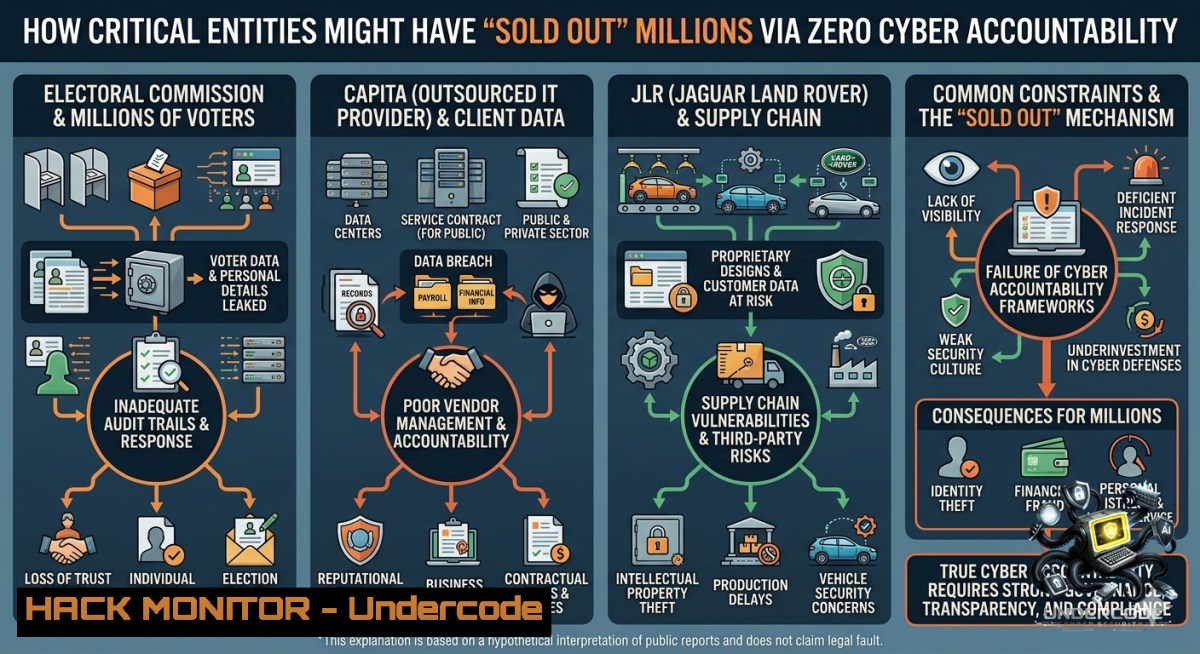
Introduction:
Domain Name System (DNS) is the phonebook of the internet – but without cryptographic signing, it remains vulnerable to cache poisoning, man-in-the-middle attacks, and domain hijacking. DNSSEC (Domain Name System Security Extensions) adds a chain of digital signatures to prevent redirection to malicious servers. Despite three catastrophic UK breaches exposing over 10 million citizens’ personal data, critical domains for the Electoral Commission, Capita, and JLR remain DNSSEC‑disabled as of June 2026 – a national security scandal that turns basic cyber hygiene into an optional expense.
Learning Objectives:
– Audit DNS records and DNSSEC status using command‑line tools (Linux/Windows)
– Configure DNSSEC signing on a test domain with BIND or PowerDNS
– Simulate DNS cache poisoning attacks to understand exploitation risks
– Implement monitoring for DNS misconfigurations in cloud environments (AWS, Azure)
– Compare regulatory fines vs. remediation costs using real breach data
You Should Know:
1. Auditing DNSSEC Status of Any Domain (Linux/Windows)
What this does: Verifies whether a domain has DNSSEC enabled, checks signature validity, and reveals the chain of trust from root to target.
Step‑by‑step guide:
On Linux (using `dig`):
 Check DNSSEC flags and RRSIG records
dig +dnssec example.com

 Query DNSKEY records (public keys)
dig +dnssec example.com DNSKEY

 Trace validation path from root
dig +trace +dnssec example.com

 Show authentication chain (AD flag indicates validated)
dig +dnssec example.com A +adflag
On Windows (using `nslookup` with PowerShell fallback):
 Basic DNSSEC check (requires Windows Server DNS client)
nslookup -type=DNSKEY example.com

 PowerShell alternative using Resolve-DnsName
Resolve-DnsName -1ame example.com -Type DNSKEY -DnsOnly
Resolve-DnsName -1ame example.com -Type A -DnssecOk
Test on the breached domains (hypothetical examples based on post):
 Electoral Commission (assumed domain: electoralcommission.org.uk)
dig +dnssec electoralcommission.org.uk DNSKEY
 Expected output: NO DNSSEC (no RRSIG, no DNSKEY)

 Capita (capita.co.uk)
dig +dnssec capita.co.uk +cdflag  disable validation to see raw
What a missing DNSSEC looks like:
No `RRSIG`, no `DNSKEY`, and the `AD` (Authenticated Data) flag absent in responses.
2. Simulating a DNS Cache Poisoning Attack (Isolated Lab Only)
What this does: Demonstrates how an attacker can inject fraudulent DNS records when DNSSEC is absent, redirecting users to phishing sites.
Step‑by‑step (Kali Linux / Ubuntu lab):
Prerequisites: Isolated virtual network, no external production traffic.
 Install required tools
sudo apt update && sudo apt install dnsmasq wireshark tcpdump

 Set up a rogue DNS responder (simulating malicious cache injection)
sudo dnsmasq --1o-daemon --log-queries --bind-interfaces --interface=eth0 \
--address=/victim-bank.com/192.168.1.100
Exploit flow (simulated):
1. Attacker sends thousands of forged UDP responses to a vulnerable recursive resolver.
2. Without DNSSEC validation, the resolver accepts the fake `A` record.
3. Subsequent users are directed to attacker‑controlled IP `192.168.1.100`.
Mitigation testing with DNSSEC enabled:
 On a DNSSEC-signed domain, run the same attack – it fails because signatures mismatch
dig +dnssec secured-bank.com A
 Expect 'ad' flag and validated RRSIG
Windows equivalent (PowerShell + NetMon): Not natively scriptable for poisoning – use Wireshark to observe traffic.
3. Enabling DNSSEC on a Test Domain Using BIND9
What this does: Guides administrators through signing a zone file, generating keys, and publishing DS records to a parent zone.
Step‑by‑step (Ubuntu 22.04+ with BIND9):
 Install BIND and dnssec tools
sudo apt install bind9 dnssec-tools

 Generate zone signing keys (ZSK) and key signing keys (KSK)
cd /etc/bind
sudo dnssec-keygen -a ECDSAP256SHA256 -b 256 -1 ZONE example.com
sudo dnssec-keygen -a ECDSAP256SHA256 -b 256 -1 ZONE -f KSK example.com

 Sign the zone file
sudo dnssec-signzone -A -3 $(head -c 1000 /dev/urandom | sha256sum | cut -d ' ' -f1) \
-1 INCREMENT -o example.com -t db.example.com

 Update named.conf to point to signed zone
echo 'zone "example.com" { type master; file "/etc/bind/db.example.com.signed"; };' >> named.conf
sudo systemctl restart bind9
Verification:
dig +dnssec @localhost example.com SOA
 Should show RRSIG and AD flag
Cloud hardening (AWS Route53): Enable DNSSEC signing via AWS Console → Route53 → Registered Domains → Enable DNSSEC. Provide DS record to registrar.
4. Continuous Monitoring for DNS Misconfigurations (Using AI & Threat Intel)
What this does: Automates detection of missing DNSSEC, weak cryptographic algorithms, and expired signatures using open‑source tools.
Step‑by‑step with Zonemaster + Python:
 Install Zonemaster (comprehensive DNS testing)
sudo apt install zonemaster-cli

 Run a full DNSSEC test against a domain
zonemaster-cli --raw --test DNSSEC electoralcommission.org.uk
Python script for bulk monitoring (AI‑ready):
import dns.resolver, dns.dnssec, sys

def check_dnssec(domain):
try:
resolver = dns.resolver.Resolver()
resolver.use_edns(0, dns.flags.DO, 4096)  set DNSSEC OK flag
answers = resolver.resolve(domain, 'A', raise_on_no_answer=False)
if answers.response.flags & dns.flags.AD:
print(f"[+] {domain} has DNSSEC (AD flag)")
else:
print(f"[-] {domain} NO DNSSEC")
except Exception as e:
print(f"[!] {domain} error: {e}")

 Batch check from CSV
domains = ["electoralcommission.org.uk", "capita.co.uk", "jaguarlandrover.com"]
for d in domains: check_dnssec(d)
Integrate with SIEM (Splunk/ELK): Send failed checks to a dashboard alerting SOC teams.
5. Regulatory & Financial Exploit – Why Fines Don’t Drive Change
What this does: Quantifies the cost‑benefit analysis of ignoring DNSSEC vs. fixing it, explaining the “tax‑deductible fine” problem.
Step‑by‑step calculation using public breach data:
 Capita breach costs: £100M+ operational + £14M ICO fine
 DNSSEC deployment for a large org: £50k one‑time (consulting + tools)
 Fine as % of revenue: 4% of global turnover under GDPR max, but ICO average ~0.02%

echo "Remediation cost: £50,000" > dnssec_math.txt
echo "Expected fine for breach (probability 30%): £14,000,000  0.3 = £4,200,000" >> dnssec_math.txt
echo "Shareholder loss due to breach (stock drop 5%): £2B market cap  0.05 = £100,000,000" >> dnssec_math.txt
echo "Executive bonus: > £1,000,000 (unaffected)" >> dnssec_math.txt
Legislative simulation (class action lawsuit):
Using UK GDPR 82, individuals can claim compensation. For 6 million Capita records at £500 each = £3B – exceeds any fine.
Windows PowerShell cost estimator:
$remediation = 50000
$fine = 14000000
$losses = 100000000
"Remediation cost: {0:C2}" -f $remediation
"Expected liability if sued: {0:C2}" -f ($losses + $fine)
6. Hardening DNS in Hybrid Cloud (AWS, Azure, On‑Prem)
What this does: Provides platform‑specific DNSSEC enabling steps plus fallback controls (DOH, TLS) for legacy DNS.
Step‑by‑step – Azure DNS:
 Azure CLI – enable DNSSEC for a zone
az network dns zone update --1ame example.com --resource-group MyRG --dnssec-enabled true

 Upload DS record to parent registrar
az network dns dnssec-configuration show --resource-group MyRG --zone-1ame example.com
Step‑by‑step – AWS Route53:
 Using AWS CLI
aws route53 enable-dnssec --hosted-zone-id Z1234567890

 Get DNSSEC signing keys
aws route53 get-dnssec --hosted-zone-id Z1234567890
Fallback for legacy systems (DNSSEC impossible): Enforce DNS over TLS (DoT) to prevent on‑path manipulation.
 On Linux – set up stubby (DoT proxy)
sudo apt install stubby
echo "resolution_type: GETDNS_RESOLUTION_STUB" >> /etc/stubby/stubby.yml
sudo systemctl enable --1ow stubby
 Point /etc/resolv.conf to 127.0.0.1
7. Exploiting Missing DNSSEC for Phishing (Red Team Exercise)
What this does: Ethical red‑team technique to demonstrate business impact of unsecured DNS – used only with written authorization.
Step‑by‑step (MITMproxy + dnsspoof):
 On attacker machine (same subnet as target)
sudo apt install dsniff mitmproxy
sudo dnsspoof -i eth0 -f hosts.txt  hosts.txt contains fake mappings
echo "192.168.1.5 login.microsoftonline.com" > hosts.txt

 Target's unsecured resolver accepts the spoofed response
 All Microsoft 365 login attempts go to attacker's fake portal
Detection script (blue team):
 Monitor for unexpected TTL changes or mismatched NS records
sudo tcpdump -i eth0 -1 'udp port 53' -vv | grep -E "A\?|NXDOMAIN"
What Undercode Say:
– Key Takeaway 1: The failure to enable DNSSEC across Electoral Commission, Capita, and JLR after massive breaches proves that fines and public shaming do not change executive behavior – only personal liability and class action risk will.
– Key Takeaway 2: Basic DNS hardening costs less than 0.1% of breach remediation (£50k vs. £100M+), yet organizations prioritize bonuses over cryptography because the math of “fine < fix” remains broken.
Analysis (10 lines): Andy Jenkinson’s post exposes a structural failure: three high‑profile entities suffered preventable data spills, yet their DNS remains naked years later. The root cause isn’t technical ignorance – DNSSEC has been an IETF standard since 2005. It’s a governance trap where the NCSC’s belated acknowledgment carries no enforcement teeth. The ICO’s £14m fine against Capita is tax‑deductible and dwarfed by £100m+ in actual losses. Meanwhile, executives keep bonuses, and citizens face lifetime fraud risk. The pattern shows that without mandatory DNSSEC legislation similar to PCI DSS or NIS2, organizations will continue to externalize risk. Class actions might shift the math, but only if courts assign direct liability to board members. Until then, DNS remains the unlocked back door of the UK’s digital infrastructure – and no one in power is losing sleep over it.
Expected Output:
Introduction (cybersecurity‑angle):
The DNS protocol’s lack of integrity checking turns every unsecured domain into a highway for cache poisoning, credential theft, and ransomware distribution. Three major UK breaches – Electoral Commission, Capita, JLR – all share one shameful secret: critical domains with DNSSEC disabled, leaving millions of citizens permanently exposed to cyber crime.
What Undercode Say:
– Breach costs are externalized to taxpayers and victims while remediation remains a rounding error on balance sheets.
– Personal liability for CISOs and directors is the only remaining lever; technical solutions already exist and are cheap.
Prediction:
-1 The UK government will continue to issue advisory guidance without mandating DNSSEC for public sector and critical national infrastructure, leading to at least three more major breaches by 2028.
-1 Insurance premiums will skyrocket for organizations without DNSSEC, but most will self‑insure and pass costs to customers.
+1 A high‑profile class action lawsuit succeeding against Capita’s board members will force a rapid legislative change by 2027, making DNSSEC compliance a personal fiduciary duty.
-1 Attackers will increasingly weaponize missing DNSSEC to conduct stealthy man‑in‑the‑middle attacks against financial APIs and cloud authentication portals, bypassing traditional perimeter controls.
+1 AI‑driven DNS monitoring tools will become standard in SOCs, automatically flagging unsigned zones and expired signatures – but adoption will lag until after the next billion‑record breach.
▶️ Related Video (80% Match):
🎯Let’s Practice For Free:
🎓 Live Courses & Certifications:
[Join Undercode Academy for Verified Certifications](https://undercode.co.uk/certifications/)
🚀 Request a Custom Project:
Secure, high-velocity infrastructure and disruptive technological engineering. Contact our engineering team for high-tier development and proprietary systems:
[[email protected]](mailto:[email protected])
💎 Smart Architecture | 🛡️ Secure by Design | ⭐ Trusted by Thousands
IT/Security Reporter URL:
Reported By: [Andy Jenkinson](https://www.linkedin.com/posts/andy-jenkinson-whitethorn-shield-96210727_three-breaches-millions-of-people-compromised-ugcPost-7468619934051364864-jDW-/) – Hackers Feeds
Extra Hub: Undercode MoN
Basic Verification: Pass ✅
🔐JOIN OUR CYBER WORLD [ CVE News • HackMonitor • UndercodeNews ]
[💬 Whatsapp](https://undercode.help/whatsapp) | [💬 Telegram](https://t.me/UndercodeCommunity)
📢 Follow UndercodeTesting & Stay Tuned:
[𝕏 formerly Twitter 🐦](https://x.com/undercodeupdate) | [@ Threads](https://www.threads.net/@undercodetesting) | [🔗 Linkedin](https://www.linkedin.com/company/undercodetesting/) | [🦋BlueSky](https://bsky.app/profile/undercode.bsky.social)


