Listen to this Post
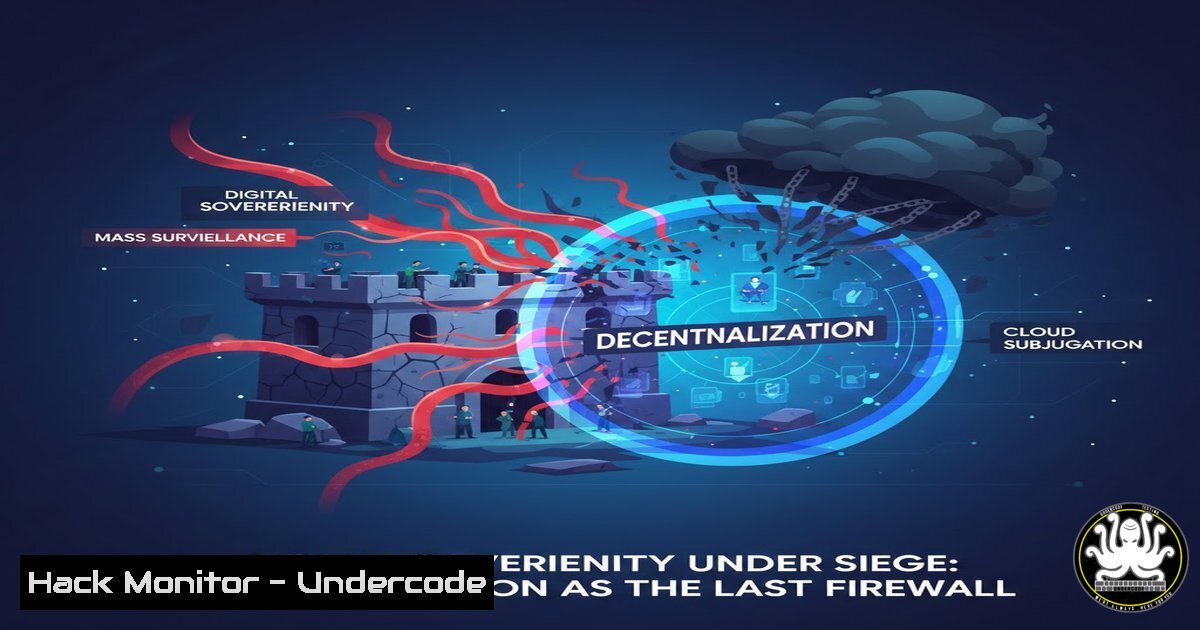
Introduction:
The centralization of data and critical infrastructure has created unprecedented vulnerabilities, where state-sponsored surveillance programs and extraterritorial cloud data access converge. This article dissects the technical and geopolitical risks of architectures that prioritize control over security, advocating for actionable decentralization strategies to reclaim digital sovereignty.
Learning Objectives:
- Understand the technical mechanisms enabling mass surveillance through centralized data lakes and cloud platforms.
- Implement practical decentralization techniques using encryption, access controls, and federated systems.
- Harden AI and cloud deployments against both external exploitation and insider threats from compromised service providers.
- The Architecture of Control: How Centralized Data Enables Mass Surveillance
Centralized data storage is not an efficiency requirement but a design choice for control. Systems like “Cyber Dome” or bulk surveillance platforms rely on correlating metadata and content from monolithic databases. The technical prerequisite is the aggregation of logs, communications, and user data into queryable, low-latency data lakes.
Step-by-Step Guide to Identifying and Isolating Critical Data:
- Data Flow Mapping: Use tools like `tcpdump` or Wireshark to map where your application data flows. Command: `sudo tcpdump -i any -w data_flow.pcap` to capture traffic.
- Inventory Sensitive Data: For on-prem databases, list tables containing PII. In PostgreSQL: `SELECT table_name FROM information_schema.columns WHERE column_name LIKE ‘%email%’ OR column_name LIKE ‘%ssn%’;`
3. Implement Network Segmentation: Isolate database servers from direct web access. Use firewall rules (e.g., `iptables -A INPUT -p tcp –dport 5432 -s-j ACCEPT` and `-j DROP` for all others). - Encrypt Data at Rest and in Transit: Enable TLS 1.3 for all services. For databases, use native TDE (Transparent Data Encryption) or tools like `cryptsetup` for Linux disk encryption:
cryptsetup luksFormat /dev/sdb1. -
Cloud Sovereignty and the Perils of Extraterritorial Data Access
Storing data with major US cloud providers (AWS, Azure, Google Cloud) subjects it to the US CLOUD Act, allowing US authorities to access data regardless of its physical location. The risk is legal, not just technical.
Step-by-Step Guide to Mitigating Cloud Jurisdictional Risk:
- Choose Sovereign Cloud Providers: Opt for providers headquartered and operated under strict EU data protection laws (e.g., in Germany: Hetzner, Ionos; EU-wide: OVHcloud).
- Client-Side Encryption Before Upload: Never let the cloud provider hold your encryption keys. Use a library like `libsodium` to encrypt files locally before upload.
Example using openssl for local file encryption
openssl enc -aes-256-cbc -salt -in sensitive.csv -out sensitive.enc -pass pass:YourStrongPass
Then upload the .enc file to cloud storage.
- Use Cloud HSM or Key Management: For necessary cloud services, use the provider’s Hardware Security Module (HSM) or Key Management Service (KMS) in a region with favorable laws, but manage root keys yourself.
-
Contractual Safeguards: Ensure SLAs explicitly forbid data transfer to third countries and mandate deletion protocols.
-
Decentralizing Infrastructure: From Monoliths to Federated and Edge Systems
De-centralization reduces attack surface and limits mass data correlation. This involves moving from single cloud regions to distributed, federated architectures.
Step-by-Step Guide to Building a Federated Service:
- Adopt a Microservices Architecture: Break monolithic apps into services (e.g., user auth, data processing). Containerize with Docker and orchestrate with Kubernetes (K8s) or Nomad.
- Implement Service Meshes for Federated Control: Use Linkerd or Istio to manage secure service-to-service communication across different hosts or locations. A basic Istio mutual TLS policy ensures only authorized services talk:
apiVersion: security.istio.io/v1beta1
kind: PeerAuthentication
metadata:
name: default
spec:
mtls:
mode: STRICT
- Deploy to Multiple, Independent Nodes: Use infrastructure-as-code (Terraform, Ansible) to deploy identical service stacks across different cloud providers or on-prem data centers.
-
Use a Distributed Database: Choose databases designed for distribution without a single point of control, like CockroachDB or Cassandra. Configure replication across zones.
-
Hardening AI Systems Against Data Poisoning and Model Theft
Centralized AI training data is a prime target. Adversaries can poison data to manipulate outcomes or steal proprietary models.
Step-by-Step Guide to Securing AI Pipelines:
- Sanitize and Validate Training Data: Use differential privacy libraries (e.g., TensorFlow Privacy) to add statistical noise to data, preventing extraction of individual records. Command to install:
pip install tensorflow-privacy. - Implement Robust Access Control for ML Repositories: Restrict access to model registries (MLflow, DVC) using RBAC. For Linux, set strict permissions:
chmod 750 /ml_models && chown :ml_team /ml_models. - Monitor for Data Drift and Anomalies: Use tools like Evidently AI or Apache Superset to create dashboards tracking input data distribution vs. training data, alerting on significant drift.
-
Secure Inference Endpoints: Never expose raw model APIs. Place them behind an API gateway (Kong, Apigee) with strict rate limiting, authentication (OAuth2/OIDC), and input sanitization to prevent adversarial attacks.
-
Proactive Defense: Implementing Zero Trust in a Decentralized World
Zero Trust Architecture (ZTA) operates on “never trust, always verify,” which is inherently compatible with decentralized systems.
Step-by-Step Guide to Enforcing Zero Trust Principles:
- Identity as the New Perimeter: Implement a strong identity provider (Keycloak, Okta) with mandatory Multi-Factor Authentication (MFA) for all users and service accounts.
- Micro-Segmentation: Use network policies to control traffic between workloads. In Kubernetes, a NetworkPolicy might look like:
apiVersion: networking.k8s.io/v1
kind: NetworkPolicy
metadata:
name: allow-only-frontend
spec:
podSelector:
matchLabels:
app: backend-db
policyTypes:</li>
</ol>

<p>- Ingress
ingress:
- from:
- podSelector:
matchLabels:
app: frontend
ports:
- protocol: TCP
port: 3306
3. Continuous Authentication and Authorization: Deploy tools like OpenPolicy Agent (OPA) to evaluate authorization policies in real-time for every API call.
4. Log Everything and Correlate Centrally (but Store Decentralized): Send logs from all distributed nodes to a central SIEM (Elasticsearch, Splunk) for analysis, but ensure the logs themselves are encrypted and the SIEM’s access is heavily guarded.What Undercode Say:
- Sovereignty is a Security Feature: Technical architecture dictates political control. Systems designed without jurisdictional and adversarial diversity in mind are inherently vulnerable to coercion and mass exploitation.
- Decentralization is Practical, Not Ideological: Implementing federated systems, client-side encryption, and zero trust is a measurable risk reduction strategy against supply chain attacks, vendor lock-in, and state-level data requisition.
The core analysis reveals a chilling convergence: the technical ease of mass surveillance and the legal overreach of cloud acts create a perfect storm for democratic erosion. The argument that centralization is necessary for “cyber defense” is a dangerous fallacy; it creates a single, high-value target. The future of resilient IT lies in architecting systems where no single entity—be it a corporation or a state—has the technical capability to access or control the entirety of the data ecosystem.
Prediction:
Within the next 3-5 years, we will witness a major geopolitical incident triggered by the extraterritorial seizure of cloud data, leading to a forced and chaotic fragmentation of the global internet. Organizations that have not proactively implemented sovereign, decentralized architectures will face catastrophic data breaches, legal liability, and operational collapse. This will catalyze a renaissance in peer-to-peer protocols, privacy-enhancing technologies, and the rise of legally-binding “digital sovereignty” certifications for enterprise IT.
▶️ Related Video (78% Match):
🎯Let’s Practice For Free:
IT/Security Reporter URL:
Reported By: Bernhard Biedermann – Hackers Feeds
Extra Hub: Undercode MoN
Basic Verification: Pass ✅🔐JOIN OUR CYBER WORLD [ CVE News • HackMonitor • UndercodeNews ]
📢 Follow UndercodeTesting & Stay Tuned:


